In the hushed serenity of a gallery, have we fallen into the habit of assuming that paintings are meant merely to be seen?
What if, buried beneath centuries of pigment and varnish, lies an actual musical score that we can perform today?
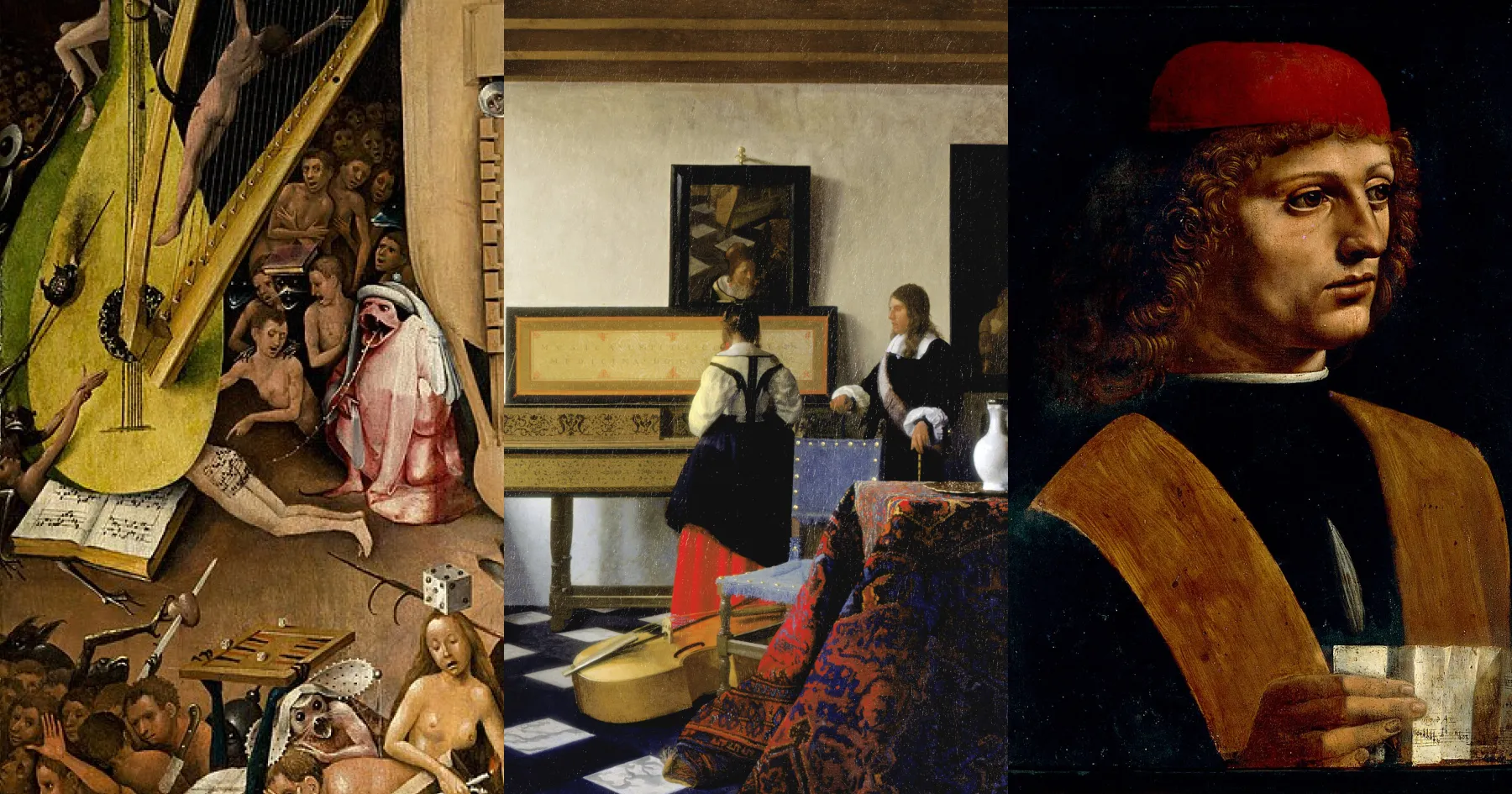
The great masters of the past frequently wove music into the harmony of line and color like secret codes. Sometimes it appears as an uncanny melody stamped onto the buttocks of a damned soul in the depths of the underworld; at other times, as a single snapped string beside an otherwise immaculate instrument. Why did these painters conceal sound within silent canvases?
Behind these hidden notes lie raw human passions, political intrigues, and religious discords that went undetected for generations. Step past the boundaries of the senses, break the silence of the canvas, and embark on a journey to hear the authentic music concealed within art. Here begins a thrilling voyage where art history converges with musicology.
Part 1: Hieronymus Bosch’s Inferno, or the 500-Year-Old "Butt Song"
An Ancient Score in the Depths of Hell
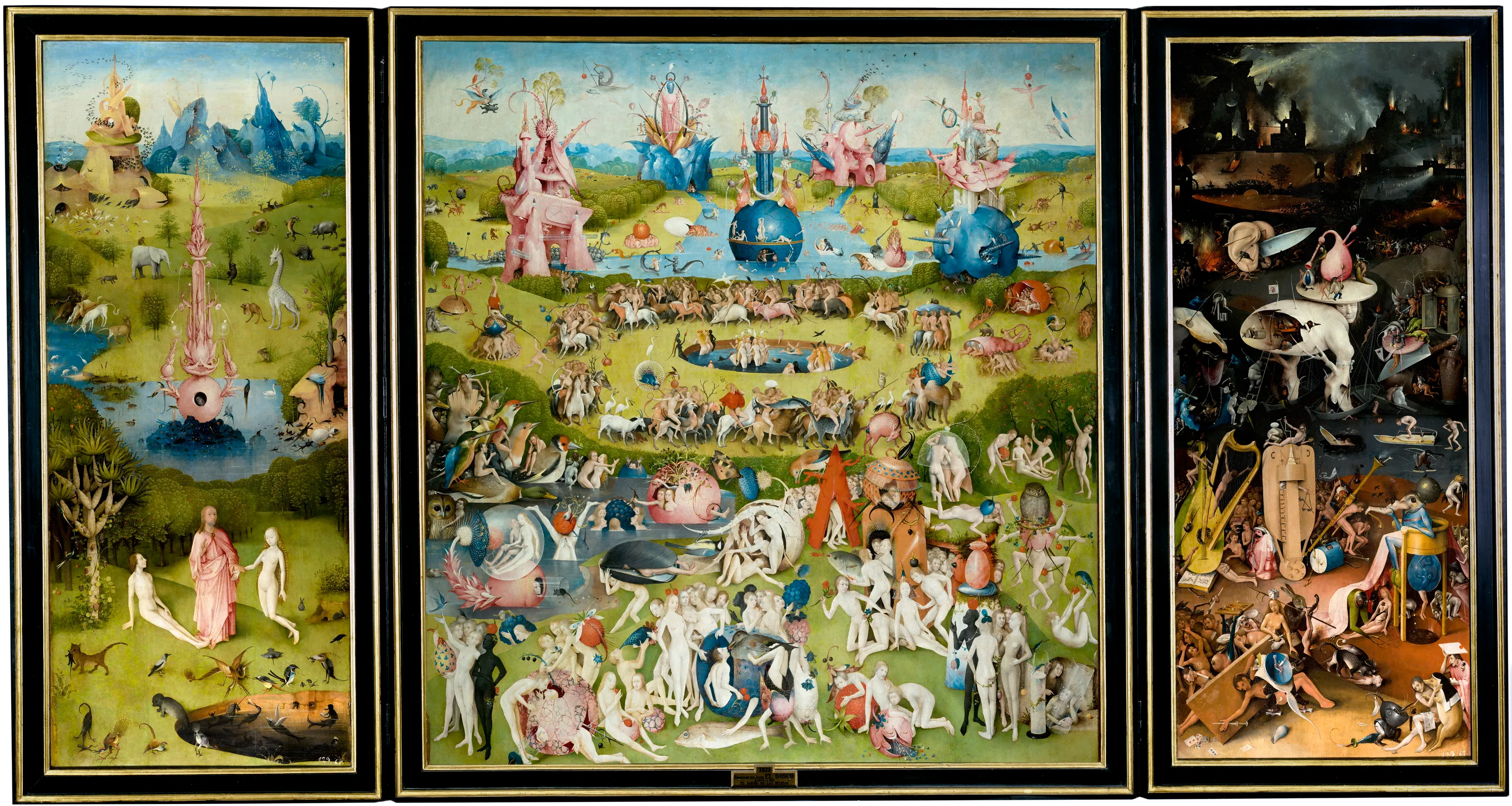
A nightmarish, chaotic world crammed with humanity’s every vice and terror: this is The Garden of Earthly Delights (c. 1500), the celebrated triptych by Early Netherlandish visionary Hieronymus Bosch. Its right-hand wing renders the horrors of damnation in astonishing, microscopic detail.
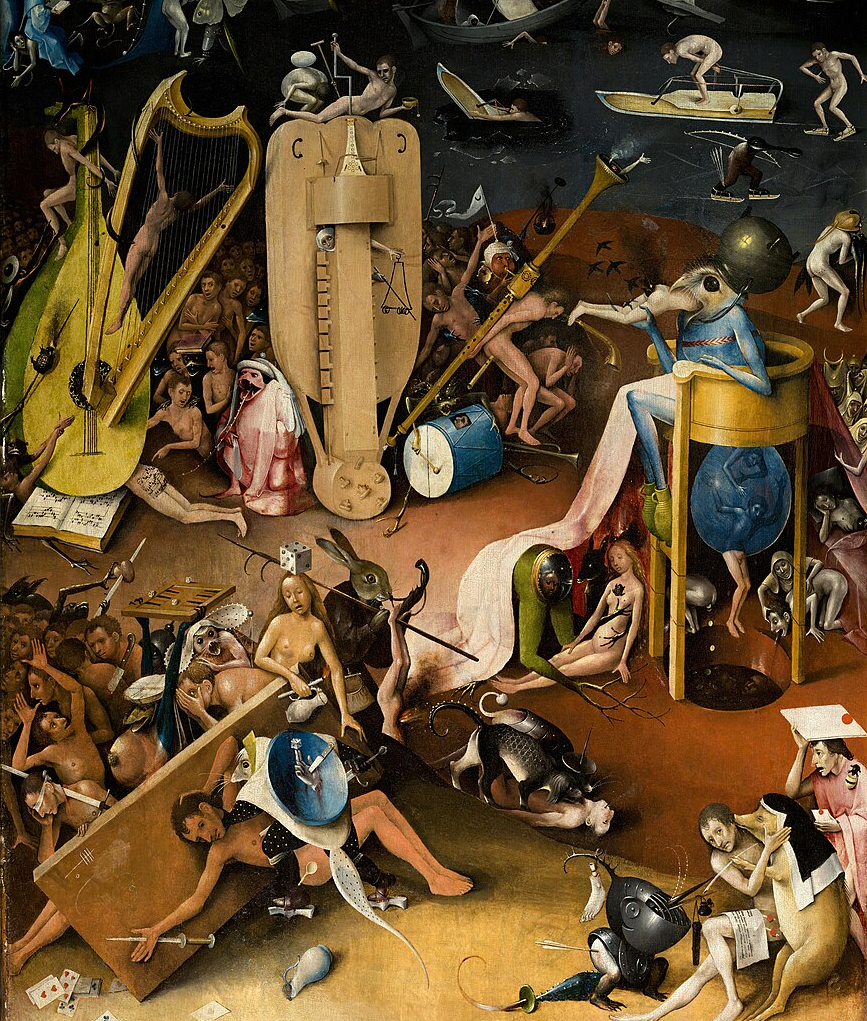
In the lower-left section of this infernal panorama—a torture zone known as the "Musicians' Hell," where sinners are crushed and crucified upon oversized harps and lutes—lurks an extraordinary enigma. Look closely at the pale, exposed rear of a sinner trapped under an immense string instrument. Stamped directly onto the skin, like a grotesque tattoo, is an array of orderly black marks.
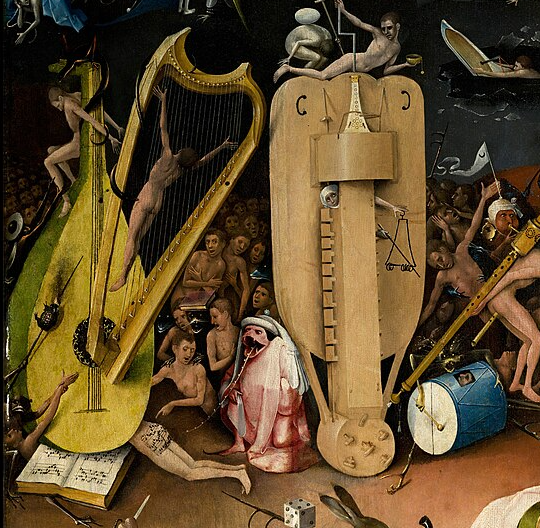
This was neither random dirt nor decorative hatching. In 2014, an observant music student recognized that these markings were authentic musical neumes in medieval chant notation. Transcribed into modern notation, the markings revealed an actual, playable melody. For half a millennium, this cryptic motif had kept its silence within the galleries of the Museo del Prado; that it was resurrected into living sound through digital networks feels like a brilliant, mischievous twist of history.
Why Brand a Score upon an Outcast’s Body?
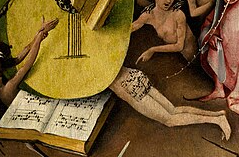
This raises a fundamental question: Why would an artist of Bosch’s stature take sacred musical notation and inscribe it upon the most vulgar, profane part of the human anatomy?
Behind this grotesque parody lies the strict Christian worldview of the late Middle Ages and early Renaissance. In Bosch’s Flanders, faith governed every facet of daily life, and anxieties surrounding earthly decadence weighed heavily upon the collective psyche. The Catholic Church viewed "secular music"—which stimulated the senses and dulled spiritual vigilance—as a snare of the devil leading toward lust and damnation. The lutes strummed by wandering minstrels and the harps played in intimate quarters were not mere instruments; they were dangerous emblems of worldly dissipation and carnal abandon.
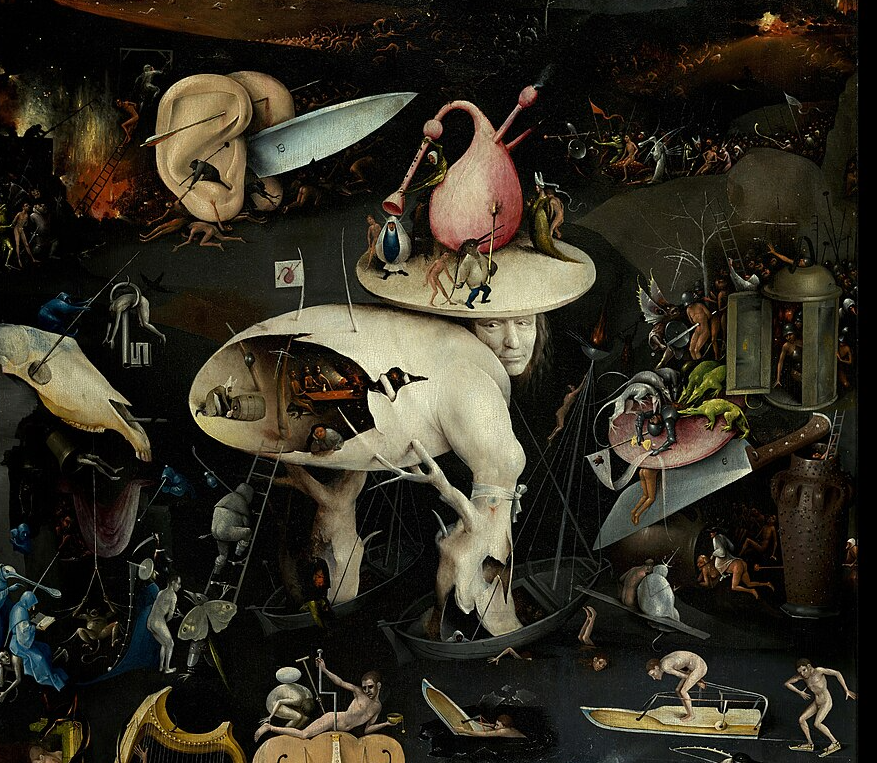
In the sacred hierarchy, liturgical song was seen as pure "celestial harmony," devised to praise God through the human voice and intellect. Its notation belonged on pristine vellum, never on mortal flesh. To brand these sacred symbols across the body's most ignominious flesh was a stroke of merciless theological satire—a piece of dark humor engineered to scandalize and instruct cultured minds.
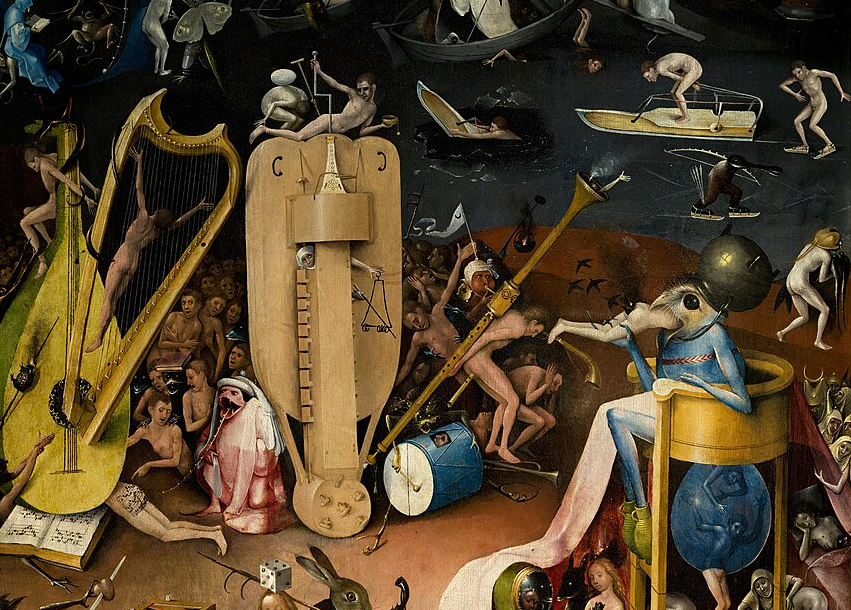
Those who indulged in secular love songs while neglecting holy praise found their punishment in Bosch's hell: forced to sing in an eternal chorus under demonic direction, reciting the very notes branded upon their own flesh. Bosch’s musical stamp was far more than a lurid whim; it stood as a silent sermon forged from the fusion of moral dread and sardonic parody.