
Ophelia among the Flowers
1905
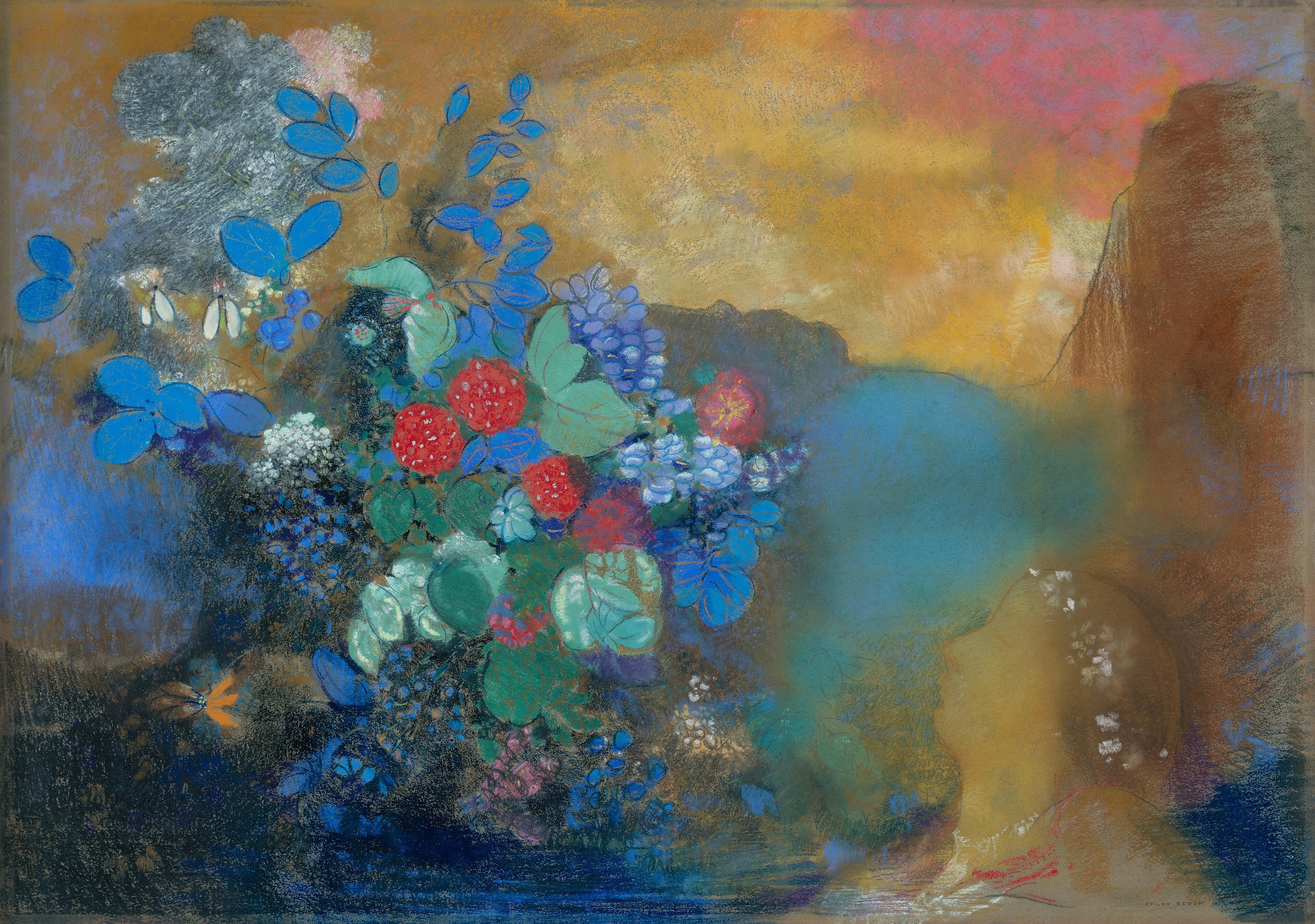
Image: Wikimedia Commons / Public Domain
- Dimensions
- 64 × 91 cm
- Medium
- 紙にパステル
- Collection
- ロンドン・ナショナル・ギャラリー
親友が目の前で水死したという無力感と悲劇の記憶を、時間をかけて見つめ直し、自然との平和的な融合や自己の解放という穏やかな風景へと昇華させる。
✦ Highlights (technique & color)
画面中央部で乱舞する色彩豊かな花々の視覚的運動に対し、画面右下に置かれたオフィーリアの静止した白い横顔が対比され、視線は動から静へ、生から死へと自然に誘導される。ウルトラマリンブルーの背景に対する鮮烈なオレンジ色の配置や、多様な緑の中に置かれたマゼンタやピンクが、光学的振動を引き起こして画面全体を発光させている。
✦ The setting of this painting
実在する特定の地名や現実の小川ではなく、画家の内面的精神世界において構築された想像上の空間。季節感や時刻、天候といった物理的な時間軸が無効化されている。
✦ Historical context
19世紀末から20世紀初頭のヨーロッパ社会では、科学的実証主義への反動として、人間の内面、無意識、夢の世界への探求が広まっていた。
Vivid, fantastical blossoms swirl as if glowing from within. Deep, lush green leaves, berry-like motifs in reds and pinks evoking lilacs and strawberries, and striking streaks of ultramarine blue intertwine in complex harmony. Amid this floral profusion, near the lower-right corner and cropped at the edge, a woman's head appears in profile. All color has drained from her face, leaving her skin pale. Her eyes are gently closed, her chin tilted slightly upward. Through this serene, tranquil figure, painter Odilon Redon poured out a profound sorrow long buried within his heart, alongside a prayer for ultimate release.
A Tragic Heroine Dissolving into Flowers
The figure nestled in the lower right is Ophelia, the tragic heroine of William Shakespeare's Hamlet. Crowned with a garland of flowers, the contours of her body gradually lose their definition, dissolving into the surrounding rock, water, and foliage. Whether she has already perished beneath the surface or simply rests in a dreamlike slumber remains shrouded in poignant ambiguity.
The setting Redon portrays is neither an actual place nor a real stream. It is an imaginary realm conjured within the artist's inner world. A diagonal cliff edge cuts across from the upper left to the center, beneath which the cold presence of water and ripples on the surface are suggested; yet traditional perspective and spatial depth have been dissolved. In this dreamscape, physical constraints such as season, hour, and weather are suspended, revealing an eternal realm that hovers between life and death, consciousness and the unconscious.
Art historians such as Christina Bradstreet and Gillian MArthur interpret this image of Ophelia dissolving into nature as a symbol of release from tragedy and the restoration of the self. Rather than portraying Ophelia's demise merely as a tragic end, Redon rendered it as a peaceful union with nature. In it, one senses an earnest yearning for liberation from the burdensome memories that haunted the artist himself.
The Loss of a Dear Friend Witnessed Firsthand
Behind Redon's deep fascination with the subject of Ophelia lay an indelible trauma etched into his own soul.
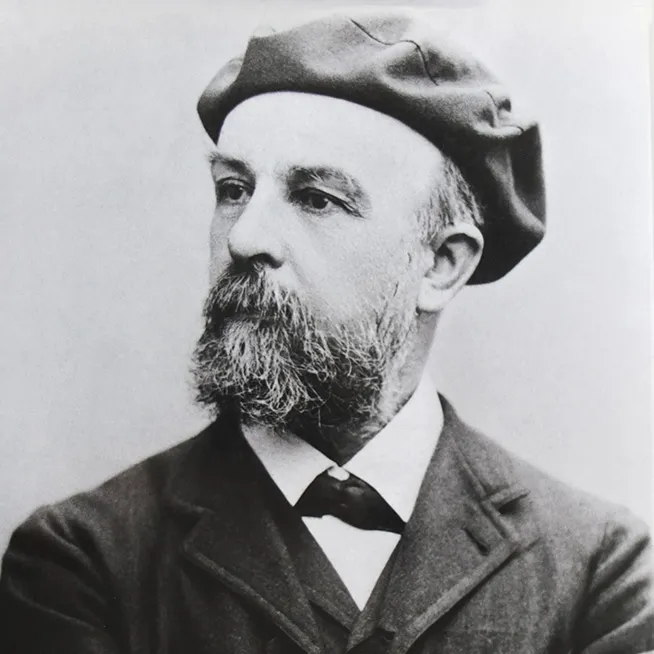
In July 1888, while vacationing in Samois-sur-Seine, Redon was confronted with an unimaginable tragedy. His dear friend, the young critic Émile Hennequin, drowned before his very eyes. The image of his friend slipping beneath the cold water, and the overwhelming helplessness of being unable to save him, weighed heavily on the artist's heart for decades, never to be forgotten.
For Redon, water became a terrifying force that had claimed a cherished life, inextricably bound to the memory of death. Yet instead of averting his eyes, he sought to confront that memory through his art. Between 1900 and 1908, Redon embarked on an intensive series of works depicting Ophelia. The tragic loss of his friend and the attendant grief provided the potent emotional impulse that brought this series into being.
Redon channeled into these canvases a lifetime of keen natural observation: memories of the somber, isolated marshlands around Peyrelebade on the outskirts of Bordeaux, along with sketches of living plants made in the Jardin des Plantes in Paris and gardens at Soisy-sous-Montmorency. Filtered through Shakespeare's literary world, these recollections were sublimated into his inner imaginative landscape.
From the "Noirs" to the Era of Color
The years around 1905 to 1908, when this work was created, marked a major turning point in Redon's career. During the 1870s and 1880s, he had worked primarily in the somber realm of his "Noirs," focusing on dark charcoal drawings and lithographs. By this period, however, he had fully emerged from that shadow to embrace his "era of color," working masterfully in pastel and oil.
His personal life had also brightened considerably. Transactions with dealers such as Ambroise Vollard and Eugène Druet brought financial stability, and family life flourished as his second son, Ari, grew older. Blessed with renewed peace of mind, Redon was able to revisit the sorrows of his inner life with a gentle spirit, transmuting them through radiant color.
He blended and smudged crushed pastel pigments to create velvety, smooth fields, while also interweaving swift, firm contours, finger and stump rubbings, and vigorous hatching. This technique endowed the surface with both a rich, tactile depth and a luminous, translucent glow. Striking oranges set against ultramarine blue, along with magenta, pink, and red fruit-like accents nestled among varied shades of green, produce an optical vibration that makes the entire composition seem to radiate with light.
About 680 more words
Read the rest of this commentary —
and step into a secret gallery
opened just for you
An "art letter" delivered to you every Saturday morning
Works, music and words chosen for your sensibility, from your artist-type result and the paintings you love
A library of masterpieces and music you can enjoy "in your own words", not just look at
A "digital art notebook" (unlimited) where your impressions build into your own taste
Unlimited likes and notes
¥980 / month¥0 today
¥980/month (tax incl.) from day 8. Cancel anytime.
Already have an account? Log in
Your Note
Write down what this painting made you feel in your art notebook.
Please sign up to write notes.
Sign up for freeRecommended Artworks
Sources & references
More artists
If you find an error in this content, please let us know here
This site is protected by reCAPTCHA, and the Google Privacy Policy and Terms of Service apply.