日本語 (JA)
 English (EN)
The "Golden Painting" That Stops Everyone in Their Tracks
Visiting a museum abroad.
Or turning the pages of an art book.
There are paintings that make you stop involuntarily and catch your breath.
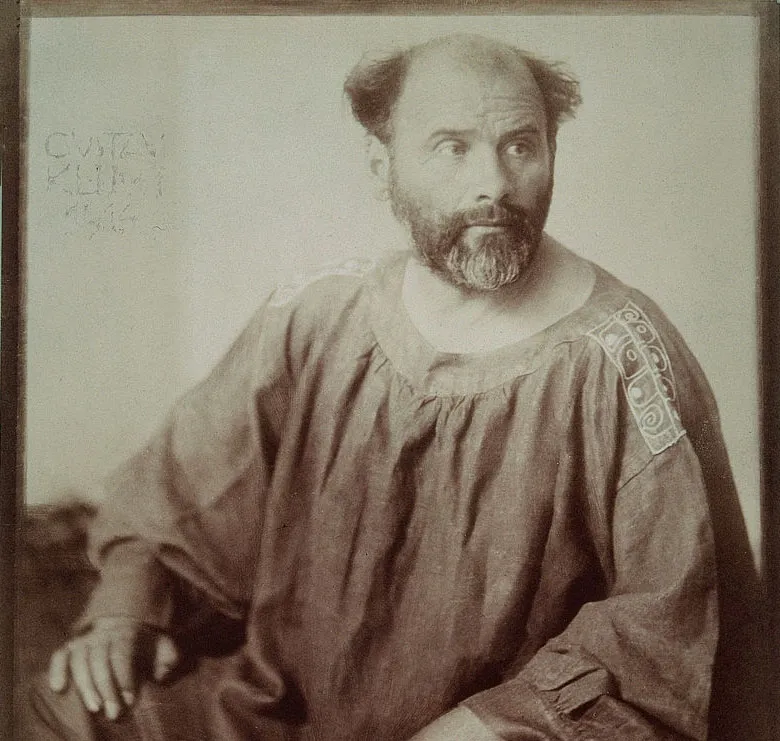 Gustav Klimt
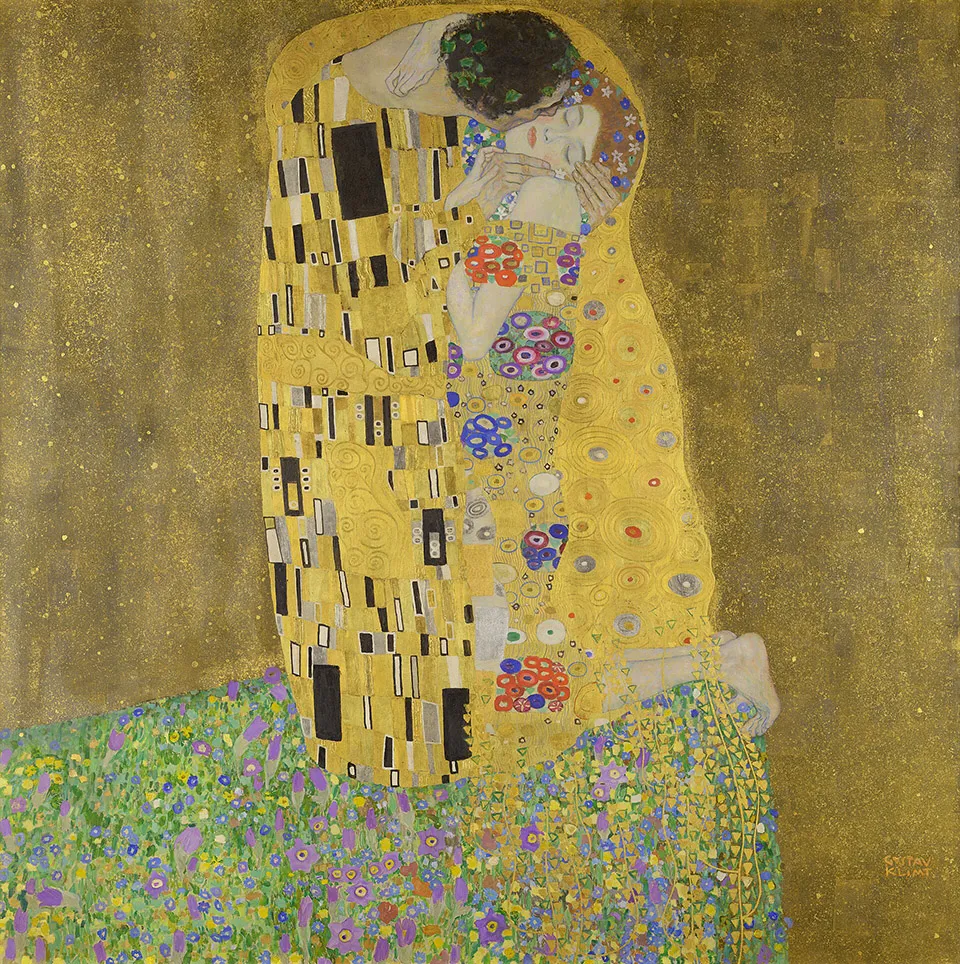
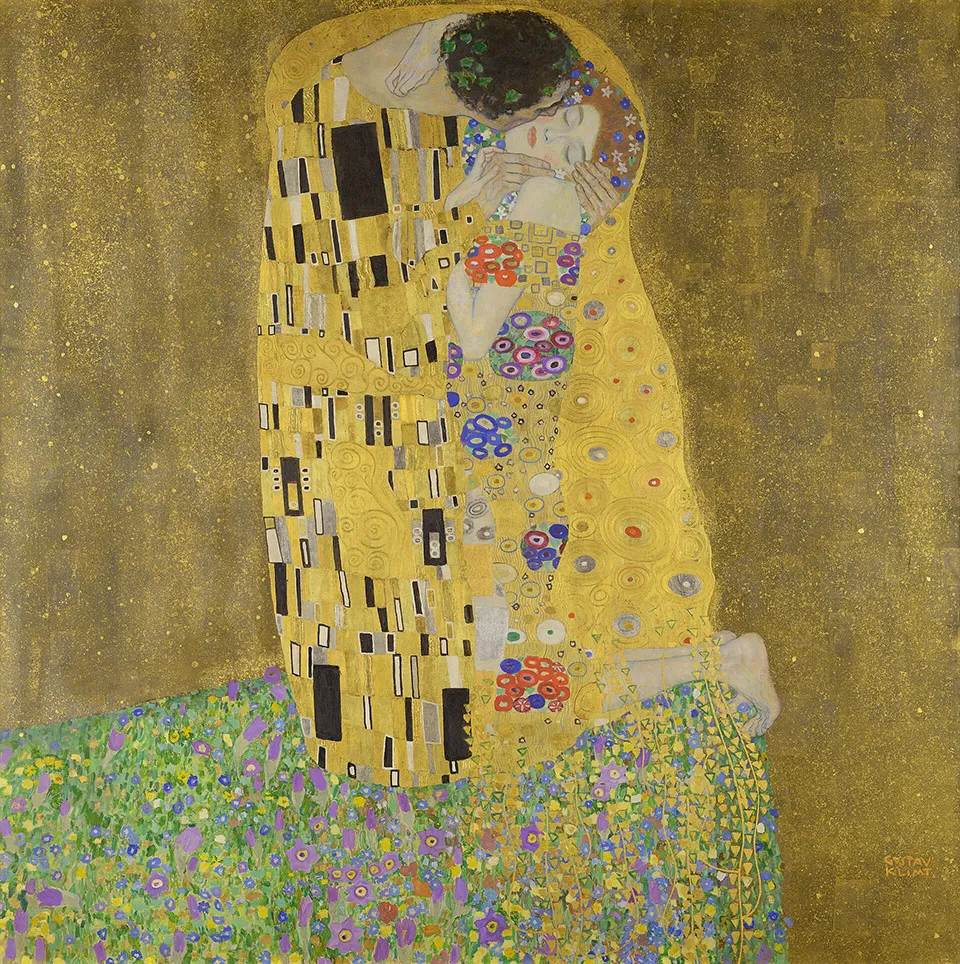
The Kiss,
by Austrian painter Gustav Klimt.
A grand, square canvas
measuring 180 centimeters on each side.
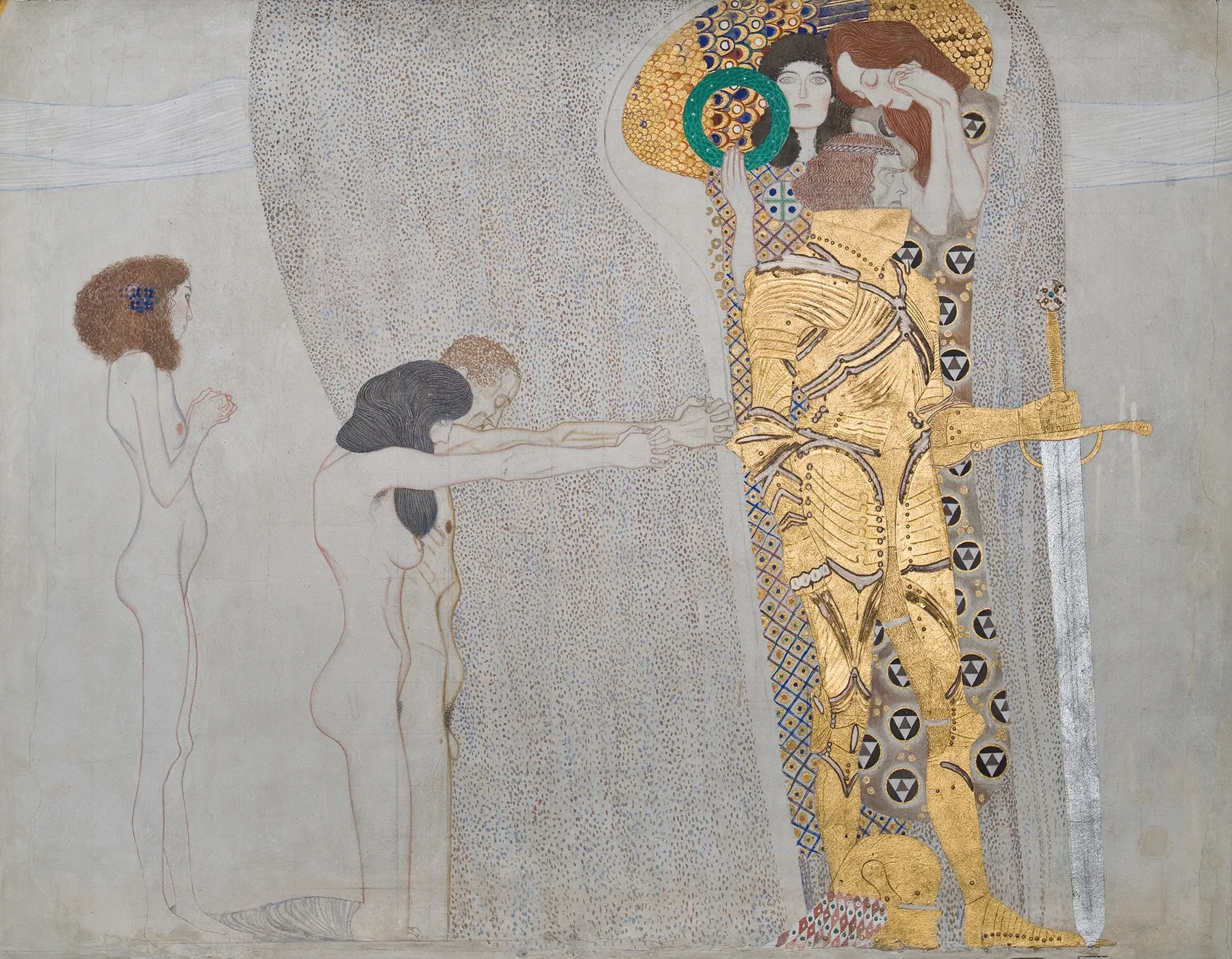
Standing before it, your eyes are filled with a dazzling, radiant gold.
A glittering world crafted with exquisite mastery,
blending genuine gold leaf with silver, platinum,
and delicate brass leaf.
The two figures locked in an embrace
appear as though shielded from everything in this world.
Yet, doesn't it make you wonder?
"Why did he choose real gold rather than mere paint?"
Was it simply for beauty?
Or to create an illusion of opulence?
In truth, behind Klimt's turn to gold lay profound personal struggle and a transformative life drama.
He Was Not Born a Genius
When you think of Klimt,
you might picture a solitary genius with an inimitable style.
That is often the prevailing impression.
Yet he did not begin with that distinct approach.
In fact, his early career followed an entirely opposite trajectory.
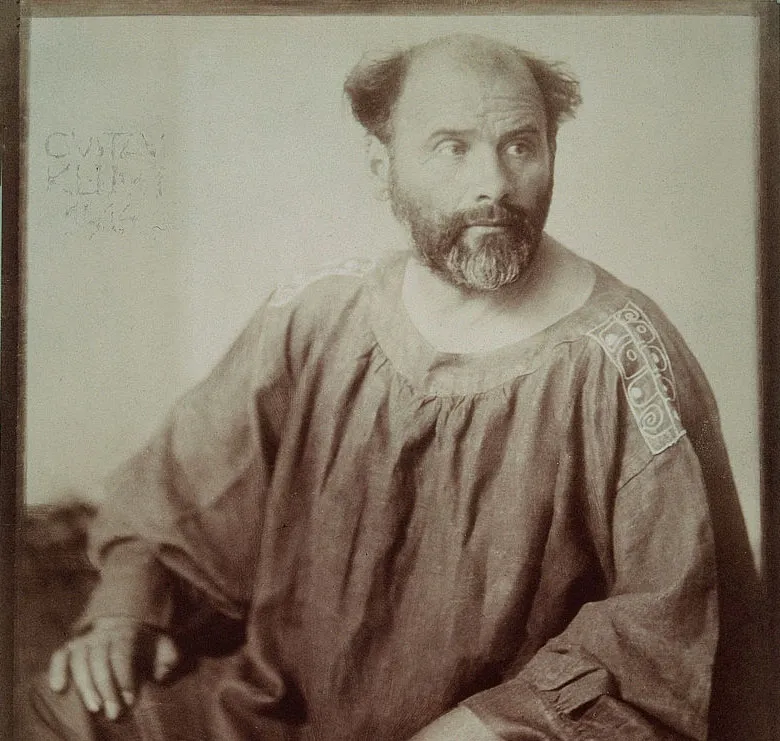
In a word, he was the quintessential model student.
In his late teens, while studying at the Vienna School of Arts and Crafts,
he established a decorative arts workshop with his brother and friends, based in the school's communal studio.
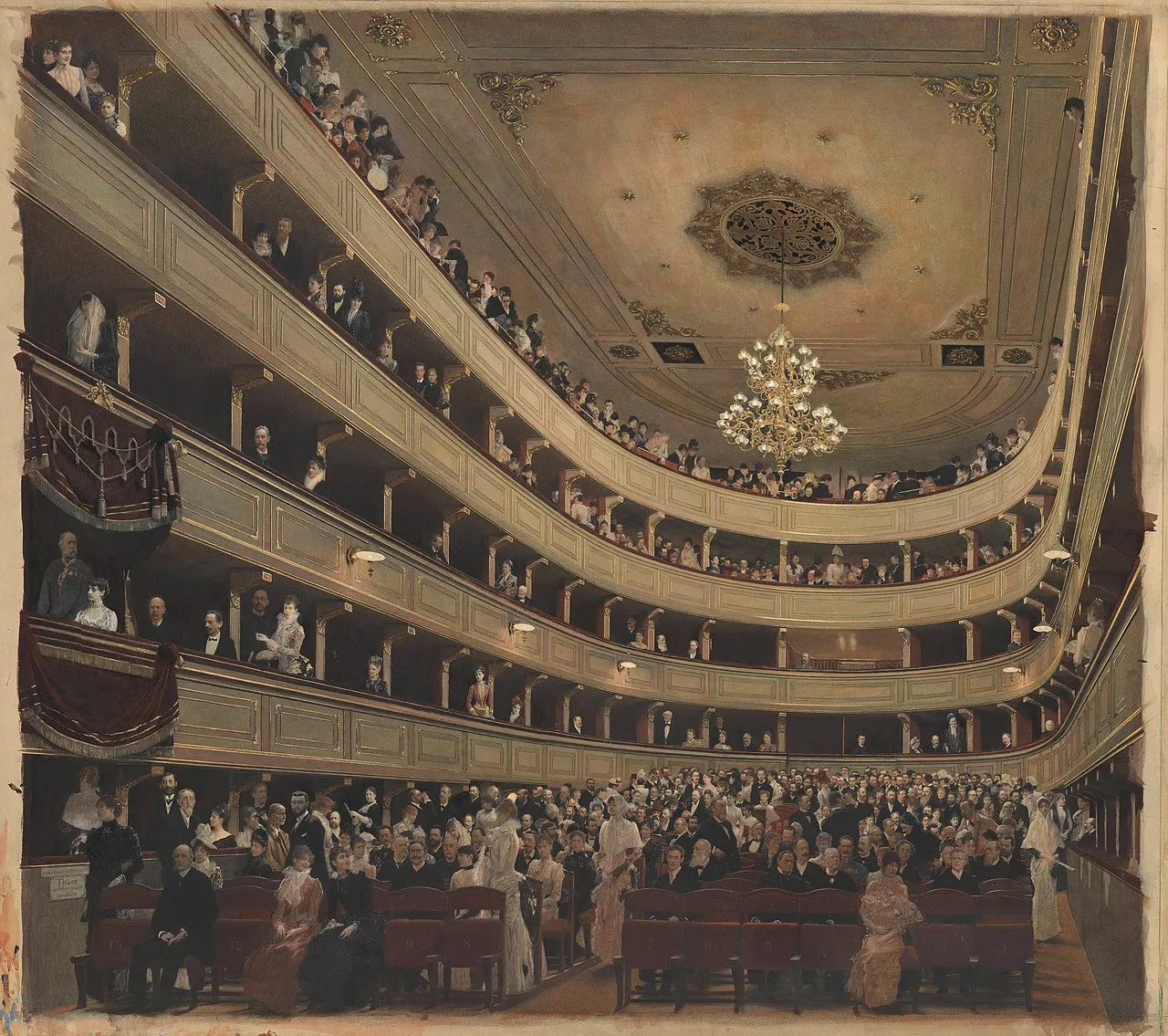
Vienna at the time was in the midst of a grand building boom, with new theaters and museums rising across the city.
Klimt and his partners received commission after commission for ceiling and wall murals in these grand theaters.
What clients sought was traditional, universally admired, photographic realism.
Klimt met those expectations without flaw.
He continued to produce immaculate works
tailored precisely to the tastes of his patrons.
 Gustav Klimt
His technical mastery was so esteemed that
Emperor Franz Joseph I awarded him the Golden Order of Merit.
Applauded by the public.
Honored by the state.
He stood right in the center of the elite path.
Yet all he was doing was skillfully delivering the "correct answers" his patrons desired.
There was not yet a single work that only Gustav Klimt could paint.
Catastrophe and Public Outcry: An Abrupt Plummet to Rock Bottom
The turning point arrived in his mid-thirties.
In 1894, he and a fellow painter were commissioned by the state
for a monumental and prestigious project:
decorating the ceiling of the Great Hall at the University of Vienna.
Klimt took charge of three themes: Philosophy, Medicine, and Jurisprudence.
The state and university professors naturally anticipated more of the same.
"Through the power of science and reason, humanity marches toward a glorious dawn."
They expected an uplifting, triumphant hymn to human progress.
Yet perhaps Klimt could no longer bear
to paint comfortable, sanitized ideals.
Human beings are not always rational or virtuous.
Some suffer in the grip of illness.
Others tremble in the dread of death.
Life, after all, is far more intricate
and absurd.
Klimt cast reality's raw suffering
and human fragility directly onto the canvas.
The moment the paintings were unveiled,
the city of Vienna erupted in uproar.
"He has desecrated traditional beauty."
"It is perverse and scandalous."
"Unworthy of an institution of higher learning."
Eighty-seven university professors submitted a joint petition of protest, setting off a fierce scandal across the press and parliament.
The very people who had celebrated him yesterday
turned overnight to cast stones.
For Klimt, who had always been the golden boy of the academy,
this was his first encounter with profound, bitter defeat.
The Day He Stopped Giving Them What They Wanted
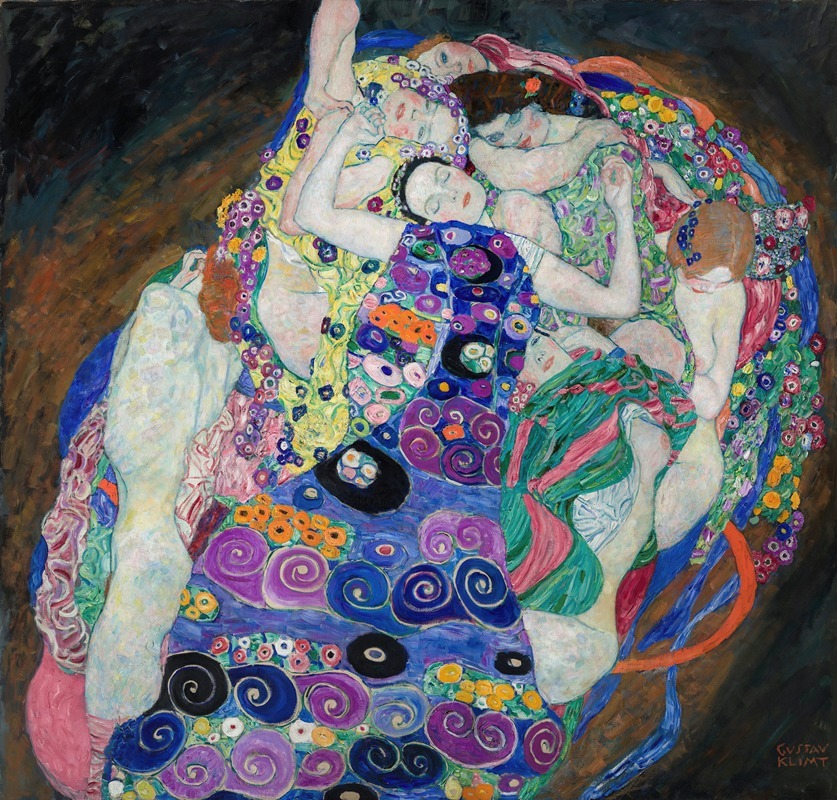 Gustav Klimt
The state issued a stern demand: repaint the murals.
Had he compromised just a little
and yielded to the professors,
his status and prestige would have remained secure.
He could have played along politely and smoothed everything over.
Yet Klimt refused to bow.
"Enough of censorship. I reject all further support from the state."
With those words, he severed ties.
With the support of patrons who believed in him, he refunded the 30,000-krone commission entirely and bought back his paintings.
It meant relinquishing the safe, gilded perch of state-sanctioned elite status.
He would no longer conform to the safe, palatable answers demanded by the state and conservative circles.
He would paint for patrons who truly understood him,
and for the beauty he genuinely believed in.
When he made that fateful decision in 1905, Klimt was forty-two.
His true creative journey
began quietly from that moment.