
Sunflowers
1887
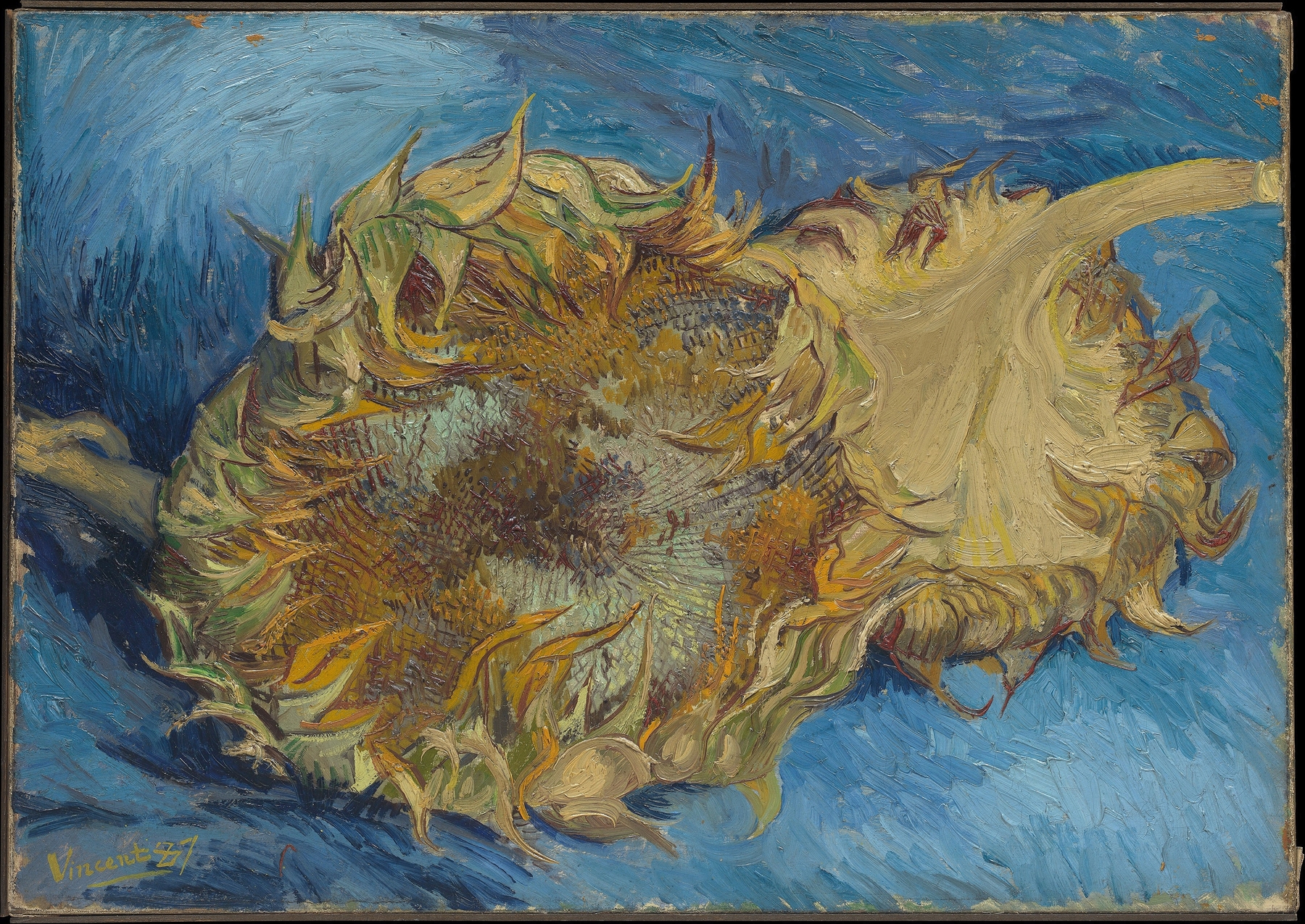
- Dimensions
- 43.2 cm × 61.0 cm
- Medium
- Oil on canvas
- Collection
- The Metropolitan Museum of Art, New York

A Post-Impressionist painter who fundamentally revolutionized the visual languag…
Even with lost friendships and shattered dreams, this piece vividly captures his unyielding soul and vital force within flowers lying flat on the ground.
✦ Highlights (technique & color)
In the lower left corner, the canvas is inscribed in oil with the signature and date "Vincent 87." The background is worked in diagonal hatching of complementary blues and violet, making the central yellow sunflowers stand out in vivid relief. The flower head on the left faces forward, its dense cluster of seeds and shriveled petals rendered in thick impasto. The blossom on the right is turned over, revealing its green calyx, bracts, and the cleanly severed cut of its stem.
✦ The setting of this painting
In the summer of 1887, in Paris, the thirty-four-year-old Vincent van Gogh gathered spent sunflowers from the allotment gardens of Montmartre and brought them to his studio. At the time, Paris was a vibrant center of avant-garde art, alive with Neo-Impressionist pointillism and complementary color theories. Confronting his subjects indoors, Van Gogh stripped the composition of spatial cues, pursuing a daring experiment in pure color and form.
✦ Historical context
The Parisian art world of the late 1880s was undergoing a profound shift from traditional academicism to modern painting. Advances in the chemical industry during the late nineteenth century led to the widespread availability of vivid synthetic pigments in paint tubes, such as chrome yellow. At the same time, developments in optics and color theory—particularly the principle of complementary contrast—greatly influenced painters. For Van Gogh, who was eager to break free from the somber tones of his Dutch period, Paris served as a transformative stage where he absorbed the era's cutting-edge techniques and ideas.
A huge, black, dried-up mass rolls in a strange, horizonless space.
It is a life-sized sunflower head, cut off and drooping weakly.
When one thinks of Van Gogh's 'Sunflowers,' what comes to mind?
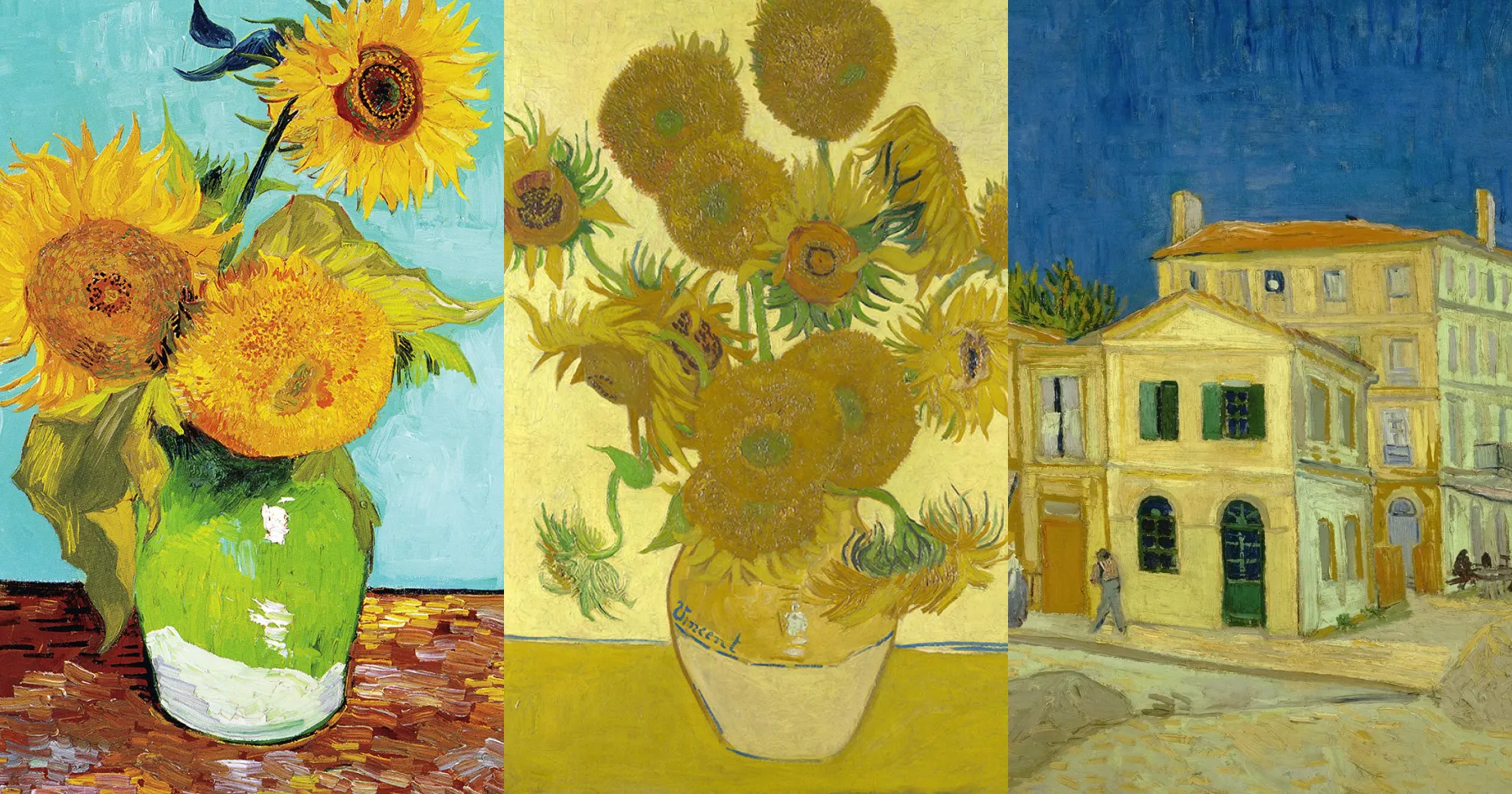
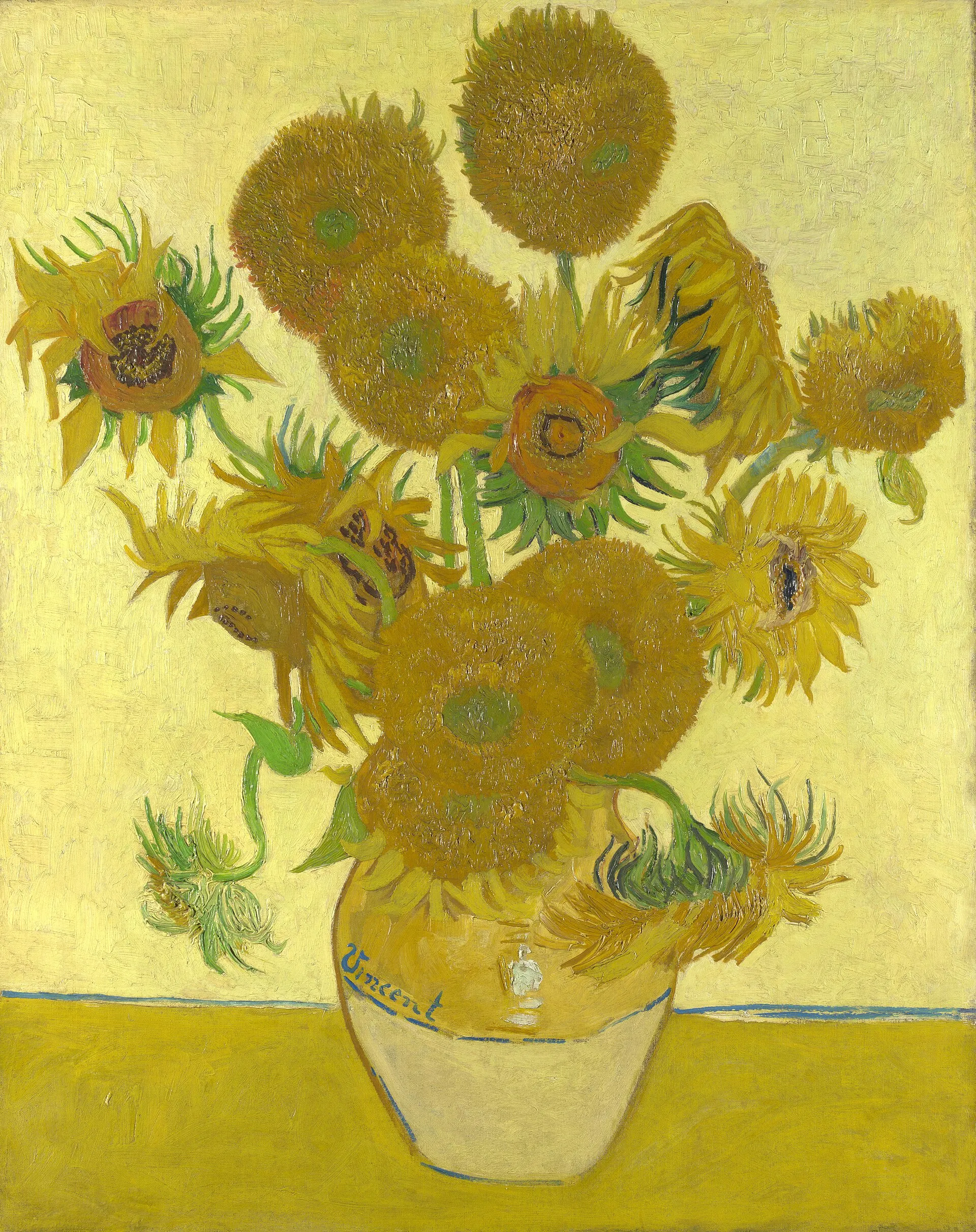
Many people imagine golden sunflowers beautifully arranged in a vase, under the bright sun of Southern France.
A painting symbolizing warm friendship. That is how it is generally described.
But, in fact. What Gauguin truly loved and cherished, keeping it displayed above his bed, was not that bright yellow one.
It was this black, withered sunflower.
In 1886, Van Gogh moved to Montmartre, Paris, France.
He wanted to completely break away from his previous somber, gray style.
He rapidly absorbed the colors of Impressionism.
'I want to try to express intense color itself, rather than harmony through gray.' His quest for color.
This culminated in the groundbreaking 'Sunflowers' series in the latter half of 1887.
He deliberately painted the cut, wilting flowers lying on the ground at life-size.
In the urban art world, a fateful encounter occurred. Paul Gauguin.
The two artists exchanged paintings. It was this painting that strongly captivated Gauguin.
For several years, until he was forced to sell it to fund his second voyage to Tahiti.
Above his bed in his Paris home, he carefully displayed this sunflower.
However, their friendship was short-lived. Late 1888. Their shared life, which began in the 'Yellow House' in Arles, Southern France, collapsed in just two months.
Violent conflict. Van Gogh cut off his own ear. A blood-stained bed.
Gauguin fled back home.
Their relationship was torn apart. Afterward, a letter arrived from Gauguin.
It was a unilateral demand: he wanted the 'Sunflowers in a Vase' painted in Arles. Van Gogh was indignant.
'You already have two sunflowers.' Not even fragments of their friendship remained.
About 111 more words
Unlock this story's ending, and every article on MusicStory
- 42
Stories1–2 new every week
An archive of paintings paired with great music, made for a weekend night and a cup of coffee
- 282
Paintings with commentarygrowing daily
From simply looking to truly reading — the brushwork and the obsession of the masters
- 10
Music Librarygrowing daily
Know it first, and what reaches your ear changes — background music becomes art you keep for life
My Notes, unlimited
Every reading adds to a digital art notebook that is yours alone
Already have an account? Log in
Stories featuring this painting
Your Note
Write down what this painting made you feel in your art notebook.
Please sign up to write notes.
Sign up for freeRecommended Artworks

More artists







If you find an error in this content, please let us know here
This site is protected by reCAPTCHA, and the Google Privacy Policy and Terms of Service apply.