Was Van Gogh's yellow a vision brought on by illness?
What was the "symphony in blue and yellow" he wrote about?
By the time you finish this story, the yellow of Sunflowers may look just a little different.
The World Through Van Gogh's Eyes
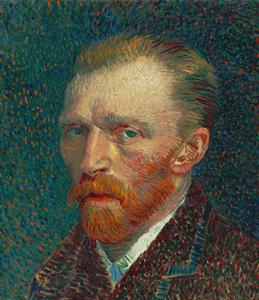 Vincent van Gogh
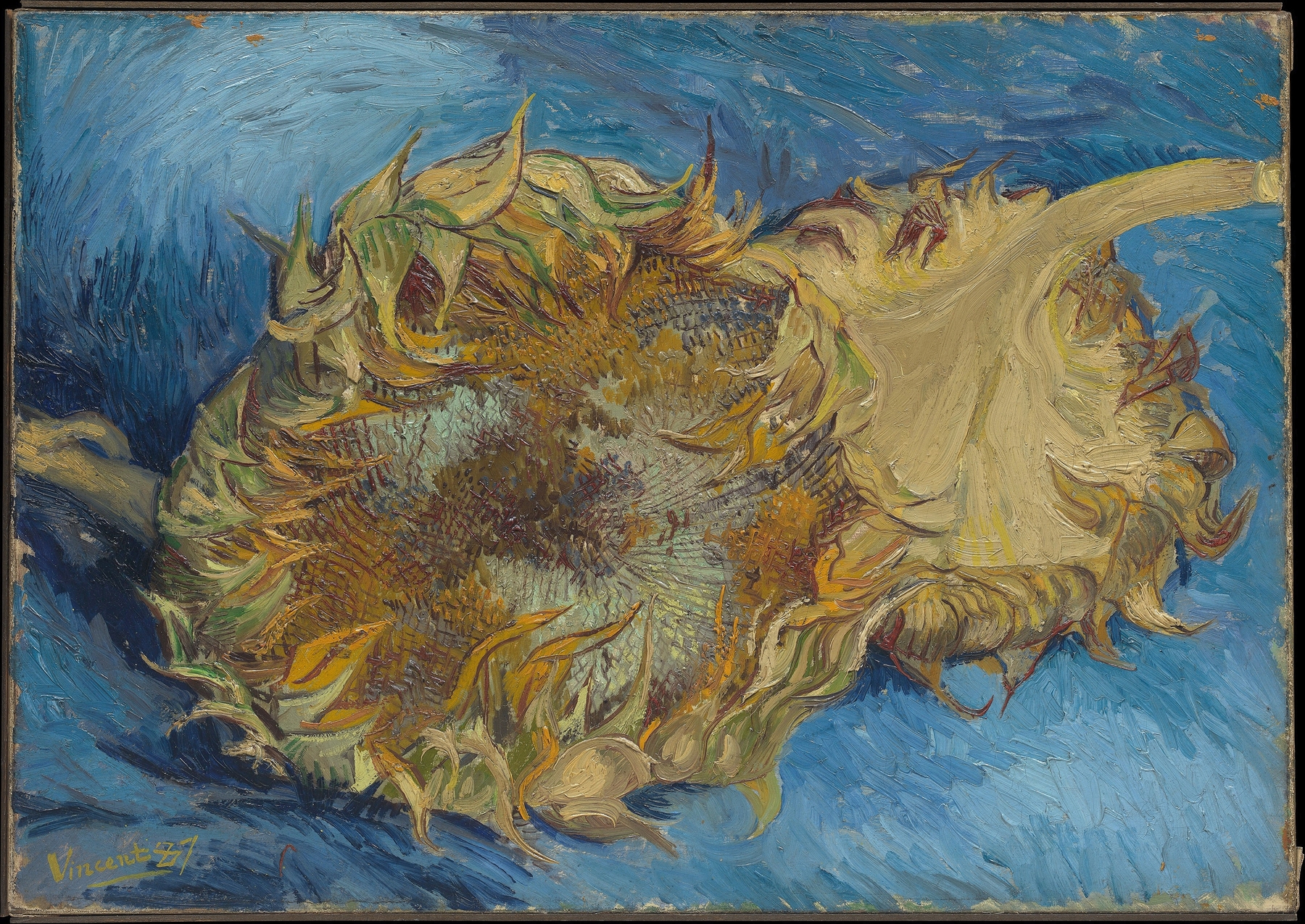
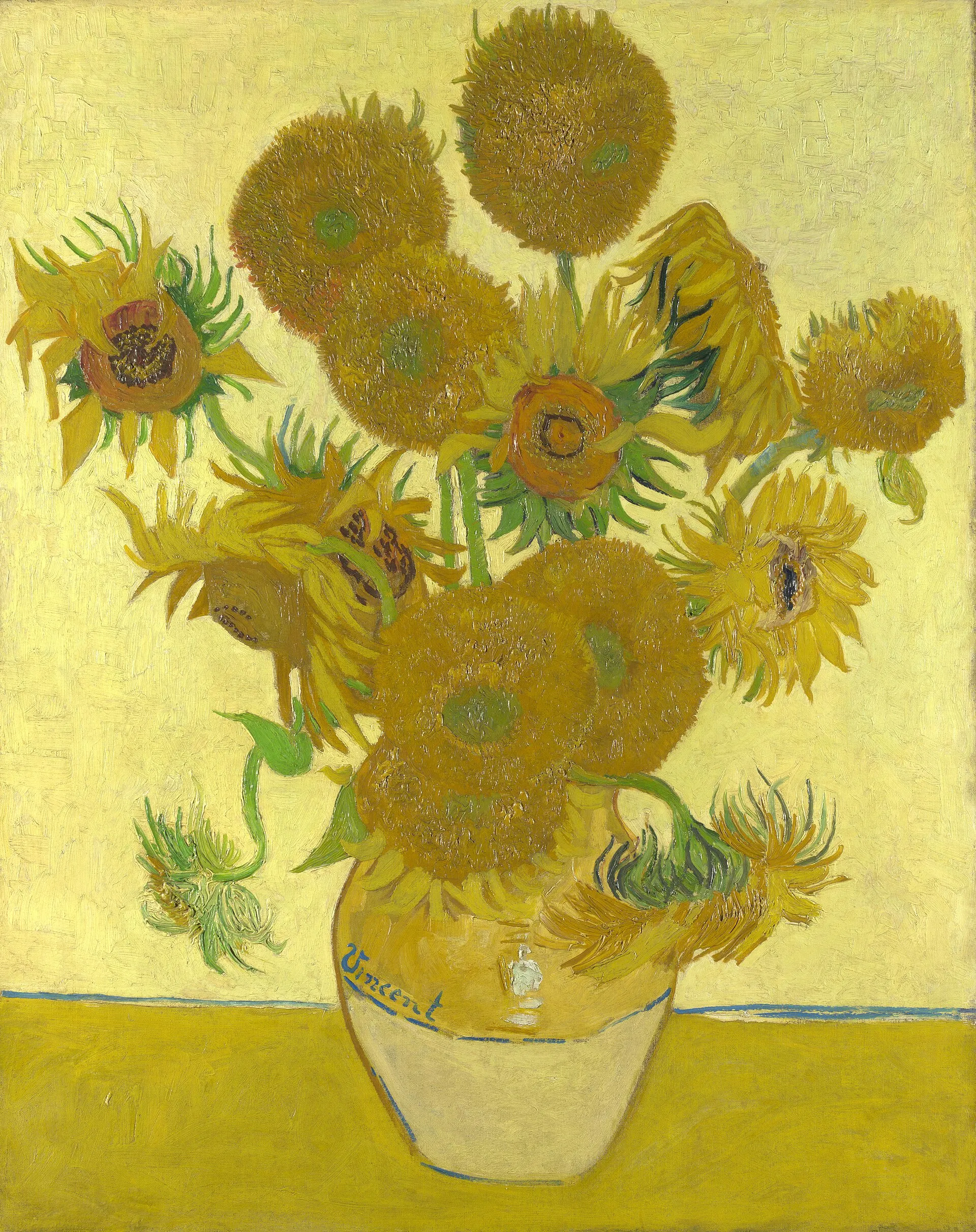
Standing before Sunflowers,
have you ever wondered,
"Is this really how he saw the world?"
Gazing at a canvas filled with furious brushstrokes and vivid yellow, it is tempting to imagine that the painter possessed a singular vision.
Such is the sheer intensity of the yellow layered upon the canvas.
Indeed, others have shared this very curiosity, leading to various medical hypotheses over the years.
The idea that illness or medication may have tinted his vision yellow has long endured as part of the lore surrounding this tormented genius.
Where did Van Gogh's yellow truly come from?
The clues lie in his own letters and the historical record of when his works were created.
An Artist Who Painted for Only a Decade
Van Gogh was born in the Netherlands in 1853.
In his youth, he drifted between various vocations—working as an art dealer's clerk, a language teacher, and a lay preacher—before finally resolving to become a painter around the age of twenty-seven.
Until his death in 1890 at the age of thirty-seven, his career as an artist spanned a brief period of only about ten years.
Quietly sustaining this short yet intense journey was his younger brother Theo, four years his junior.
Working as an art dealer in Paris, Theo faithfully sent his elder brother living expenses and painting supplies.
Van Gogh wrote to Theo in great detail, describing what he was painting each day and the artistic expressions he was striving to attain.
Thanks to his habit of documenting his thoughts in writing, more than eight hundred of his letters survive today.
In February 1888, Van Gogh left Paris and relocated to Arles, a town in the south of France.
Hoping to establish a studio where fellow artists could live and inspire one another, he invited Paul Gauguin, a painter he deeply admired.
Gauguin was a French artist five years his senior who had abandoned a career as a stockbroker to pursue painting.
He would later journey to Tahiti in the South Pacific, becoming renowned for depicting the island's people in radiant colors.
Their life together in Arles began in October 1888.
However, frequent clashes over their artistic visions led their cohabitation to unravel after only about two months.
In December of that same year, the infamous incident occurred in which Van Gogh severed his own ear.
Even as he continued to suffer from mental breakdowns, he never stopped painting, until he shot himself in July 1890 and died two days later.
Such a turbulent life cemented his image as a mad genius, and his use of yellow came to be widely interpreted as a manifestation of his illness.
A Hypothesis Born from a Single Portrait
Regarding the link between his illness and the color yellow, an intriguing hypothesis was sparked by a single portrait.
 Vincent van Gogh
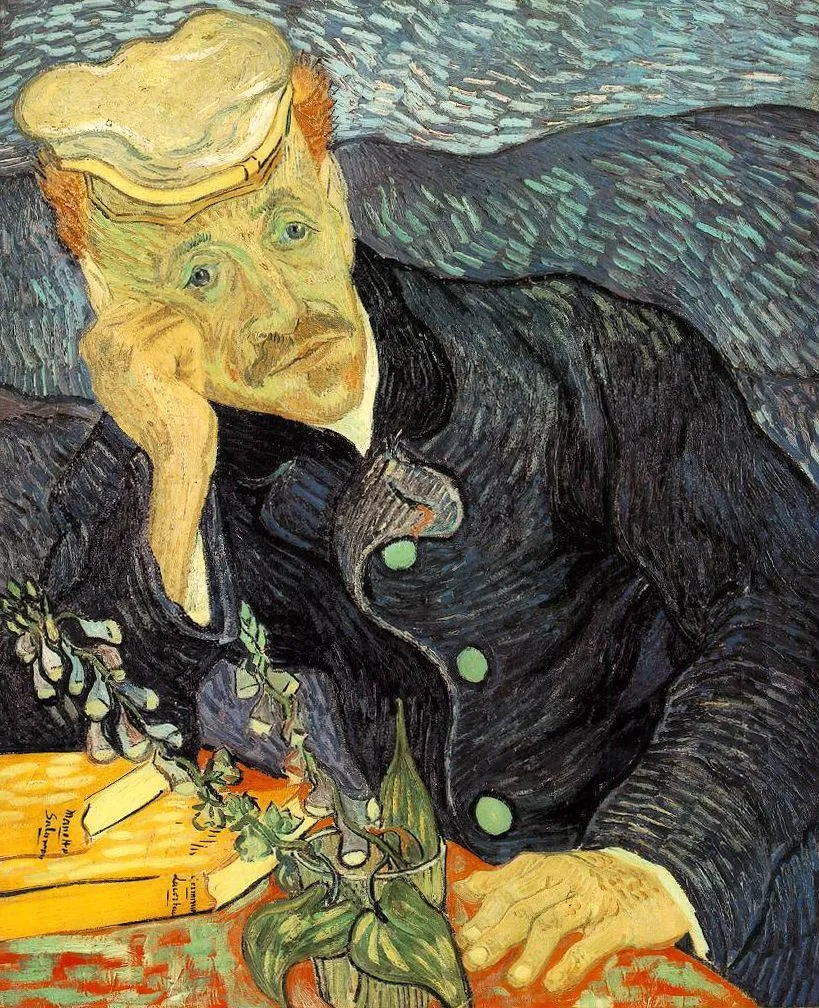
That work is Portrait of Dr. Gachet, painted in June 1890, the month before Van Gogh died.
The canvas depicts a man resting his head on his hand with a melancholic expression, alongside purple flowers resting on the table before him.
The sitter, Dr. Paul Gachet, was the physician who cared for Van Gogh in Auvers-sur-Oise during the final months of his life.
An amateur painter himself, he moved in close circles with many prominent artists.
This portrait garnered global attention in 1990 when a Japanese businessman bought it at auction for roughly 12.5 billion yen, making it the most expensive painting ever sold at the time.
The purple blossoms on the table are digitalis, commonly known as foxglove.
Belonging to the plantain family, it was used in the nineteenth century as a heart medication and was also prescribed to treat epilepsy.
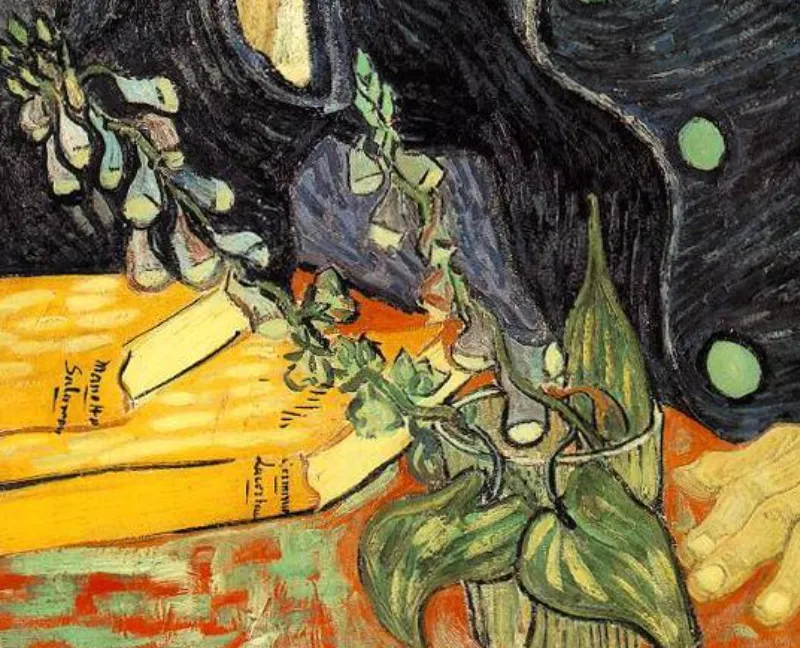
When ingested in excessive amounts, digitalis can cause xanthopsia—a side effect that imparts a yellow tint to one's vision.
Connecting the clues of the doctor, the medication, yellow vision, and the yellow paintings, Dr. T. C. Lee published a paper in the Journal of the American Medical Association in 1981.
His theory proposed that Dr. Gachet had prescribed digitalis to Van Gogh, and that this side effect made the world appear yellow to him.
Other hypotheses have pointed to poisoning from absinthe or from the lead contained in his paints.
The Answers Preserved in Timelines and Letters
The narrative of a suffering genius producing masterpieces is compelling and fits neatly with the tragic arc of his life.
This is likely why the theory remains widely believed to this day.
Yet, when we cross-reference the chronology of his works with the progression of his illness, an inescapable contradiction emerges.
The timeline assumed by these medical hypotheses simply does not align with the actual timing of his artistic output.
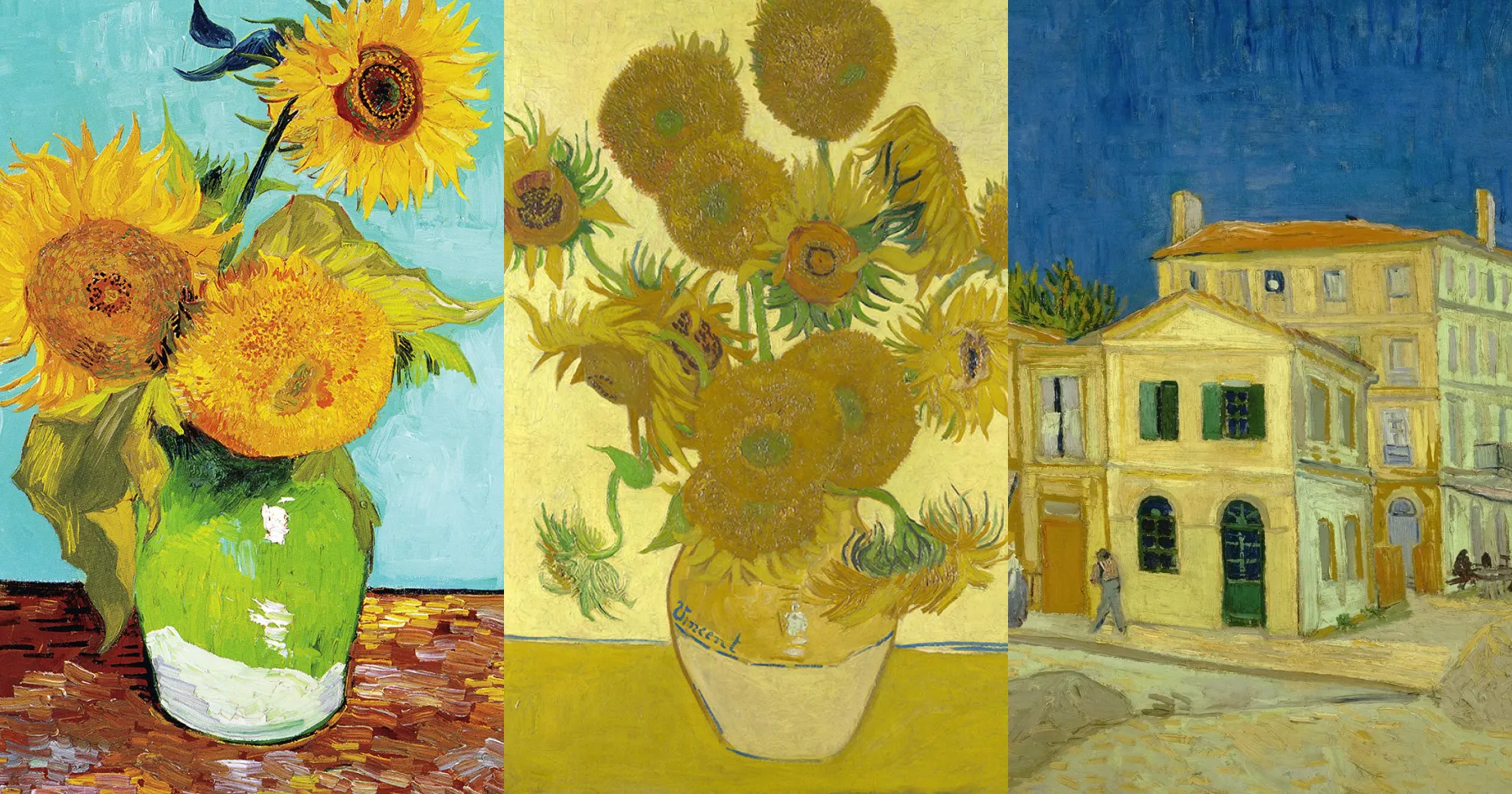
For instance, the first four Sunflowers paintings were created in Arles in August 1888.
Van Gogh, however, did not meet Dr. Gachet until May 1890, a full year and nine months later.
During the period when his yellow paintings were pouring forth, he had not even laid eyes on Dr. Gachet.
Examining the chronology reveals numerous other discrepancies with this hypothesis.
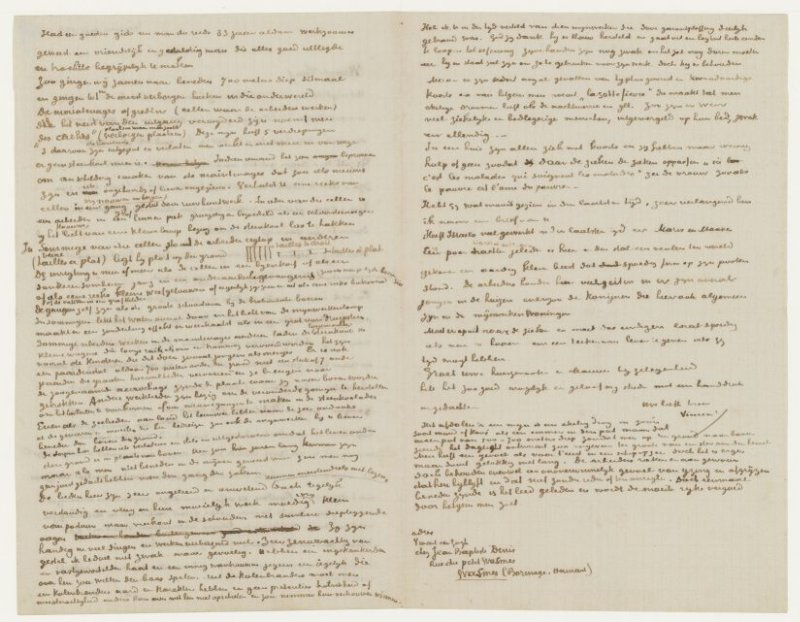
Furthermore, his more than eight hundred letters chronicle the summer he painted sunflowers while awaiting Gauguin, the project he termed a "symphony in blue and yellow," and his reflections on the color yellow shared with his sister.
Below, we trace the true origins of Van Gogh's yellow through historical timelines and his own correspondence.