
 日本語 (JA)
 English (EN)
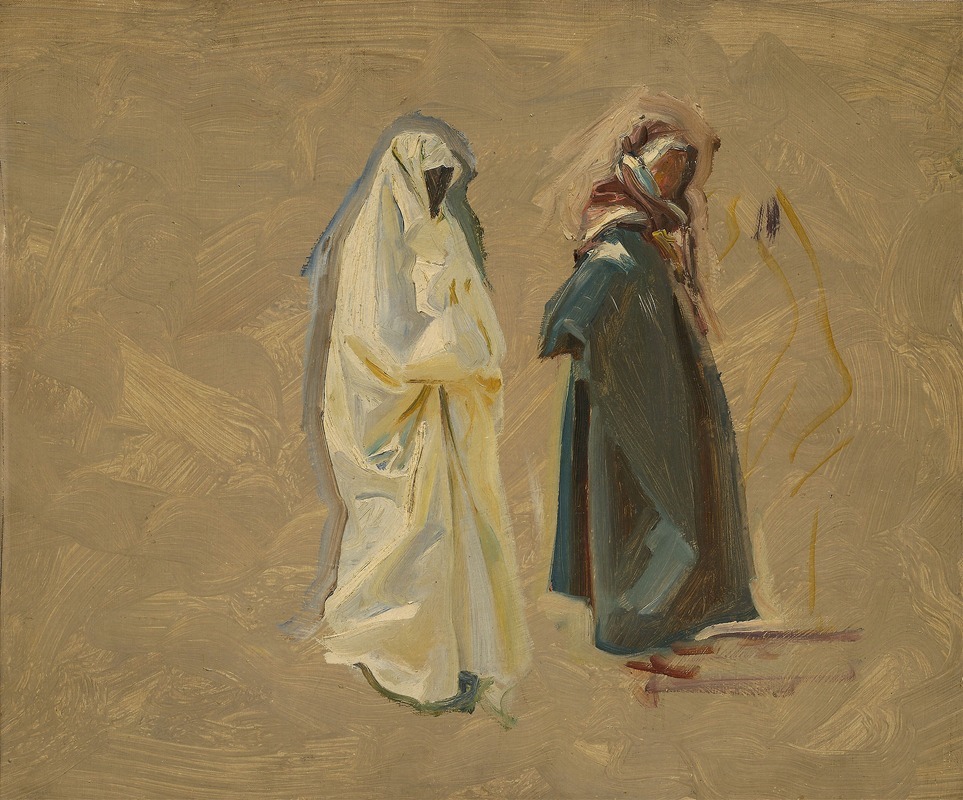
Study of Two Bedouins
1905
- Dimensions
- 46.7 × 39.1 cm
- Medium
- Oil on canvas
- Collection
- The Art Institute of Chicago
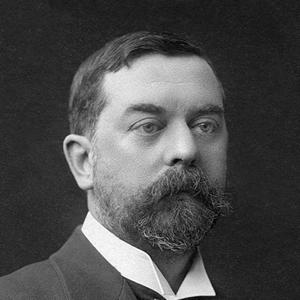
Born in Italy to American parents, he spent his early years in Paris before esta…
✦ Highlights (technique & color)
Under the harsh desert light and shadow, the heavy folds of the drapery are captured with sculptural precision. The palette is deliberately restrained, grounded in earthy tones of beige, brown, and ochre reminiscent of desert dust. By subduing bright color contrasts, Sargent achieves a documentary realism that powerfully conveys the quiet, austere dignity of the Bedouins.
✦ The setting of this painting
A Bedouin camp set in the harsh, arid landscape of the Middle East (such as Syria, Palestine, or modern-day Jordan). Two nomadic Arab men, dressed in traditional keffiyehs and coarse, full-length wool burnouses, are captured in intimate conversation against a backdrop evocative of the dry, tawny desert.
✦ Historical context
Between 1905 and 1906, Sargent was seeking a decisive break from commissioned society portraiture. Turning down new commissions, he embarked on an extensive sketching journey through the Middle East to prepare for his monumental mural cycle, Triumph of Religion, for the Boston Public Library. In search of authentic models for the Old Testament prophets and Hebrew people, he made detailed studies of the Bedouins living in these remote regions.
Against a background evoking a parched, tawny desert, two men wrapped in headdresses and woolen cloaks converse in quiet intimacy.
The artist was John Singer Sargent, painting around 1905 to 1906.
At the time, he stood at the absolute pinnacle of high-society portraiture in Britain and America. Yet he was actively searching for a way to break free from that world entirely. Steadfastly turning down new commissions, he threw himself into an ambitious research expedition to the Middle East.
He had a singular purpose: to paint the monumental mural Triumph of Religion for the Boston Public Library. Seeking to capture the true, lifelike presence of the Old Testament prophets, he journeyed to remote regions of the Middle East, sketching nomadic tribes in painstaking detail. This painting was an on-site study created to faithfully render the figures for his grand project.
The painting was acquired by Charles Deering—Sargent’s oldest and closest friend.
They first met in 1876, when Sargent was just twenty years old and Deering was a young naval officer. Later achieving great success as an industrialist, Deering spent a lifetime collecting his friend’s work. He gathered not only grand, official portraits, but also intimate, personal studies born when the artist escaped his societal obligations to pursue pure artistic exploration. This painting was obtained directly from Sargent himself.
About 111 more words
Sign up free and enter Your Museum
Read the stories behind great paintings and music for free, in Your Museum
Your Note
Write down what this painting made you feel in your art notebook.
Please sign up to write notes.
Sign up for freeRecommended Artworks
Sources & references
More art movements
Pre-Baroque
1 artworks
Victorian era
10 artworks
Impressionism
48 artworks
Late Pre-Raphaelite
10 artworks
Baroque
2 artworks
American Impressionism
5 artworks
Realism
4 artworks
Pre-Raphaelite
3 artworks
Barbizon School
5 artworks
Academic art
5 artworks
Luminism
3 artworks
Rococo
2 artworks
Symbolism
22 artworks
Neo-Impressionism
3 artworks
Ukiyo-e
1 artworks
Japonism
4 artworks
Edo period
1 artworks
Fauvism
1 artworks
Naturalism
9 artworks
Russian Realism
1 artworks
Post-Impressionism
13 artworks
Genre painting
9 artworks
Neoclassicism
3 artworks
ウィーン分離派
7 artworks
自然主義
1 artworks
ナショナル・ロマンティシズム
1 artworks
未来派
1 artworks
More artists
If you find an error in this content, please let us know here
This site is protected by reCAPTCHA, and the Google Privacy Policy and Terms of Service apply.