A leading painter of German Early Romanticism who dismantled traditional landscape composition, confronting viewers with the abyss of nature through figures seen from behind.
LifeLife and works
Throughout his career, Caspar David Friedrich grappled with the question of how to evoke the invisible presence of the divine, the human soul, and the realms of death and eternity through the visible natural world. Rather than merely transcribing what lay before his eyes, he placed great value on reconstructing visual experience within his own inner self. In his notebooks, he wrote that a painter should depict not only what stands before him, but also what he sees within himself.
Born in 1774 in the Baltic port town of Greifswald in Swedish Pomerania, he faced the loss of his mother and brother during childhood. After studying the chiaroscuro of seventeenth-century Dutch landscape painting at the Royal Danish Academy of Fine Arts in Copenhagen, he relocated to Dresden, the capital of the Kingdom of Saxony, at the age of twenty-four. His early work centered on sepia drawings and watercolors based on sketches along the Baltic coast, characterized by topographically precise linework and accurate renderings of light.
A major turning point in his career came in his early thirties with his serious move into oil painting. Painted between 1807 and 1808, The Cross in the Mountains revealed the divine presence purely through a natural landscape—an evergreen tree atop a mountain peak caught in the evening glow, bearing a crucifix—without depicting biblical figures or historical narratives. When unveiled, the work sparked fierce controversy, condemned by traditional critics as hubris for allowing landscape painting to creep into a church and crawl onto an altar. Yet this very dispute brought widespread attention to his endeavor to elevate landscape painting to a sacred realm.
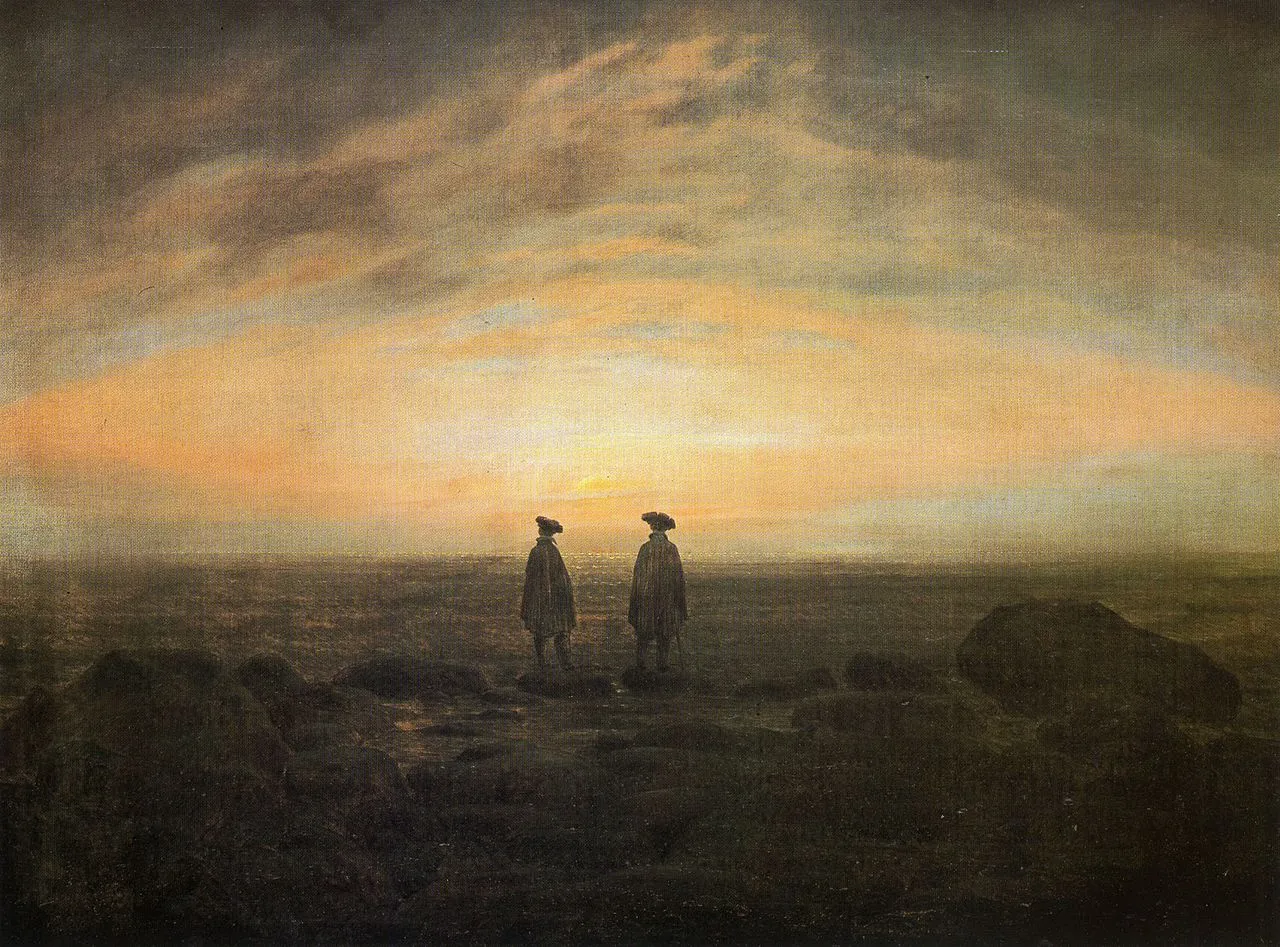
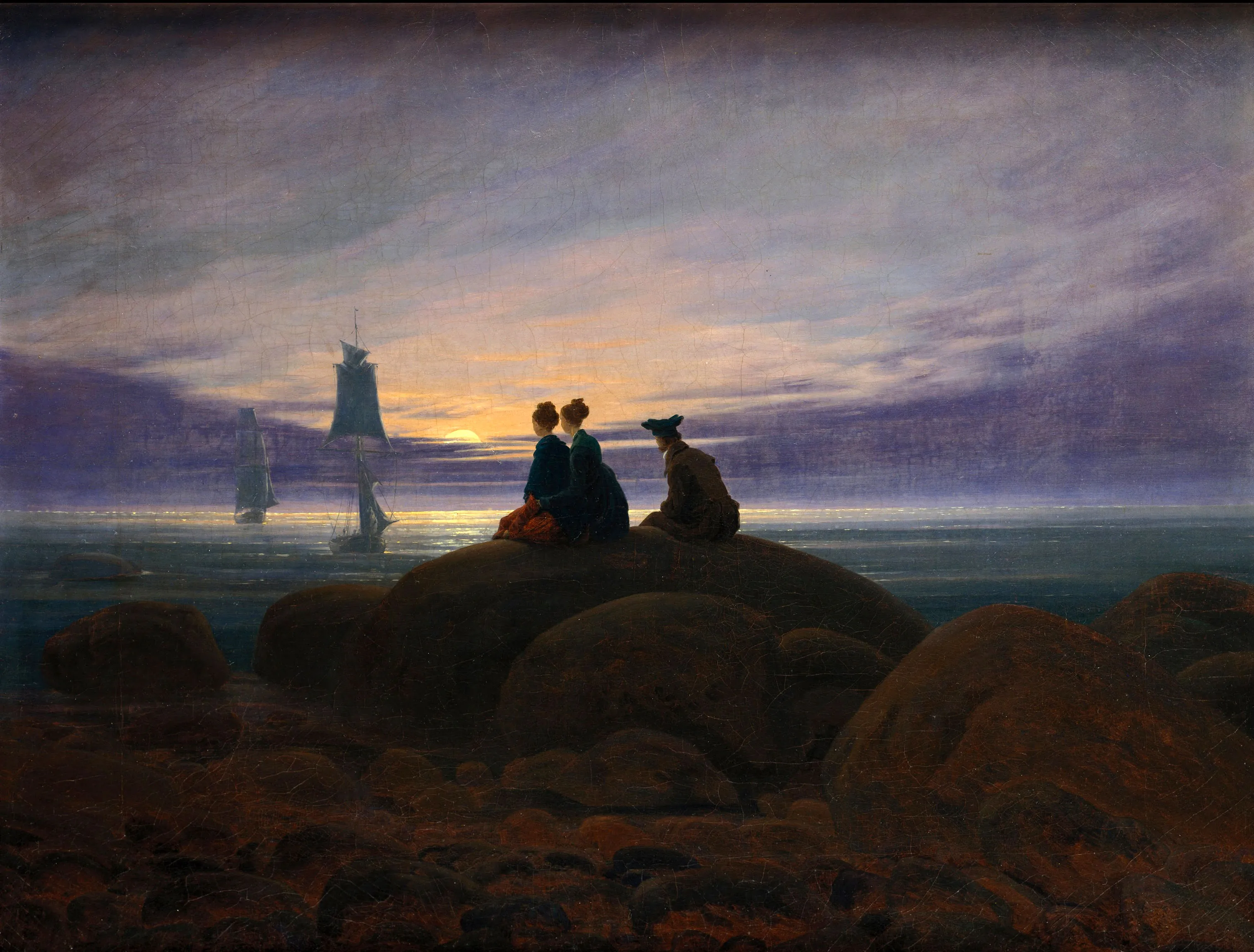
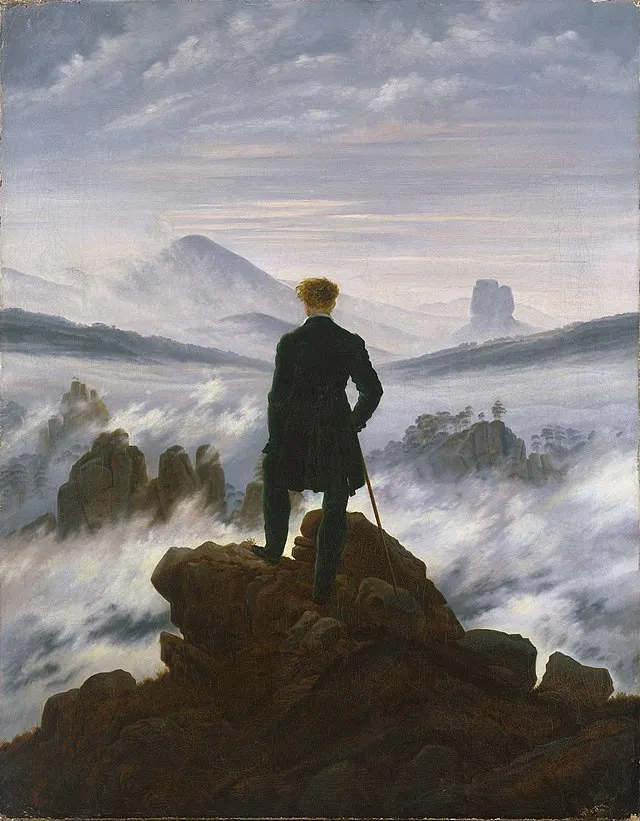
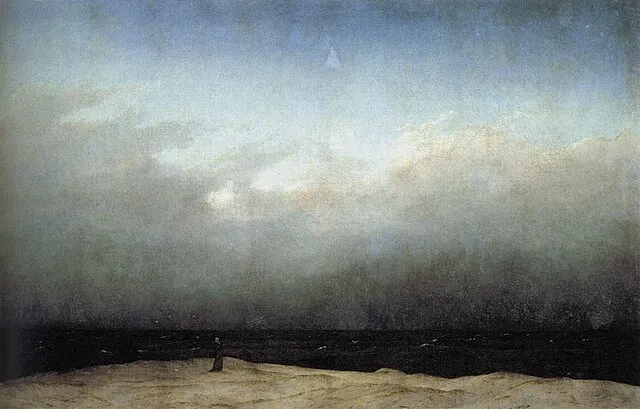
Thereafter, his spatial expression grew even more radical. In The Monk by the Sea, exhibited at the 1810 Berlin Academy, he deliberately sheared away the customary foreground footing that had guided the viewer's gaze into the distance. Sky and sea occupy the vast majority of the canvas, punctuated only by a lone, minuscule monk. Beholding this painting, the dramatist Heinrich von Kleist remarked that it felt as if one's own eyelids had been cut away. Around 1818, in Wanderer above the Sea of Fog, Friedrich depicted the back of a man standing isolated upon a precipitous crag. By allowing the painted figure to proxy the viewer's gaze, he fully realized a composition in which the inner soul of the figure—rather than the external nature depicted—became the true focal point of the painting.
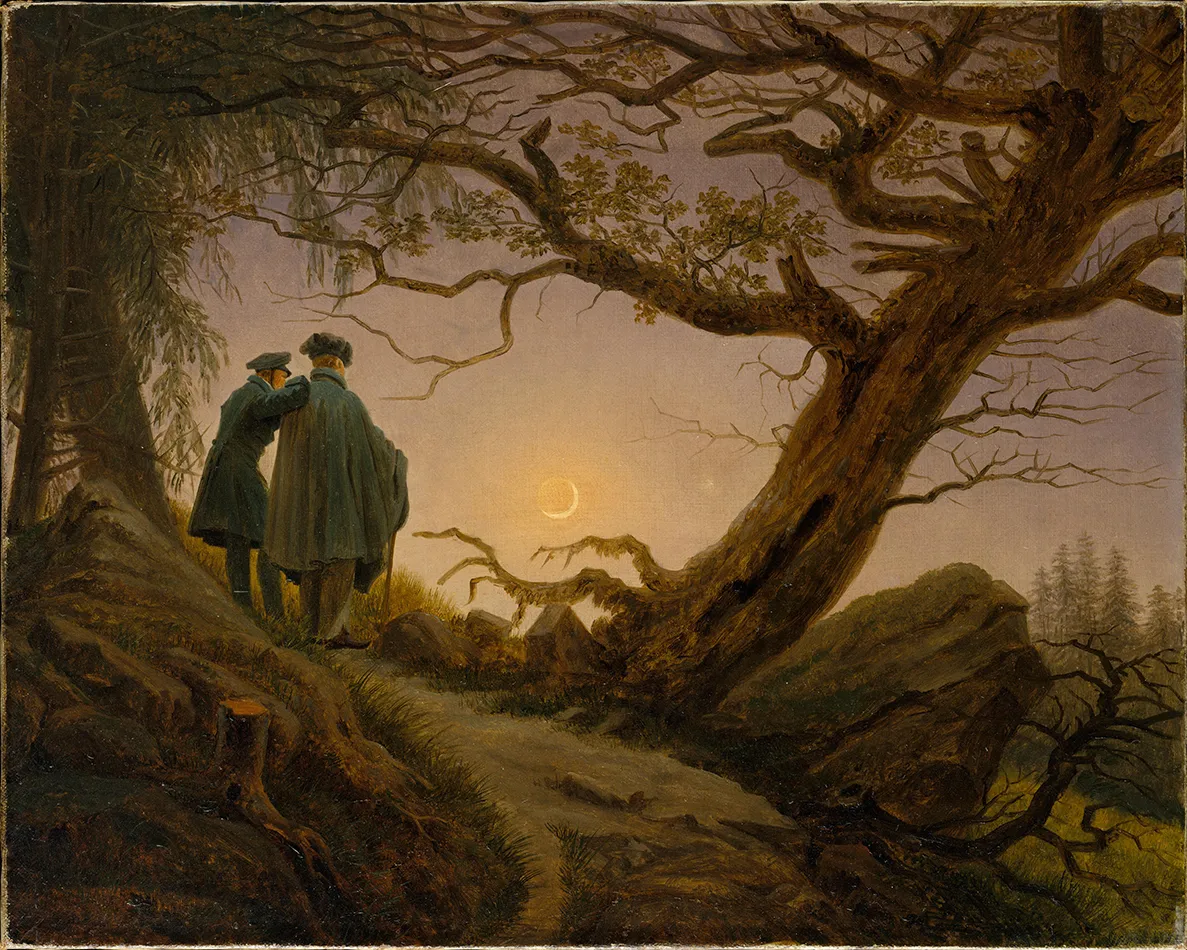
Friedrich gained financial stability when the King of Prussia purchased his works in 1810, followed by numerous acquisitions by members of the Russian imperial family in the early 1820s. In 1818, he married Caroline Bommer, and the work depicting the white cliffs of Rügen, visited on their honeymoon, displays a warm composition with figures leaning toward one another.
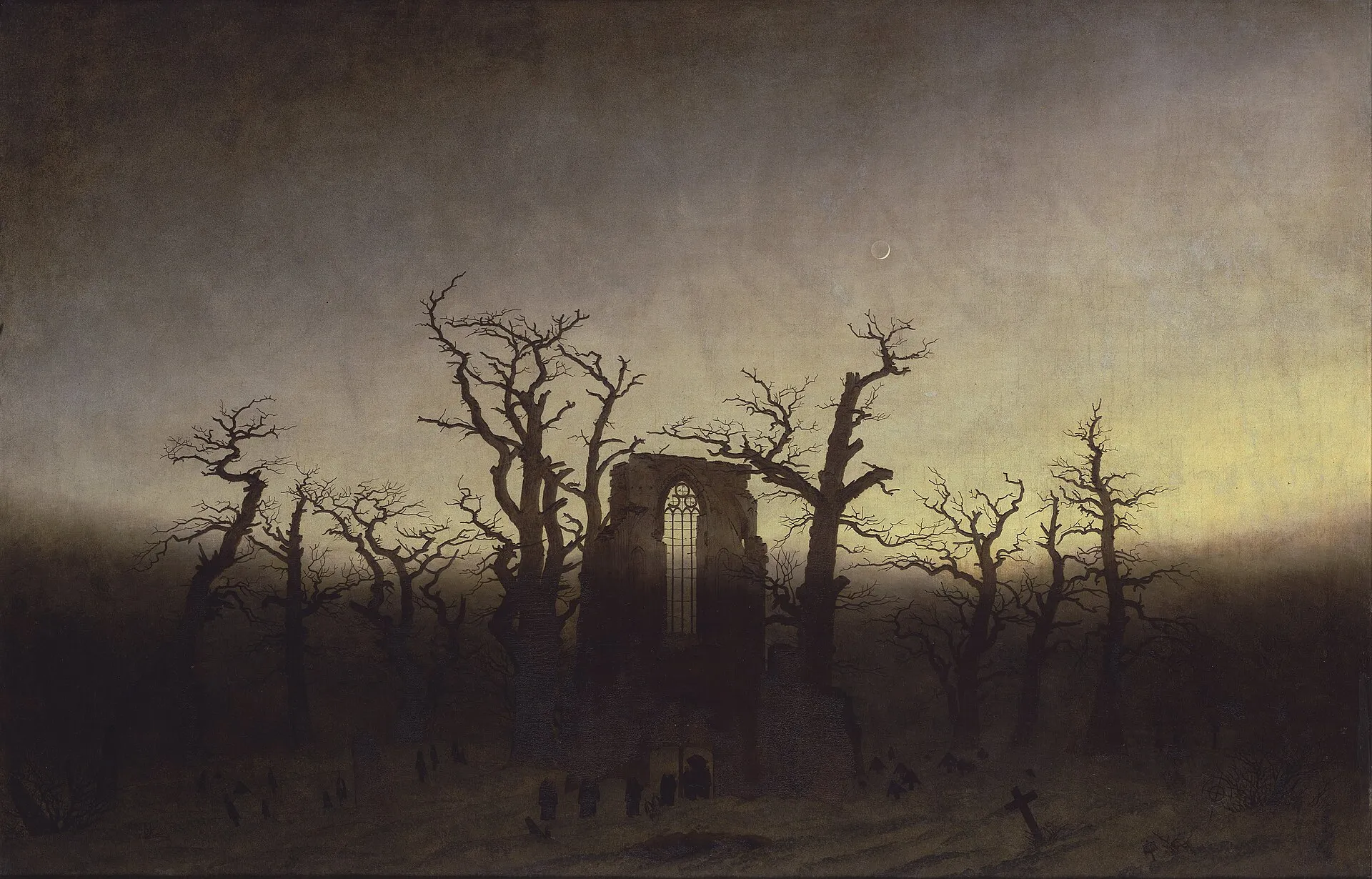
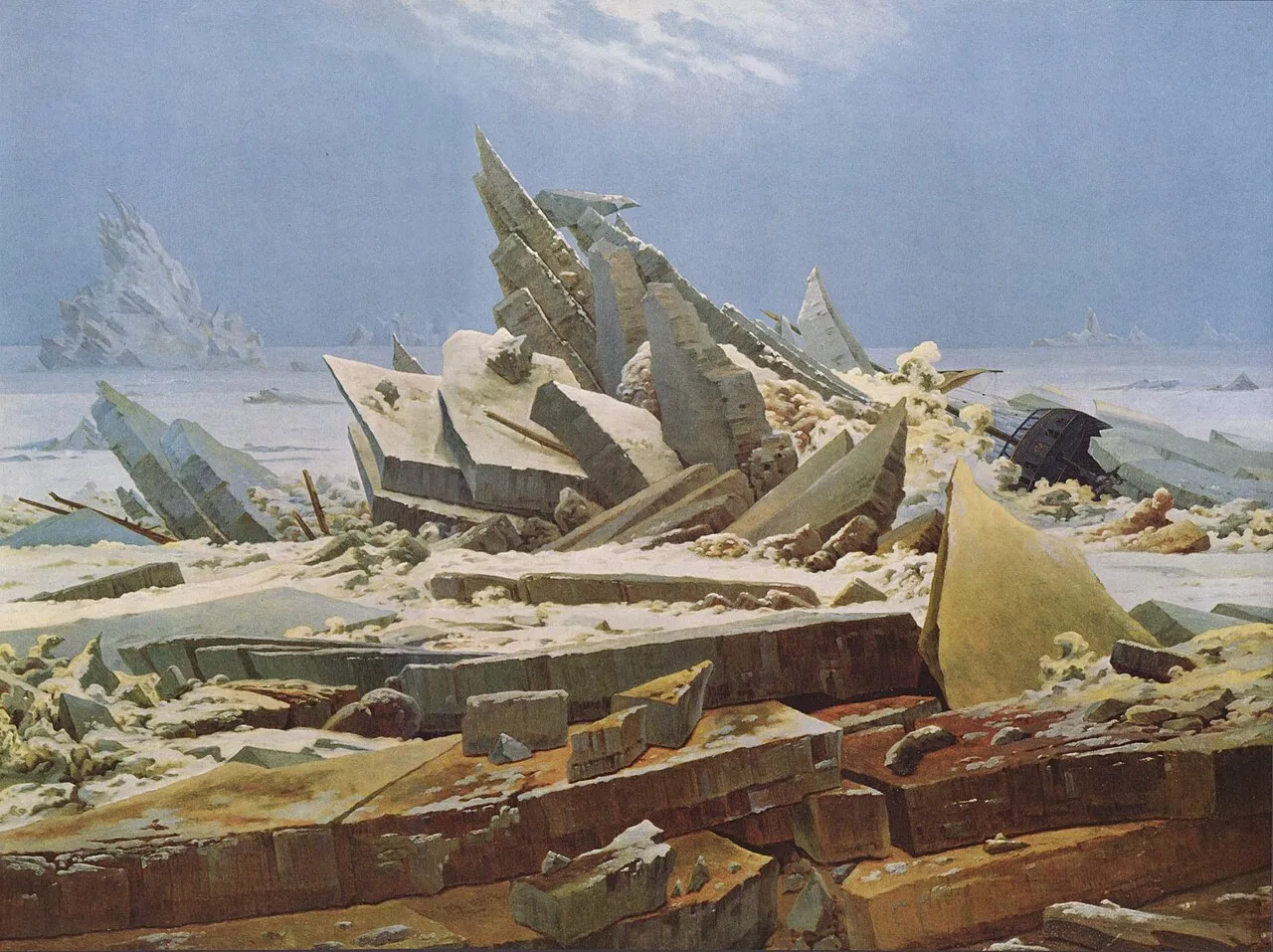
In the late 1820s, however, Friedrich's fortunes took a downturn. As market tastes shifted toward narrative and realistic landscapes, his symbolic works came to be viewed as outdated, and sales plummeted. In 1835, he suffered a stroke that left him partially paralyzed, making it impossible to continue working in oils. Motifs alluding to death—withered trees, ruins, and sinking ships—dominated his final years, and physical limitations forced him to return to small watercolors and sepia drawings.
Plunged into financial hardship, he relied on help from his fellow tenant, the Norwegian painter Johan Christian Dahl, who helped sell his works, and on an aid grant from the Russian tsar. In May 1840, Friedrich died in Dresden at the age of sixty-five from complications following his stroke. The serene canvases he created—building upon meticulous pencil and pen underdrawings with countless thin glazes of oil paint—are preserved today in institutions such as the Alte Nationalgalerie in Berlin. His visual expression left an indelible mark on twentieth-century American art, echoing in the meditative chapel created by Mark Rothko and in the monumental color fields of Barnett Newman's abstract paintings.