
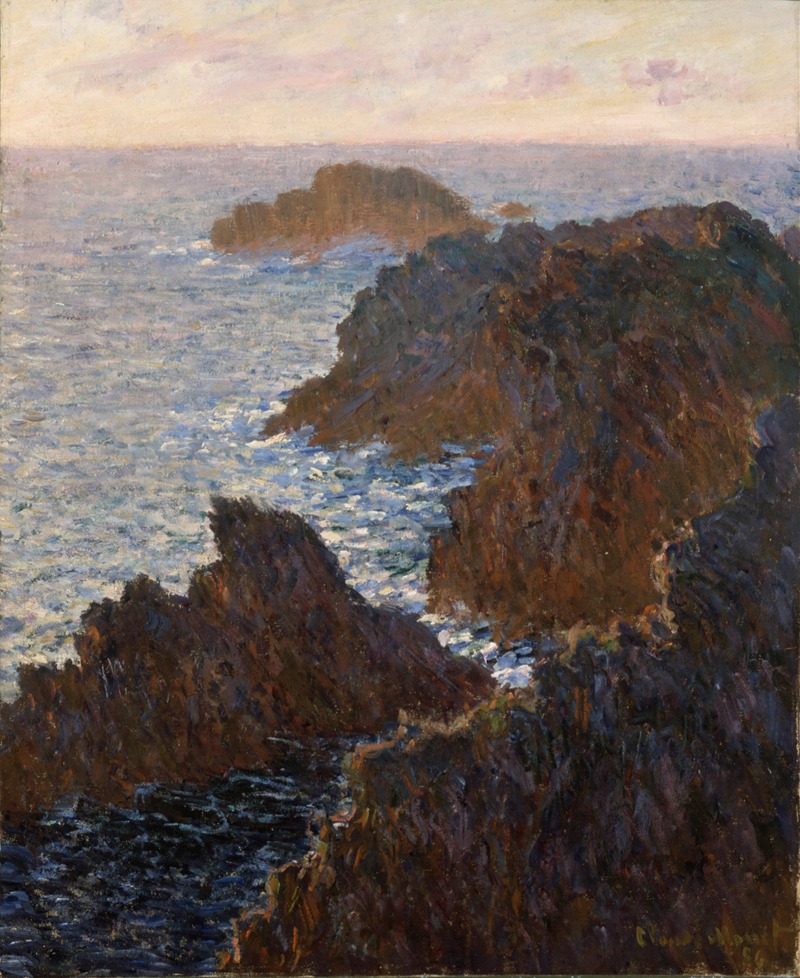
Rocks at Belle-Isle, Port-Domois
1886
- Dimensions
- 81.3 × 64.8 cm
- Medium
- Oil on canvas
- Collection
- Cincinnati Art Museum
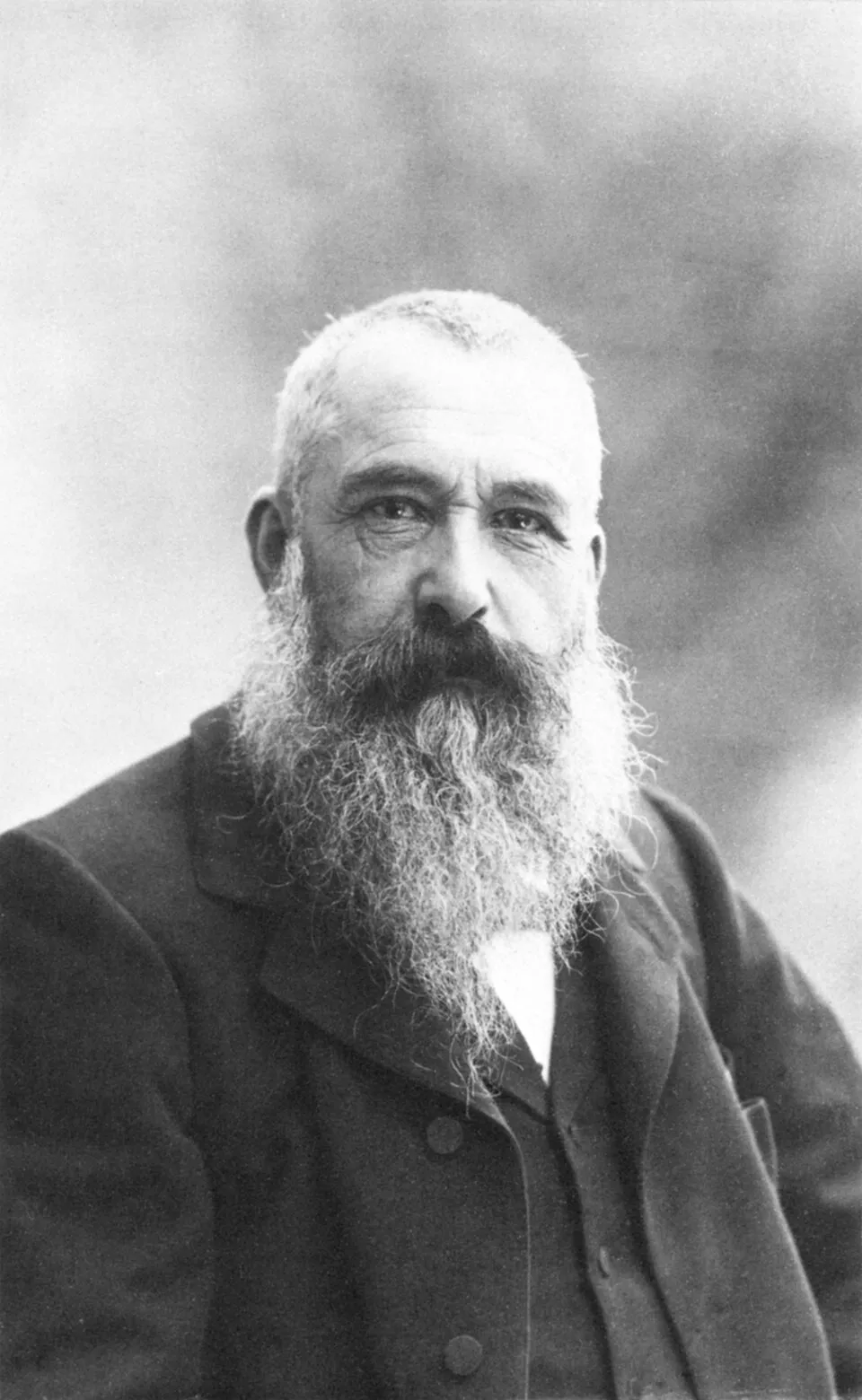
Celebrated as a founding figure of Impressionism, he is one of France’s most ren…
✦ Highlights (technique & color)
The composition is characterized by a deep, subdued color palette of dark browns, deep greens, and violets. Recent conservation removed a later coating of glossy, discolored yellow varnish, restoring the original cool blues and the humid, matte texture reminiscent of sea mist. The turbulent waves are rendered with short, broken brushstrokes.
✦ The setting of this painting
Set on Belle-Île, the largest French island off the southern coast of Brittany, this work depicts the Port-Domois coast on its southwestern shore. Long exposed to the rough waves of the Atlantic, the rugged terrain is defined by sheer cliffs and a succession of striking rock formations. At the time, it was an isolated, desolate wilderness untouched by tourism.
✦ Historical context
Autumn 1886. While French society was undergoing rapid modernization, Monet temporarily broke away from serene landscape depictions to embark on a challenging journey that confronted the harshness of nature. This reflects a period when he yearned to capture wild, barren landscapes in contrast to modern progress.
A tempestuous sea with crashing waves and towering, sharply chiseled cliffs.
A dark mass of rock dominating the right side of the canvas stands in fierce confrontation with the ocean.
This is a powerful landscape by the Impressionist master Claude Monet.
For many years, this painting was known for having a somewhat yellowish cast.
With its glossy surface, a warm light seemed to illuminate the crags—
or so it was long perceived.
In reality, that golden glow was not Monet's doing at all.
It was the result of an inappropriate synthetic resin varnish applied in the late 20th century.
When the museum acquired the work in 1985, it was still coated in this layer.
Only recently, when the varnish was painstakingly removed during restoration,
did Monet's true vision finally come to light.
In the autumn of 1886,
Monet visited an island off the southern coast of Brittany:
Belle-Île, the largest island in the region.
He stayed along the Port-Domois coast in the southwest,
a harsh and unforgiving place known as the "Valley of Hell."
At the time, Belle-Île was completely untouched by tourism—
an isolated, desolate wilderness rarely frequented by artists.
Monet initially intended to stay for just two weeks,
yet he ultimately remained there for more than two months.
During this period, Monet feared that his work might lapse into mannerism.
It was precisely why he sought to capture the overwhelming dynamism of nature.
He enlisted the help of a local fisherman, Hippolyte Guillaume,
to anchor his easel against the violent winds and haul his heavy canvases.
Monet wrote to his friend, the painter Gustave Caillebotte:
"I am working like mad."
"It is a truly magnificent, desolate, and wild region,"
"a tremendous heap of rocks and sea with incredible colors."
He also wrote to Alice Hoschedé, who would later become his wife:
"Faced with this barren, eerie, terrifying, yet intensely beautiful nature,"
"I am struggling to render the rocks as dark, ominous, and tragic as they truly are."
About 127 more words
Unlock this story's ending, and every article on MusicStory
- 42
Stories1–2 new every week
An archive of paintings paired with great music, made for a weekend night and a cup of coffee
- 282
Paintings with commentarygrowing daily
From simply looking to truly reading — the brushwork and the obsession of the masters
- 10
Music Librarygrowing daily
Know it first, and what reaches your ear changes — background music becomes art you keep for life
My Notes, unlimited
Every reading adds to a digital art notebook that is yours alone
Already have an account? Log in
Your Note
Write down what this painting made you feel in your art notebook.
Please sign up to write notes.
Sign up for freeRecommended Artworks
_1893.webp)
.webp)
Sources & references
More artists



If you find an error in this content, please let us know here
This site is protected by reCAPTCHA, and the Google Privacy Policy and Terms of Service apply.