
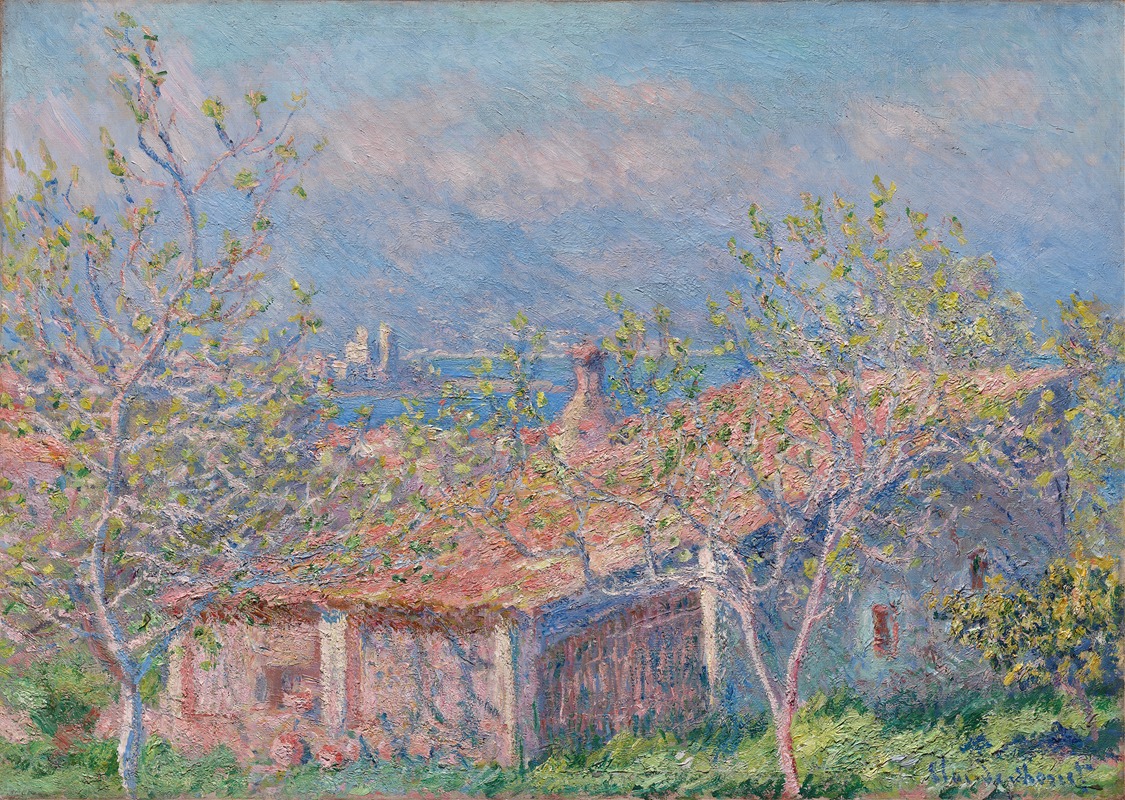
Gardener’s House at Antibes
1888
- Dimensions
- 66.3 × 93 cm
- Medium
- Oil on linen canvas
- Collection
- The Cleveland Museum of Art
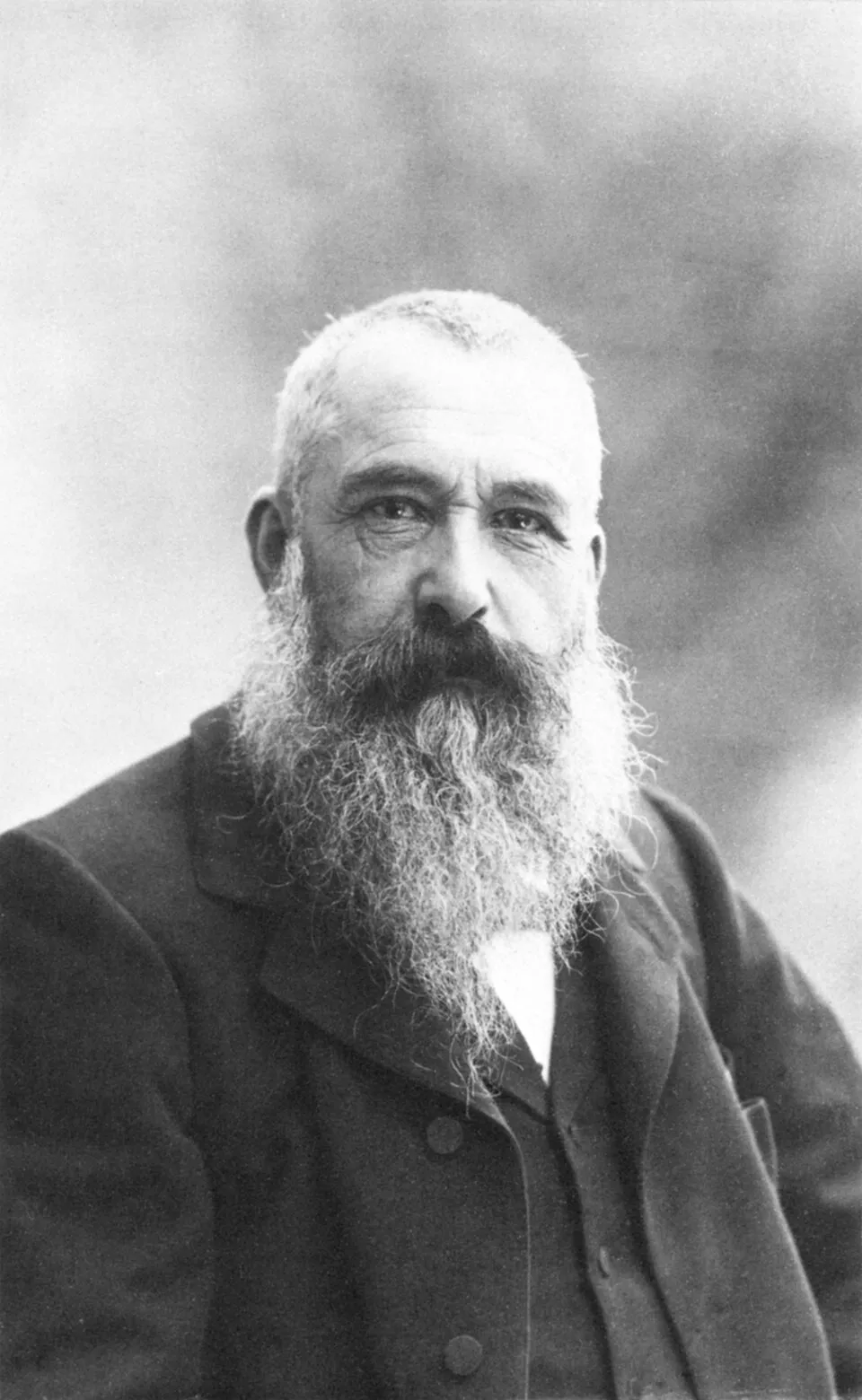
Celebrated as a founding figure of Impressionism, he is one of France’s most ren…
✦ Highlights (technique & color)
Under the brilliant light of southern France, Monet's palette shifted toward brighter, clearer tones, enlivening the scene with warm pinks, luminous corals, crisp greens, and radiant blues. The light-reflecting white walls and sun-baked ground are rendered with thick layers of impasto that obscure the weave of the canvas, conveying the intense Mediterranean heat. In contrast, delicate dabs of pale green are lightly applied to capture the foliage of the trees.
✦ The setting of this painting
Set in Antibes, a town along the Mediterranean coast of southern France, the composition features a modest gardener's house at its center. Behind it stretch the deep azure waters of the Mediterranean and the distant, haze-shrouded Alps. In the foreground, slender and graceful trees typical of Antibes frame the house from both sides, accentuating the radiant sunlight that lies just beyond the pleasantly shaded path.
✦ Historical context
From January to May 1888, Monet stayed in Antibes in the south of France. In stark contrast to the often overcast skies of northern France, the intense Mediterranean sunlight and dazzling atmosphere profoundly stimulated his sense of color. Despite the challenging conditions—where fierce gusts like the mistral frequently threatened to blow away his easel—he worked tirelessly, completing around forty canvases.
A rustic gardener's house nestled between slender, supple trees.
Behind it stretch the deep blue Mediterranean Sea and the Alps, shimmering white in the distance.
In the winter of 1888,
Claude Monet arrived in Antibes, a coastal town in the South of France.
For an artist accustomed to the overcast skies of northern France, it was a completely different world.
The intense Mediterranean sunlight.
The dazzling atmosphere.
Its overwhelming brilliance struck Monet's vision with profound force.
Yet the picturesque South of France was far from merely serene.
At times, fierce gusts known as the mistral raged across the landscape.
The winds were so violent they threatened to blow away his entire easel.
Finding it difficult even to stand, Monet had to battle against the fury of nature.
He could have easily fled.
Yet he never faltered.
Over the course of his five-month stay, he completed around forty paintings,
working through his canvases at an extraordinarily prolific pace.
What was it that drove him so passionately?
About 150 more words
Unlock this story's ending, and every article on MusicStory
- 42
Stories1–2 new every week
An archive of paintings paired with great music, made for a weekend night and a cup of coffee
- 282
Paintings with commentarygrowing daily
From simply looking to truly reading — the brushwork and the obsession of the masters
- 10
Music Librarygrowing daily
Know it first, and what reaches your ear changes — background music becomes art you keep for life
My Notes, unlimited
Every reading adds to a digital art notebook that is yours alone
Already have an account? Log in
Your Note
Write down what this painting made you feel in your art notebook.
Please sign up to write notes.
Sign up for freeRecommended Artworks
_Claude_Monet_-_Muse%CC%81e_des_Beaux-Arts_de_Lyon_(W821)+(1).webp)
Sources & references
More artists




If you find an error in this content, please let us know here
This site is protected by reCAPTCHA, and the Google Privacy Policy and Terms of Service apply.