
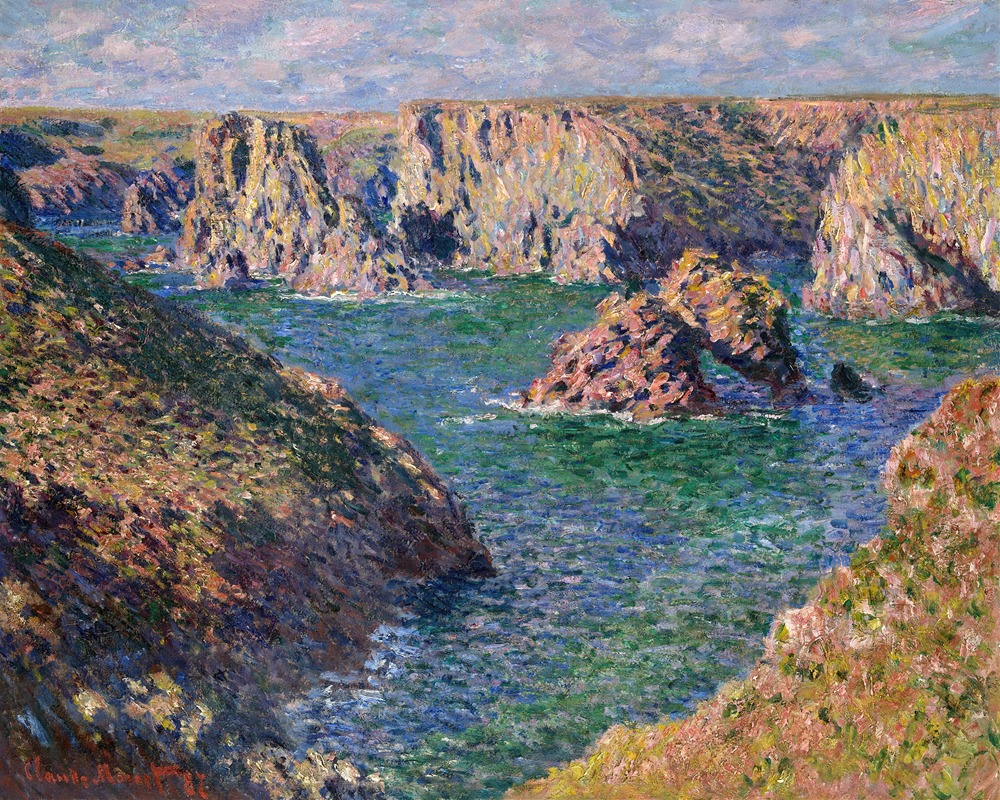
Port-Domois, Belle-Isle
1887
- Dimensions
- 64.8 × 81.3 cm
- Medium
- Oil on canvas
- Collection
- Yale University Art Gallery
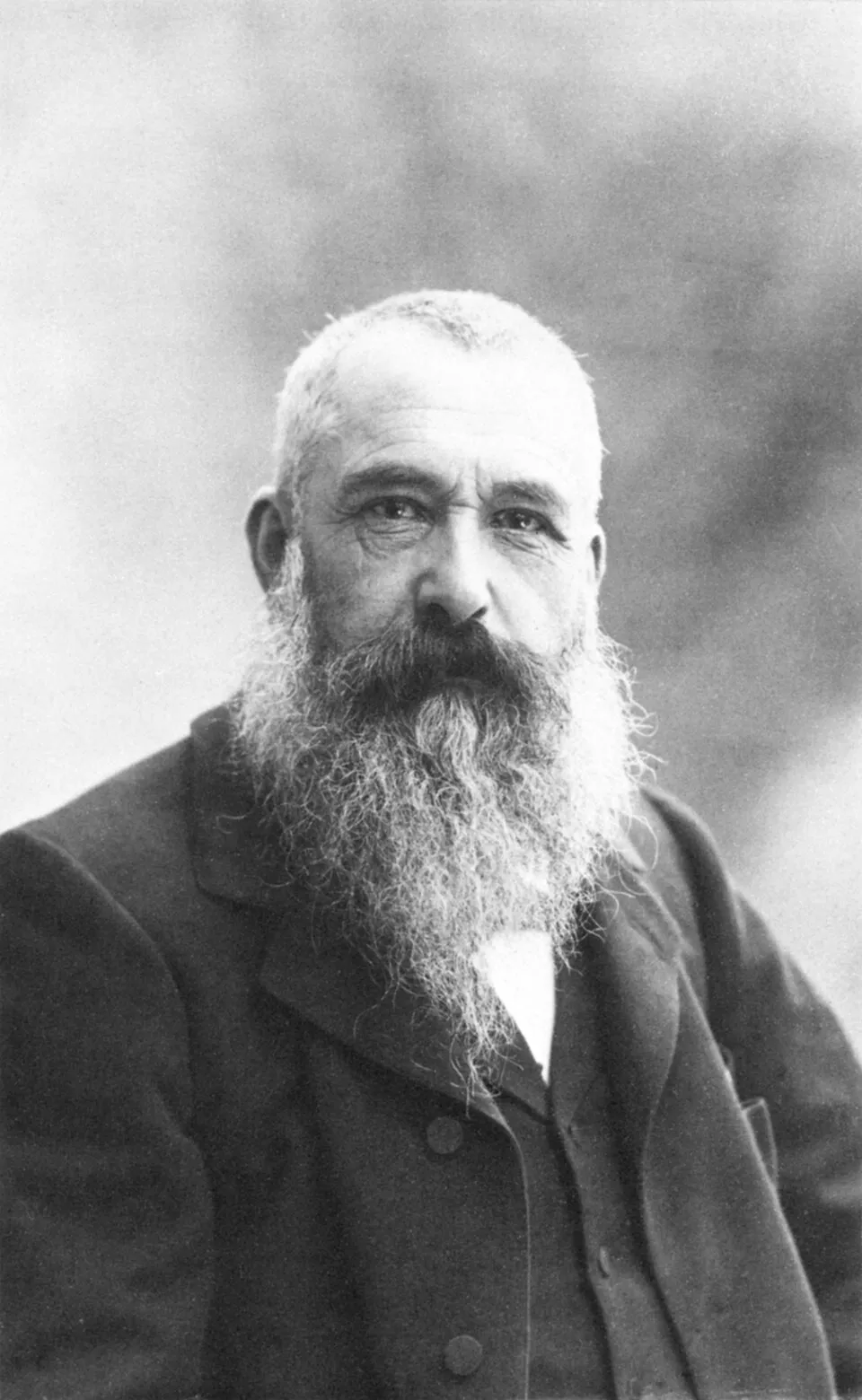
Celebrated as a founding figure of Impressionism, he is one of France’s most ren…
✦ Highlights (technique & color)
The rock surfaces are built up with thick strokes of orange, amber, and green, conveying a dense, tactile materiality. In contrast, the sea is rendered in short brushstrokes shifting from deep blue to white and emerald green, capturing the dynamic motion of the water. The elevated vantage point, minimizing the sky, heightens the dramatic confrontation between rock and sea.
✦ The setting of this painting
Port-Domois is situated in the southwestern part of Belle-Île-en-Mer, the largest Breton island off the southern coast of Brittany. Long battered by the rough waters of the Atlantic, this rugged terrain is marked by jagged, sawtooth cliffs and dramatic rock formations. Untouched by tourism at the time, it remained an isolated, bleak, and untamed wilderness.
✦ Historical context
In the mid-1880s, French society was undergoing rapid modernization. Meanwhile, Monet sought a temporary departure from the gentle landscapes of places like Giverny. Striving to develop new ways of capturing light and atmosphere, he traveled across France in search of austere landscapes that stood in stark contrast to modern life.
Below stretches a tumultuous sea of blue and green.
White waves crash relentlessly against the sheer, jagged rocks.
In the autumn of 1886,
Claude Monet was staying on an island off the coast of Brittany:
Belle-Île-en-Mer.
Specifically, at the coast of Port-Domois on its southwestern edge.
At the time, French society was in the midst of rapid modernization.
Monet himself had been painting the tranquil scenery of Giverny and the Seine.
Yet, he feared his art was falling into a rut.
In search of a new form of expression,
he chose an isolated, desolate wilderness untouched by tourists.
Endlessly battered by the rough Atlantic waters,
this coast forms a jagged, saw-toothed line of sheer cliffs and striking rock formations.
His stay extended into the winter—
a demanding journey confronting the severity of nature.
He reported to his art dealer, Paul Durand-Ruel,
that he was working on several canvases of the same motif simultaneously.
This was no warm Mediterranean scene;
he was striving to capture the dark, solemn, and tragic essence of the northern sea.
About 145 more words
Read stories of masterpieces for free
Your Note
Write down what this painting made you feel in your art notebook.
Please sign up to write notes.
Sign up for freeRecommended Artworks
_Claude_Monet_-_Muse%CC%81e_des_Beaux-Arts_de_Lyon_(W821)+(1).webp)
Sources & references
More artists


If you find an error in this content, please let us know here
This site is protected by reCAPTCHA, and the Google Privacy Policy and Terms of Service apply.