
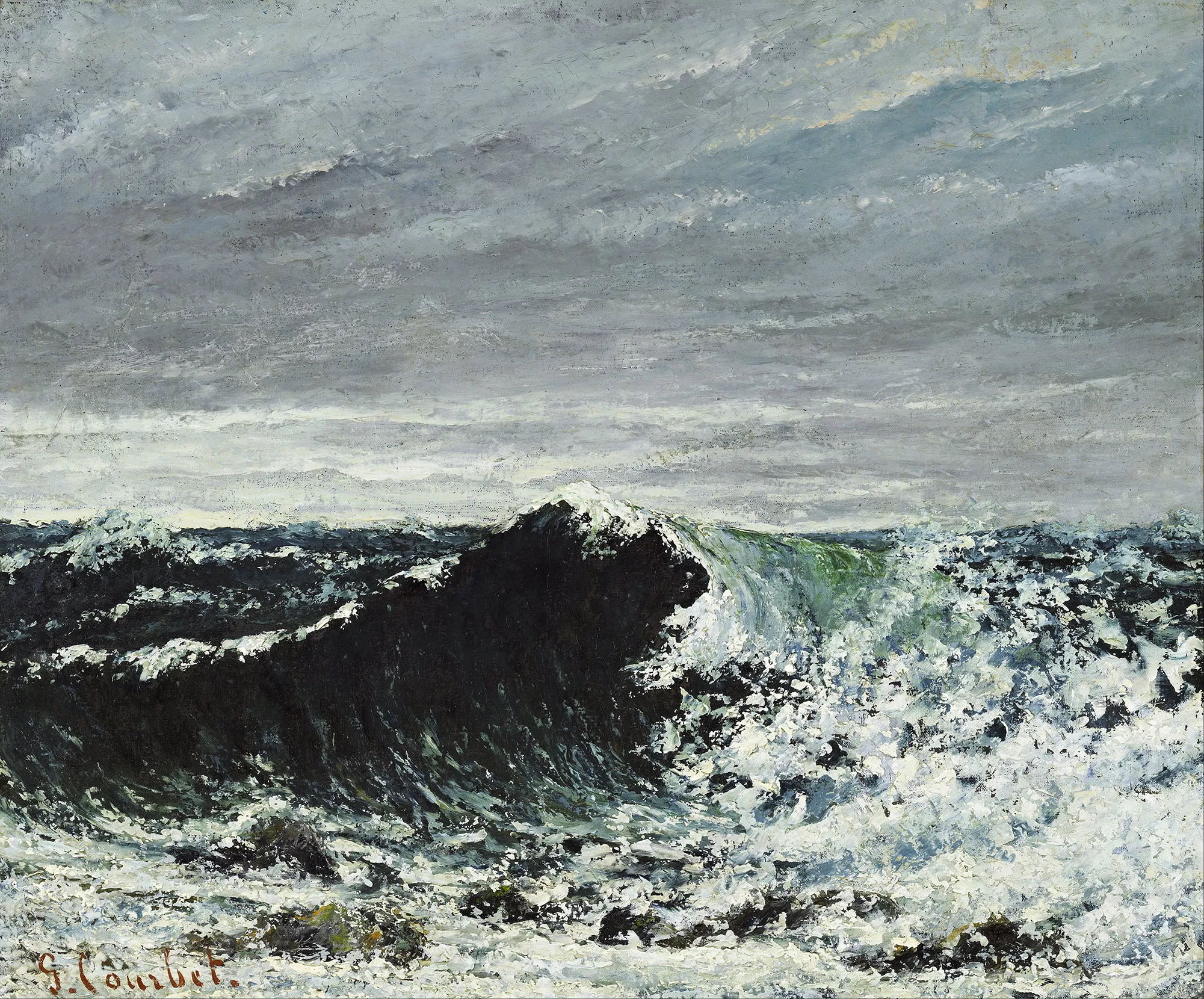
La Vague (The Wave)
1869
19世紀フランスを代表する写実主義(レアリスム)の画家。 当時の保守的な美術界や伝統に真っ向から反発し、1855年のパリ万国博覧会では審査に不満を持ち、独自に「…
A dark bluish-green sea beneath a heavy, overcast stormy sky.
Between them, a colossal wave, seemingly about to crash down on us, breaks into white spray.
The setting is Étretat, a coastal town in Normandy, northwestern France. For the painter Courbet, who grew up in a mountainous inland village, the sea had long been an unknown world, both terrifying and captivating.
About 163 more words
Read stories of masterpieces for free
Stories featuring this painting
Your Note
Write down what this painting made you feel in your art notebook.
Please sign up to write notes.
Sign up for freeRecommended Artworks
.webp)
_by_Ilya_Repin_-_%D0%9D%D0%B5%D0%B0%D0%BF%D0%BE%D0%BB%D0%B8%D1%82%D0%B0%D0%BD%D0%BA%D0%B0.webp)
More artists
If you find an error in this content, please let us know here
This site is protected by reCAPTCHA, and the Google Privacy Policy and Terms of Service apply.