
View over the Sea
1882
- Dimensions
- 63.5 x 80.3 cm
- Medium
- Oil on canvas
- Collection
- Nationalmuseum, Stockholm
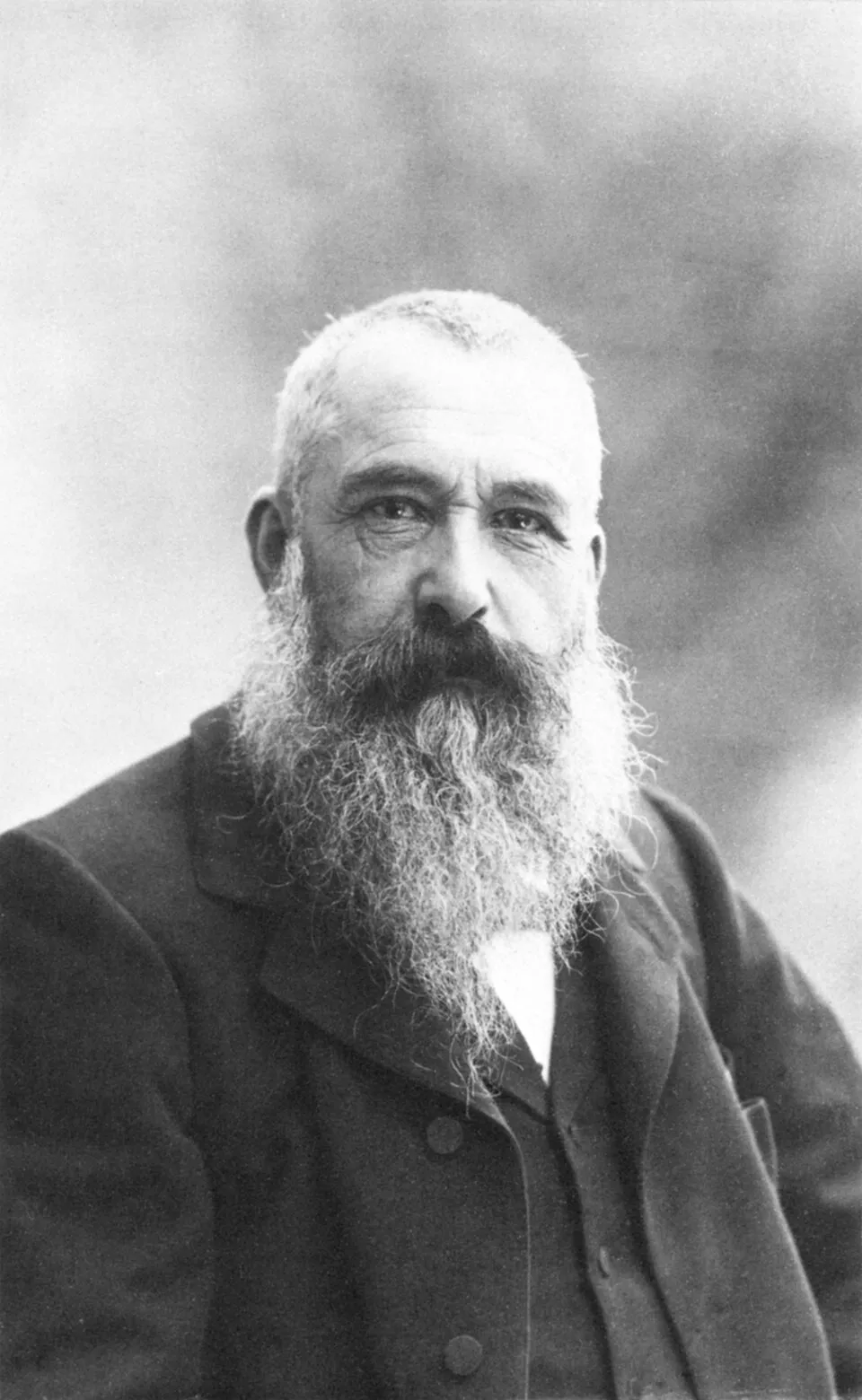
Celebrated as a founding figure of Impressionism, he is one of France’s most ren…
✦ Highlights (technique & color)
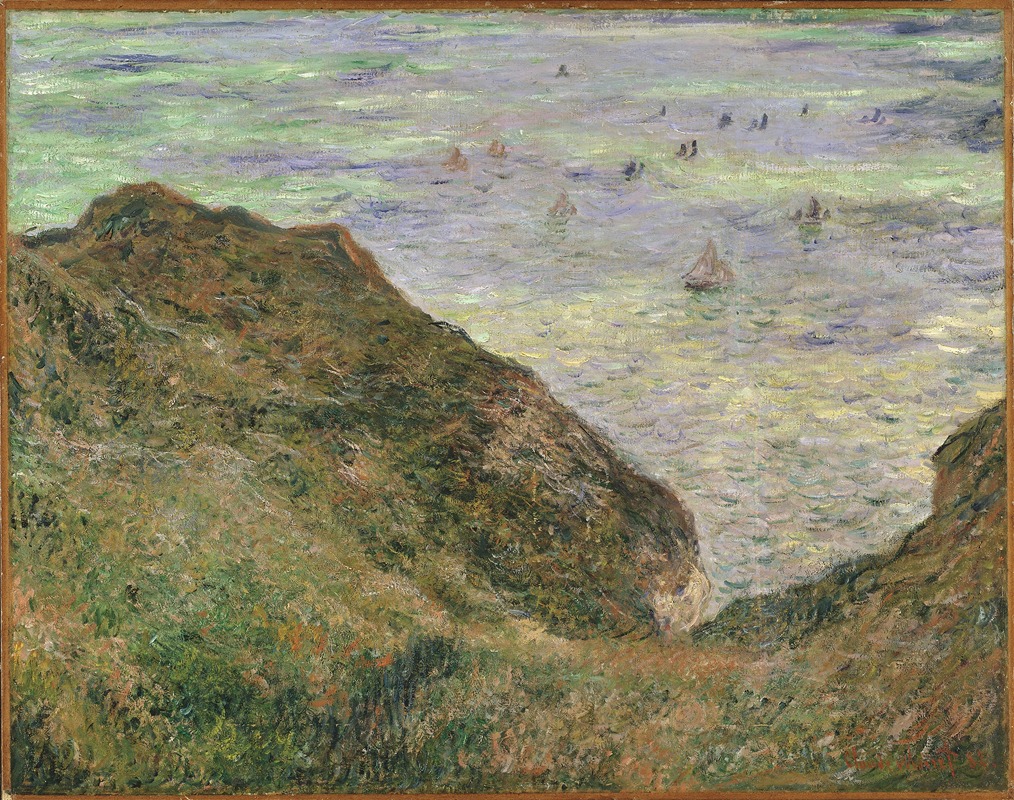
A striking feature of this work is its unique spatial composition, which completely dispenses with the horizon traditionally found near the top of Western landscapes, allowing the sea itself to fill the entire background. The colors of the water—delicate lilac, emerald green, cobalt blue, and soft white capturing directly reflected light—are juxtaposed in remarkably short, intricate brushstrokes. This optical color division, contrasted with the richly textured cliff face, fuses tactile elements like atmosphere and sea breezes onto the two-dimensional surface.
✦ The setting of this painting
This painting depicts the sea cliffs of Pourville, a quiet coastal village near Dieppe in Normandy, France, overlooking the English Channel. In the early 1880s, the expansion of the railway network triggered a boom in modern sea bathing and tourism, making the region widely accessible to the middle class and the bourgeoisie. Monet set up his canvas atop the soaring cliffs to the east of Pourville, capturing this scene from a dizzying, precipitous angle looking down onto the sea below.
✦ Historical context
In early 1880s France, the rapid expansion of the railway network opened up the Normandy coast—previously accessible only to a select few—to the broader public. As modern seaside leisure and tourism experienced an explosive boom, Monet became fascinated by this new coastal everyday life. Rather than simply depicting leisurely recreation, he explored a new form of dialogue between humanity and nature, weaving together dramatic atmospheric shifts with modern recreational sailboats.
From atop a sheer cliff, we look down at the sea stretching out below.
In the foreground lies a slope lush with wild grasses and flowers, beyond which the rippling sea extends endlessly.
France in the early 1880s.
With the dramatic expansion of the railway network, the Normandy coast opened wide to the middle and bourgeois classes.
It was the height of an explosive boom in modern seaside leisure and tourism.
This painting might appear to be simply a beautiful snapshot of such a fashionable coastal scene.
An ordinary landscape of a tranquil resort—
that is often how it is perceived.
Yet, in truth, this work completely eliminates an element that was once essential to traditional Western landscape painting:
the horizon.
In 1882, Monet made an extended stay in Pourville, a quiet port village near Dieppe.
From February to April, and again from June to October.
He was captivated by this new coastal life.
Yet his focus was distinctly different from the pure pleasures of leisure he had once painted in Argenteuil.
What he poured his soul into
was the dialogue between the overwhelming meteorological shifts over the English Channel and the modern recreational sailing boats floating like small white accents upon it.
Examining this new form of dialogue between humanity and nature as pure optical effects of light.
Throughout his stay in Pourville, Monet rushed across the clifftops carrying several canvases at once.
The ebb and flow of the tide.
The drifting clouds.
He chased the changing weather minute by minute.
Whenever the light shifted, he immediately swapped out the canvas on his easel for another in progress.
Embodying the ultimate spirit of plein-air painting, he worked relentlessly.
It was a solitary, grueling battle to capture something as intangible as shifting weather on canvas.
About 164 more words

Sign up free and enter Your Museum
Read the stories behind great paintings and music for free, in Your Museum
Your Note
Write down what this painting made you feel in your art notebook.
Please sign up to write notes.
Sign up for freeRecommended Artworks
Sources & references
More artists
If you find an error in this content, please let us know here
This site is protected by reCAPTCHA, and the Google Privacy Policy and Terms of Service apply.