
Last Supper
1927
- Dimensions
- 395 × 300 cm
- Medium
- キャンバスに油彩
- Collection
- グルーニング美術館
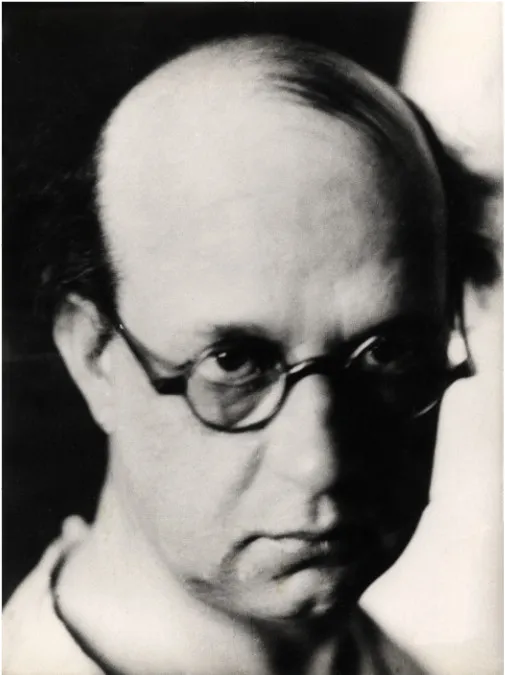
20世紀前半のベルギーにおいて、印象主義的な光の描写を真っ向から拒絶し、独自の静密な内省的世界を確立した画家である。
A fierce rebellion against sentimental, sanitized religious art. A cry from the soul, etching the raw pain of his failed monastic life alongside his genuine faith.
✦ Highlights (technique & color)
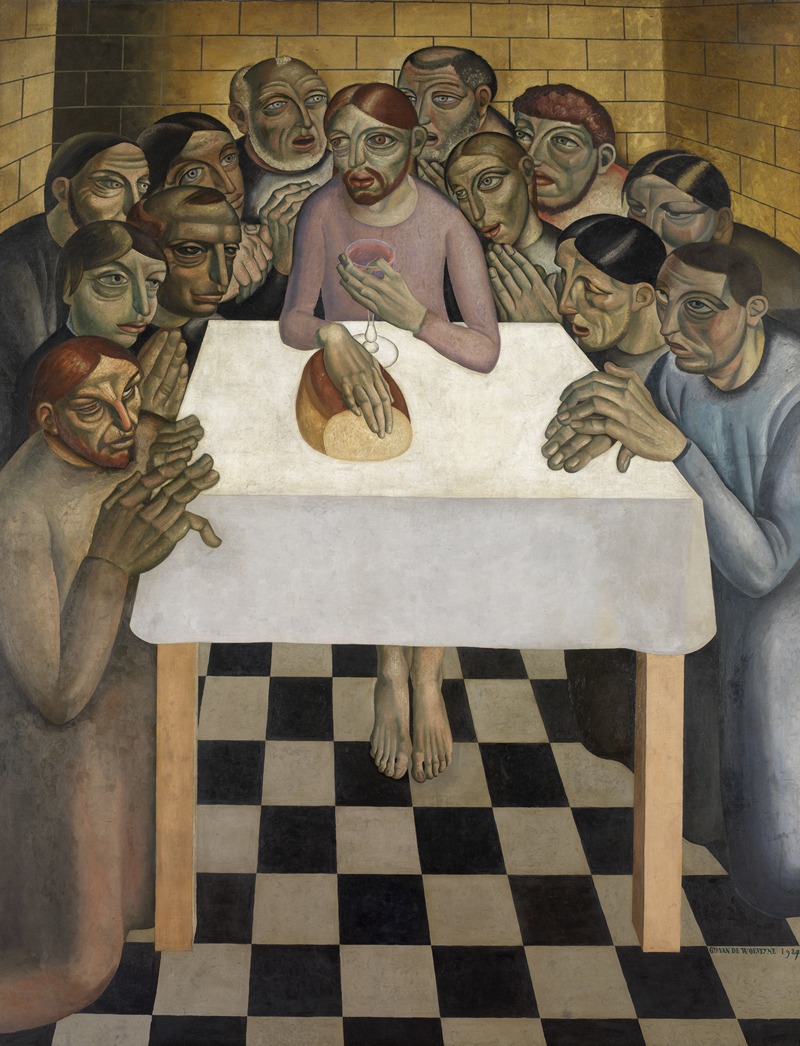
Painted on a monumental vertical canvas nearly four meters tall. Thin, washed-out paint soaks into the fabric to reproduce the dry, heavy texture of ancient frescoes. The figures feature distorted proportions—elongated necks and exaggerated, gnarled hands reminiscent of hard laborers. The vivid red hair of both Jesus and Judas creates a striking, unsettling visual motif.
✦ The setting of this painting
A cramped, claustrophobic room stripped of all historical decor and windows, resembling a prison cell. The space mirrors two realities at once: the tense energy of underground meetings held by working-class believers during the modern Catholic Revival, and the desperate secrecy of the apostles hiding from Roman authorities. Simple laborers' bread and a single glass of wine sit upon the table.
✦ Historical context
During the 1920s, Belgium saw the rise of a Catholic Revival aimed at modernizing religious art. Despite this, churches remained flooded with conservative, sentimentally sweet imagery. Despising this hollowed-out art, the painter launched a direct assault against it, embracing a brutally raw, avant-garde approach filled with human pain.
A windowless, unadorned room, cramped like a prison cell. Huddled around a single table, the men hunch forward, packed together with an unnatural, stifling intensity.
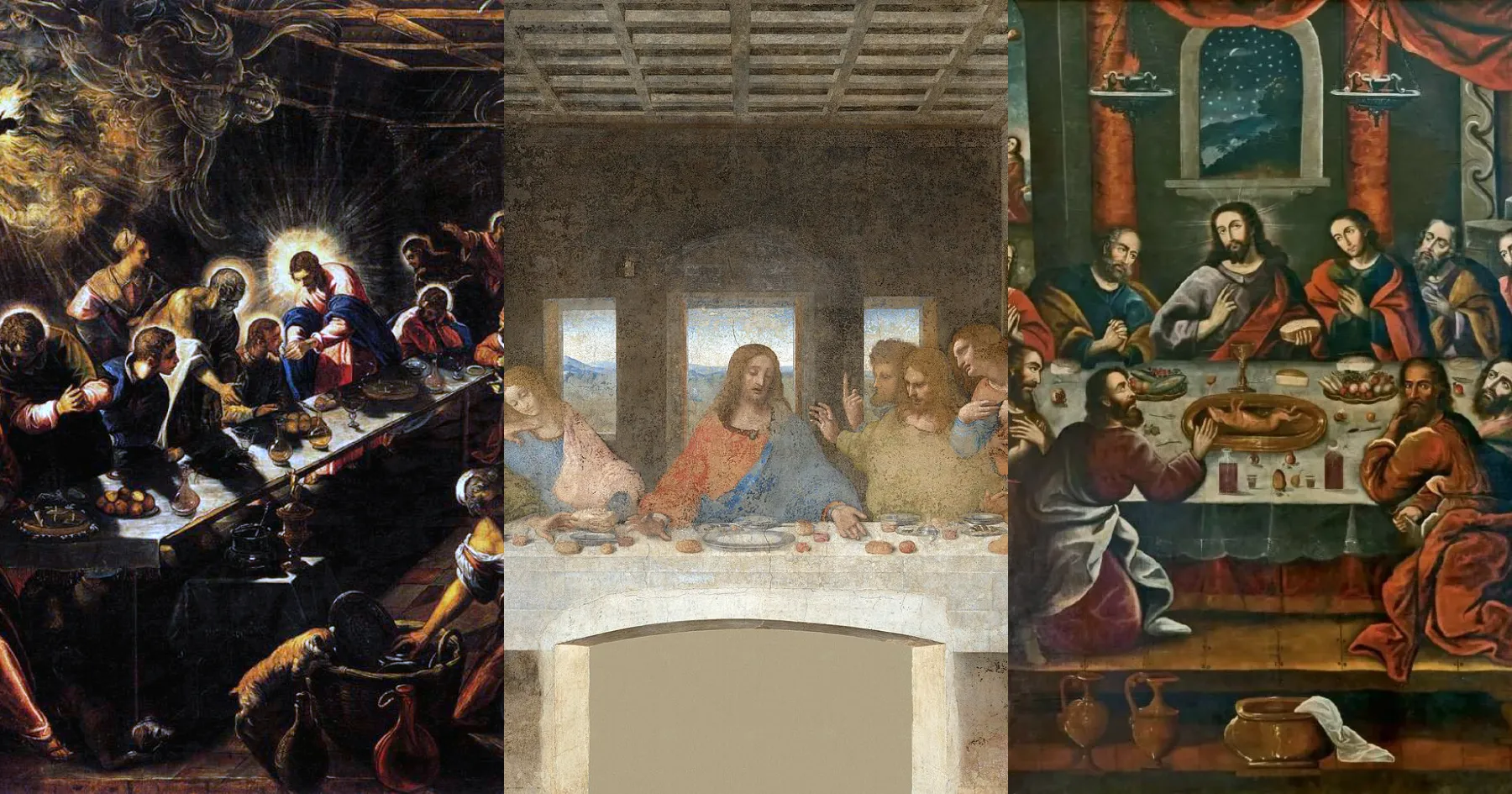
When you hear "The Last Supper," what image comes to mind? Perhaps a grand, serene scene of disciples seated side-by-side along a wide horizontal table. Yet in this painting, there is not a trace of grace. The men's necks are unnaturally elongated, their hands grotesquely large and gnarled. Upon the table lies no lavish feast—only simple round loaves of bread meant for laborers and a single glass of red wine. At the center, an emaciated Jesus sits with hair and a beard painted a startling shade of red.
In 1920s Belgium, a movement was underway to modernize Christian art. Yet the churches of the era remained flooded with conservative, sickly-sweet religious imagery. Gustave Van de Woestyne abhorred it. To him, it was harmless, hollow art. This unsettling version of the Last Supper was his fiercely sincere declaration of faith—a radical rebellion against soft, sanitized religion.
About 239 more words
Read the rest of this commentary —
and step into a secret gallery
opened just for you
An "art letter" delivered to you every Saturday morning
Works, music and words chosen for your sensibility, from your artist-type result and the paintings you love
A library of masterpieces and music you can enjoy "in your own words", not just look at
A "digital art notebook" (unlimited) where your impressions build into your own taste
Unlimited likes and notes
¥980 / month¥0 today
¥980/month (tax incl.) from day 8. Cancel anytime.
Already have an account? Log in
Stories featuring this painting
Your Note
Write down what this painting made you feel in your art notebook.
Please sign up to write notes.
Sign up for freeRecommended Artworks
![Untitled [Rescue boat]](https://musicstory-assets-682855971161-ap-northeast-1-an.s3.ap-northeast-1.amazonaws.com/artworks/paintings/untitled-rescue-boat.jpg)
Sources & references
More artists
If you find an error in this content, please let us know here
This site is protected by reCAPTCHA, and the Google Privacy Policy and Terms of Service apply.