
Fugue
1925
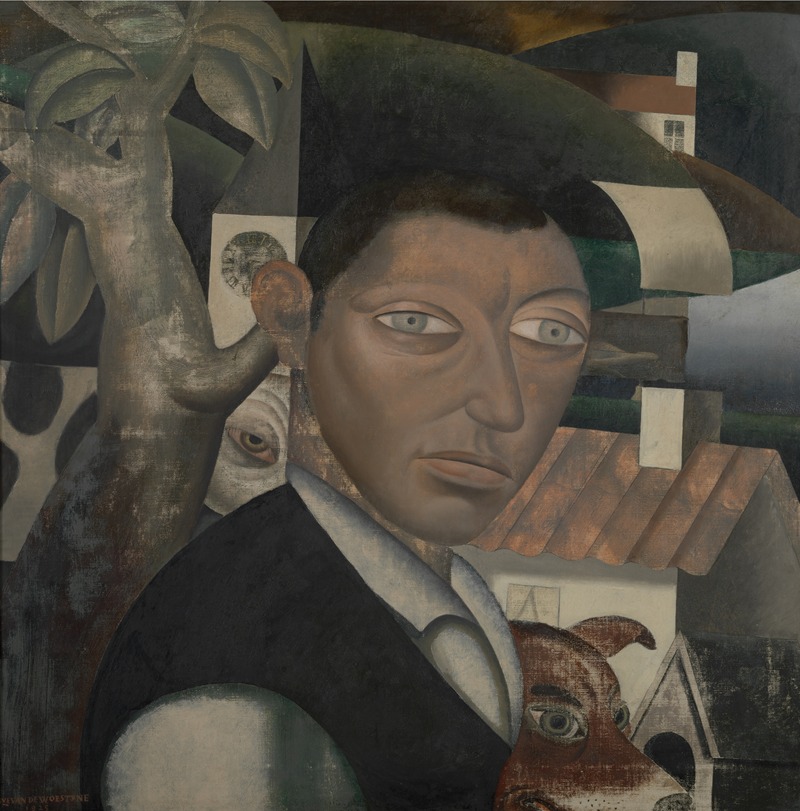
- Dimensions
- 80.5 × 80 cm
- Medium
- Oil on canvas
- Collection
- Museum of Fine Arts, Ghent
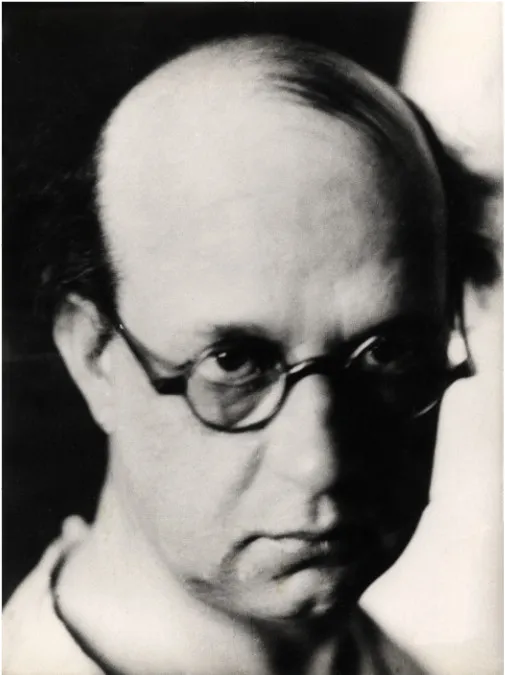
20世紀前半のベルギーにおいて、印象主義的な光の描写を真っ向から拒絶し、独自の静密な内省的世界を確立した画家である。
✦ Highlights (technique & color)
Much like a musical fugue, the painting visualizes a counterpoint of overlapping elements. Influenced by Cubism and Expressionism, the artist dismantled motifs into geometric planes of color, reconstructing them on a flat surface. Anchored by earthy browns and grays, striking planes of red and white provide a vivid contrast.
✦ The setting of this painting
Rather than depicting a specific geographical location, the work captures the very lifeworld that surrounds the peasant's existence. Encircling the central figure's face and his dog, elements such as home, church, animals, and nature—which give meaning and order to his life—are scattered like a fragmented mosaic.
✦ Historical context
In the Belgian art scene around 1925, the frenzy of World War I had subsided, giving way to the "return to order"—a trend seeking stability, order, and classical construction. While the painter himself held official posts, including the directorship of an art academy, he also participated in avant-garde circles, continually exploring radical forms of expression.
At the center of the canvas, a man's face gazes out at the viewer.
Surrounding him are the head of a dog, a church clock tower, rooftops,
and trees, all scattered like fragments of a mosaic.
In 1925,
the painter Gustave Van de Woestyne stood at the pinnacle of the Belgian art world.
He had just been appointed director of the Royal Academy of Fine Arts in Mechelen.
He was also named a professor at the National Higher Institute of Fine Arts in Antwerp, securing some of the most prestigious official posts of his era.
In the mid-1920s, with the chaos of the First World War having finally subsided,
a prevailing desire for order and stability swept through the art world.
Artists who achieved high standing often settled into conservative styles.
Gustave, however, chose a different path.
Even as an academic luminary, he joined the avant-garde group Les 9,
never ceasing to pursue radical modes of expression.
In fact, he created another work titled Fugue.
Painted in 1919, that earlier piece now hangs in the Kunstmuseum Den Haag in the Netherlands.
It was created shortly after his return to his homeland following a harsh period of exile in England.
Rendered with a naive, gentle touch, it portrayed his family with fresh vitality,
brimming with relief and hope after surviving the war.
About 132 more words
Read the rest of this commentary —
and step into a secret gallery
opened just for you
An "art letter" delivered to you every Saturday morning
Works, music and words chosen for your sensibility, from your artist-type result and the paintings you love
A library of masterpieces and music you can enjoy "in your own words", not just look at
A "digital art notebook" (unlimited) where your impressions build into your own taste
Unlimited likes and notes
¥980 / month¥0 today
¥980/month (tax incl.) from day 8. Cancel anytime.
Already have an account? Log in
Your Note
Write down what this painting made you feel in your art notebook.
Please sign up to write notes.
Sign up for freeRecommended Artworks
![Untitled [Rescue boat]](https://musicstory-assets-682855971161-ap-northeast-1-an.s3.ap-northeast-1.amazonaws.com/artworks/paintings/untitled-rescue-boat.jpg)
Sources & references
More artists
If you find an error in this content, please let us know here
This site is protected by reCAPTCHA, and the Google Privacy Policy and Terms of Service apply.