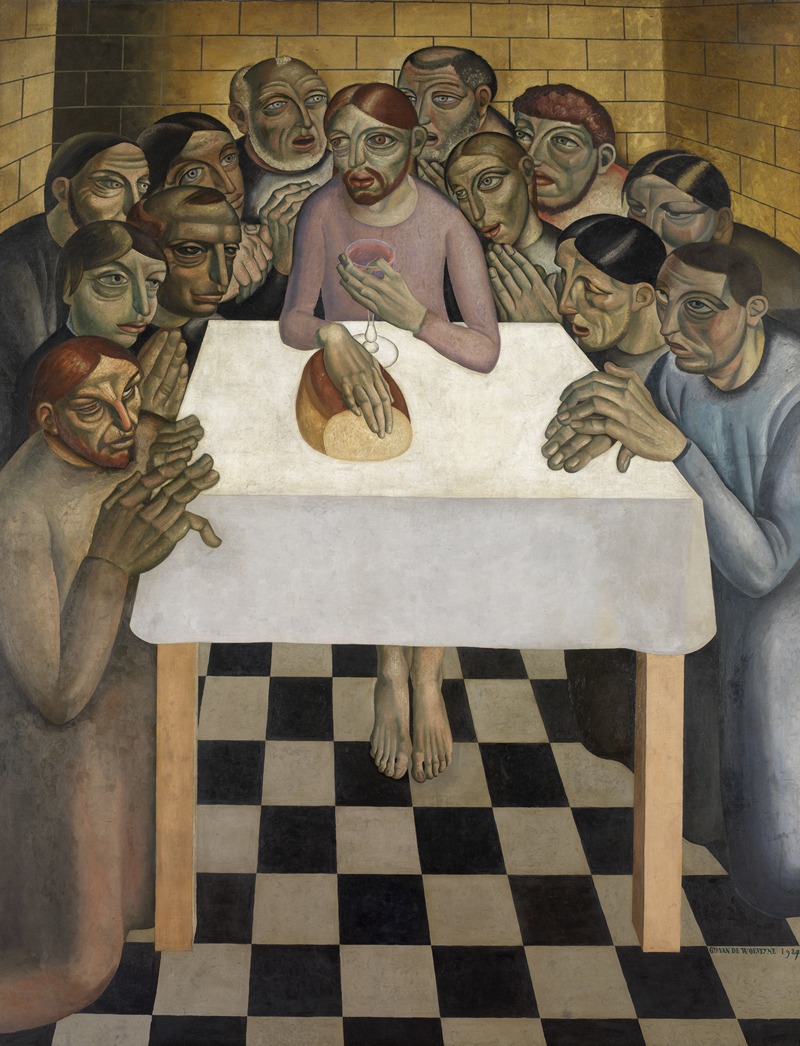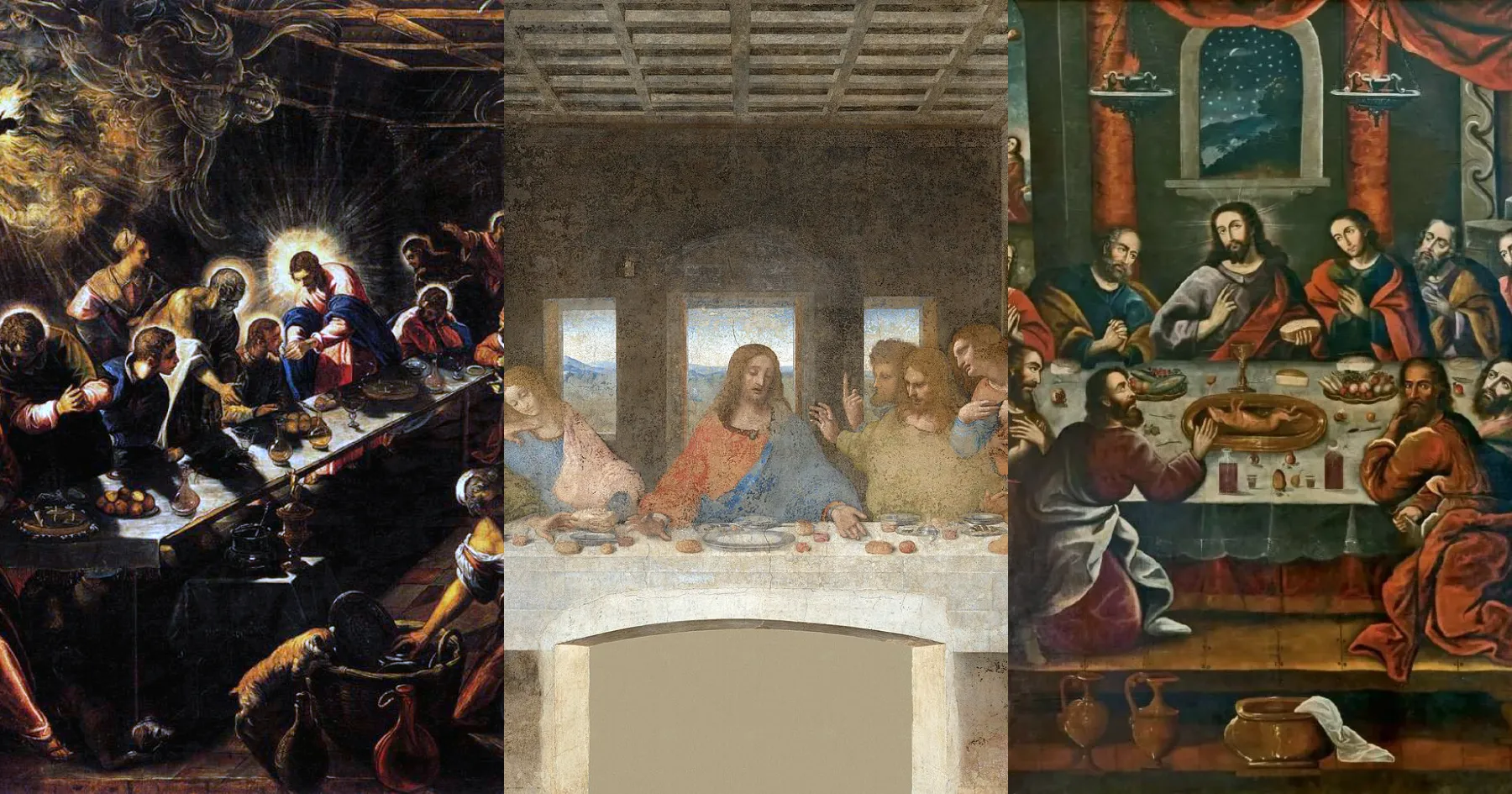
On the eve of His crucifixion, Christ gathered around a final table with His disciples.
This is the subject of our story: the Last Supper.
This seemingly humble meal has become one of the most enduring themes in Christian art.
Why have so many painters returned to this table time and time again?
What drew them to it?
The answer lies in the profound drama condensed into this single moment.
Most famous of all is Christ's startling revelation of betrayal: "Truly, I say to you, one of you will betray me."
The moment those words were spoken, intense turmoil rippled through the disciples.
At the very same time, a deeply mystical ritual was unfolding, as Christ broke bread, saying, "This is my body."
Drama and ritual.
It is the intertwining of these two elements that has endlessly stirred the creative imagination of artists.
Yet, though depicting the very same subject, each artist has conjured an entirely different world.
Why did such differences arise? Here begins our journey into the mysteries of art.
Leonardo da Vinci's The Last Supper
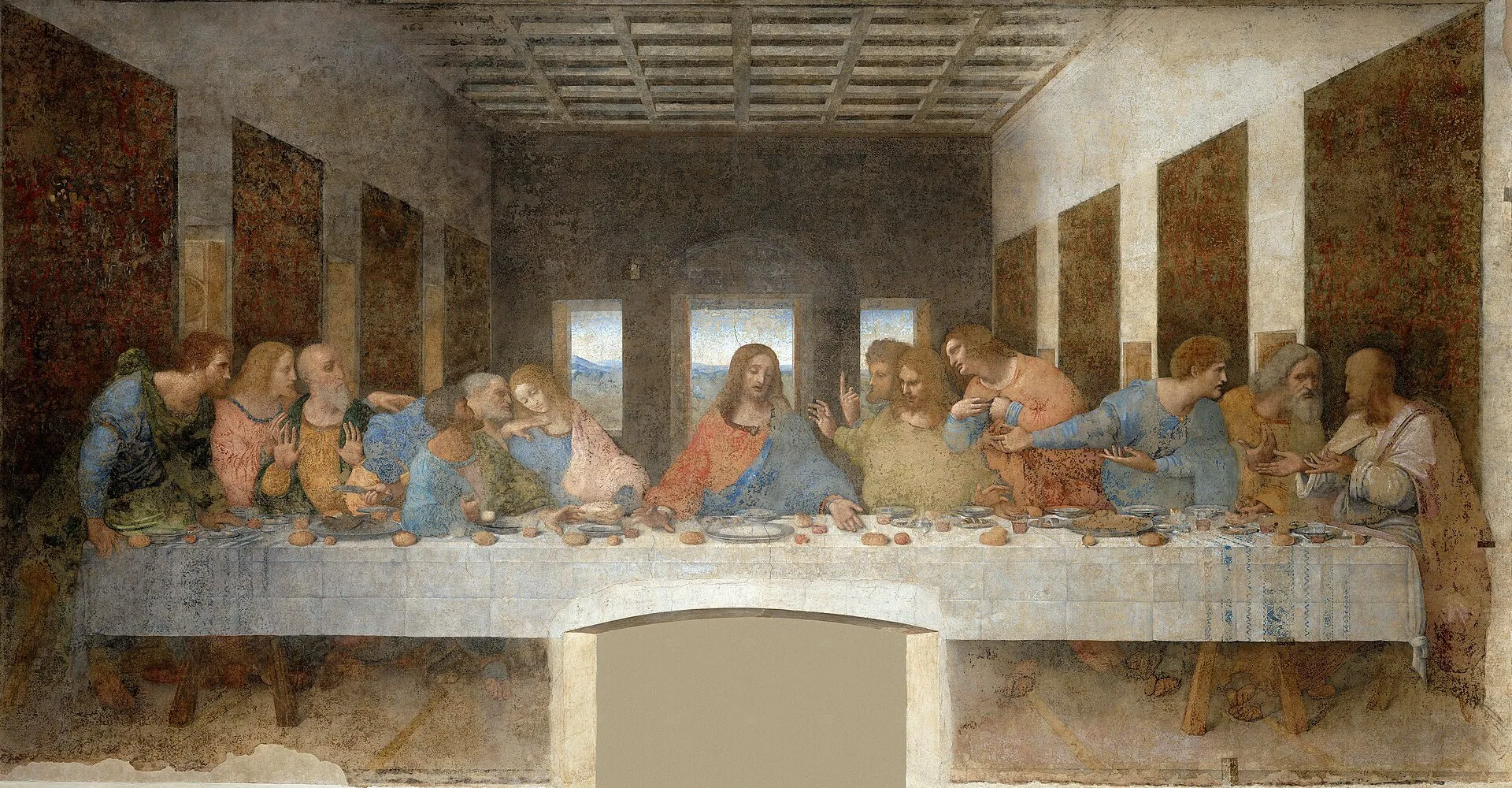
Let us begin by taking the masterpiece we know best as our touchstone:
The Last Supper, painted at the end of the 15th century by Renaissance genius Leonardo da Vinci.
Painted on the wall of a convent in Milan, Italy, this mural revolutionized the course of art history from its very foundation.
Before Leonardo, depictions of the Last Supper were predominantly serene, with the disciples seated in orderly composure. But Leonardo chose a different path.
He captured the immediate panic at the very moment Christ foretold the betrayal.
"Lord, is it I?"
Shock, anger, sorrow—the raw, vivid emotions on the disciples' faces.
Leonardo termed these turbulent movements of the human psyche the "motions of the soul" (moti dell'anima).
To capture them, he engaged in tireless and exhaustive observation of human nature.
Moreover, the composition conceals an exquisite intellectual design.
Every perspective line is meticulously calculated to converge at Christ's forehead at the center.
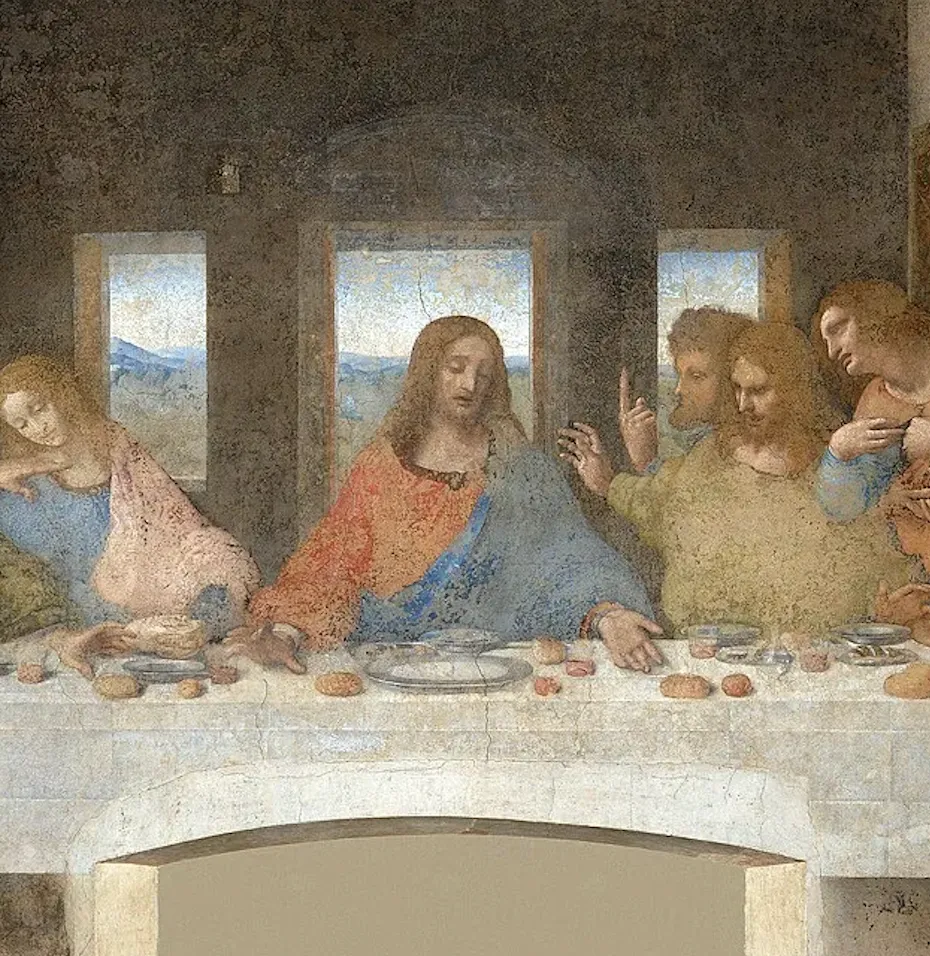
In other words, the physical center of the space aligns perfectly with the spiritual center—the presence of God.
Where, then, is the traitor Judas, the painting's greatest enigma?
In earlier paintings, Judas was rendered instantly recognizable as the villain.
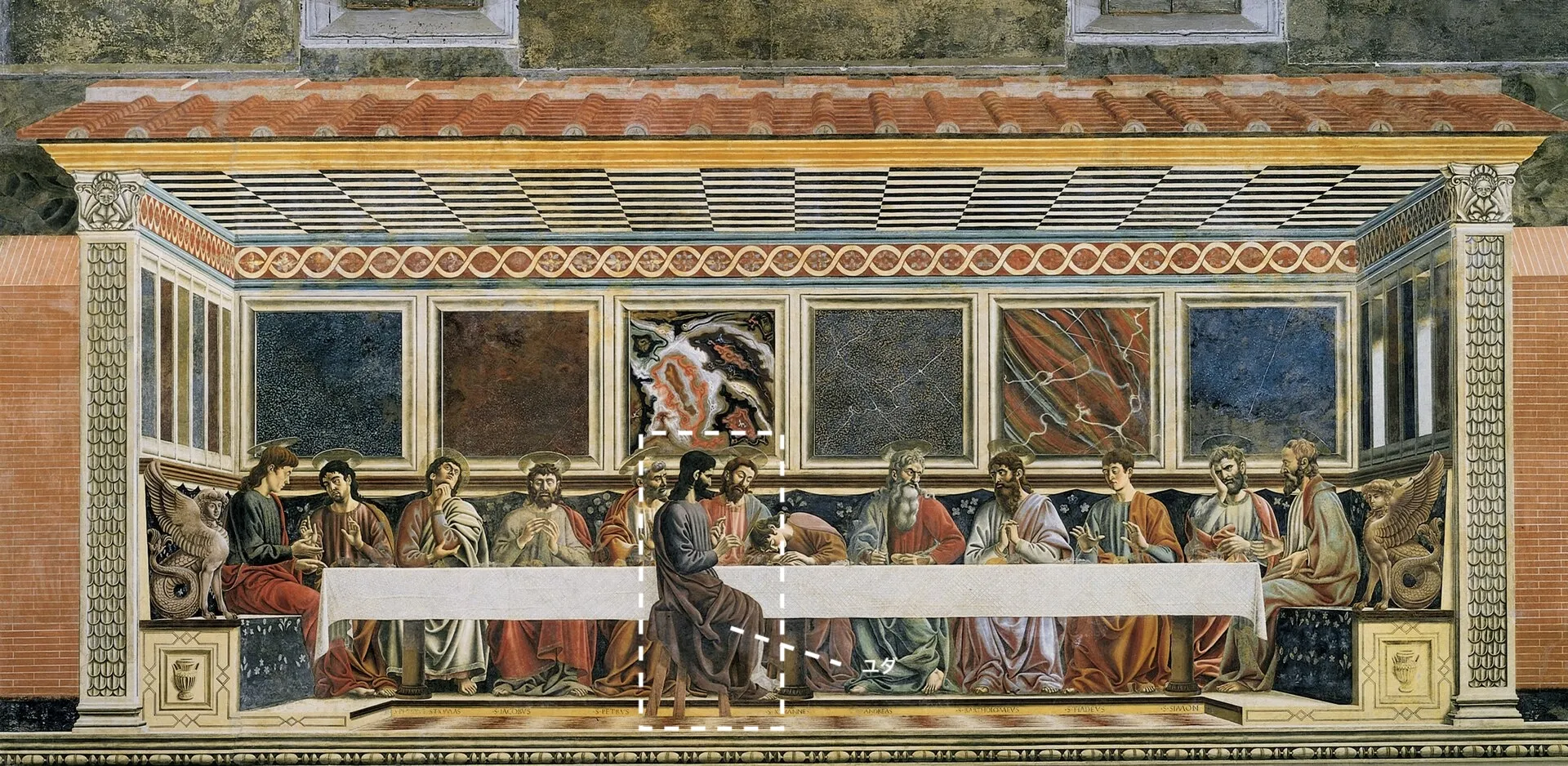
He was made to sit isolated on the near side of the table, separated from everyone else. (From Andrea del Castagno's The Last Supper)
Yet Leonardo placed Judas in the very same row alongside the other apostles.
Judas, however, pulls his body back slightly into the background.
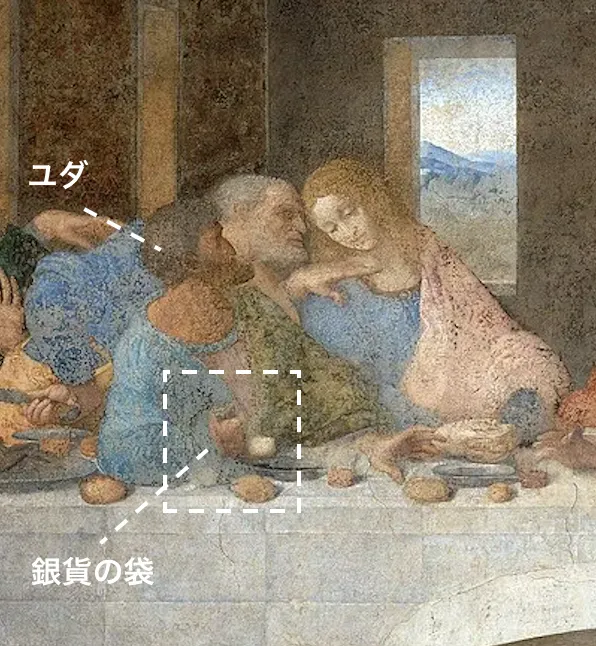
And his face is steeped in dark shadow.
This subtle, sophisticated psychological nuance—an understated search for the culprit—was the revolution Leonardo brought to art.
*Note on the bag of silver coins: This illustrates the well-known episode in which Judas betrayed Christ in exchange for thirty pieces of silver.
How Would This Table Change if We Traveled the World?
First, keep Leonardo's The Last Supper, with its consummate beauty, firmly in mind.
Here is where our journey into mystery truly begins.
What if we were to look at Last Supper paintings created in lands far across the globe from Europe?
In one painting, a mysterious roasted creature lies before Jesus, its paws pointing straight up into the air.
In another, an auspicious Japanese fish reigns proudly as the centerpiece of the feast.
Why did such curious variations arise?
It was no mere whim of the painters.
Within them lie the turbulent tides of history and the heartfelt prayers of people striving to embrace a new faith.
Let us unlock the doors to these secrets.