
Two Heads
1920
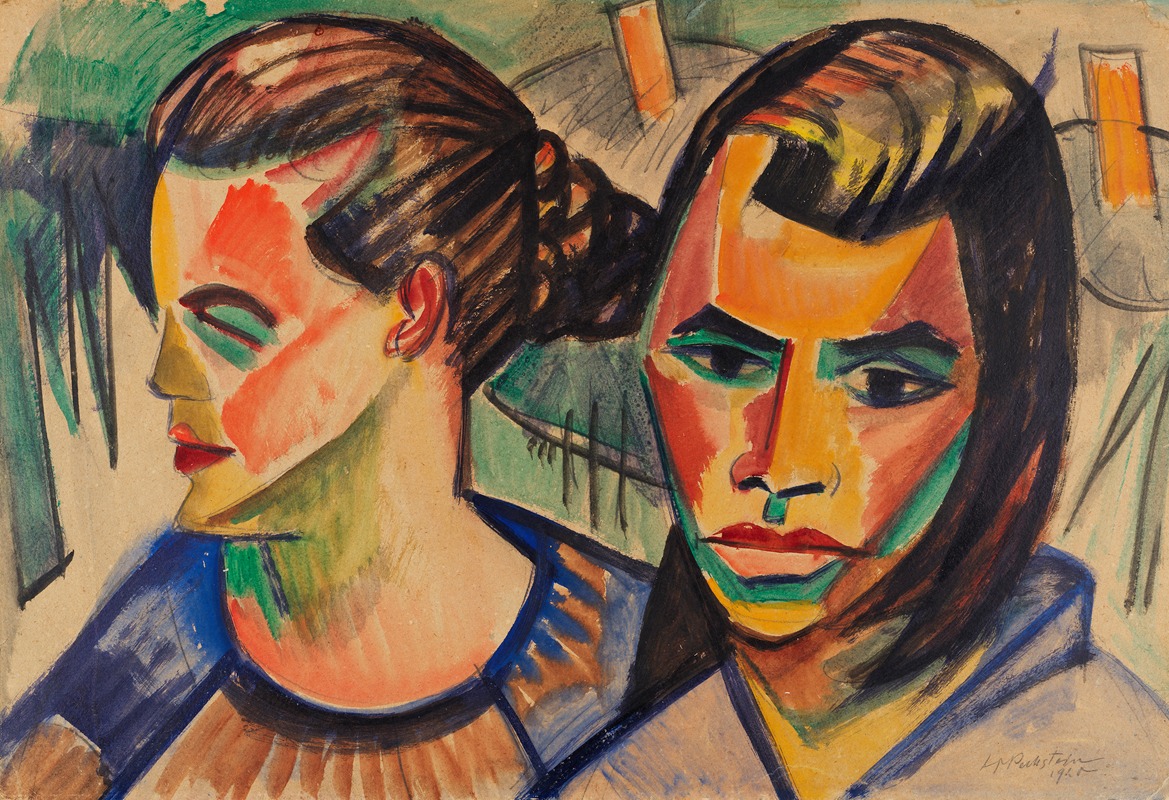
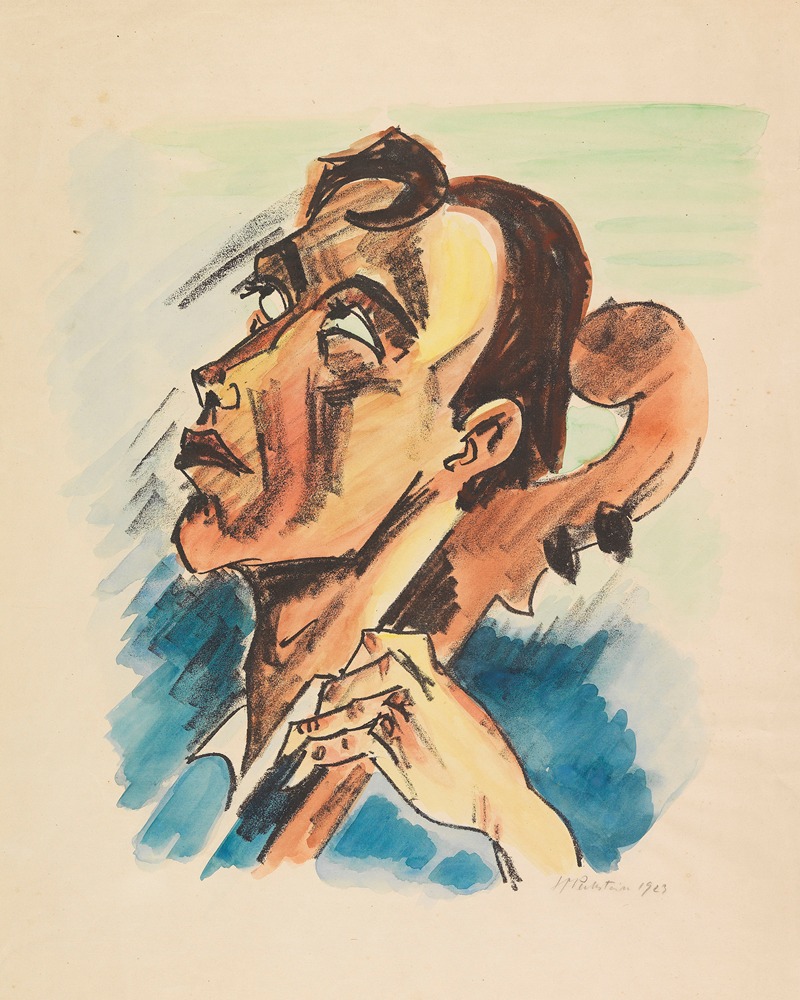
Two faces fill the canvas. A man and a woman are nestled close together, yet their gazes never meet. Pechstein, hailed as 'the painter of paradise,' captivated audiences as a leading figure of Die Brücke from before the war, celebrating joy with vibrant colors. While it might be assumed that his brilliance continued after the war, the truth is that in this 1920 watercolor, the former light is no longer present.
In 1920, Berlin, the 38-year-old Hermann Max Pechstein was in deep solitude. Just a few years prior, he had believed he found a 'utopia' in the Palau Islands. However, World War I took everything away: internment by the Japanese army, military service on the front lines. He had navigated through mud and the shadow of death, finally returning to the city. Yet, what awaited him in the Berlin he returned to was rampant inflation and political turmoil.
His brushwork, which once depicted wild vitality, underwent a transformation. Heavy, angular lines drawn with charcoal and muted color tones were manifestations of the decadence that permeated post-war Weimar society and an indelible existential anxiety. He had a long-time wife, Lotte, a woman who had served as the model for countless masterpieces since they met in 1909. However, the year after this painting was created, in 1921, they chose to divorce.
About 113 more words
Unlock this story's ending, and every article on MusicStory
- 42
Stories1–2 new every week
An archive of paintings paired with great music, made for a weekend night and a cup of coffee
- 282
Paintings with commentarygrowing daily
From simply looking to truly reading — the brushwork and the obsession of the masters
- 10
Music Librarygrowing daily
Know it first, and what reaches your ear changes — background music becomes art you keep for life
My Notes, unlimited
Every reading adds to a digital art notebook that is yours alone
Already have an account? Log in
Your Note
Write down what this painting made you feel in your art notebook.
Please sign up to write notes.
Sign up for freeRecommended Artworks
![Untitled [Rescue boat]](https://musicstory-assets-682855971161-ap-northeast-1-an.s3.ap-northeast-1.amazonaws.com/artworks/paintings/untitled-rescue-boat.jpg)
More artists
If you find an error in this content, please let us know here
This site is protected by reCAPTCHA, and the Google Privacy Policy and Terms of Service apply.