
Anxiety
1896
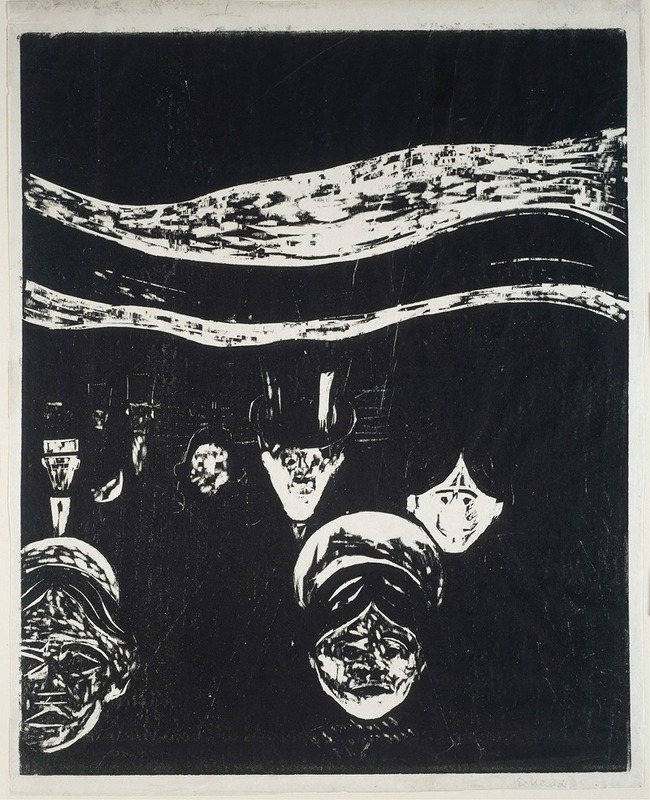
- Dimensions
- 図版:458 × 373 mm、用紙:593 × 435 mm
- Medium
- Woodcut (carved with gouges and chisels) on Japanese paper
- Collection
- The National Museum (Norway), Munch Museum, private collection
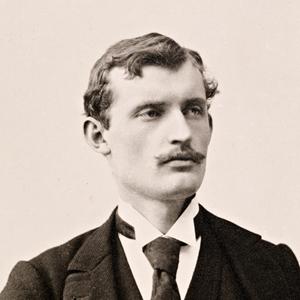
A celebrated Norwegian painter active from the late nineteenth century to the fi…
✦ Highlights (technique & color)
This woodcut is vigorously carved using flat chisels and gouges. The stark contrast of dense black ink absorbed directly into the Japanese paper visually conveys a tangible sense of physical pressure and laceration. The undulating, slender lines in the sky herald the dawn of Expressionism, illustrating how inner psychological turmoil can distort the surrounding landscape.
✦ The setting of this painting
A panoramic view from Ekeberg Hill, located southeast of Kristiania (now Oslo). Below spreads the deep blue Oslo Fjord and the glowing lights of the city. This is the very place where Munch famously sensed an "infinite scream passing through nature," rendered here as an iconic setting where the turbulent forces of nature and the urban crowd intersect.
✦ Historical context
In mid-1890s Europe, rapid urbanization and technological innovation were accompanied by a pervasive sense of psychological unease and spiritual desolation. The intense isolation and alienation experienced by modern urban crowds, unbound from traditional social norms, became central themes in art, intertwined with fin-de-siècle decadence and debates over the absence of God.
A crowd with pallid, death-like faces.
They stare at us.
Above them, undulating thin lines are drawn across the sky.
January 1892.
While staying in Nice, Munch recorded an experience in his diary.
It was dusk, and he was walking with two friends.
Suddenly, the sky turned blood red.
At that moment, he felt a 'great, infinite scream' tearing through nature.
The location was Ekeberg Hill, southeast of Christiania.
Below, the deep blue fjord and city lights stretched out.
From this intense memory, The Scream was born.
However.
His inner terror did not end there.
Munch placed the urban crowd within the undulations of nature.
When exhibited in Paris in 1896, critics called them:
'Wandering fetuses.'
In a rapidly urbanizing society.
People, freed from tradition, yet gasped with intense isolation and alienation.
About 114 more words
Read stories of masterpieces for free
Your Note
Write down what this painting made you feel in your art notebook.
Please sign up to write notes.
Sign up for freeRecommended Artworks
Sources & references
More artists
If you find an error in this content, please let us know here
This site is protected by reCAPTCHA, and the Google Privacy Policy and Terms of Service apply.