
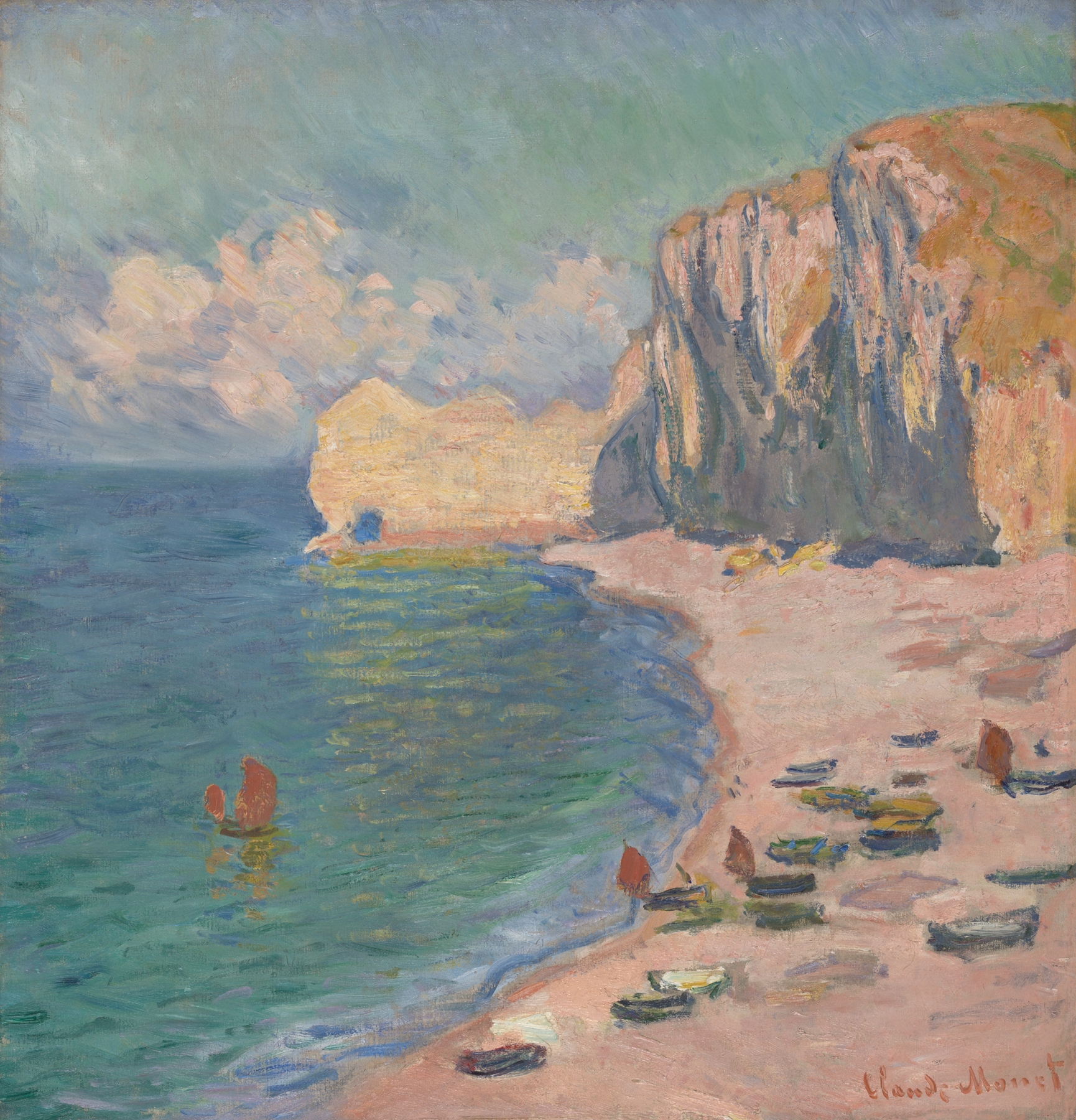
Étretat: The Beach and the Falaise d'Amont
1885
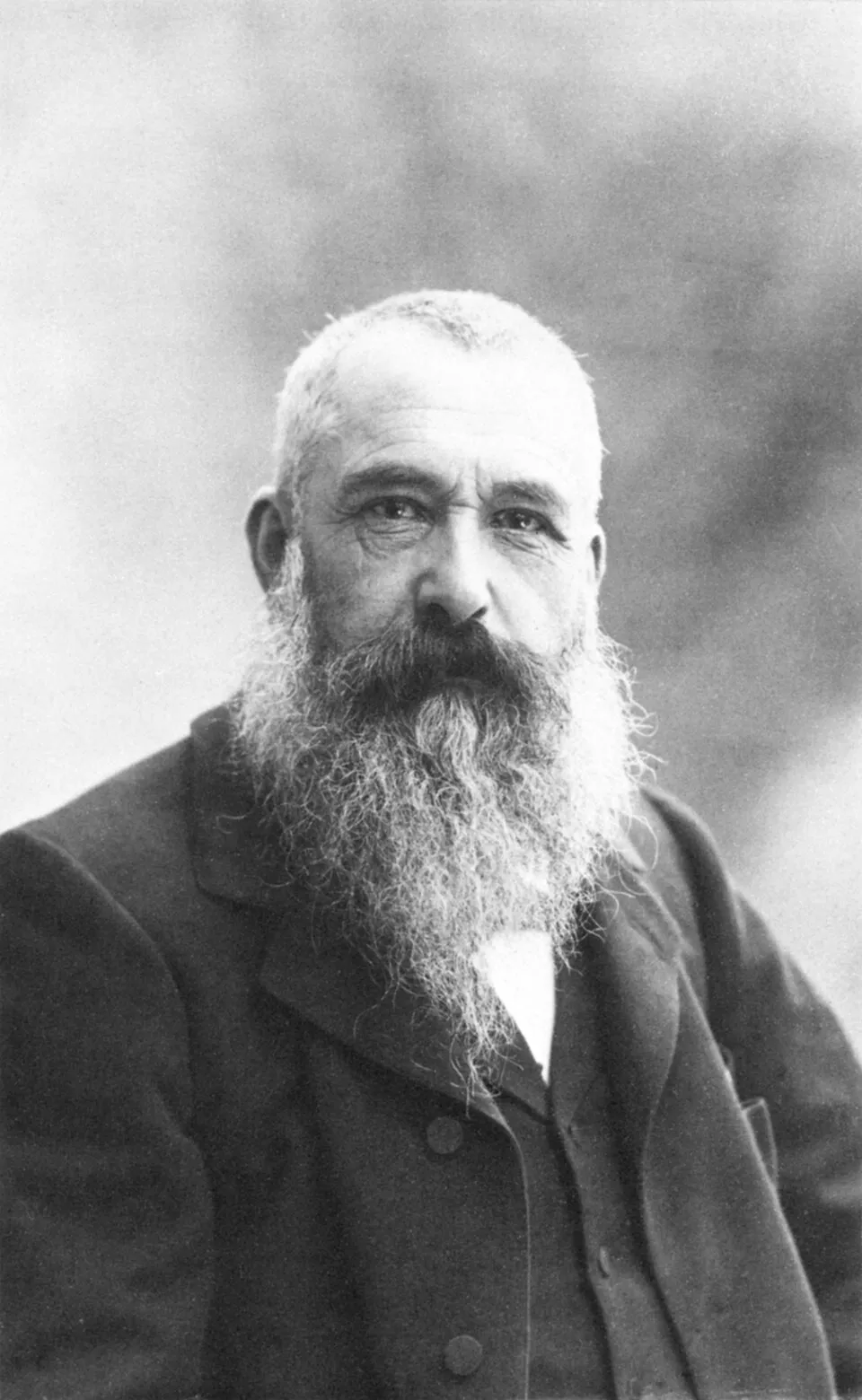
Celebrated as a founding figure of Impressionism, he is one of France’s most ren…
A colossal cliff, gleaming white under the sunlight. At its base, a tranquil shoreline stretches out, dotted with small fishing boats.
At first glance, this painting seems full of happiness. It's a dreamlike landscape woven from pastel pinks and blues. It's often said that Monet simply captured a fleeting moment of joy before his eyes, a 'record of serene light,' during a visit to a quiet resort with his family.
But in truth, behind this shimmering light, Monet was battling intense anxiety. This tranquil painting did not originate from actual serenity.
Rather, it was the crystallization of a sorrowful prayer, a desperate attempt to protect a 'temporary happiness' that he feared could shatter at any moment.
September 1885. Claude Monet, then 44, was in Étretat, a coastal town in Normandy. His companions were his beloved Alice Hoschedé and their eight children, including their respective children from previous relationships.
They were viewed with cold disdain by society as 'immoral cohabitants.' Alice, though separated, was still legally married to her husband, Ernest. Seeking refuge from societal gossip, they came to this quiet coast.
In October, Alice and the children returned home ahead of him. Monet, left alone at the Hôtel Blanquet in Étretat, continued to paint feverishly.
He was terrified of losing her.
In fact, even before this, Ernest, Alice's husband, had been pressuring her to 'bring his wife and children back.' Monet had been so consumed by the fear of losing her that he once sent a desperate letter to Alice from Étretat, writing, 'I wish I were dead.'
Then, in February of the following year, 1886, the worst news arrived. Ernest suddenly appeared on Alice's birthday, insisting on taking his family back.
Overwhelmed by despair, Monet, who had revisited Étretat, completely stopped painting. Left behind in his studio were those unfinished canvases, still incomplete.
About 172 more words
Read stories of masterpieces for free
Your Note
Write down what this painting made you feel in your art notebook.
Please sign up to write notes.
Sign up for freeRecommended Artworks
_Claude_Monet_-_Muse%CC%81e_des_Beaux-Arts_de_Lyon_(W821)+(1).webp)
.webp)
More artists

If you find an error in this content, please let us know here
This site is protected by reCAPTCHA, and the Google Privacy Policy and Terms of Service apply.