
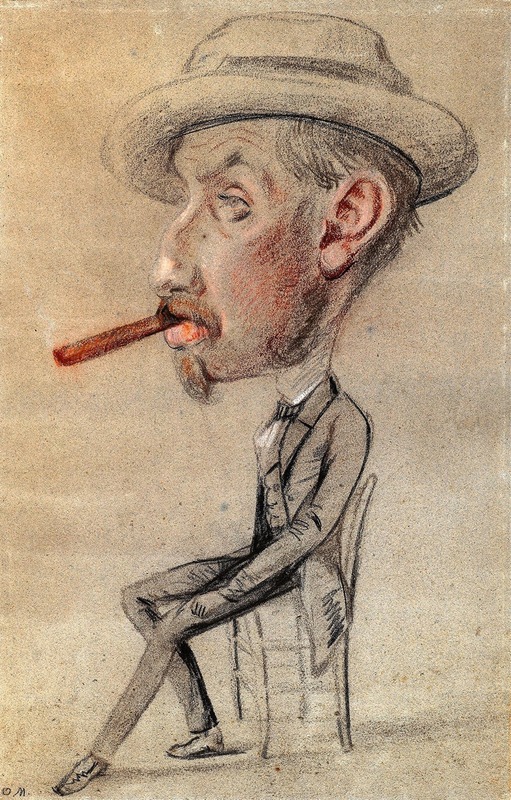
Caricature of a Man with a Big Cigar
1855
- Dimensions
- 縦 59.8 cm × 横 38.5 cm
- Medium
- Black and red chalk, with white, pink, peach, ochre, and dark brown chalk and pastel, on blue wove paper (discolored to blue-gray, lined with double wove paper and cream paper)
- Collection
- The Art Institute of Chicago (Chicago, Illinois, USA)
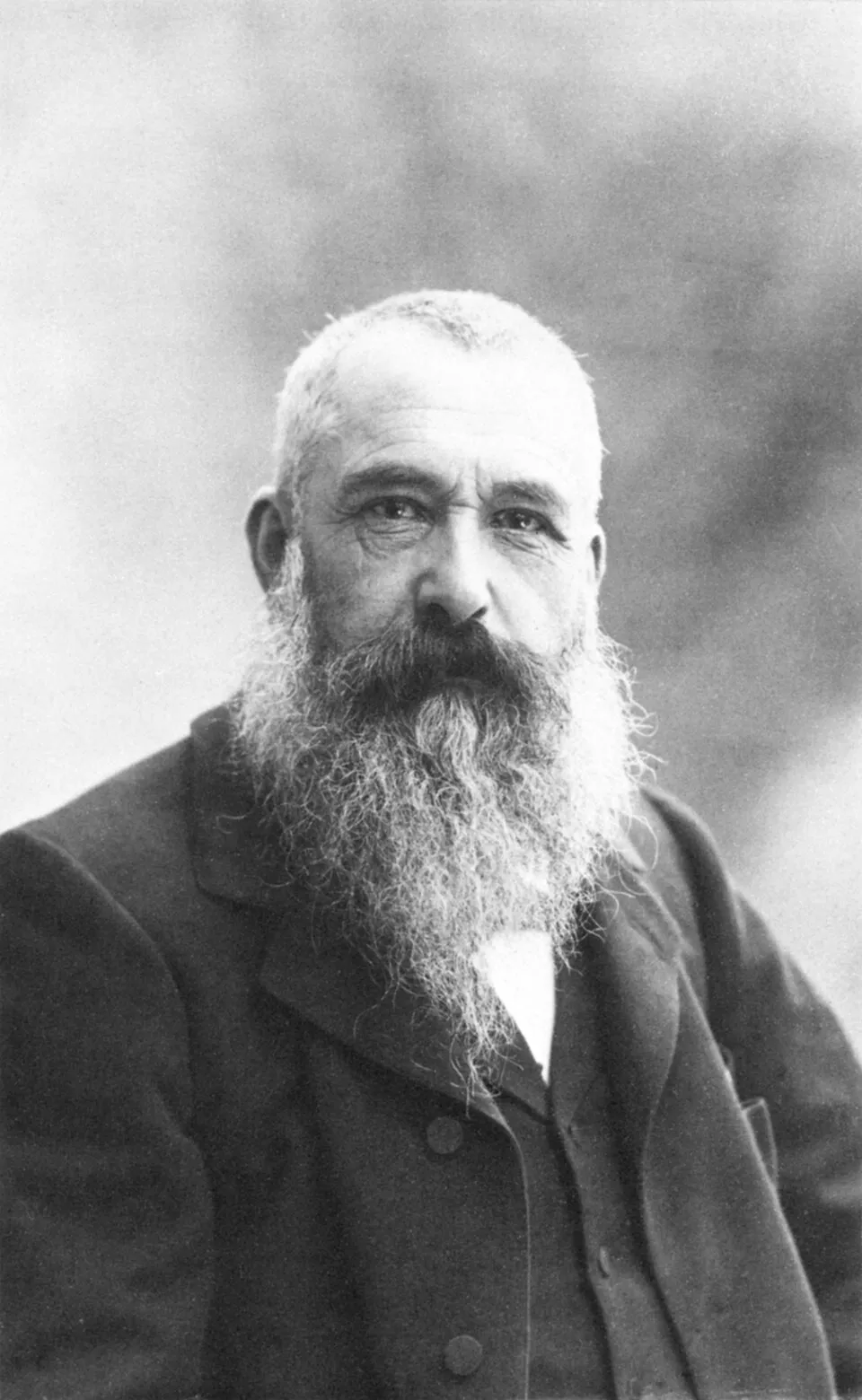
Celebrated as a founding figure of Impressionism, he is one of France’s most ren…
✦ Highlights (technique & color)
The artist cleverly utilized the blue wove paper as a mid-tone. Foregoing black outlines for the face, he applied red, pink, and ochre pastels directly to the surface to capture the warm flush of skin and the play of light with convincing volume. The trousers were rendered with the broad side of the chalk pressed flat against the paper, offering an early glimpse of his inclination toward abstraction.
✦ The setting of this painting
The setting is the Norman port town of Le Havre, where Monet spent much of his youth. The subjects of his drawings were the merchants, local notables, and recognizable town figures who walked its streets. In his mid-teens, Monet captured their defining traits in caricatures that earned him local renown when displayed in the window of a neighborhood stationery shop.
✦ Historical context
In 1850s France, illustrated satirical periodicals like Le Charivari were at the height of their popularity. The young Monet drew immense visual inspiration from this print culture, marking a transitional phase in which his work evolved from mere sketches into full-fledged, painterly expressions in color.
A man with an oversized head sits perched on a disproportionately small chair, a massive cigar clamped between his lips. With legs crossed, his profile gazes absently off into the distance.
Claude Monet is world-renowned as a master of water lilies and landscapes—a quintessential Impressionist who captured natural light and atmosphere upon the canvas. That is the story most commonly told.
In reality, however, the starting point of his visual exploration was not landscape painting at all. It was caricature, born of sharp, perceptive human observation.
The year is 1855, in the port town of Le Havre in Normandy, France. At around fifteen years old, he was known simply as "Oscar Monet." He was something of a troublemaker, neglecting his studies to doodle caricatures of his teachers and classmates in the margins of his textbooks.
Yet, his extraordinary drawing ability astonished the local adults. Before long, he was accepting commissions, charging between ten to twenty francs a piece. Instantly exaggerating the features of passing merchants and local notables, he grew into a well-known figure in town.
Monet's caricatures were displayed in the town's only modern frame and stationery shop, Gravier-Coquerel. Framed and showcased in the shop window, his works created a sensation among the locals, echoing the young Monet’s growing reputation throughout the city.
One day, a man paused in front of that very window. It was Eugène Boudin, a landscape artist whose own seascapes were displayed in the same shop. Struck by Monet’s remarkable draftsmanship, Boudin summoned the young boy through the shopkeeper.
"Your caricatures are immensely entertaining, and your talent is extraordinary," Boudin told him. "But you must not stop here."
He earnestly urged Monet to go out into nature and learn to paint the glowing sea and sky.
Monet hesitated. At the time, he privately found Boudin’s understated landscapes almost repulsive. He had no desire to paint landscapes, and he flatly rejected Boudin's invitations.
About 189 more words
Read stories of masterpieces for free
Your Note
Write down what this painting made you feel in your art notebook.
Please sign up to write notes.
Sign up for freeRecommended Artworks
Sources & references
More artists
If you find an error in this content, please let us know here
This site is protected by reCAPTCHA, and the Google Privacy Policy and Terms of Service apply.