
The First Mourning
1888
- Dimensions
- 203 × 250 cm
- Medium
- Oil on canvas
- Collection
- National Museum of Fine Arts, Argentina
✦ Highlights (technique & color)
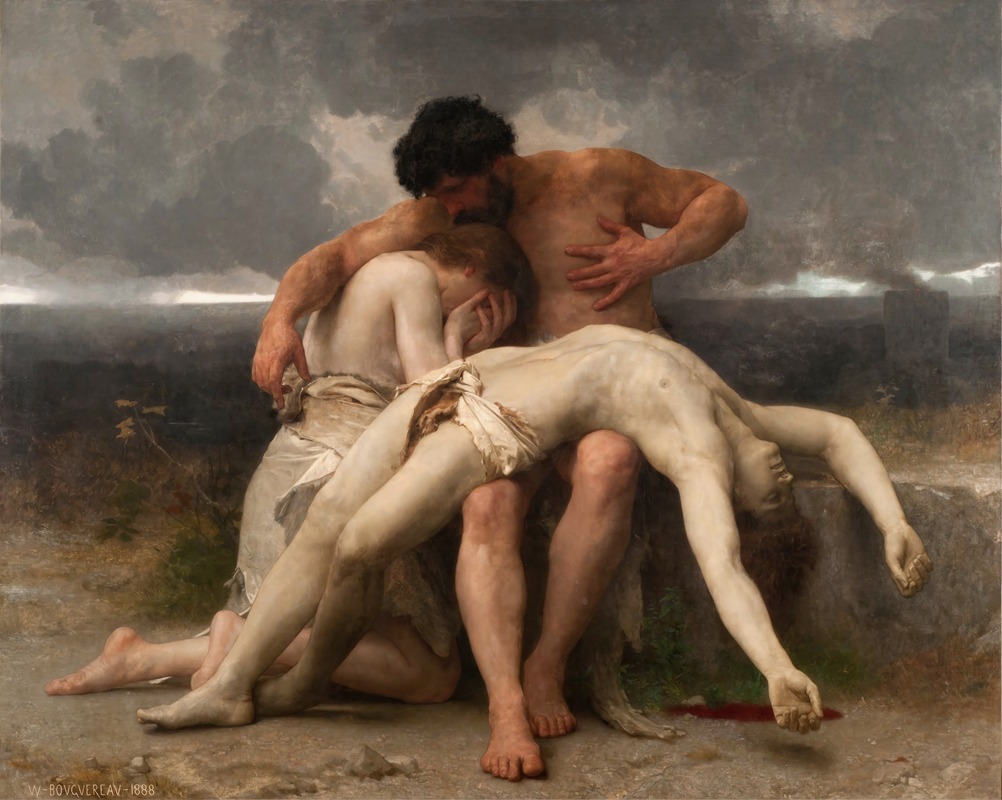
Adam's sun-browned, weathered skin forms a striking contrast with Eve's ivory-pale complexion. Deriving from Michelangelo and Raphael, the three figures form a classical pyramidal composition that achieves a flawless sculptural harmony. Abel's body is depicted with idealized beauty, devoid of any gruesome wounds.
✦ The setting of this painting
This setting depicts the cold, desolate land east of Eden from the Book of Genesis. In the far distance, white smoke rises from Abel's blessed altar of sacrifice, merging into ominous, gray storm clouds. On the parched ground in the foreground, a dark red stain of shed blood is visible, silently bearing witness to the very first murder in human history.
✦ Historical context
At the Paris Salon of the 1880s, monumental, tragic history paintings like this were regarded as the pinnacle of the genre, showcasing an artist's technical mastery and anatomical knowledge. Bouguereau drew upon his consummate classical training to construct this theatrical and magnificent scene, capturing the devastating moment Adam and Eve confront the death of their child.
Across a cold, desolate land, three figures appear. A man holds a hand over his heart, his face cast in silent anguish.
Clinging to his arm, a woman breaks down in tears, burying her face completely. At their feet lies a lifeless young man.
In the distant sky, ominous gray storm clouds gather, and a slender wisp of smoke rises. On the dry earth in the foreground lingers a small, dark red stain of blood.
This scene depicts humanity's very first tragedy, recounted in the Old Testament: the murder of Abel by his brother Cain, east of Eden. It is the moment when Adam and Eve, humanity's first parents, confront the death of their son.
Unveiled at the Paris Salon of 1888, this work was hailed as a pinnacle of Academic art, showcasing the painter's formidable skill and anatomical mastery. It is a grand history painting rendered on a monumental canvas spanning two and a half meters in width. The smoke in the distance rises from the altar of Abel's offering, which had received God's blessing.
A consummate, beautiful religious painting that dramatically captures a sacred narrative—at first glance, it may well seem so. Yet beneath the surface of this work lies a deeply poignant reality.
The painter's own heartbreaking confrontation with death.
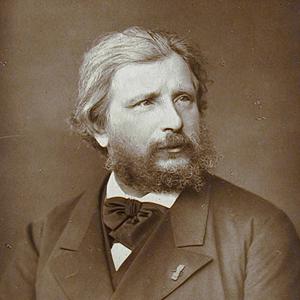
It was the spring of 1877 when Bouguereau lost his first wife, Nelly, to illness. It was tuberculosis.
The tragedy did not end there. Just two months later, in June of that same year, his infant second son, Maurice, was also taken by the very same disease.
About 276 more words
Unlock this story's ending, and every article on MusicStory
- 42
Stories1–2 new every week
An archive of paintings paired with great music, made for a weekend night and a cup of coffee
- 282
Paintings with commentarygrowing daily
From simply looking to truly reading — the brushwork and the obsession of the masters
- 10
Music Librarygrowing daily
Know it first, and what reaches your ear changes — background music becomes art you keep for life
My Notes, unlimited
Every reading adds to a digital art notebook that is yours alone
Already have an account? Log in
Your Note
Write down what this painting made you feel in your art notebook.
Please sign up to write notes.
Sign up for freeRecommended Artworks
Sources & references
More artists
If you find an error in this content, please let us know here
This site is protected by reCAPTCHA, and the Google Privacy Policy and Terms of Service apply.