
The Hands
1895
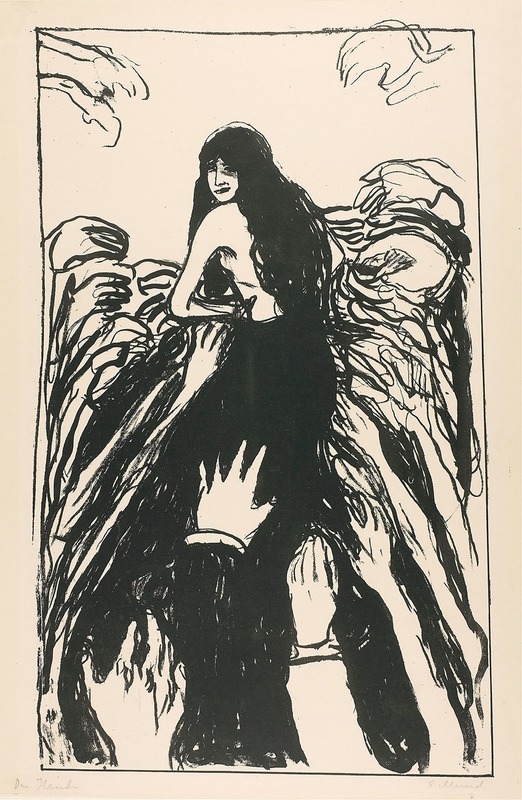
- Dimensions
- モチーフ:48.4 × 29.0 cm / シート:62.0 × 45.5 cm
- Medium
- Lithograph (color lithograph, crayon and tusche on wove paper)
- Collection
- Held in several collections, including the Munch Museum and the Art Institute of Chicago
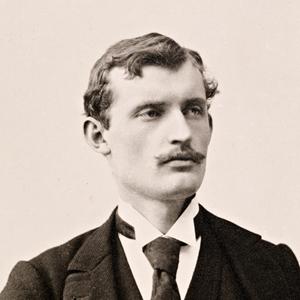
A celebrated Norwegian painter active from the late nineteenth century to the fi…
✦ Highlights (technique & color)
A color lithograph printed at a renowned print shop in Berlin, executed with crayon and liquid ink (tusche) on wove paper. The uneven rubbing of the black ink and the raw, unrefined rendering of the hands leave vivid traces of the physical process, producing a striking visual effect that evokes profound anxiety in the viewer.
✦ The setting of this painting
The background is a pitch-black void completely stripped of any sense of place, bearing no elements that suggest a specific room or outdoor setting. It is conceived as a purely psychological realm, materializing the silent gazes of desire and the fear of exploitation felt within the woman as an oppressive spatial weight.
✦ Historical context
In Berlin around 1895, a conflicted view of gender prevailed, regarding women simultaneously as virtuous saints and as femmes fatales who drained men of their vitality. Munch engaged in fervent debates with intellectuals at the tavern Zum schwarzen Ferkel (The Black Piglet), reflecting the social classes, repressions, and capricious fate of the era in his work.
A young woman, her back exposed, stands isolated in a pitch-black space.
Surrounding her, countless pale hands reach out greedily from the depths of the darkness.
The year is 1895.
Edvard Munch was active in Berlin, based at the salon 'Zum schwarzen Ferkel' (The Black Piglet).
There, he engaged in decadent discussions almost every night with playwright August Strindberg, writer Stanisław Przybyszewski, and their muse, Dagny Juel.
Society at the time was rife with a twisted view of gender, simultaneously revering women as sacred 'saints' while also seeing them as 'femmes fatales' who drained men's vitality.
In such an era, Munch gazed upon primitive human desires, the domination by others, and the psychological isolation that accompanied it.
This work was conceived as a pivotal piece in his series The Frieze of Life, which explored existential human emotions.
It was first unveiled in March 1895 at an exhibition of modern painting held at the Hugo Baroccio Gallery in Berlin.
About 134 more words
Read stories of masterpieces for free
Your Note
Write down what this painting made you feel in your art notebook.
Please sign up to write notes.
Sign up for freeRecommended Artworks
.webp)
Sources & references
More artists


If you find an error in this content, please let us know here
This site is protected by reCAPTCHA, and the Google Privacy Policy and Terms of Service apply.