
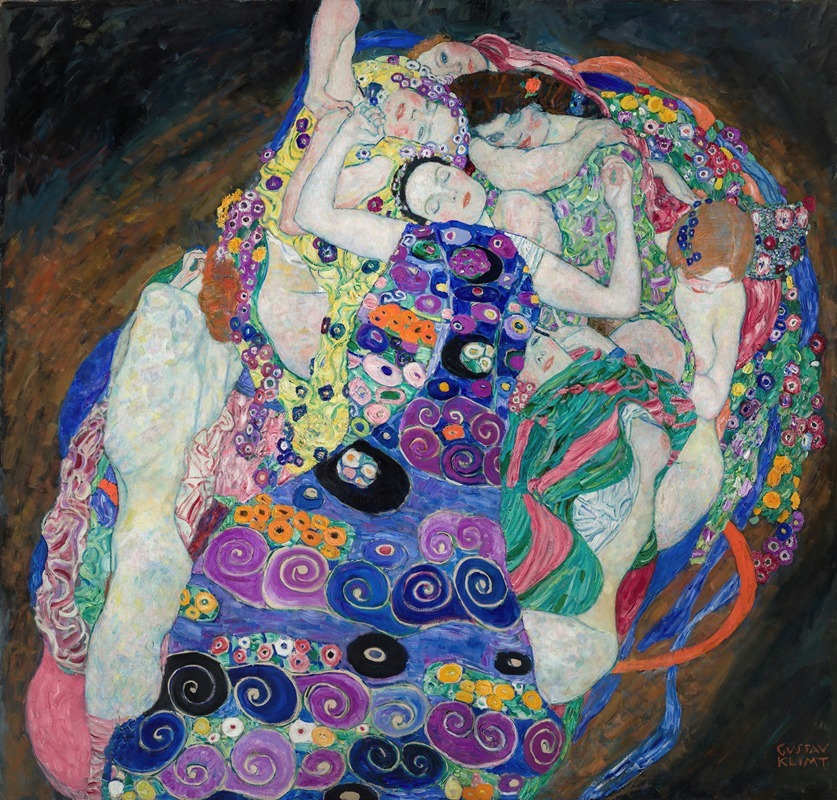
The Maiden
1913
- Dimensions
- 190.0 × 200.0 cm
- Medium
- Oil on canvas
- Collection
- National Gallery Prague (Prague, Czech Republic)
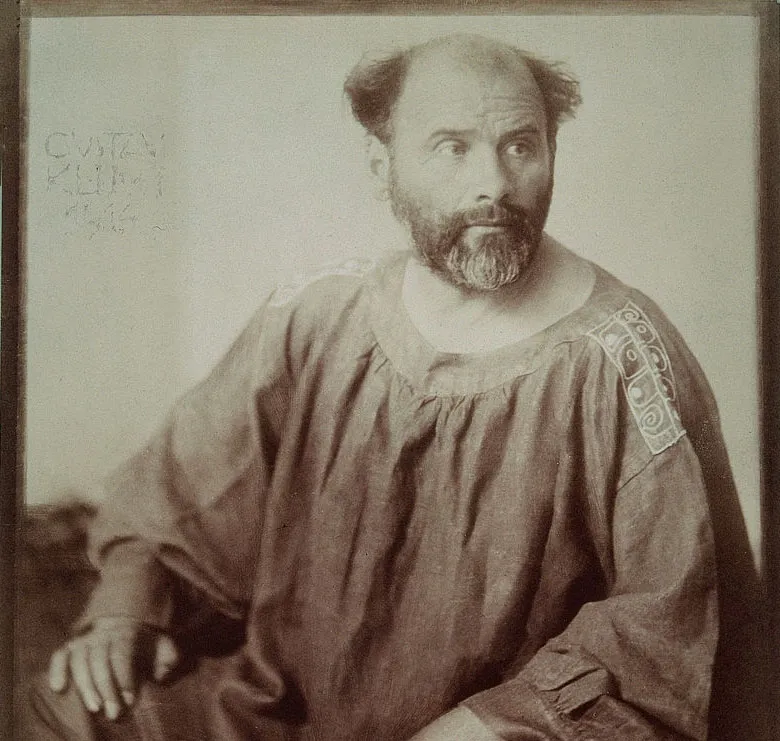
One of Vienna's foremost Symbolist painters active from the late 19th to early 2…
✦ Highlights (technique & color)
The work is distinguished by its kaleidoscopic layering of colors and a composition defined by fluid, elliptical motion. Diverse oil pigments, including ultramarine and vermilion, are richly applied in dense layers. The smooth, pale skin of the women creates a striking contrast with the undulating and floral decorative motifs evocative of Japanese kimono and obi.
✦ The setting of this painting
The scene depicts neither an actual landscape nor an interior, but a purely allegorical realm embodying a woman's unconscious, dreams, and spiritual and physical awakening. At the center of an inky void floats a multifaceted island woven of intertwined female figures and vibrant fabrics. This weightless setting visualizes the unfolding journey of life, capturing the metamorphosis from girlhood into womanhood.
✦ Historical context
In the early 1910s, Vienna was transitioning from decorative styles toward Expressionism, which pursued inner psychological and emotional depths. It was an era when artists such as Egon Schiele unveiled radical depictions of the body, and Sigmund Freud's psychoanalysis gained widespread influence among intellectuals. The deep recesses of human consciousness—dreams, the subconscious, and repressed desires—became paramount themes of artistic inquiry.
A colossal island woven from vibrant fabrics and women's bodies floats in a pitch-black void.
At its center, a maiden sleeps peacefully, surrounded by women in states of half-waking reverie and ecstatic trance.
Painted in 1913, when Gustav Klimt had entered his fifties.
Having once reigned at the pinnacle of the Viennese art world with his lavishly gilded "Golden Phase," he chose to leave that triumphant style behind.
Times were shifting; in Vienna, Sigmund Freud's psychoanalysis was unveiling the depths of the human unconscious, dreams, and repressed desires.
Amid this new wave turning toward the interior world, what moved Klimt most profoundly was the talent of the younger generation, including his young protégé Egon Schiele.
The bent elbows and sharply angled wrists drawn by Schiele.
The raw, visceral movement of bodies.
Klimt did not merely praise and support these young artists; he absorbed their expressionist energy into his own canvases.
Casting aside the shimmer of gold leaf, he moved toward more vivid colors and intricate rhythms of life.
Refusing to rest on his laurels, he chose to reinvent his artistic expression.
- This work is part of “6 works for you” for The Free Spirit → See
About 139 more words
Unlock this story's ending, and every article on MusicStory
- 42
Stories1–2 new every week
An archive of paintings paired with great music, made for a weekend night and a cup of coffee
- 319
Paintings with commentarygrowing daily
From simply looking to truly reading — the brushwork and the obsession of the masters
- 10
Music Librarygrowing daily
Know it first, and what reaches your ear changes — background music becomes art you keep for life
My Notes, unlimited
Every reading adds to a digital art notebook that is yours alone
Already have an account? Log in
Your Note
Write down what this painting made you feel in your art notebook.
Please sign up to write notes.
Sign up for freeRecommended Artworks
Sources & references
More artists
If you find an error in this content, please let us know here
This site is protected by reCAPTCHA, and the Google Privacy Policy and Terms of Service apply.