
 日本語 (JA)
 English (EN)
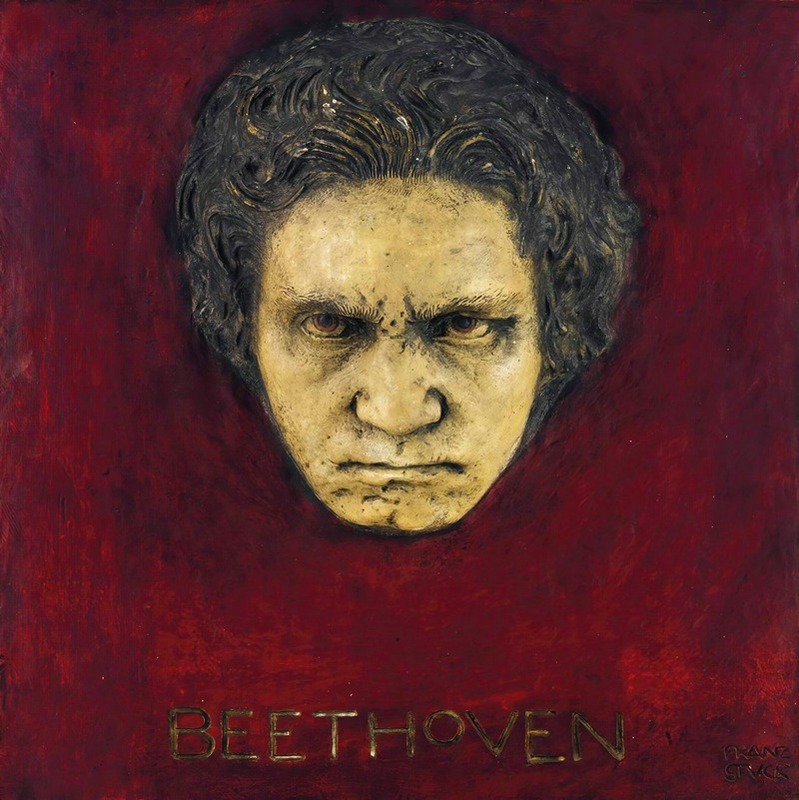
- Dimensions
- 47.6 × 45.7 × 12.7 cm
- Medium
- Painted and gilded plaster relief
- Collection
- The Metropolitan Museum of Art
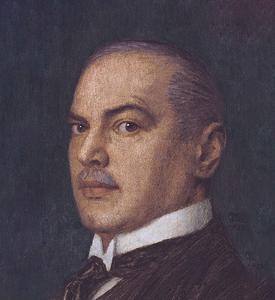
Franz von Stuck was a German painter, sculptor, printmaker, and architect. Stuck…
✦ Highlights (technique & color)
Rejecting the prevailing 19th-century convention of pure white marble sculpture, this work revives the polychromy of ancient Greece. By applying gold leaf to the plaster surface and painting shadows and background directly in shades of red and brown, it merges the dimensionality of sculpture with the surface quality of painting.
✦ The setting of this painting
Free from any concrete landscape, Beethoven's near-life-size visage emerges dramatically from a background panel painted in an eerie, impassioned blood-red. It is conceived as a spiritual realm that conveys the supernatural power inherent in music.
✦ Historical context
From the late 19th to early 20th century—culminating around the 75th anniversary of his death in 1902—the veneration of Beethoven as the ultimate creative genius reached its zenith across Germany and Austria.
A face juts forward against a blood-red background, both eerie and passionate.
Wild, turbulent curls.
And a fierce, piercing gaze that strikes directly at the viewer.
It is Ludwig van Beethoven.
It may appear as the very archetype of the dramatic, "tormented genius."
The mythic hero that people of that era envisioned Beethoven to be.
One might assume the artist conjured this face entirely from exaggerated imagination.
Yet in truth, the underlying bone structure of this face is no mere figment of artistic fancy.
Stuck created this relief sculpture between 1900 and 1902.
The year 1902 marked the 75th anniversary of Beethoven's death.
At the time, the fervor of the "Beethoven cult" in Germany and Austria had reached its peak.
It was a movement celebrating him as an absolute genius of creation.
Stuck himself was an ardent participant in this collective adoration.
He sought to adorn the music salon of Villa Stuck, the residence he designed himself.
He conceived a cycle of portraits depicting the great men who had guided humanity.
This Beethoven was designed as part of that decorative wall ensemble.
About 224 more words
Read the rest of this commentary —
and step into a secret gallery
opened just for you
An "art letter" delivered to you every Saturday morning
Works, music and words chosen for your sensibility, from your artist-type result and the paintings you love
A library of masterpieces and music you can enjoy "in your own words", not just look at
A "digital art notebook" (unlimited) where your impressions build into your own taste
Unlimited likes and notes
¥980 / month¥0 today
¥980/month (tax incl.) from day 8. Cancel anytime.
Already have an account? Log in
Your Note
Write down what this painting made you feel in your art notebook.
Please sign up to write notes.
Sign up for freeRecommended Artworks
Sources & references
More art movements
Pre-Baroque
1 artworks
Victorian era
10 artworks
Impressionism
48 artworks
Late Pre-Raphaelite
10 artworks
Baroque
2 artworks
American Impressionism
5 artworks
Realism
4 artworks
Pre-Raphaelite
3 artworks
Barbizon School
5 artworks
Academic art
5 artworks
Luminism
3 artworks
Rococo
2 artworks
Symbolism
22 artworks
Neo-Impressionism
3 artworks
Ukiyo-e
1 artworks
Japonism
4 artworks
Edo period
1 artworks
Fauvism
1 artworks
Naturalism
9 artworks
Russian Realism
1 artworks
Post-Impressionism
13 artworks
Genre painting
9 artworks
Neoclassicism
3 artworks
ウィーン分離派
7 artworks
自然主義
1 artworks
ナショナル・ロマンティシズム
1 artworks
未来派
1 artworks
More artists
If you find an error in this content, please let us know here
This site is protected by reCAPTCHA, and the Google Privacy Policy and Terms of Service apply.