Nymphs Finding the Head of Orpheus
1900
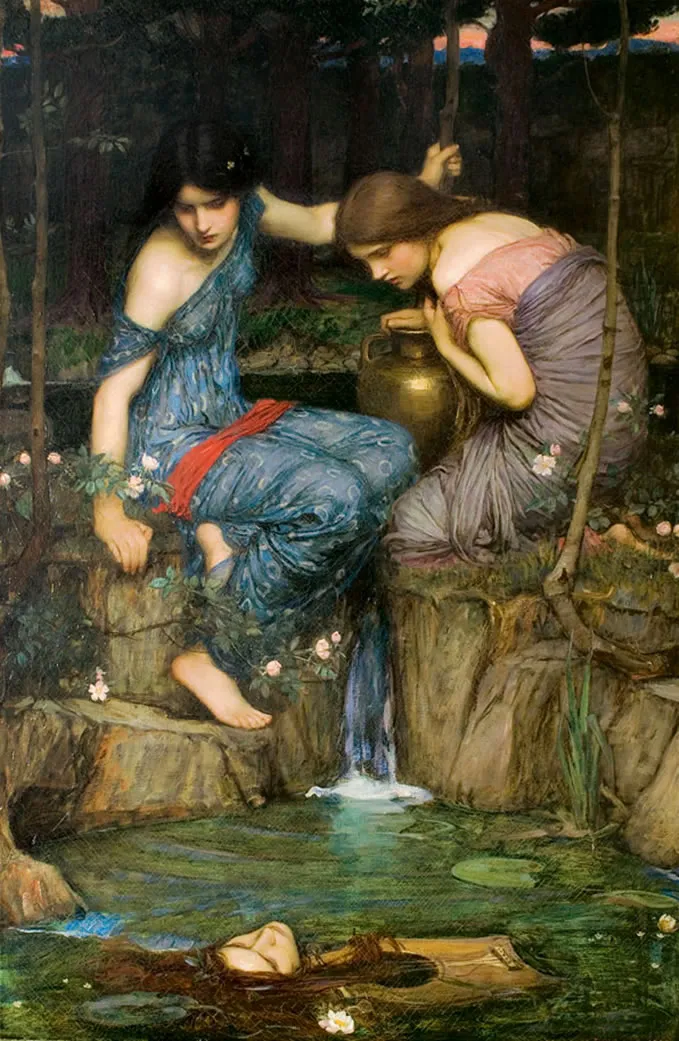
Deep within a shadowy forest, two beautiful nymphs lean over the water's edge, gazing into the still surface.
Before their eyes, drifting among the water weeds alongside a wooden lyre, is the severed head of a man.
This is a terrifying yet mystical scene, depicting the final moments of Orpheus, the legendary musician from Greek mythology.
Yet, interestingly, while many painters of the era preferred to depict his glorious achievements during his life or his dramatic rescue of his wife from the Underworld, Waterhouse deliberately chose this scene of his cruel and tragic end.
Having lost his beloved wife Eurydice forever, Orpheus sank into deep despair and rejected all advances from other women.
This incurred the fierce wrath of frenzied women, who brutally tore him limb from limb. His head and lyre, thrown into the river, drifted across the sea and eventually washed ashore on the island of Lesbos. Remarkably, it is said that even in death, his head continued to murmur songs of love and sorrow.
Waterhouse did not depict the immediate aftermath of this gruesome murder as a violent and bloody panic.
The vivid contrast between the pale, bloodless face of the musician and the rosy skin of the nymphs who discovered him.
Before the horror of death, the nymphs' expressions are not of gruesome panic, but of dreamy sympathy and quiet curiosity.
Even while depicting such a gruesome end, why is this painting enveloped in such profound tranquility and beauty?
Perhaps it is because his figure, continuing to sing with his lyre even after his body was torn apart, quietly testifies to the 'eternal nature of art that can never be extinguished.'
If you find an error in this content, please let us know here
ラファエル前派の精神を色濃く受け継いだイギリスの画家。 イギリス人の画家の両親のもとローマで生まれ、ロンドンの王立芸術院(ロイヤル・アカデミー)で学んだのち、自…
Stories featuring this painting
Your Note
Write down what this painting made you feel in your art notebook.
Please sign up to write notes.
Sign up for free