
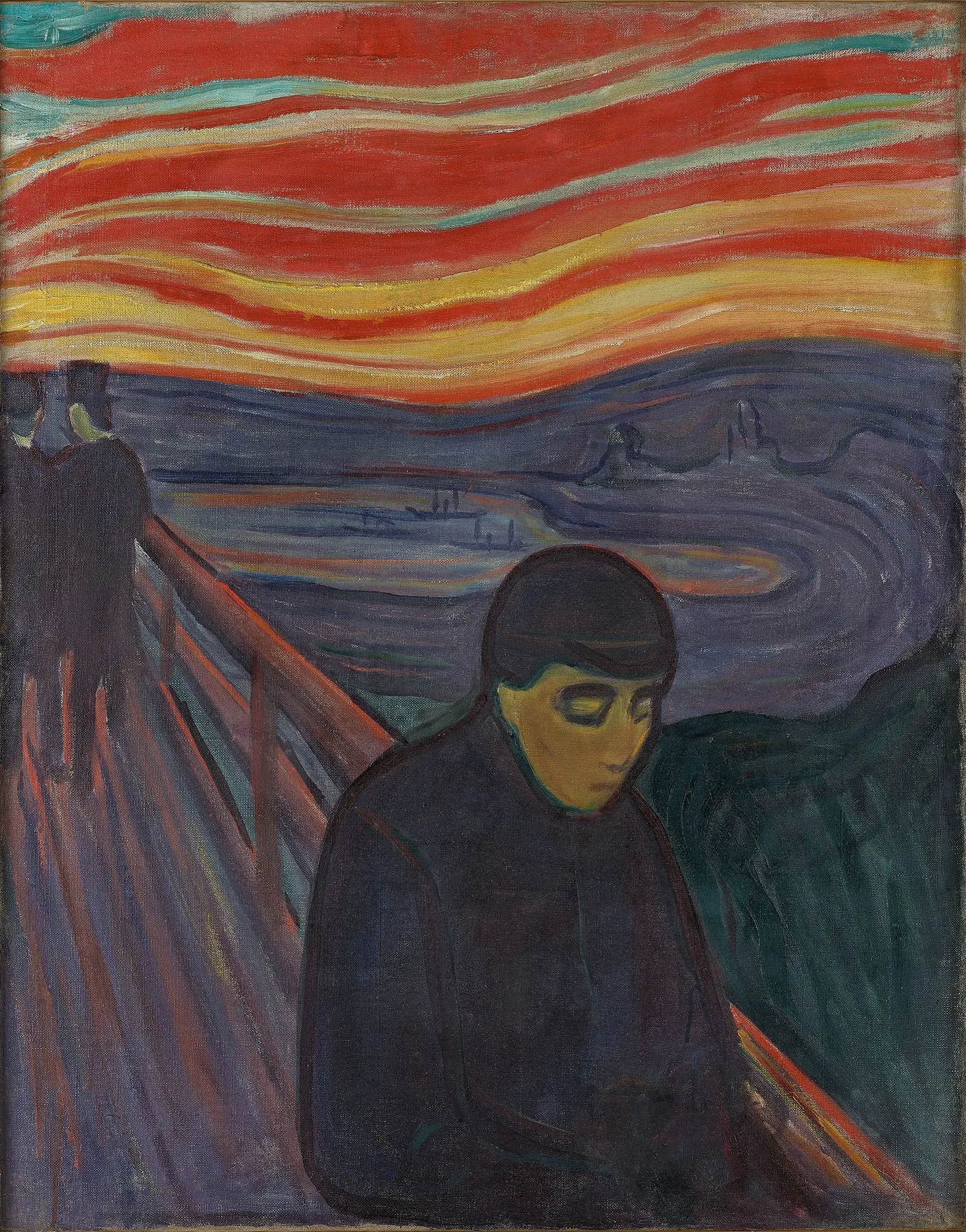
Despair
1894
- Dimensions
- 91.7 × 72.5 × 2.3 cm
- Medium
- Oil on canvas
- Collection
- Munch Museum (Oslo, Norway)
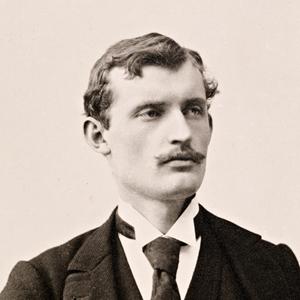
A celebrated Norwegian painter active from the late nineteenth century to the fi…
A study in quiet, silent despair—a deliberate return to stillness after the dynamic frenzy of The Scream. Amid the turmoil of family illness and his own psychological crisis, this is a confession of the soul, inscribing an inescapable solitude onto the canvas.
✦ Highlights (technique & color)
Applied so thinly that the weave of the canvas shows through, the paint retains a fluid, almost liquid quality. The sky is rendered with unblended, parallel horizontal strokes that create a visual tension. The sickly yellowish-green of the man's face and the crimson of the sky form a complementary pair, while the sharp diagonal of the railing collides dynamically with the sky's horizontal lines, evoking a claustrophobic sense of having no escape.
✦ The setting of this painting
The setting is Ljabrochausséen, a road climbing Ekeberg hill in the eastern part of Christiania (now Oslo), Norway's capital. Below lies a panoramic view of the Christiania Fjord and the city. While known as a scenic overlook, the foot of the hill was also home to a municipal slaughterhouse, and nearby stood the psychiatric hospital where Munch's younger sister was institutionalized.
✦ Historical context
The early 1890s was a period marked by widespread psychological crises, a counter-reaction to rapid urbanization brought by the Industrial Revolution. Scholars have suggested that the blood-red sky in the background was inspired by real meteorological phenomena—such as atmospheric dust from the 1883 eruption of Krakatoa, or nacreous polar stratospheric clouds. It was also an era when artists moved away from Impressionism toward Symbolism, seeking to depict the inner psyche.
Beneath a blood-red sky, a man in a black coat leans heavily against a railing.
Deep shadows are etched around his sunken eyes, his gaze fixed downward upon the water below.
Looking at this painting, a certain famous masterpiece may come to mind.
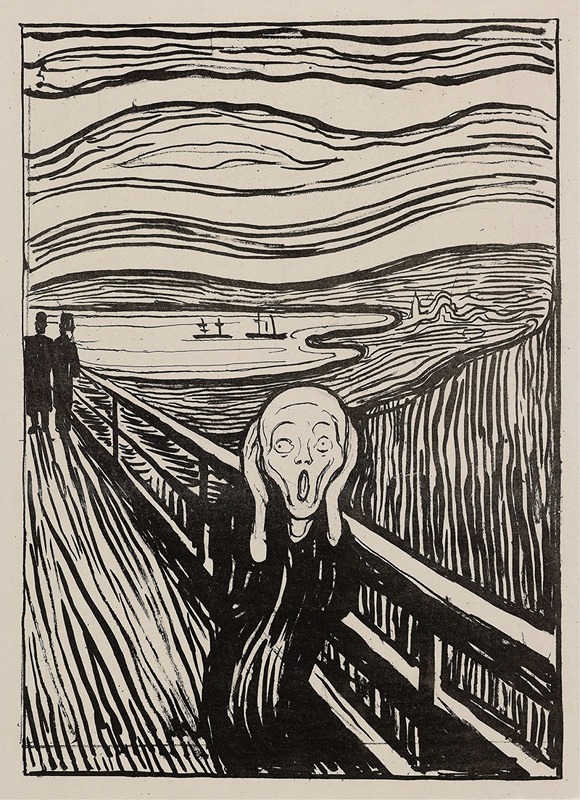
Yes, Edvard Munch's "The Scream."
The undulating sky of swirling red and yellow.
The bridge stretching into the distance, and the receding silhouettes of two figures.
The background composition is almost identical to that of "The Scream."
Because of this, "Despair" is often described in commentary online in terms such as these:
"A mere preparatory sketch, a failed attempt at 'The Scream.'"
Yet, that is a misconception.
This work is not a failed study made prior to "The Scream."
It is an independent, finished painting created in 1894, the year after "The Scream" was completed.
Why did Munch choose to return to this very composition after having already painted "The Scream"?
It began around 1891 or 1892.
Munch was walking along a road in Kristiania, Norway, with two friends.
As the sun set, the sky suddenly turned blood-red.
Feeling an agonizing pain in his chest, exhausted, he leaned against the railing.
His friends walked on, leaving him trembling with anxiety.
A vast, infinite scream pierced through nature.
To visualize this intense experience, he painted the first version of "Despair" in 1892.
Then, in 1893, he created his definitive masterpiece, "The Scream," featuring a figure facing forward with hands over its ears.
A dynamic panic that seemed to release everything.
That should have brought his artistic quest to an end.
Yet in 1894, while staying in Berlin, Germany, Munch took up his brush once more.
At the time, his life was deeply unsettled.
His solo exhibition in Berlin was vehemently condemned as "immoral and crude," forced to close after only a few days.
He lived in constant financial distress.
In terms of health, he suffered from nervous exhaustion and excessive drinking.
The psychological trauma from the sudden death of his father, Christian, in 1889 still cast a dark shadow over him.
Furthermore, at the foot of the hill of Ekeberg, where he had walked, lay a psychiatric hospital.
His sister Laura, who suffered from severe mental illness, was institutionalized there.
The road he took regularly to visit her was inextricably linked in Munch's mind to familial illness, madness, and a premonition of death.
About 167 more words
Unlock this story's ending, and every article on MusicStory
- 42
Stories1–2 new every week
An archive of paintings paired with great music, made for a weekend night and a cup of coffee
- 319
Paintings with commentarygrowing daily
From simply looking to truly reading — the brushwork and the obsession of the masters
- 10
Music Librarygrowing daily
Know it first, and what reaches your ear changes — background music becomes art you keep for life
My Notes, unlimited
Every reading adds to a digital art notebook that is yours alone
Already have an account? Log in
Your Note
Write down what this painting made you feel in your art notebook.
Please sign up to write notes.
Sign up for freeRecommended Artworks
.webp)
Sources & references
More artists
If you find an error in this content, please let us know here
This site is protected by reCAPTCHA, and the Google Privacy Policy and Terms of Service apply.