
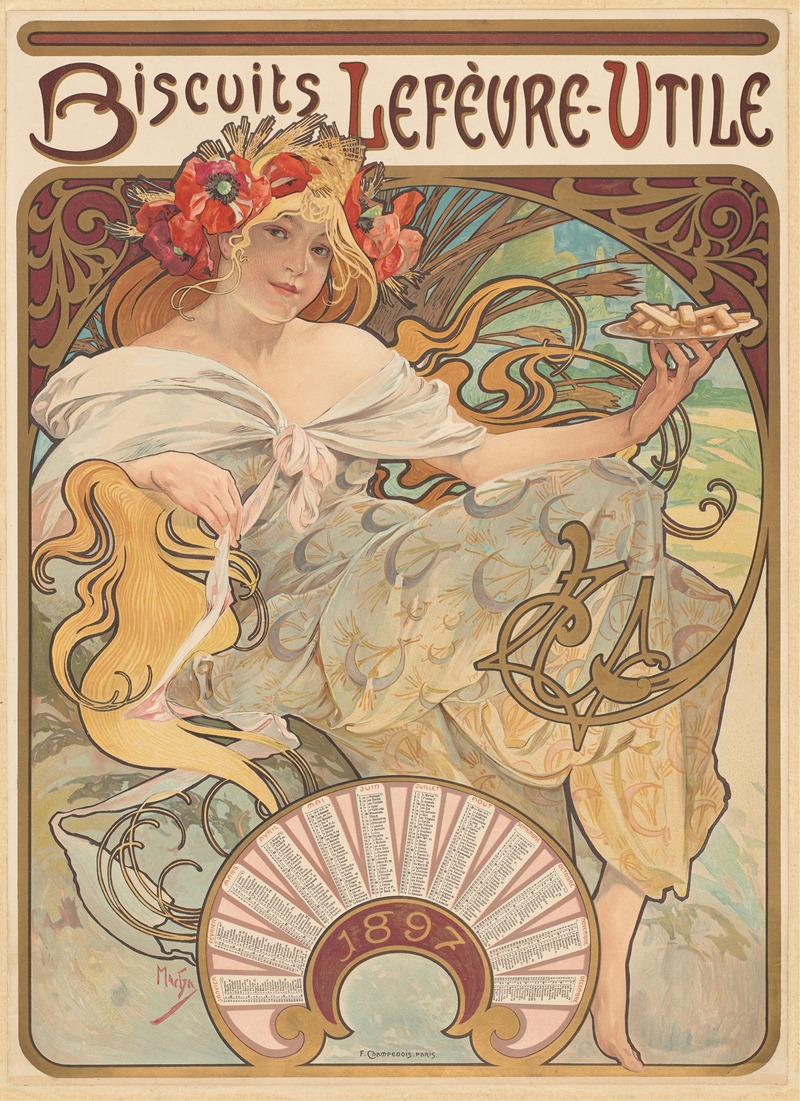
Biscuits Lefèvre-Utile
1896
- Dimensions
- 61.5 × 44.3 cm
- Medium
- Color lithograph
- Collection
- Mucha Foundation
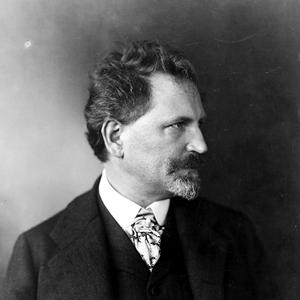
Alfons Maria Mucha, known internationally as Alphonse Mucha, was a Czech painter…
✦ Highlights (technique & color)
Crisp outlines define the figure and drapery. The color palette is centered on warm tones such as gold and yellow, evoking wheat and baked sweets. Cool blues and soft greens in the background balance the overall composition, enhancing its visual harmony and elegance.
✦ The setting of this painting
Set against the refined ambiance of Belle Époque Paris at the close of the nineteenth century, this work was originally created as a poster featuring a calendar, combining everyday practicality with artistic elegance. Wheat symbolizing the harvest and large blossoms are arranged decoratively, lending an aura of abundance and grace to a familiar confection.
✦ Historical context
In Paris during the late 1890s, technological innovations in color lithography allowed vibrant posters to adorn the streets, sparking a cultural phenomenon often described as an "open-air museum." It was an era when art and commerce became deeply intertwined, marking the dawn of progressive advertising strategies as businesses commissioned leading artists to elevate their brand image.
A young girl, her hair adorned with a large blossom, smiles with effortless grace. Raised in her hands is a tray laden with biscuits.
Paris in the late 1890s. The city streets overflowed with vibrant posters—what the public hailed as "the art gallery of the streets." At the end of 1894, a theatrical poster had catapulted a painter to fame overnight: Alphonse Mucha.
In 1896, he signed an exclusive contract with a prominent Parisian printing house. Secured with newfound financial stability, a compelling request arrived at his studio. The client was a historic biscuit manufacturer based in Nantes, France: Lefèvre-Utile, famously known as LU.
Its proprietor, Louis Lefèvre-Utile, harbored a visionary ambition: to elevate his brand's image by enlisting the foremost artists of the age. It was a forward-thinking marketing strategy, and Mucha rose brilliantly to the challenge. Far from producing a mere product advertisement, he transformed the humble biscuit into a refined luxury of high society.
About 163 more words
Unlock this story's ending, and every article on MusicStory
- 42
Stories1–2 new every week
An archive of paintings paired with great music, made for a weekend night and a cup of coffee
- 282
Paintings with commentarygrowing daily
From simply looking to truly reading — the brushwork and the obsession of the masters
- 10
Music Librarygrowing daily
Know it first, and what reaches your ear changes — background music becomes art you keep for life
My Notes, unlimited
Every reading adds to a digital art notebook that is yours alone
Already have an account? Log in
Your Note
Write down what this painting made you feel in your art notebook.
Please sign up to write notes.
Sign up for freeRecommended Artworks
Sources & references
More artists

If you find an error in this content, please let us know here
This site is protected by reCAPTCHA, and the Google Privacy Policy and Terms of Service apply.