
La Plume
1899
- Dimensions
- 71 × 27.3 cm
- Medium
- Color lithograph on paper
- Collection
- Mucha Foundation
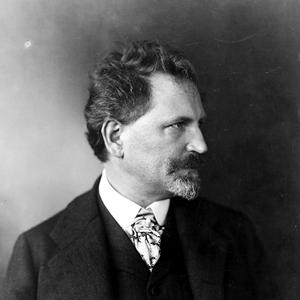
Alfons Maria Mucha, known internationally as Alphonse Mucha, was a Czech painter…
✦ Highlights (technique & color)
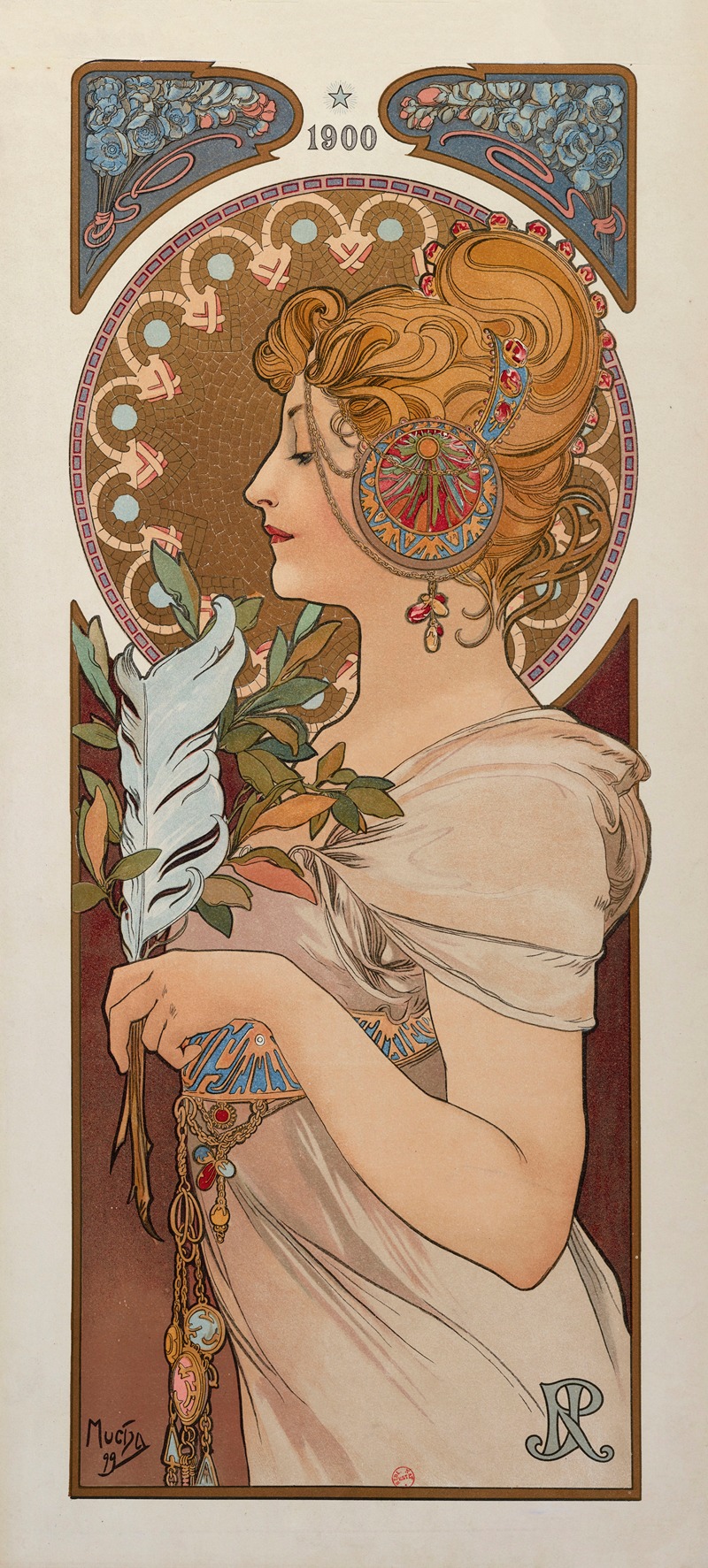
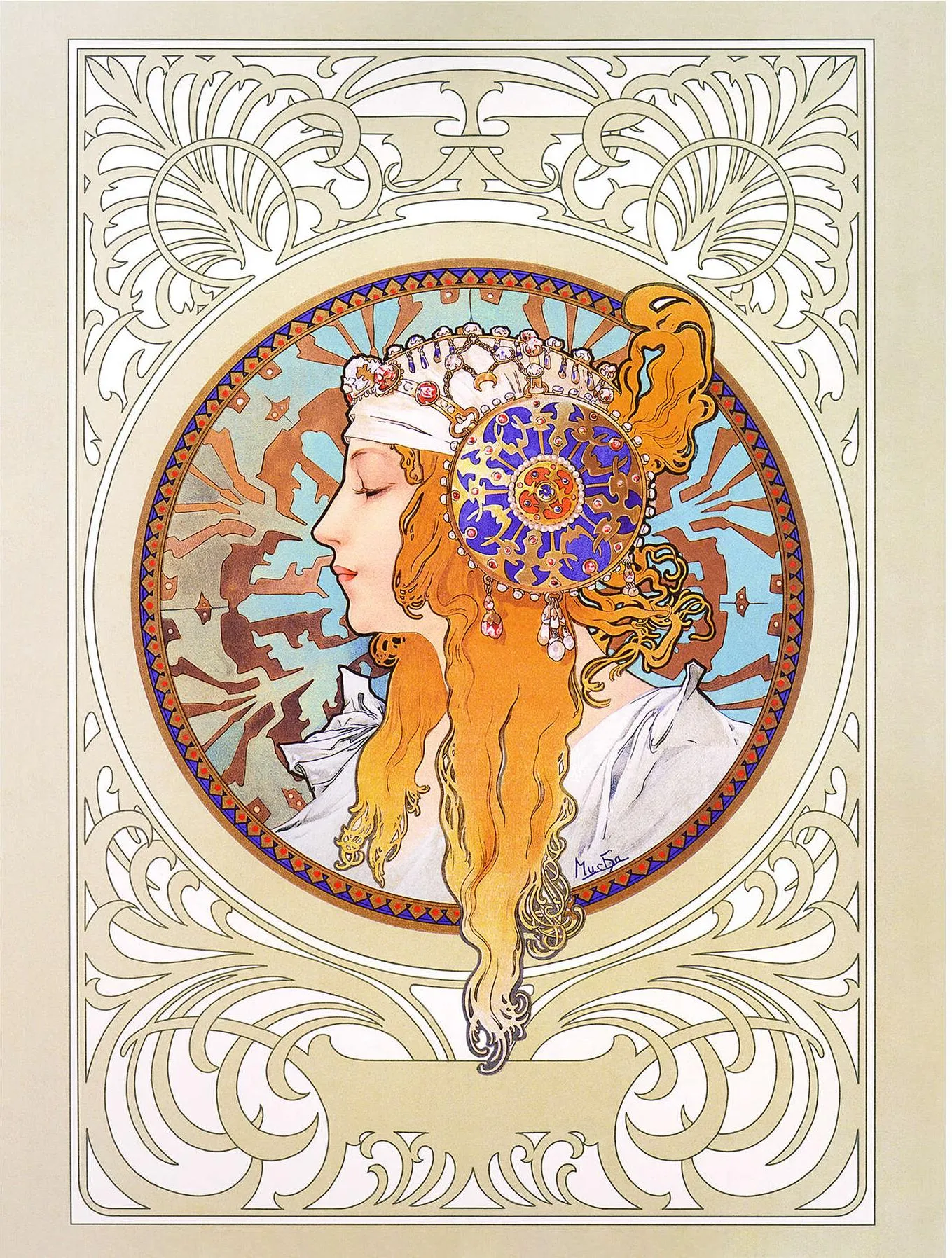
This work is characterized by muted pastel tones and exceptionally delicate outlines. A blonde woman, posed nearly in profile, is adorned with exquisite jewelry. The intricately rendered folds of her drapery contrast with the rectilinear, mosaic-like geometric patterns in the background, imparting decorative depth and an elegant rhythm to the composition.
✦ The setting of this painting
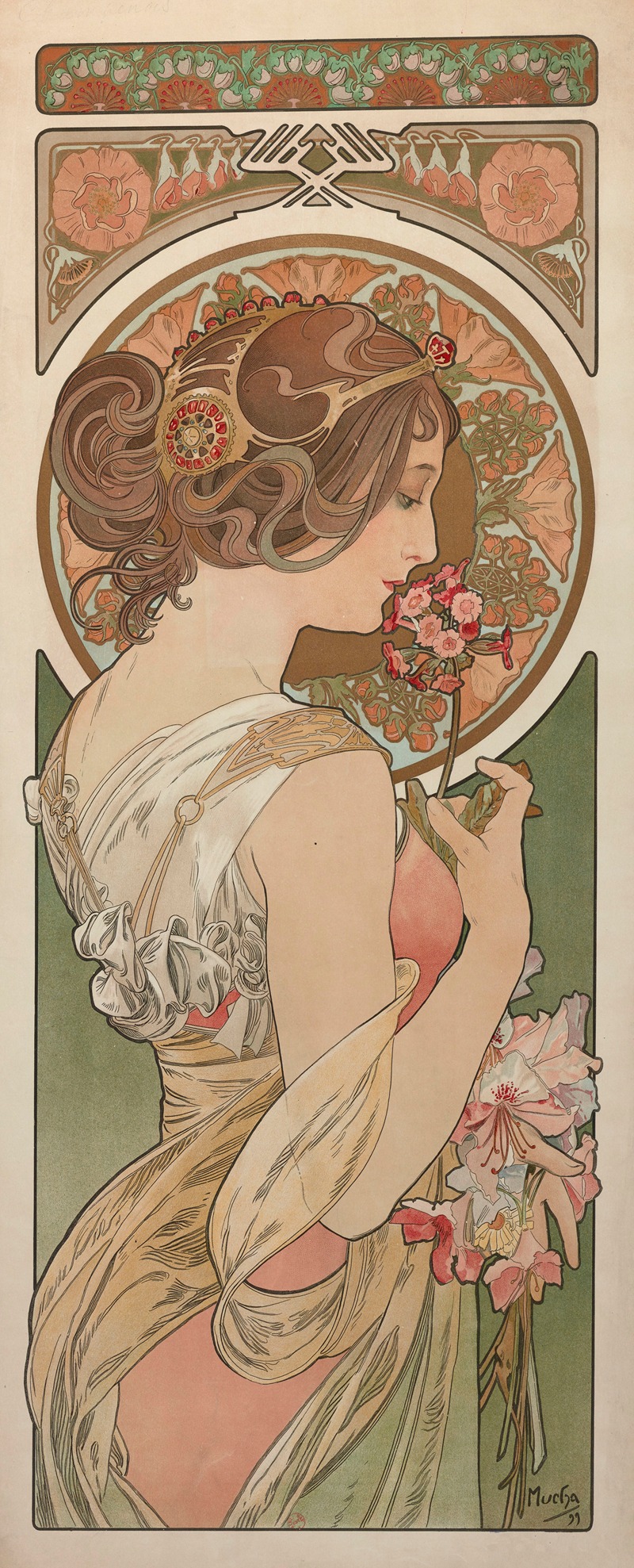
Rather than depicting a real landscape, the space is filled with circular, geometric mosaic motifs. While its companion piece, Primrose, features organic botanical elements, this work employs rigid abstract patterns independent of nature. The goose quill held by the woman symbolizes intellect and writing.
✦ Historical context
In Paris during the late 1890s, the concept of the "decorative panel" emerged—artistic posters stripped of commercial advertising text. Mucha signed a contract with the printer Champenois to produce these affordable, mass-producible artworks. They embodied the "democratization of art," bringing beauty not only to the wealthy elite but into the homes of everyday people.
Set against a geometric mosaic pattern, a woman stands quietly. Elaborate jewelry adorns her dark hair and gown. In her hands, she holds a spray of laurel leaves and a goose quill pen.
Paris, 1899. Alphonse Mucha was bound by an exclusive contract with the publisher and printer Champenois. Supported by a steady monthly salary, he set up a vast studio on Rue du Val-de-Grâce, immersing himself day after day in his art.
Champenois conceived a revolutionary concept: the "decorative panel"—posters stripped entirely of advertising text. It was a novel medium of art that could be mass-produced affordably.
Mucha resonated deeply with this vision. Art, he maintained, was not the exclusive domain of the wealthy elite; it ought to brighten the walls of humble, everyday homes as well. Affordable beauty accessible to all—he was a devoted believer in the "democratization of art."
The quill pen resting in the woman's hand served as an emblem of intellect and literature. Yet it was also a direct nod to a specific publication: the literary journal La Plume. In 1897, the journal had hosted a solo exhibition for Mucha at its gallery and released a special issue dedicated to his work, cementing his reputation. It was a name to which the artist felt a profound debt of gratitude.
About 102 more words
Read stories of masterpieces for free
Your Note
Write down what this painting made you feel in your art notebook.
Please sign up to write notes.
Sign up for freeRecommended Artworks
Sources & references
More artists

If you find an error in this content, please let us know here
This site is protected by reCAPTCHA, and the Google Privacy Policy and Terms of Service apply.