
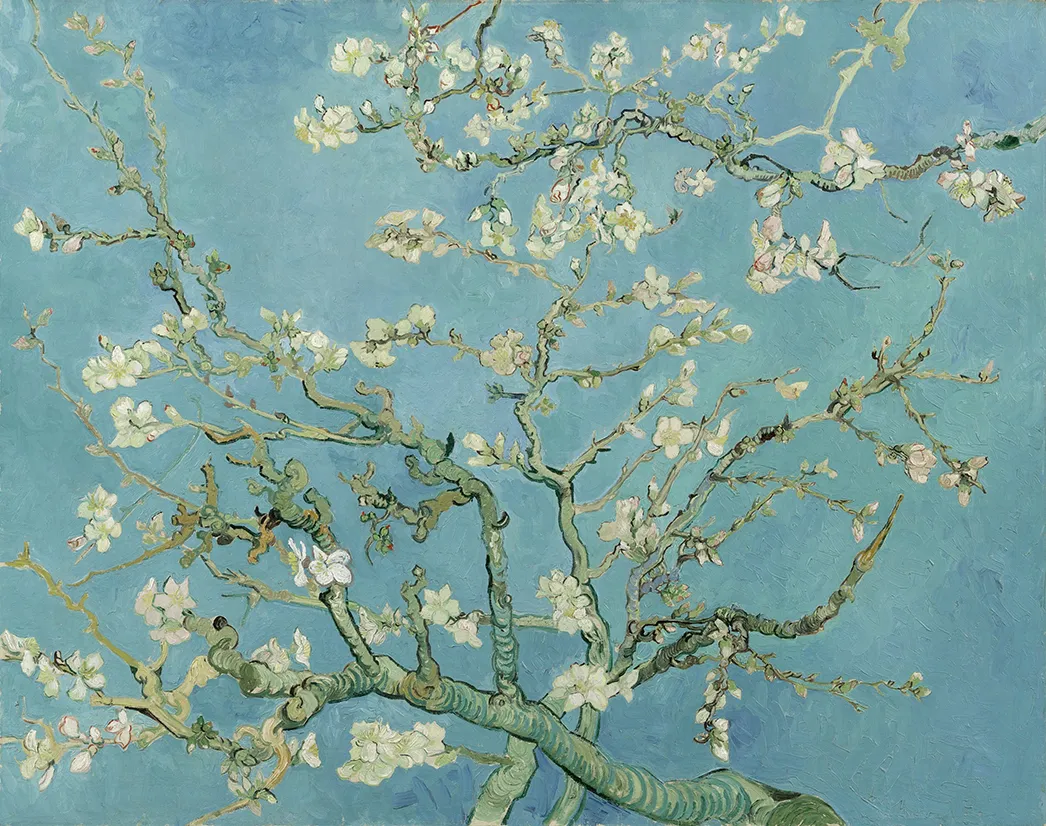
Almond blossom
1890
- Dimensions
- 73.3 × 92.4 cm
- Medium
- Oil on canvas
- Collection
- Van Gogh Museum, Amsterdam
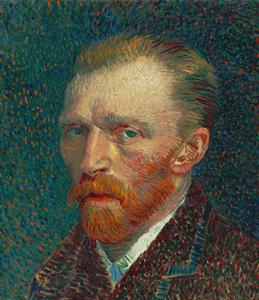
A Post-Impressionist painter who fundamentally revolutionized the visual languag…
A quiet yet steadfast rejection of posthumous mythologies of madness and foreboding. Painted to celebrate the birth of his nephew, who was given his own name, this work is a hymn to life, imbued with lucid clarity and unconditional love for his family.
✦ Highlights (technique & color)
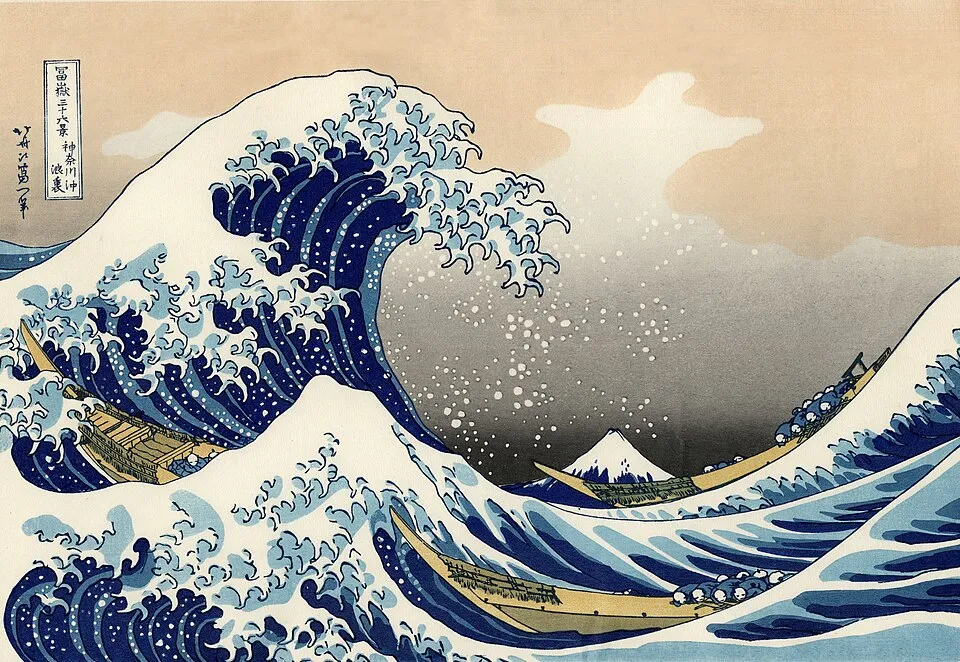
Drawing strong inspiration from Japanese ukiyo-e prints, the work employs a bold composition that omits the tree trunk to focus closely on the branches. Bold, dark outlines delineate the limbs, while thick impasto gives texture to the petals. Originally, the painting featured a striking contrast between a turquoise sky and vivid pink blossoms.
✦ The setting of this painting
February 1890, Saint-Rémy in Provence, southern France. The setting is the garden of the asylum where Van Gogh was staying, or an orchard nearby. Amid the crisp air of early spring—where a lingering winter chill met the first warmth of the sun—he painted outdoors, directly observing the almond blossoms as they began to bloom.
✦ Historical context
In the late 19th century, Europe was swept by Japonisme, inspired by Japanese ukiyo-e woodblock prints. This era also saw the rise of vivid synthetic pigments made possible by advances in organic chemistry during the Industrial Revolution. However, many of these paints were chemically unstable, with poor lightfastness that caused them to fade upon exposure to light and oxygen.
Thick, powerful branches reach up toward a clear blue sky. Adorning them are delicate white almond blossoms in full bloom. Vincent van Gogh. When hearing his name, many people immediately picture a tragic life. This painting, too, is often described as having been created amidst mad despair or a premonition of death. In reality, however, that is a story constructed after his time. When he painted this, his mind was remarkably serene. And these flowers were not originally white.
January 31, 1890. Joyful news reached Van Gogh while he was recovering at the asylum in Saint-Rémy in southern France. His younger brother Theo and sister-in-law Jo in Paris had welcomed their firstborn son. Theo told him in a letter that they had named the child "Vincent Willem," after his uncle. Van Gogh was overjoyed from the bottom of his heart. He resolved to paint a gift to hang in his nephew’s bedroom. With that determination, he stepped outdoors where the cold of early spring still lingered. The subject he chose was an almond tree. Almond trees bloom earlier than any other fruit tree at the end of winter, making them a symbol of "new life" and "hope."
In mid-February, he set to work at the canvas in the crisp air. Much like in Japanese ukiyo-e prints, he boldly cropped out the trunk, depicting only the branches. Applying thick layers of paint, he meticulously rendered each individual petal. "It was meant to be the best thing I had done—painted with the utmost patience and calm," he would later reflect in a letter.
- This work is part of “6 works for you” for The Teller of Nostalgia → See
About 223 more words
Unlock this story's ending, and every article on MusicStory
- 42
Stories1–2 new every week
An archive of paintings paired with great music, made for a weekend night and a cup of coffee
- 319
Paintings with commentarygrowing daily
From simply looking to truly reading — the brushwork and the obsession of the masters
- 10
Music Librarygrowing daily
Know it first, and what reaches your ear changes — background music becomes art you keep for life
My Notes, unlimited
Every reading adds to a digital art notebook that is yours alone
Already have an account? Log in
Your Note
Write down what this painting made you feel in your art notebook.
Please sign up to write notes.
Sign up for freeRecommended Artworks
Sources & references
More artists
If you find an error in this content, please let us know here
This site is protected by reCAPTCHA, and the Google Privacy Policy and Terms of Service apply.