
 日本語 (JA)
 English (EN)
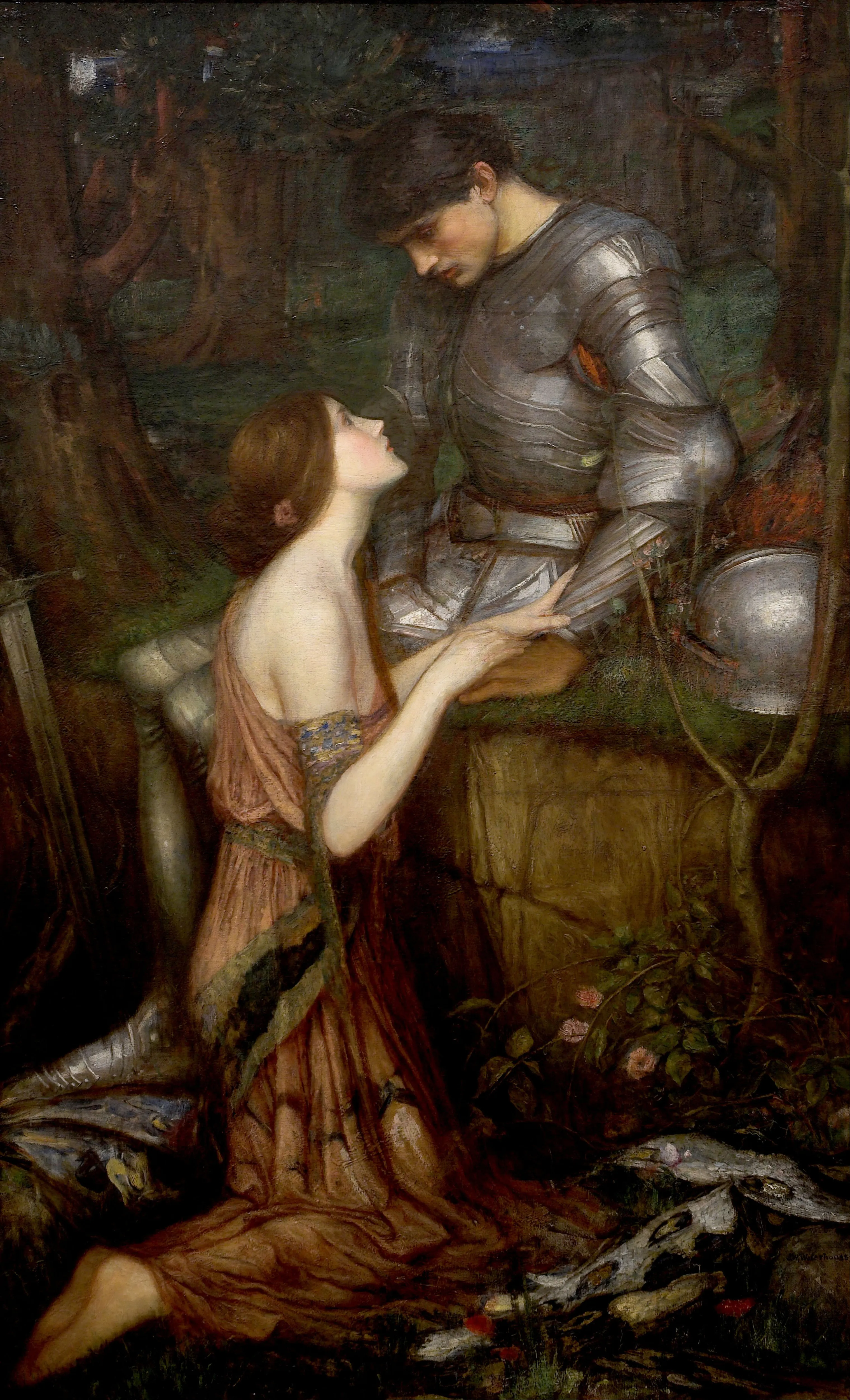
- Dimensions
- 112 × 81 cm
- Medium
- 油彩、カンヴァス
- Collection
- ヘッセン州立美術館
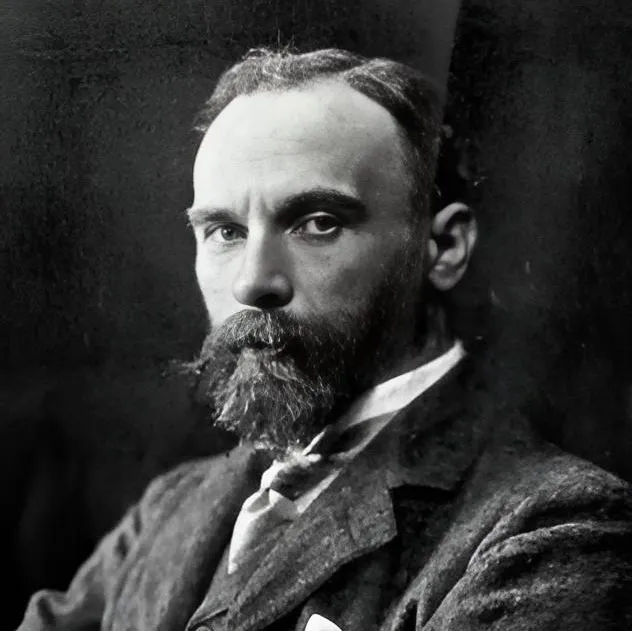
An English painter deeply influenced by the spirit of the Pre-Raphaelite Brother…
ロイヤル・アカデミー正会員選出に向けて自身の評価を決定づけるため、時代の不安を投影した魅惑的で危険な女性像の系譜を確立しようとした。
✦ Highlights (technique & color)
身を乗り出す騎士の重厚な暗い甲冑と、膝を折り立ち上がる妖精の柔軟な体の傾斜が激しい斜めの動線を生み出している。女性が自らの長い髪を指で編み込み、騎士の首に巻き付ける視覚的トリックに注目。森のアースカラーの中で、女性の青白く透き通る皮膚と赤い唇が強烈なコントラストをなしている。
✦ The setting of this painting
外界から隔絶された薄暗く鬱蒼とした「魔法の森」。巨木の幹や下草が密生し、日光がほとんど遮られた不穏で密室的な自然空間。
✦ Historical context
1893年。19世紀末ヨーロッパで「ファム・ファタール」の表象が浸透し、ヴィクトリア朝社会ではニュー・ウーマン運動による女性の社会的自立が進んでいた。これに対する男性側の潜在的な恐怖や欲望が象徴主義絵画に反映された時代。
A dim, dense "enchanted forest," cut off from the outside world. Here on the canvas, I am summoning a claustrophobic and unsettling natural sanctuary, thick with giant tree trunks and tangled undergrowth where sunlight barely penetrates. Depicted within is an armed knight, enchanted by a faery maiden met in the meads, and led toward his ruin. Entwining her long tresses around the knight's neck to draw him near, she kneels on the forest floor, locking the leaning knight in a deadly, spellbound gaze. It is this moment of peak psychological and dramatic tension that my brush seeks to bring into view.
An Enchanted Forest Rising from a Poet's Verse
I had immersed myself deeply in the world of the ballad La Belle Dame sans Merci, penned in 1819 by the English Romantic poet John Keats. "O what can ail thee, knight-at-arms, / Alone and palely loitering?" Beginning with this poignant inquiry, the poem recounts the pathetic fate of a knight enchanted by a faery lady met in the meads, drawn into her elfin grot, and drained of his very soul.
I had no intention of letting this tragic tale remain a mere illustration. I felt a powerful compulsion to elevate the visionary, visceral dread of Keats's verse into the realm of fine art. The year 1893 held special significance for me. With my election as a full Royal Academician approaching two years later in 1895, it was a pivotal moment to cement my reputation as a painter. For that very reason, I needed to create a canvas of unprecedented magnetic power.
Before undertaking the finished work, I executed an oil study on panel measuring 35.5 by 30.5 centimeters, carefully exploring the balance of composition and color. Then, facing the canvas of 112 by 81 centimeters, I built up layers of muted earth tones—deep forest greens, browns, and grays—constructing a cloistered space cut off from the outside world. I believed that her presence would stand out with even greater intensity against such gloom. Precisely because the setting is so shadowy and unsettling, the strange enchantment she radiates seizes the viewer's gaze and refuses to let go.
Encounter with an Ideal Muse
To breathe genuine life into this painting, a flawless vision of the faery woman was indispensable. At last, I found my ideal muse: Sybil Muriel Foster, from Chingford in northeast London. Though she would later spend her life unmarried as a nurse, at this time she was still young, retaining the delicate softness of girlhood.
Her slightly pointed chin, the graceful slope of her long neck, her subtly upturned nose, and her sensitive lips—these features, which would later be noted in Christie's catalogue essays and by the scholar Ken Baker, embodied the very ideal of beauty I sought, becoming the genesis of what the world would come to recognize as the "Waterhouse Girl."
I set her pale, translucent skin and rose-tinted lips against the shadowy backdrop of the forest. The soft texture of her drapery emerged in gentle relief, and I felt a formidable magnetism emanating from the entire composition. Beginning with this work and continuing until around 1906, she would serve as the principal model for the masterworks of my prime—including Ophelia, Hylas and the Nymphs, Psyche, and The Mermaid. Over the years, as her appearance matured into a sharper, more refined beauty, I would continue to capture her on canvas. Yet the visage she offered here in 1893, at once innocent and cruel, captured a miraculous moment unique to this singular piece.
About 391 more words
Read the rest of this commentary —
and step into a secret gallery
opened just for you
An "art letter" delivered to you every Saturday morning
Works, music and words chosen for your sensibility, from your artist-type result and the paintings you love
A library of masterpieces and music you can enjoy "in your own words", not just look at
A "digital art notebook" (unlimited) where your impressions build into your own taste
Unlimited likes and notes
¥980 / month¥0 today
¥980/month (tax incl.) from day 8. Cancel anytime.
Already have an account? Log in
Music recommended for this painting
Stories featuring this painting
Your Note
Write down what this painting made you feel in your art notebook.
Please sign up to write notes.
Sign up for freeRecommended Artworks
Sources & references
- ファムファタール の美術・絵画素材 - アフロ
- Essay – painting analysis & reflection- apa format | Applied Sciences homework help - SweetStudy
- The Pre-Raphaelites (Art of Century) 9781780428154 - DOKUMEN.PUB
- " La Belle Dame Sans Merci, 1893 " by John William Waterhouse - Wayfair
- La Belle Dame sans Merci by John William Waterhouse - my daily art display
- Was Manchester Art Gallery Wrong to Put Its Nymphs on Ice for a Week? - Medium
- Wild Women: 19th Century Painting As Inspiration For The Image of Women in Contemporary Dutch Photography. | PDF - Scribd
- The very Victorian nymphs of J.W. Waterhouse - Apollo Magazine
More art movements
Pre-Baroque
1 artworks
Victorian era
10 artworks
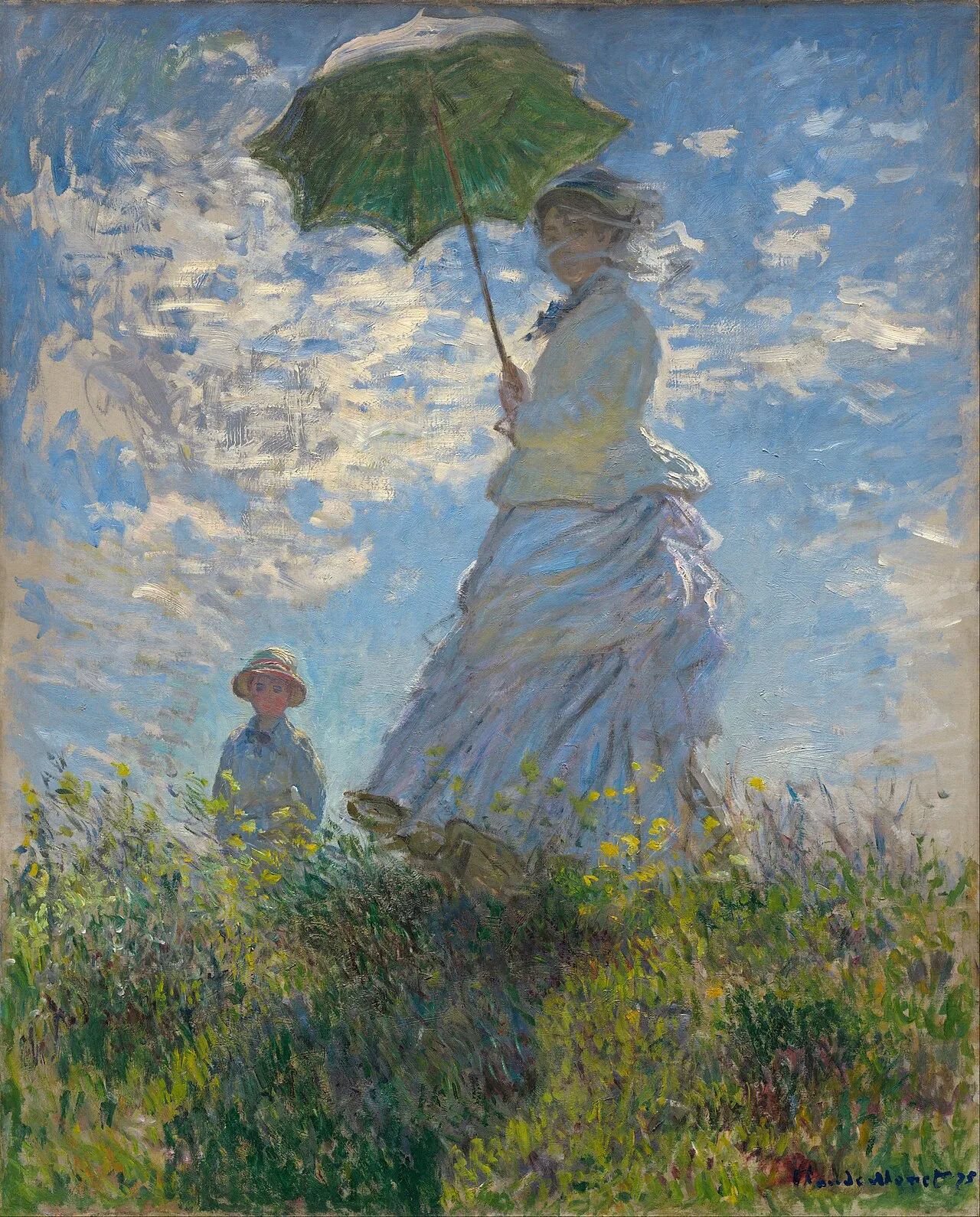
Impressionism
48 artworks
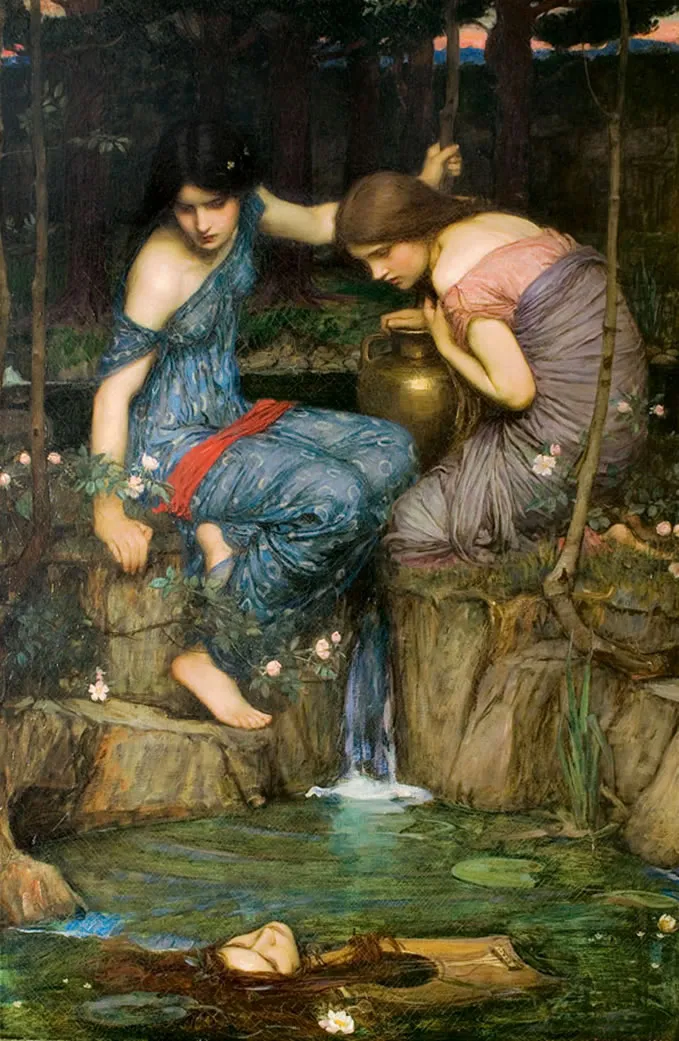
Late Pre-Raphaelite
10 artworks
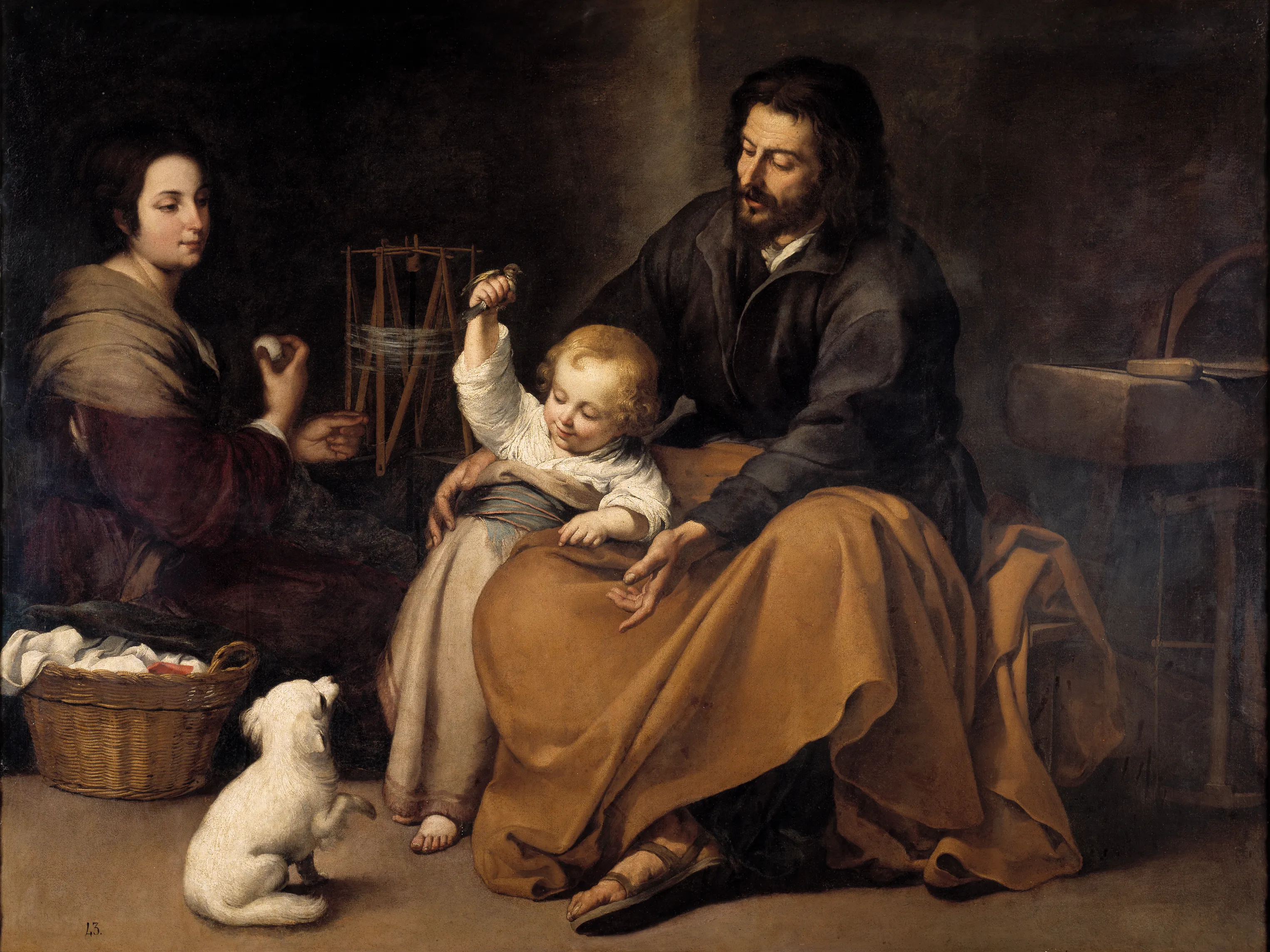
Baroque
2 artworks
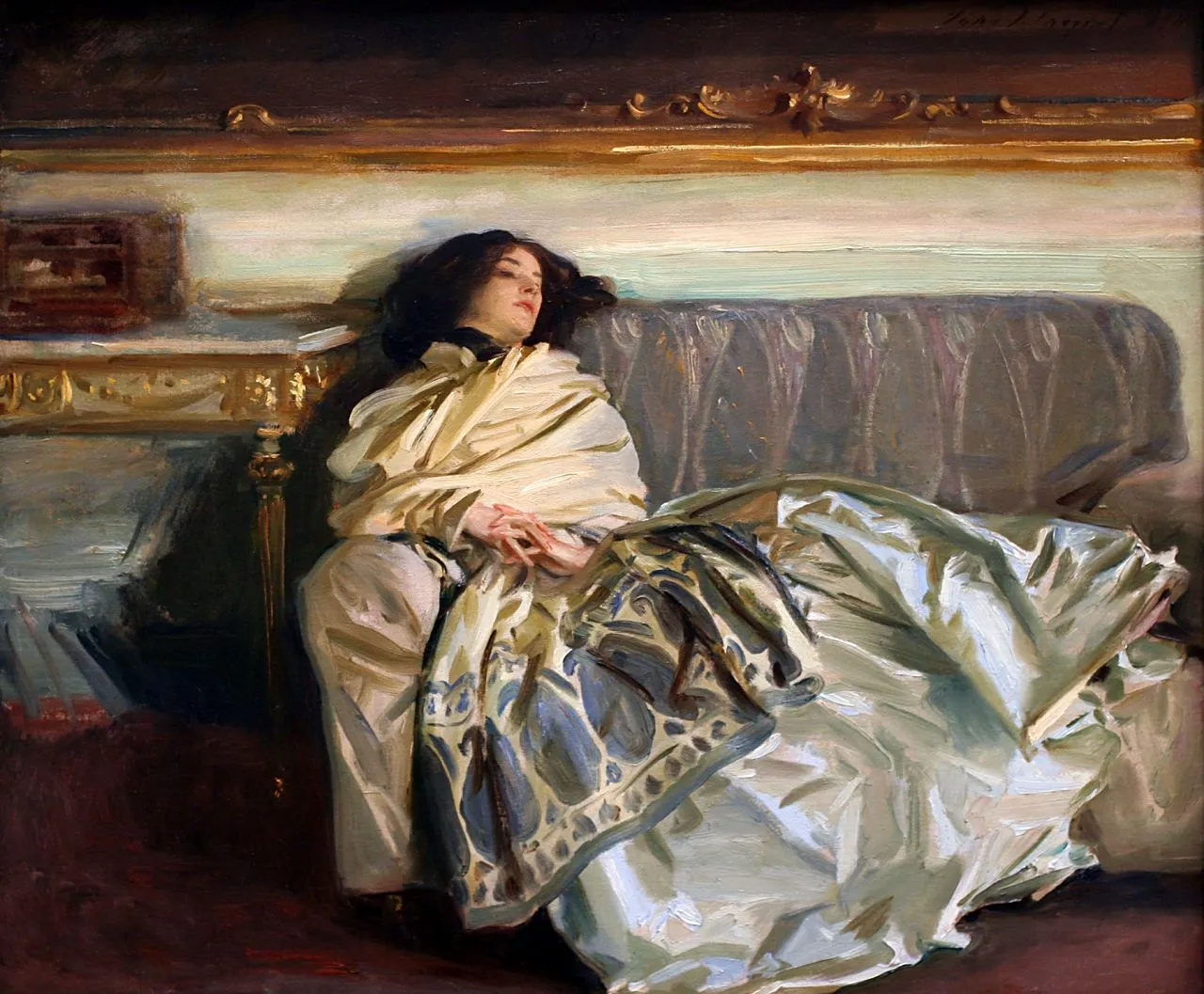
American Impressionism
5 artworks
Realism
4 artworks
Pre-Raphaelite
3 artworks
Barbizon School
5 artworks
Academic art
5 artworks
Luminism
3 artworks
Rococo
2 artworks
Symbolism
22 artworks
Neo-Impressionism
3 artworks
Ukiyo-e
1 artworks
Japonism
4 artworks
Edo period
1 artworks
Fauvism
1 artworks
Naturalism
9 artworks
Russian Realism
1 artworks
Post-Impressionism
13 artworks
Genre painting
9 artworks
Neoclassicism
3 artworks
ウィーン分離派
7 artworks
自然主義
1 artworks
ナショナル・ロマンティシズム
1 artworks
未来派
1 artworks
More artists
If you find an error in this content, please let us know here
This site is protected by reCAPTCHA, and the Google Privacy Policy and Terms of Service apply.