
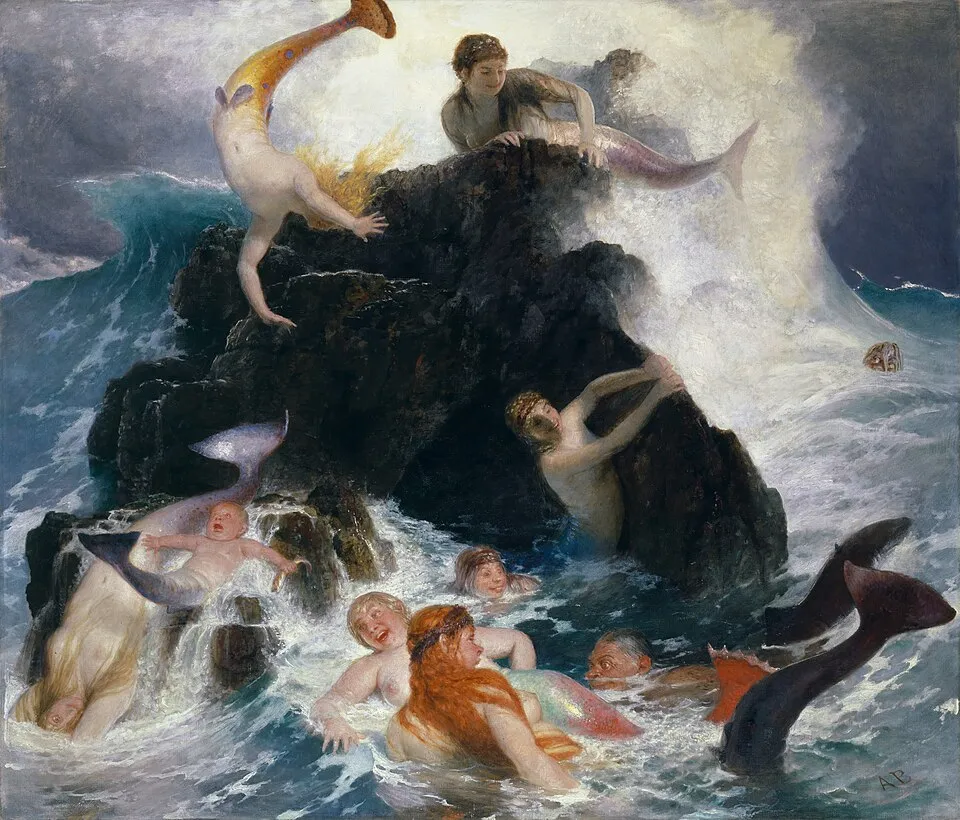
Play of the Nereides
1886
1827 – 1900
19世紀後半を代表する、スイス出身の象徴主義および世紀末芸術の画家。
On a dark rocky shore, battered by raging waves, sea spirits (Nereids) frolic innocently, somersaulting and laughing loudly amidst the spray.
The scene, brimming with the violent energy and vitality of nature, also depicts an infant being tossed by the waves and the aged sea god Triton observing from the side.
However, when this painting was first unveiled, it was met with bewilderment and backlash from critics.
About 150 more words
Unlock this story's ending, and every article on MusicStory
- 42
Stories1–2 new every week
An archive of paintings paired with great music, made for a weekend night and a cup of coffee
- 282
Paintings with commentarygrowing daily
From simply looking to truly reading — the brushwork and the obsession of the masters
- 10
Music Librarygrowing daily
Know it first, and what reaches your ear changes — background music becomes art you keep for life
My Notes, unlimited
Every reading adds to a digital art notebook that is yours alone
Already have an account? Log in
Stories featuring this painting
Your Note
Write down what this painting made you feel in your art notebook.
Please sign up to write notes.
Sign up for freeRecommended Artworks
.webp)
More artists



If you find an error in this content, please let us know here
This site is protected by reCAPTCHA, and the Google Privacy Policy and Terms of Service apply.