Starry Night Over the Rhône
1888
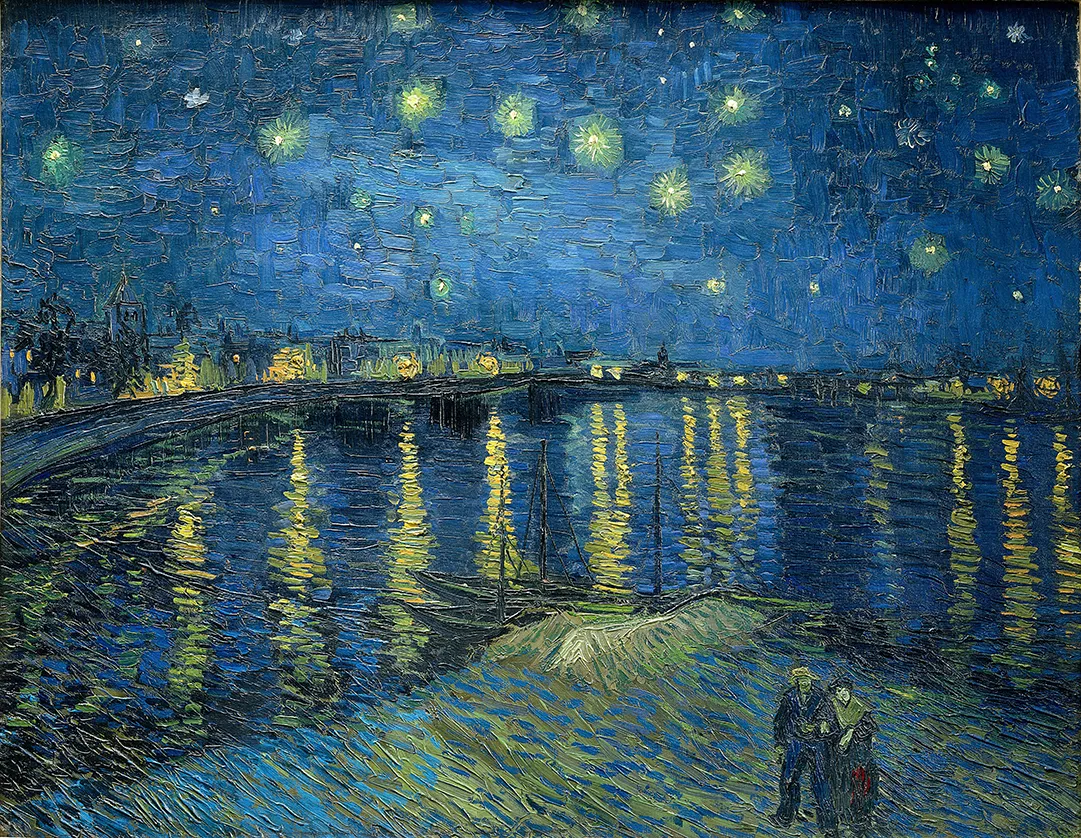
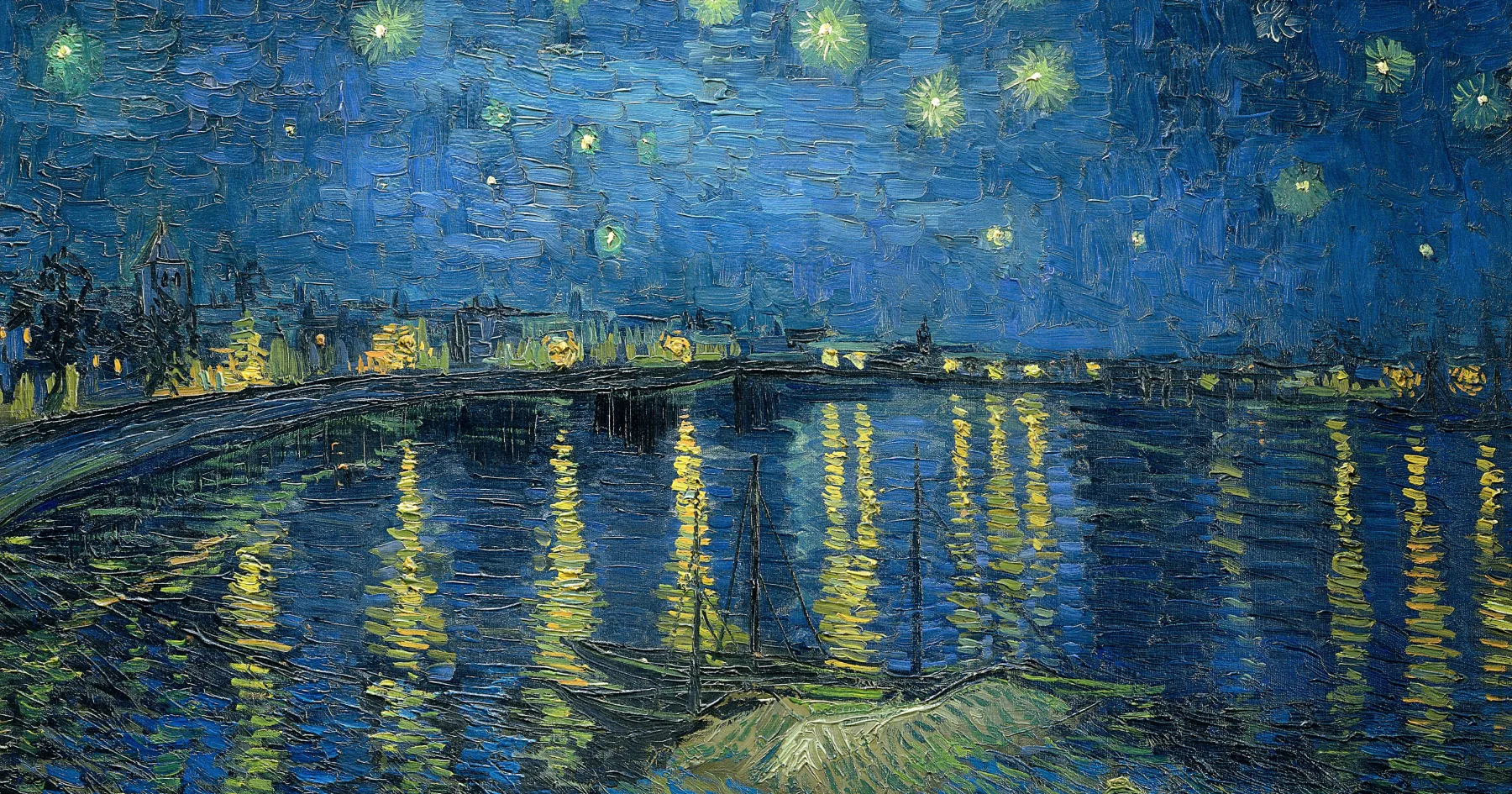
The Rhône River at night, bathed in deep blue, where shades of Prussian blue and cobalt blue intertwine.
On the water's surface, the golden light of gas lamps from the city of Arles on the opposite bank shimmers long and vividly. Looking up, giant stars twinkle like jewels.
In the foreground, figures of lovers walk arm-in-arm, and a gentle, romantic atmosphere envelops the entire scene.
However, this painting is more than just a landscape that captures a beautiful night from reality.
At that time, Van Gogh, exhausted by urban life and relationships in Paris, had just moved to Arles in the South of France, seeking bright sunlight and vibrant colors.
What sustained him in his solitary life was the fervent dream of inviting fellow painters to this place and creating an artists' utopia.
Eagerly awaiting the arrival of his respected fellow painter Gauguin, he was driven by hope and fervor as he approached the canvas.
“I absolutely need something that could be called religion. That's why I go out at night and paint the stars.”
For Van Gogh, whose dream of becoming a clergyman had been shattered, painting the night sky was an act of spiritual salvation, replacing his lost faith.
He wrote in a letter, “People go to the stars through death,” finding his own existential questions and prayers for eternity in the overwhelming expanse of the starry sky.
Interestingly, in the composition of this painting, which faces southwest, the 'Big Dipper,' shining prominently in the center of the sky, is depicted in a direction where it should realistically be invisible.
Van Gogh did not simply paint the scene before his eyes; rather, he intentionally reconfigured a star alignment he had seen in another sky (or autumn constellations) to create his ideal night sky.
It is said that this reflects his earnest wish, superimposing the miracle of his companions gathering in Arles onto the night sky.
The stark, artificial light of gas lamps and the eternally shining natural light of stars.
This quiet night, painted by him on the cusp of hope and solitude before he was later engulfed by a fierce mental storm, may well be the most beautiful and clearest radiance of Van Gogh's heart in his life.
If you find an error in this content, please let us know here
Music recommended for this painting
Stories featuring this painting
Your Note
Write down what this painting made you feel in your art notebook.
Please sign up to write notes.
Sign up for free