Please note: I'm Japanese and still learning English, so I use AI for translations. Doing my best! Feel free to correct me if I make a mistake! 🙏
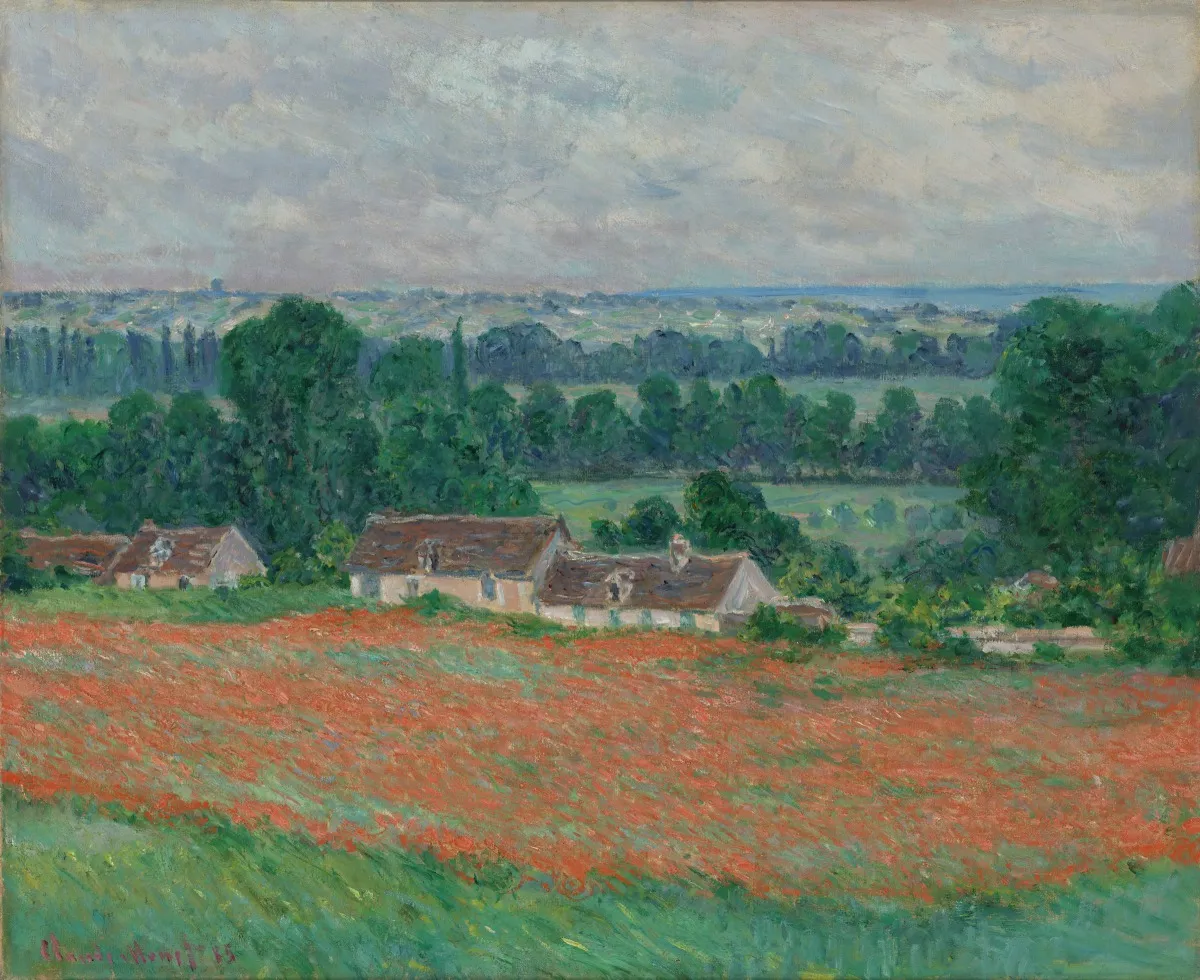
Haystacks. Rouen Cathedral. Poplars. Water Lilies pond.
When you look at Claude Monet's works, you'll notice the same subjects appearing repeatedly.
And it's not just two or three paintings.
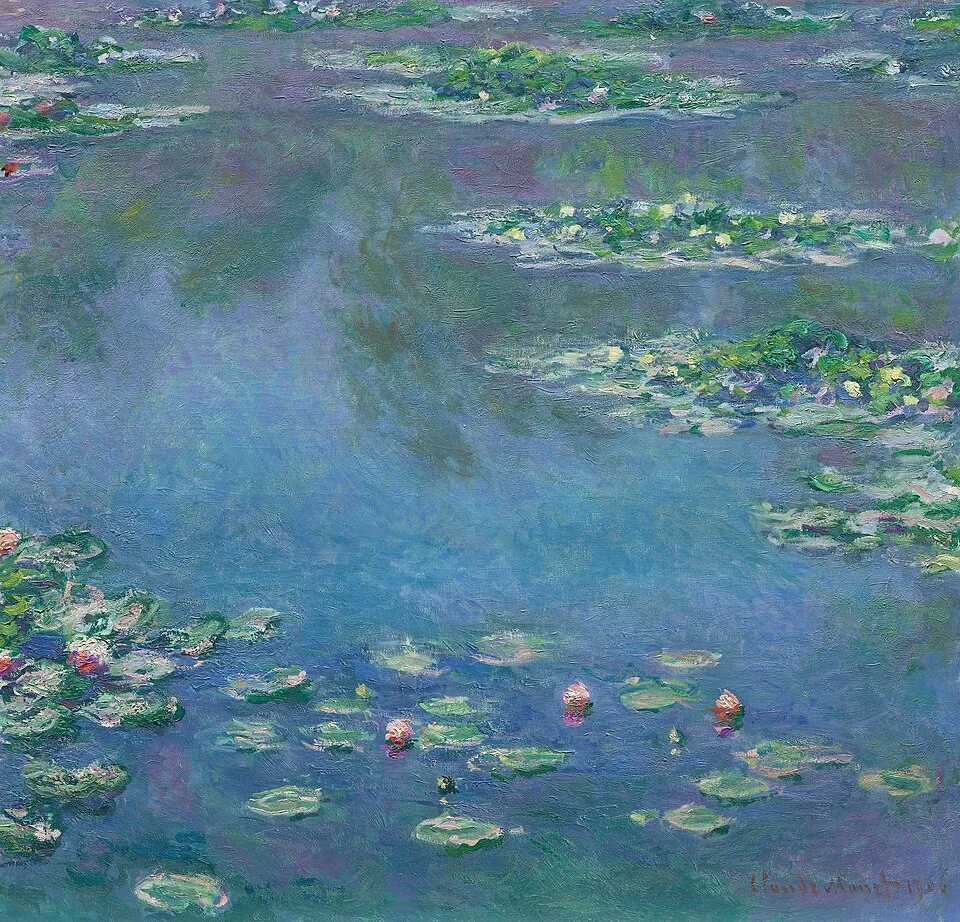
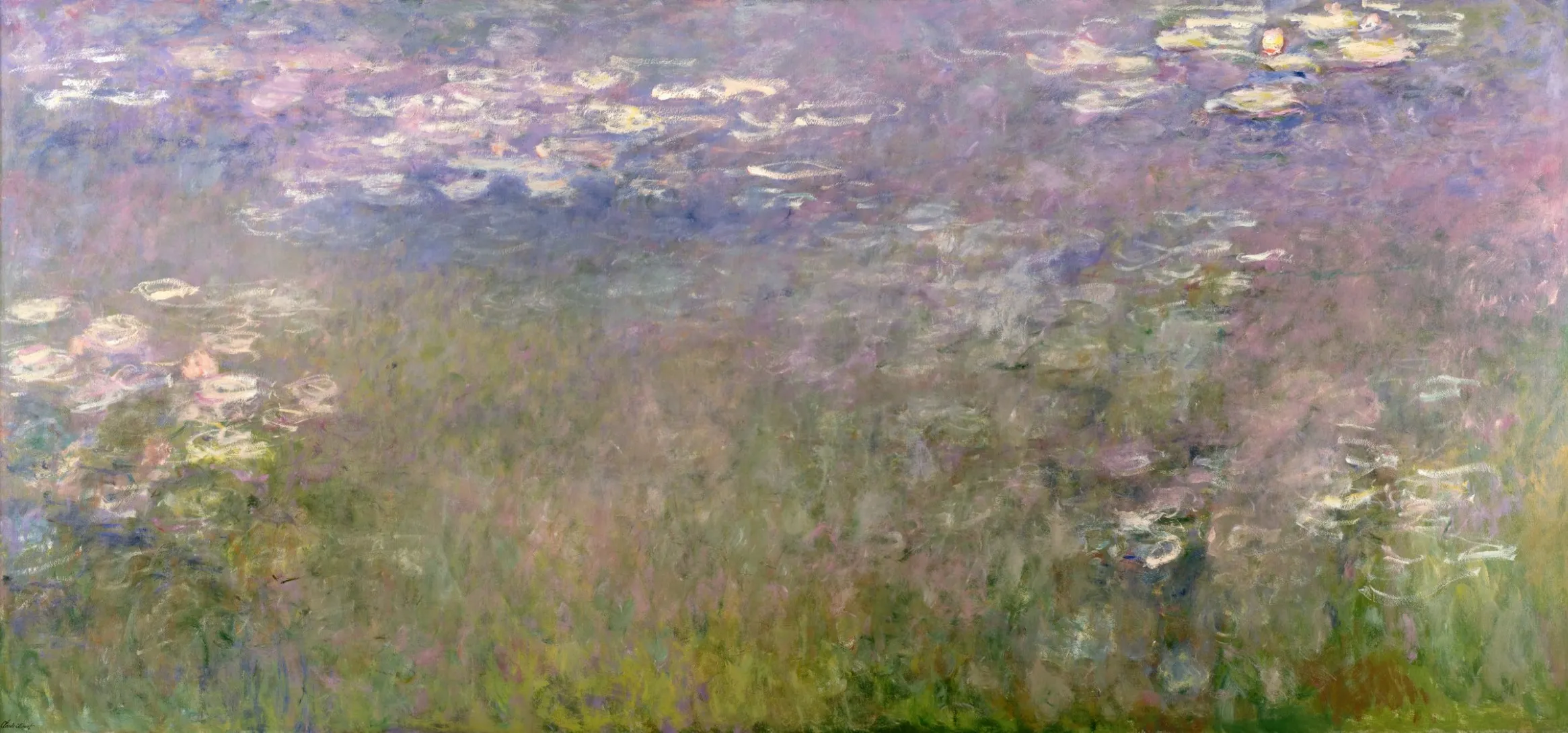
He painted about 30 Haystacks, over 30 Rouen Cathedrals, and nearly 250 Water Lilies throughout his life.
Why did he continue to paint the same subjects so extensively?
One might wonder if he never got tired of it.
When you learn the reason, your perception of Monet's paintings will change.
What he was trying to paint was neither haystacks nor cathedrals.
What He Painted Was Not Objects
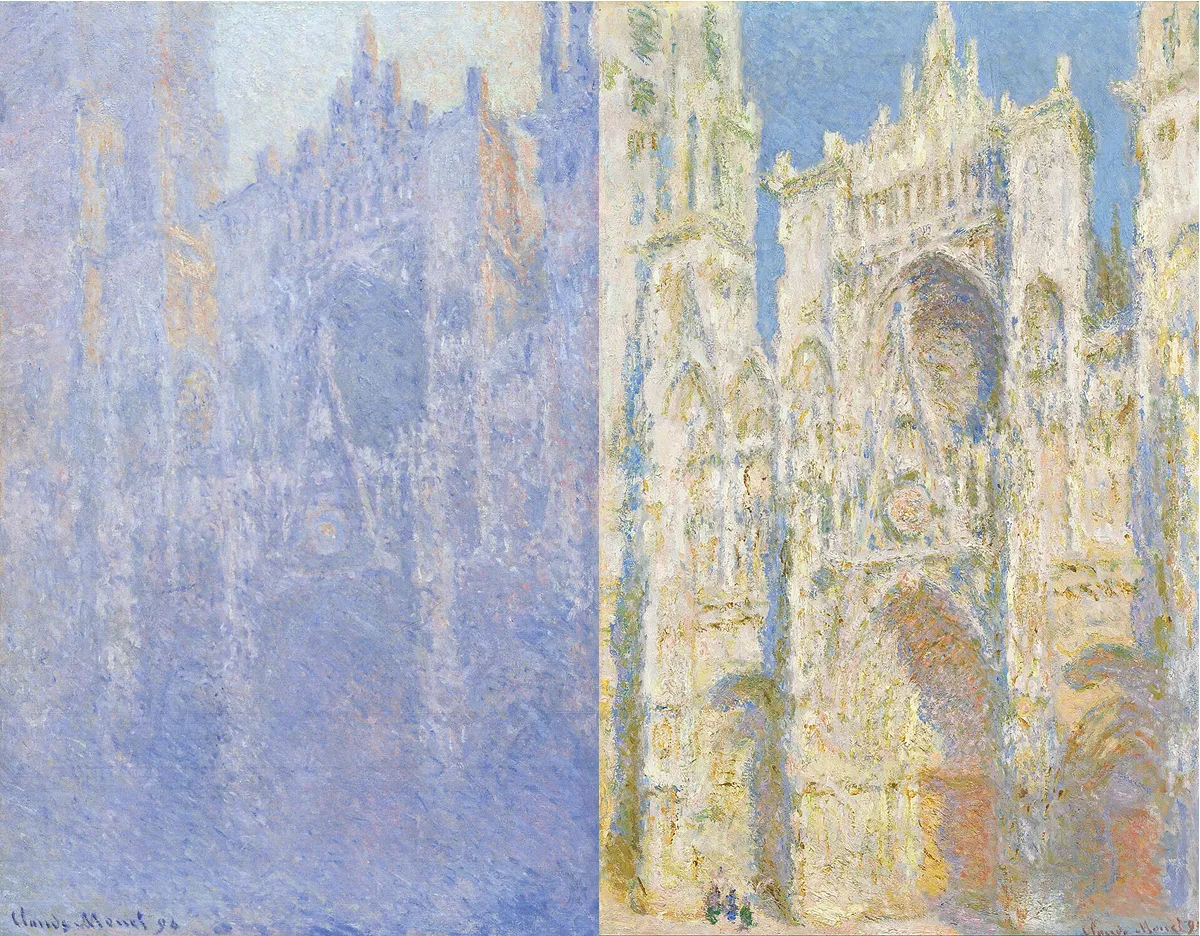
From 1892 to 1894, Monet stayed in Rouen, a city in northern France, and repeatedly painted the facade of the cathedral.
He rented a room across from the cathedral and day after day, painted the same facade visible from his window.
When you line up the finished paintings, something remarkable happens.
Even though it's supposed to be the exact same building, the colors are completely different in each painting.
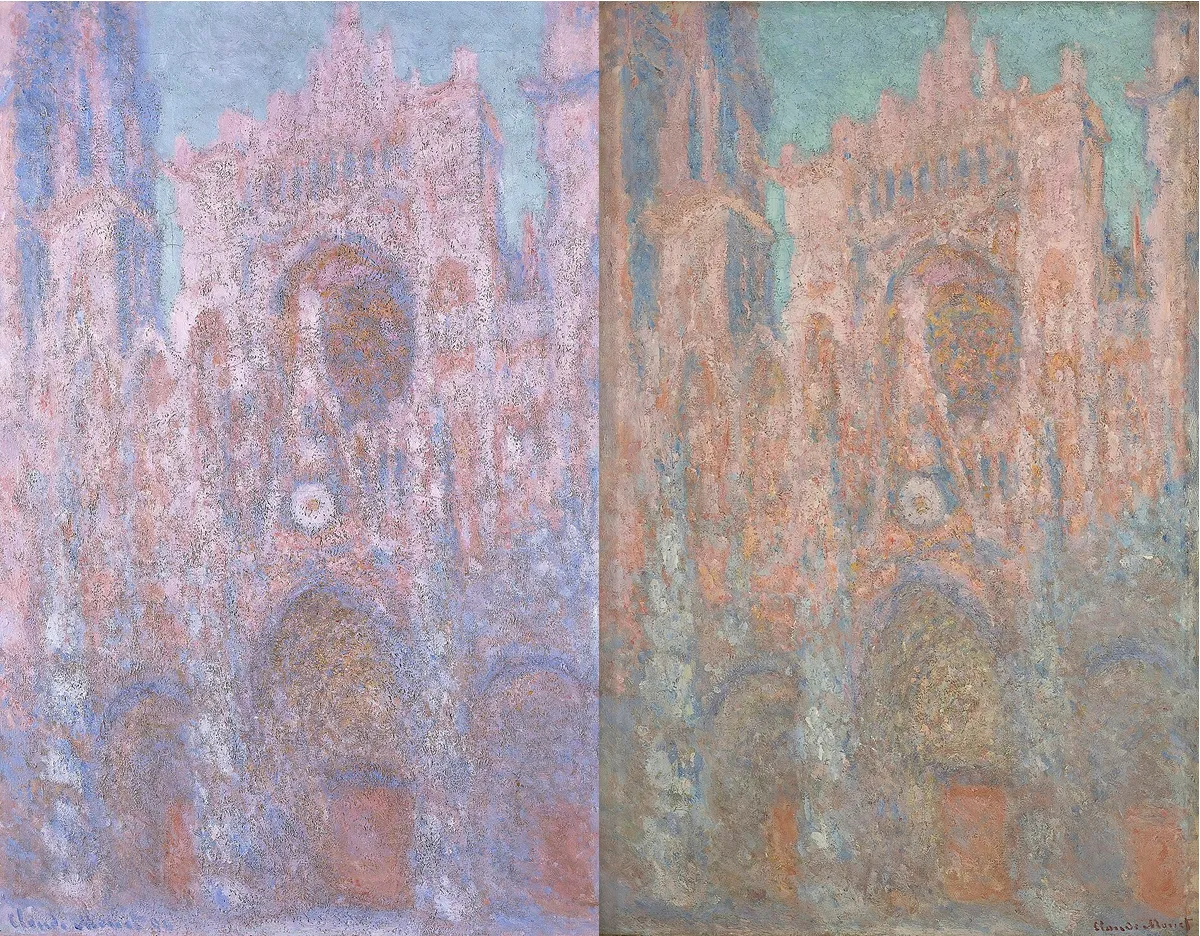
In one painting, bathed in the morning sun, it's a bluish-white; in another, bathed in the evening sun, it's a fiery orange; and in yet another, it's submerged in mist, appearing gray.
The gray stone building appears lavender, green, or even pink.
What Monet was painting was not the cathedral itself.
It was the light that fell upon its surface, changing moment by moment.
He often said:
"Nature never stands still."
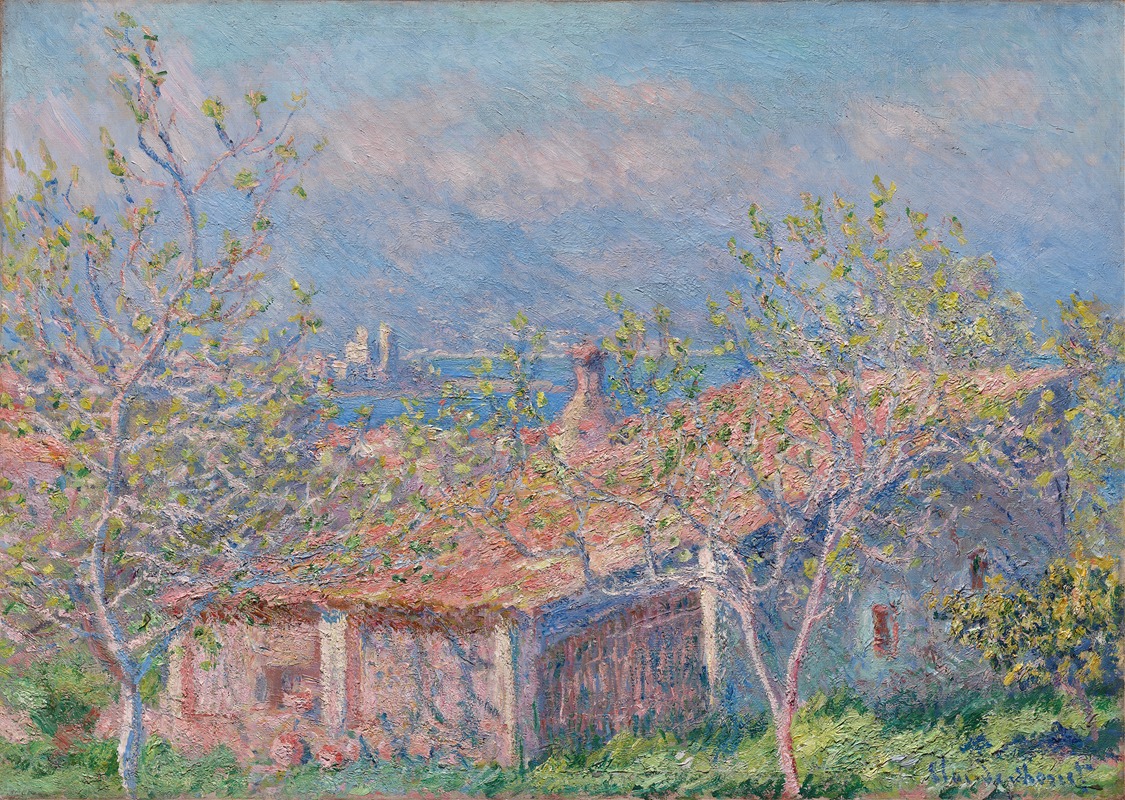
Even when standing in the same spot and looking at the same thing, if the angle of the sun changes, if clouds drift by, or if the season shifts, the colors seen by the eye become entirely different.
That very transience was Monet's subject.
That's why one painting was not enough.
Only by arranging many paintings together could he depict the very passage of time as light changed.
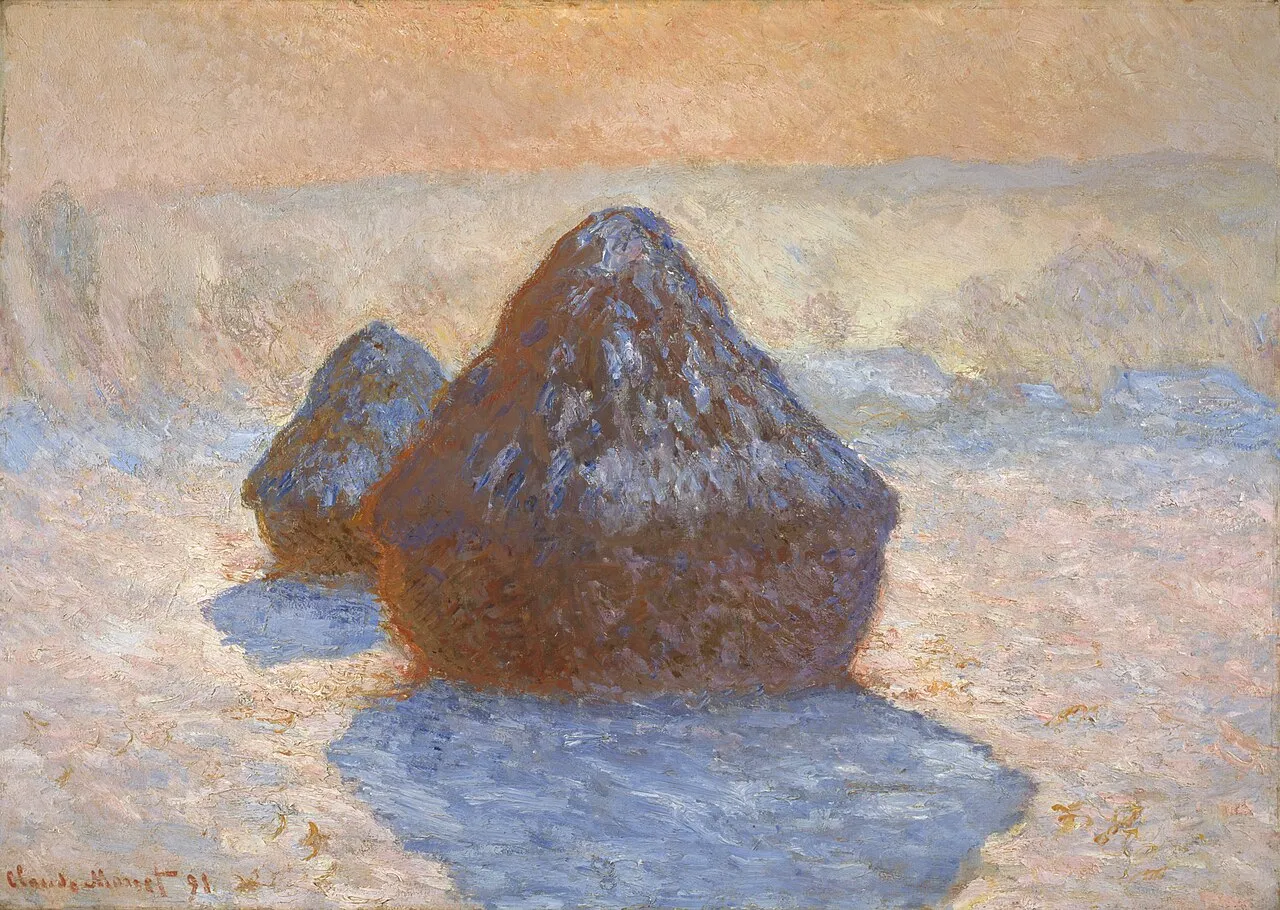
The Haystacks series is the same.
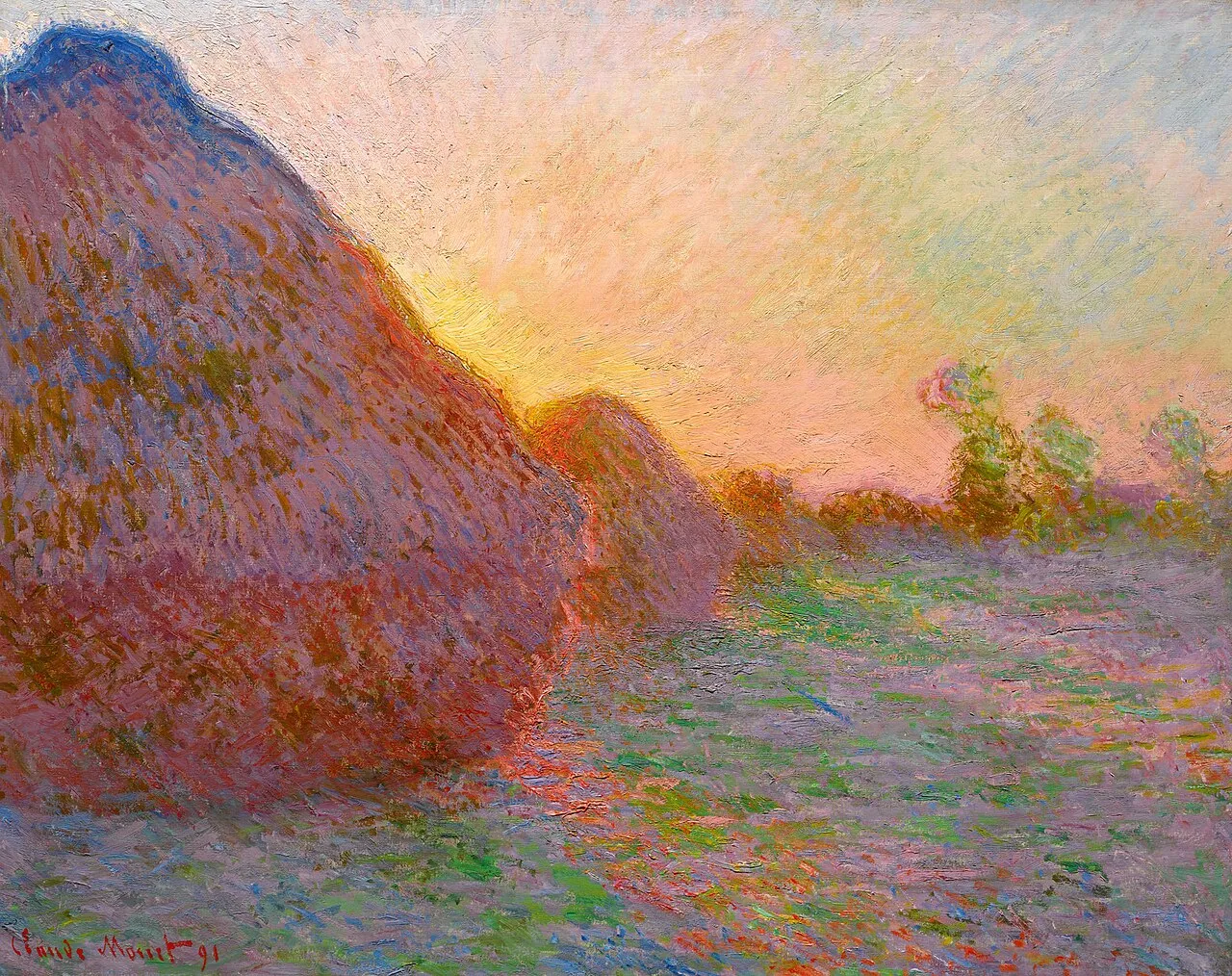
An ordinary haystack near his home in Giverny.
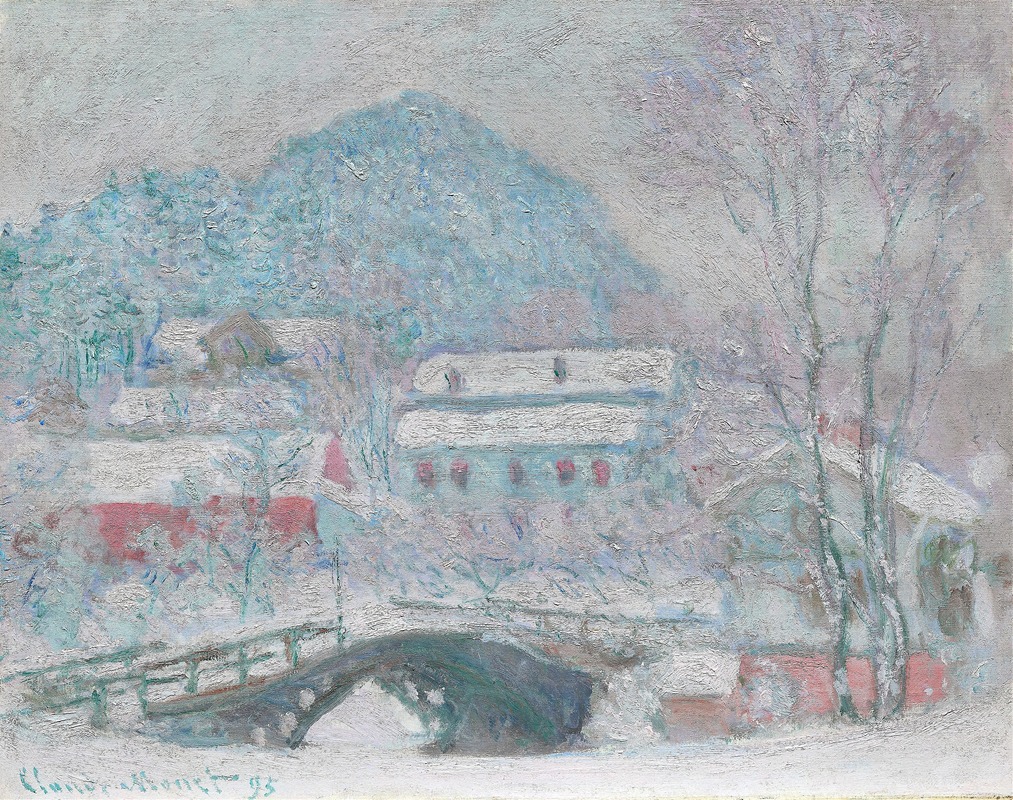
Something no one would think to make a subject for a painting, Monet repeatedly painted in the morning, at noon, at dusk, and on snowy days.
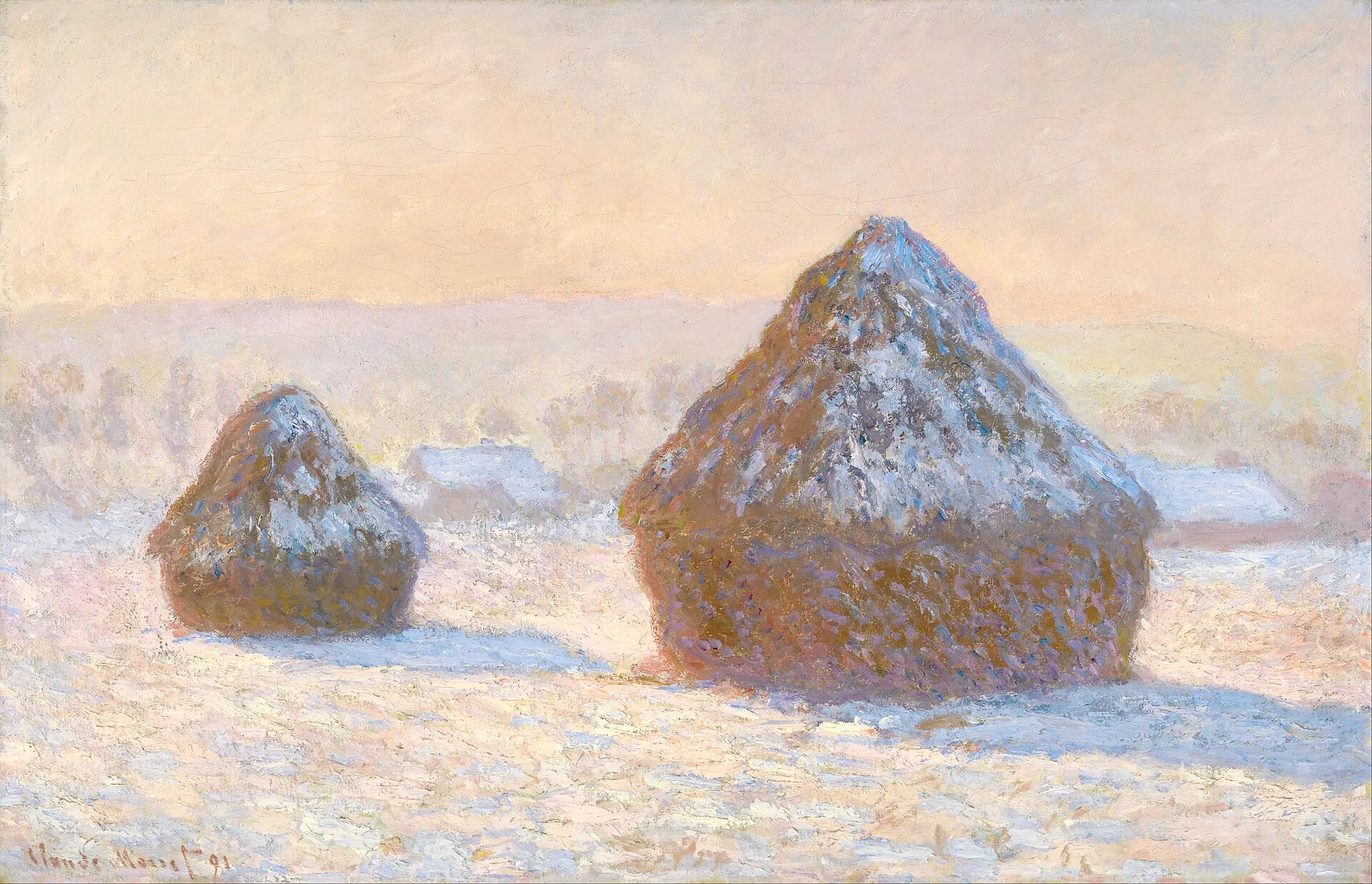
The main subject was not the haystack, but the light and atmosphere illuminating it.
Many Canvases, Simultaneously
This method of painting was actually quite arduous.
Light doesn't wait.
Even if he tried to capture the light of a specific moment, the sun would move and the colors would change while he was painting.
So, the method Monet adopted was to set up multiple canvases simultaneously. Each time the light conditions changed, he would switch to the canvas corresponding to those conditions.
A painting for the morning light, one for noon, one for a cloudy day.
Many paintings progressed little by little, simultaneously.
And each of these paintings proved more difficult than expected.
While working on the Rouen series, Monet often fell into despair.
Struggling with his inability to paint as he wished, he nevertheless continued to return to the site.
In 1895, he selected 20 of these works and exhibited them together in a dealer's gallery.
This was to present them as a group, not as individual paintings.

The arranged cathedrals, though the same building, changed their appearance moment by moment due to the light.
The immovable stone and the constantly moving light.
That contrast became visible within a single room.
This endeavor had a significant impact on later art.
A young painter who saw the Haystacks series in Moscow in 1895 was profoundly struck.
It was Wassily Kandinsky.
He realized that a painting could exist even if the "object" depicted was unrecognizable, and eventually embarked on abstract painting.
The result of Monet's pursuit of light also became the gateway for painting to cease being merely a "representation of something."
With Failing Eyesight

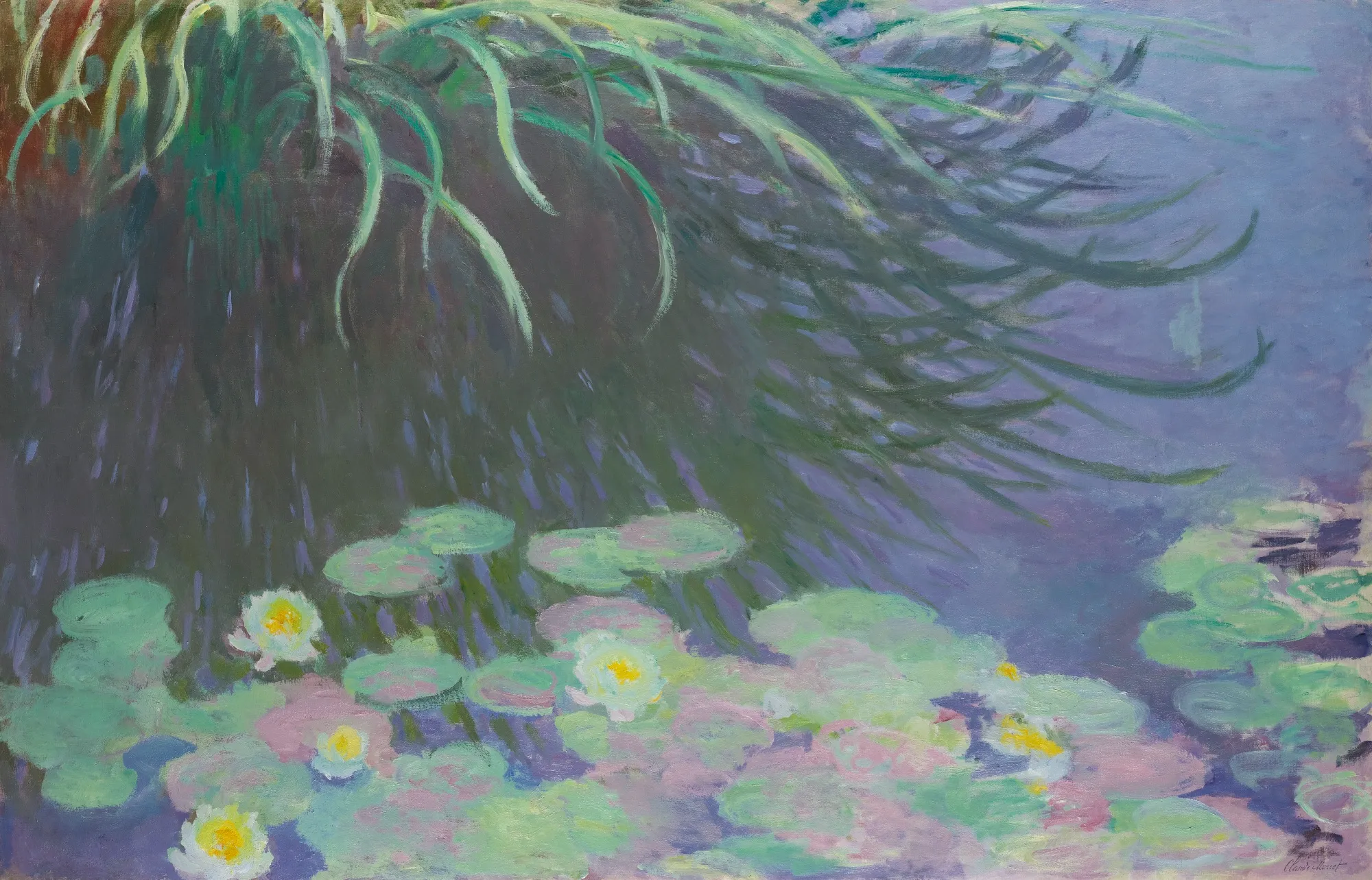
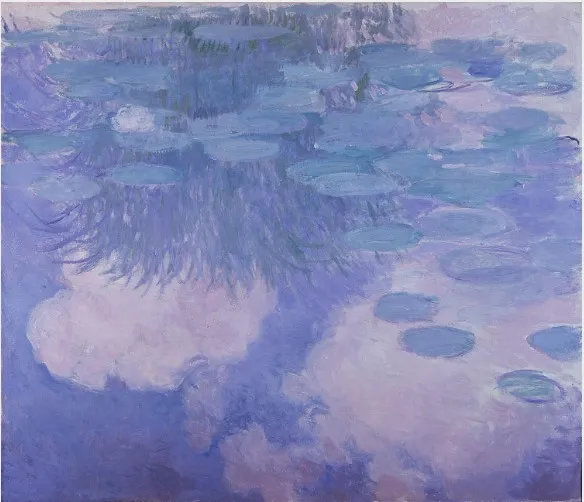
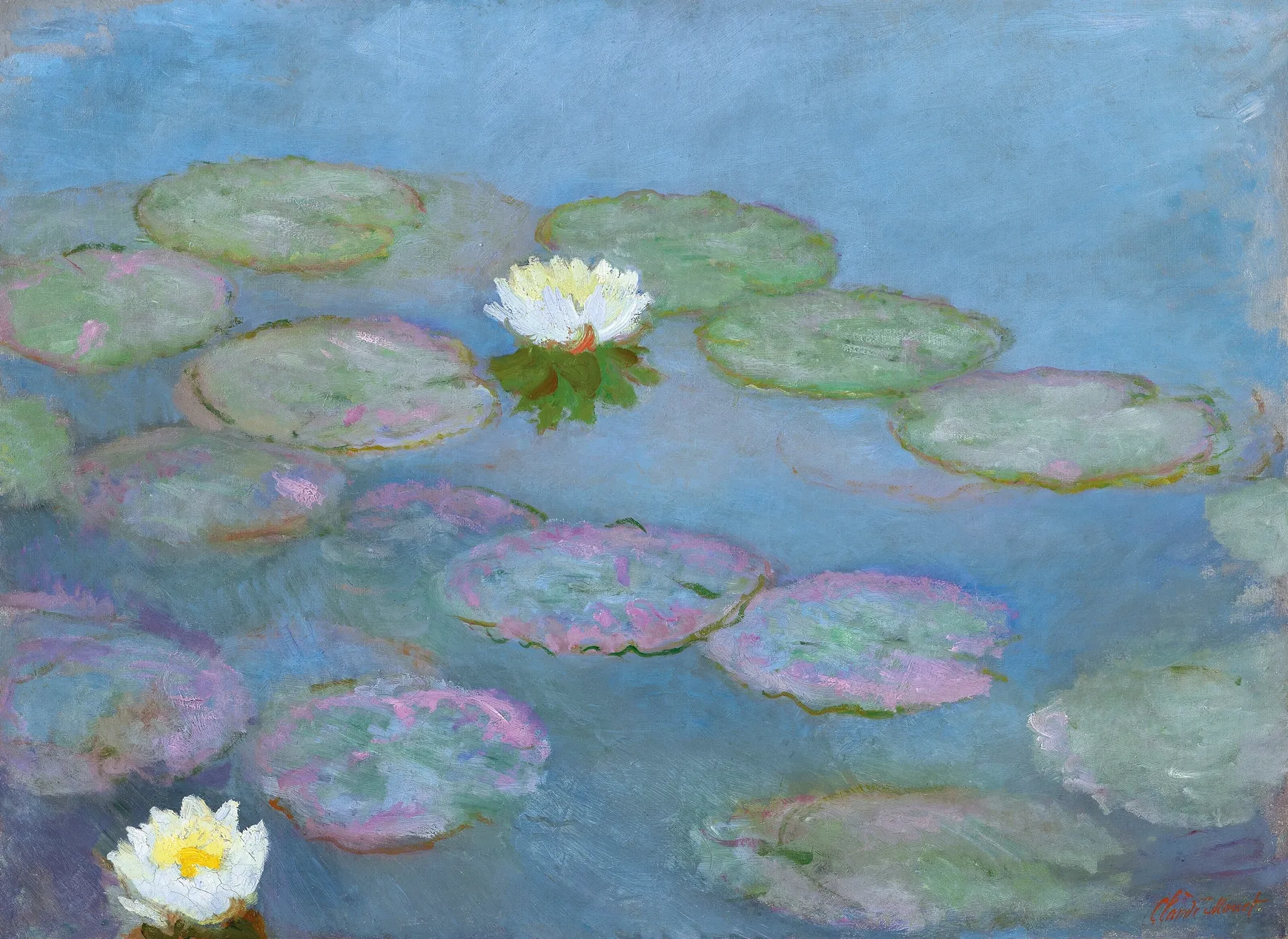
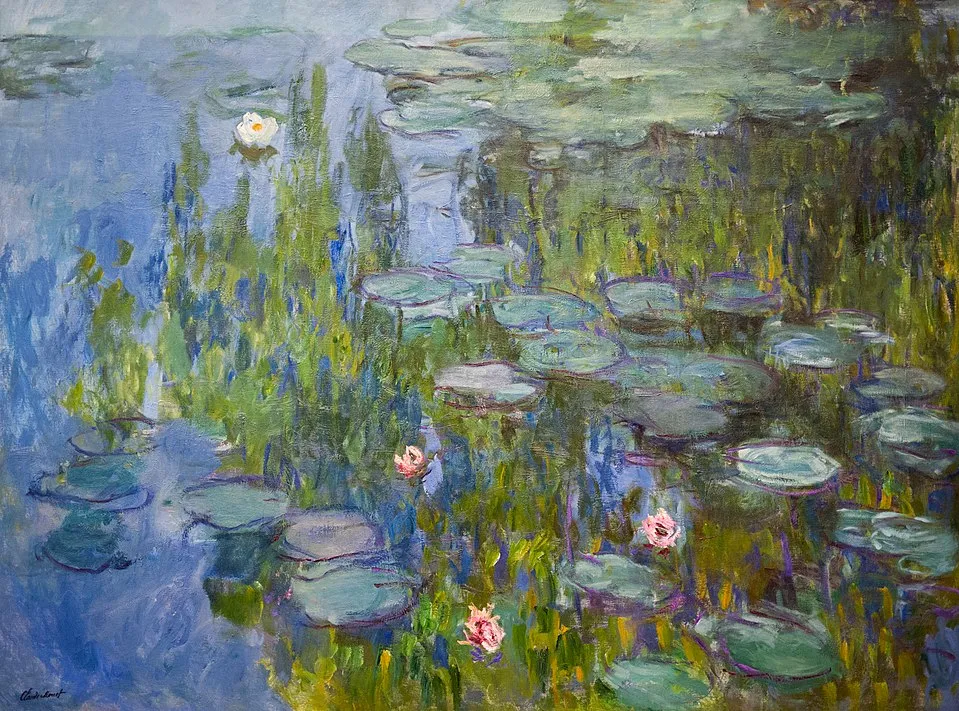
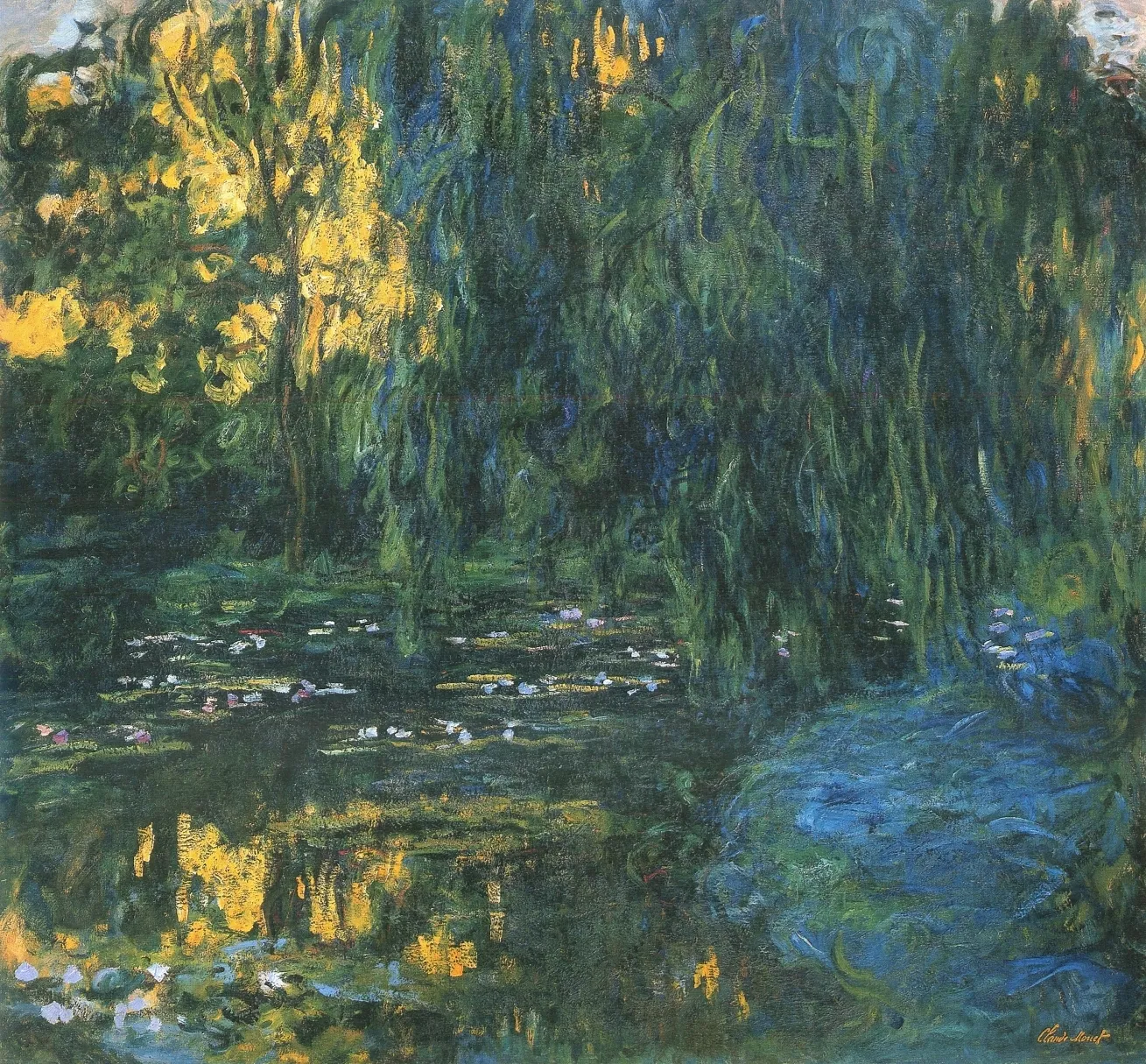
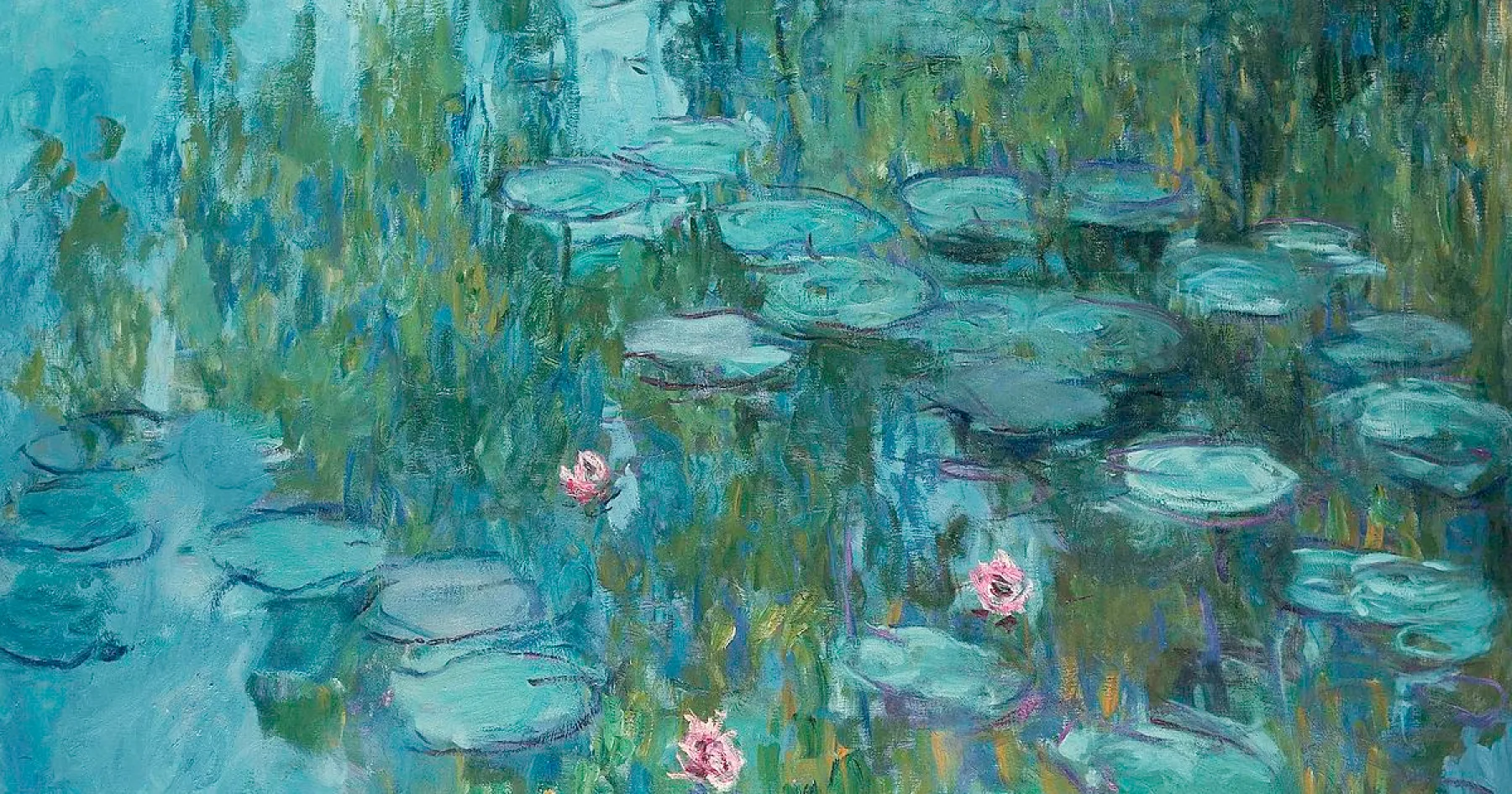
In his later years, Monet created a Japanese-style garden and pond at his home in Giverny and continued to paint Water Lilies. Here too, he repeatedly painted the same pond and the same water lilies.
However, during this period, another factor was added for him. His eyesight was beginning to fail.
Monet began to suffer from symptoms of cataracts around 1905, in his mid-sixties. It's a disease where the lens of the eye becomes cloudy and discolors yellow.
He complained to his doctor:
"I can no longer perceive colors with the same intensity; reds appear muddy, pinks are insipid, and intermediate tones escape me."

A painter who dedicated his life to depicting light was gradually losing the ability to see that light correctly.
Could anything be more cruel?
Eventually, the symptoms progressed, making it difficult even to distinguish the colors of paint tubes.
He labeled his tubes with large letters, kept the positions of the paints on his palette strictly the same every day, and began to choose colors relying on memory.
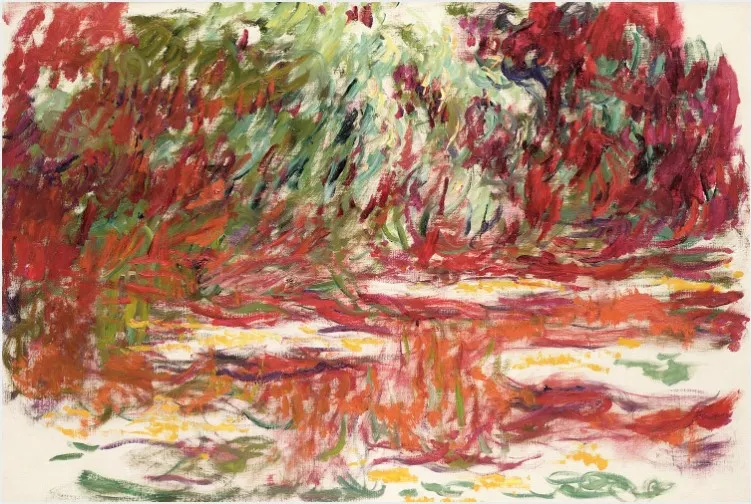
The Water Lilies paintings from this period lost their blues and greens, revealed raw reds and yellows, and their outlines dissolved.

The late-period canvases that we perceive as "abstract and beautiful" were not so much an intentional stylistic change as the world truly appeared to his eyes.
Nevertheless, Monet continued to refuse surgery.
Because he knew that Mary Cassatt, a fellow Impressionist painter, had been unable to paint after her surgery.
Each time he was advised to have surgery, he refused and wrote:
"It is better to make do with this poor eyesight; I would rather stop painting if necessary, but I want to see a little of what I love."
Ultimately, in 1923, cornered, he finally underwent surgery on his right eye.
His vision partially returned, but his perception of colors never fully recovered.
After the operation, he was disappointed by many of his own works painted during his illness and destroyed them with his own hands.
The Same Landscape Never Appears Twice

Why did Monet paint the same landscape so many times?
The answer is because there was never truly the same landscape.
For him, standing in the same spot did not mean seeing the same thing.
If the light changed, it was already a different world.
Haystacks, cathedrals, and water lily ponds all appeared different with each passing moment.
In an attempt to capture that transience, he arranged dozens of canvases.
And in the end, even as he was losing the very eyes that saw that light, he continued to hold his brush.

Next time you see Monet's paintings, step back a little and compare one with its neighbor.
How different two paintings of the same subject can appear.
That difference is what Monet truly wanted to paint.
What he saw was not the landscape, but the fleeting, never-to-be-repeated light that fell upon it.
We encourage you to write down your thoughts in a notebook!