
 日本語 (JA)
 English (EN)
- Dimensions
- 縦 62.0 cm × 横 93.50 cm
- Medium
- 油彩、細粒カンヴァス
- Collection
- ソローリャ美術館
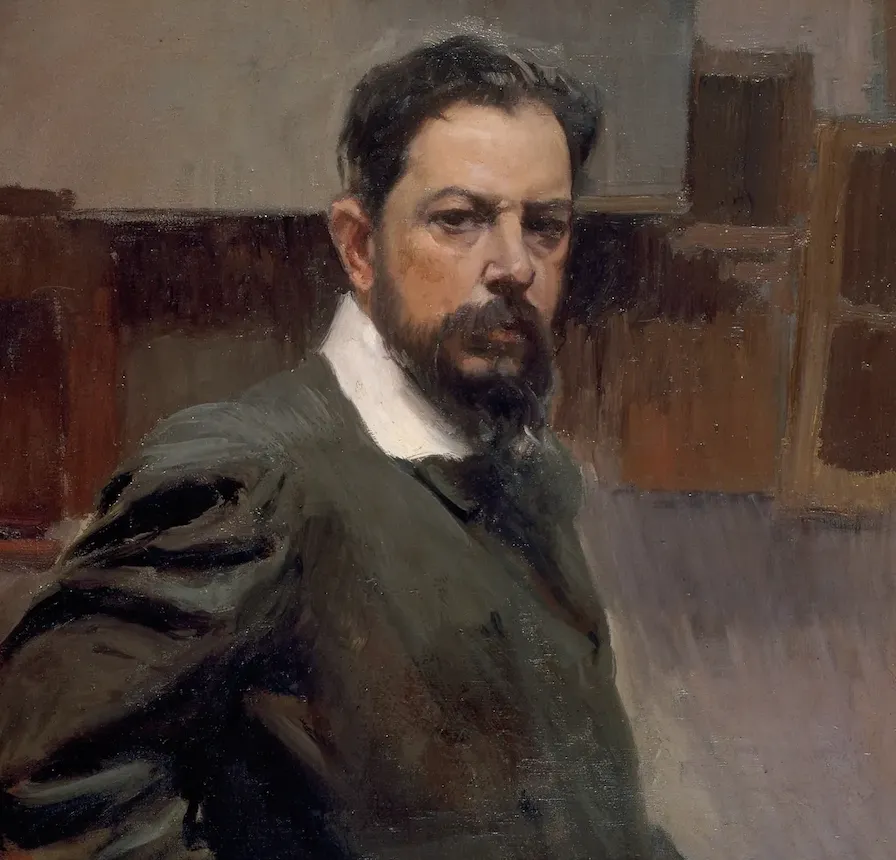
A defining figure of Spanish art who bridged the late nineteenth and early twent…
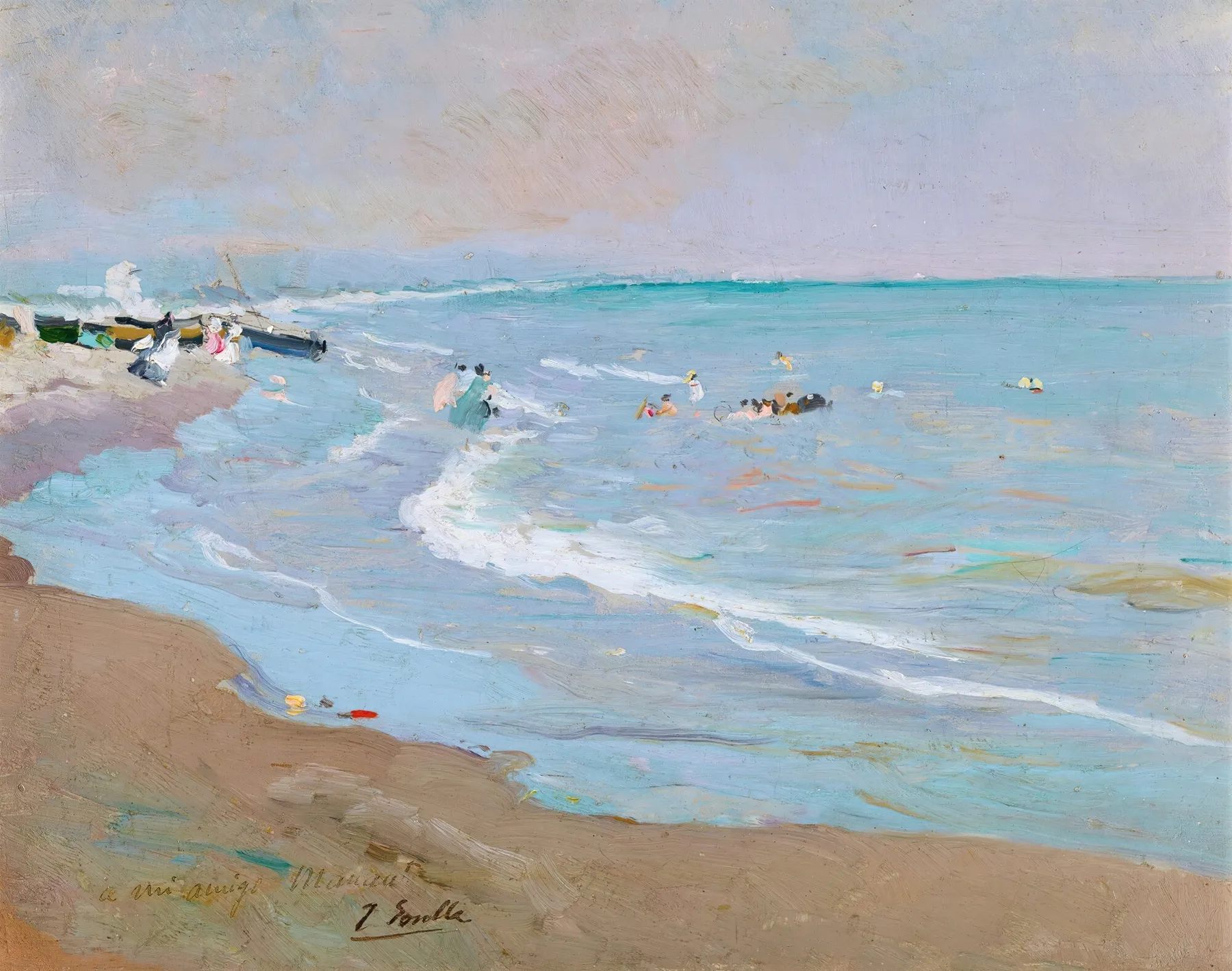
特定の顧客からの依頼ではなく、個人的な情愛と探求心から、制作上の制約から解放されて純粋に光と形態の実験を行うため。
✦ Highlights (technique & color)
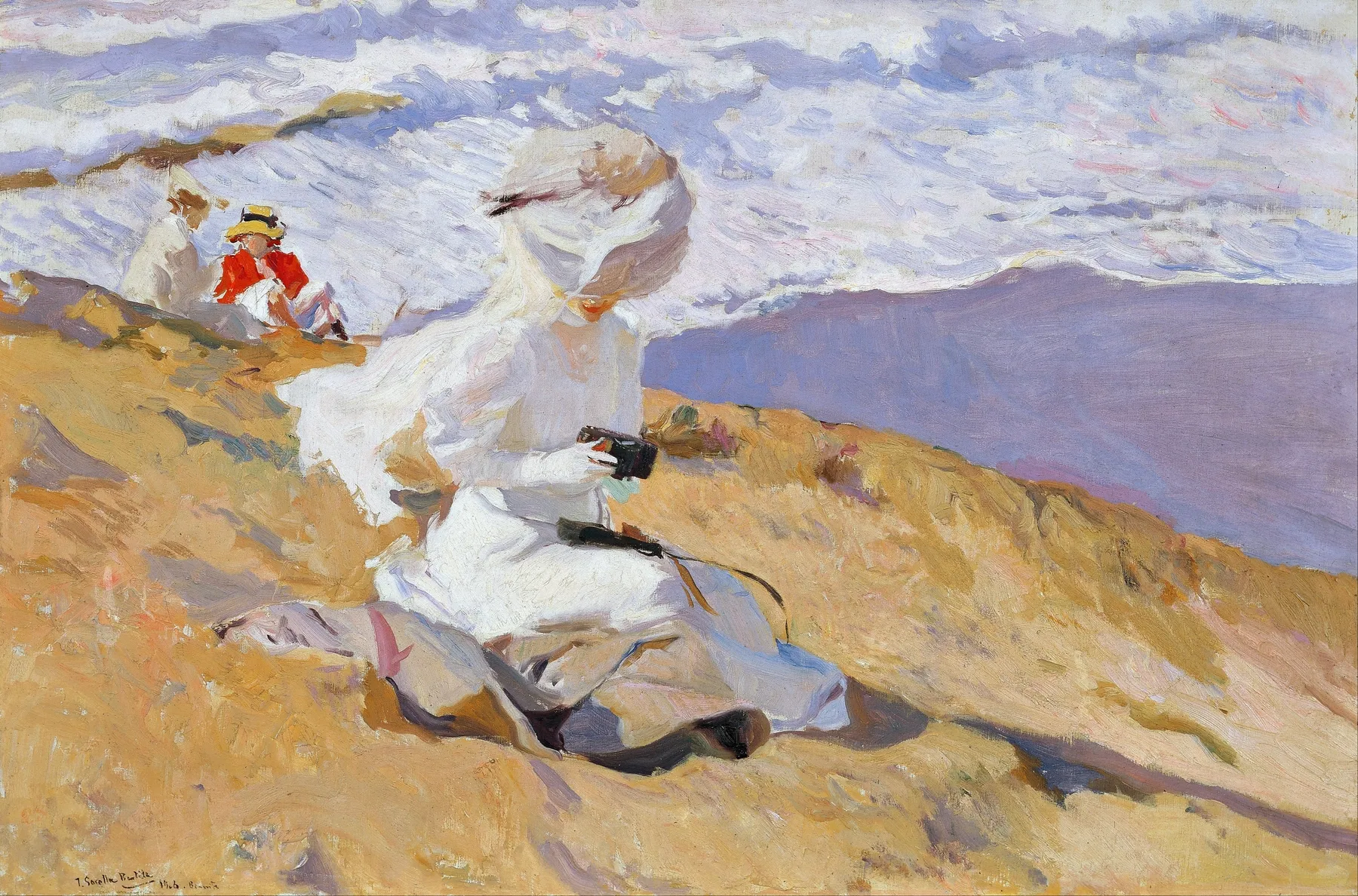
画面には写真特有の構図法が取り入れられている。やや高い視線から見下ろすハイアングルにより水平線が排除され、人物の帽子やヴェールの端がフレームで鋭利に切り取られる動的なトリミングが施されている。また、左奥の女性たちから手前のカメラ、右へと広がる白波にかけて対角線による視線誘導が巧みに配置されている。
✦ The setting of this painting
フランス南西部の大西洋に面した高級リゾート地、ビアリッツのミラマール海岸。王公貴族や上流階級が集う洗練された余暇の空間であり、大西洋特有の涼やかで銀色がかった光に包まれている。
✦ Historical context
1906年。イーストマン・コダック社がロールフィルム式可搬型カメラを普及させ始めた時期であり、写真機が専門家のものから女性やアマチュアのレジャー用具へと変貌し、近代女性の行動様式が変化しつつあった時代。
On Miramar Beach in Biarritz, an exclusive French resort swept by cool Atlantic breezes, silvery light danced on the crests of the waves. Amid the soothing rhythm of the surf on the sand, painter Joaquín Sorolla gazed quietly at the scene before him. Sitting on the beach, dressed in pure white with a veil fluttering in the wind, was a woman. In her hands, she held a small, black device. It was an irreplaceable summer moment spent with his beloved family.
A Special Summer Holiday Following Triumphant Success
In the summer of 1906, Sorolla felt an unprecedented sense of liberation and joy. From June to July of that year, he had held his first major retrospective solo exhibition at the Galerie Georges Petit in Paris. Featuring nearly five hundred works, the exhibition achieved the greatest triumph of his career, both critically and financially. Having seized tremendous wealth and international acclaim in one stroke, he traveled with his family to Biarritz, the premier seaside resort where European royalty, nobility, and high society congregated.
Unlike the everyday fishing villages of Valencia, the shores of Biarritz were a realm of leisure, elegance, and bourgeois sociability. Blessed with financial freedom, Sorolla generously indulged his wife and children with the latest Parisian fashions and luxury items, such as the newest Kodak camera. For him, this rich personal life had now become the most captivating subject for his painting. Free from depicting arduous labor or the darker corners of society, he could purely pursue the figures of those he loved and the radiant light that enveloped them. It was truly an extraordinary summer holiday for the artist.
His Wife Through the Viewfinder
Regarding the woman in white seated on the sand, general art books and certain exhibition texts have sometimes suggested she might be the painter’s eldest daughter, María, or second daughter, Elena. However, research by the Museo Sorolla and the scholarly database of the Spanish Ministry of Culture (CERES) identifies her as his wife, Clotilde. This misidentification is thought to stem from confusion with another work depicting their eldest daughter painted in Biarritz that same summer, as well as the difficulty of discerning her facial features beneath the hat and veil.
What she holds in her hands is not a book, but a compact camera—the height of luxury leisure equipment at the time. Newly released by Eastman Kodak, this ultracompact camera was an emblem of early 20th-century bourgeois holiday culture. Sorolla watched with admiration as his wife embraced the role of an active recorder of her world, a modern woman operating the latest technology. Seeing her lightly reveling in the new era was, for him, profoundly beautiful and a source of great pride.
Photography and Painting: Two "Instants"
The title given to this work, Instantánea, carries a double meaning: both a snapshot photograph and a fleeting instant. To Sorolla, the medium of photography was by no means an unfamiliar novelty. His relationship with photography was etched with a deeply personal history that went far beyond merely adopting it as a motif.
At the age of eighteen, Sorolla had worked in a photography studio, where he met Clotilde, the woman who would become his wife. The craft of framing the world through a lens was intertwined with the blossoming of their love. For Sorolla, the camera in his wife's hands carried a special resonance, evoking the memory of the studio where they first met. As she sought to capture a fleeting scene with her camera, the painter himself endeavored to capture her with his brush on canvas. It was a quiet, fervent dialogue between photography and painting, each striving to preserve a passing moment for eternity.
About 572 more words
Read the rest of this commentary —
and step into a secret gallery
opened just for you
An "art letter" delivered to you every Saturday morning
Works, music and words chosen for your sensibility, from your artist-type result and the paintings you love
A library of masterpieces and music you can enjoy "in your own words", not just look at
A "digital art notebook" (unlimited) where your impressions build into your own taste
Unlimited likes and notes
¥980 / month¥0 today
¥980/month (tax incl.) from day 8. Cancel anytime.
Already have an account? Log in
Stories featuring this painting
Your Note
Write down what this painting made you feel in your art notebook.
Please sign up to write notes.
Sign up for freeRecommended Artworks
Sources & references
More art movements
Pre-Baroque
1 artworks
Victorian era
10 artworks
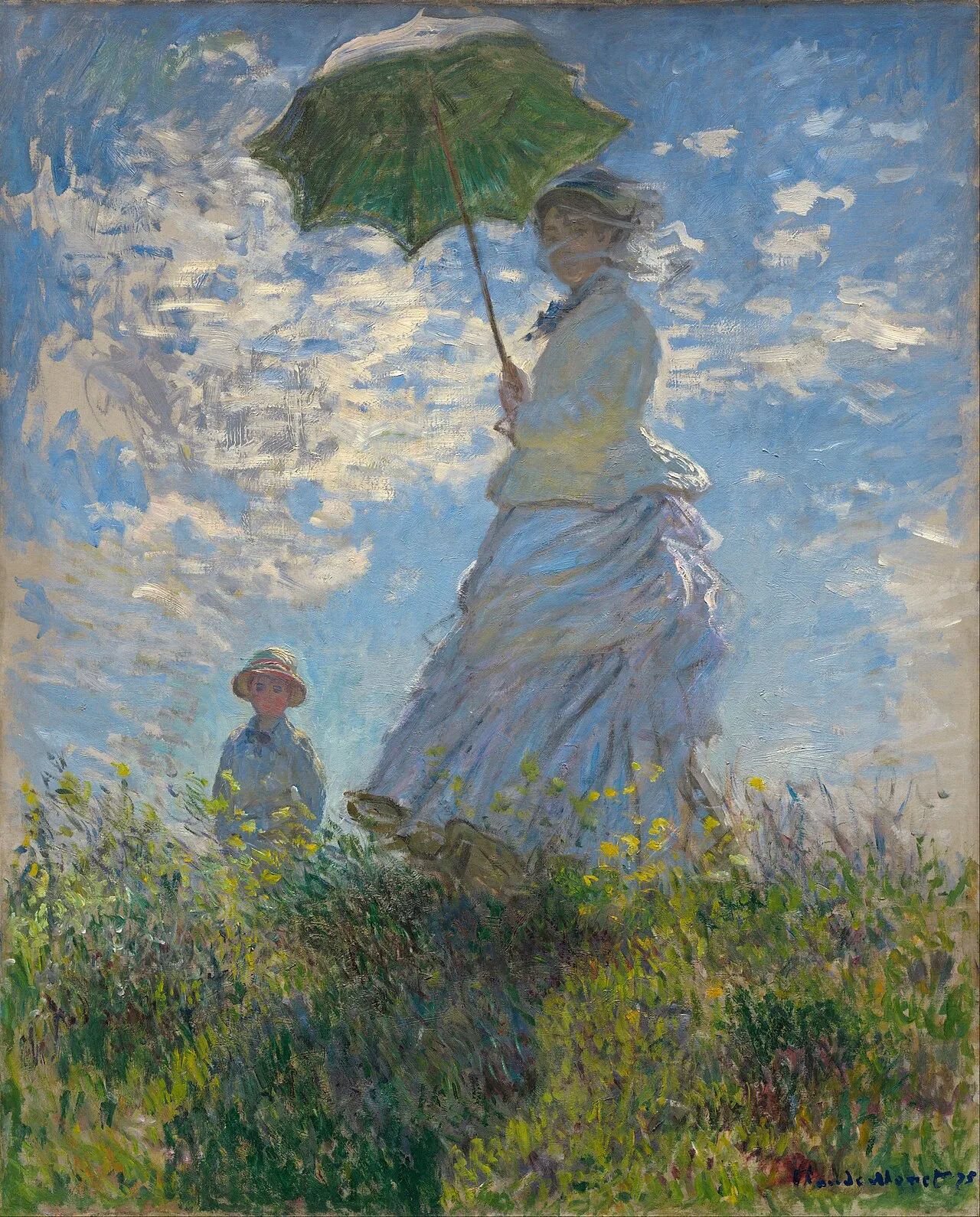
Impressionism
48 artworks
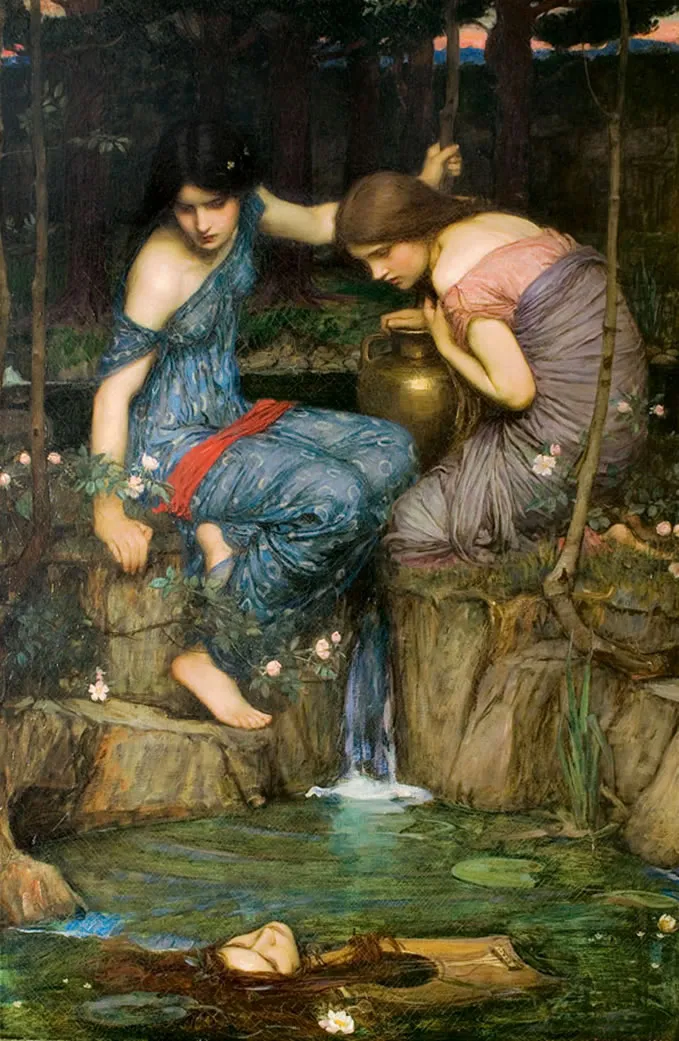
Late Pre-Raphaelite
10 artworks
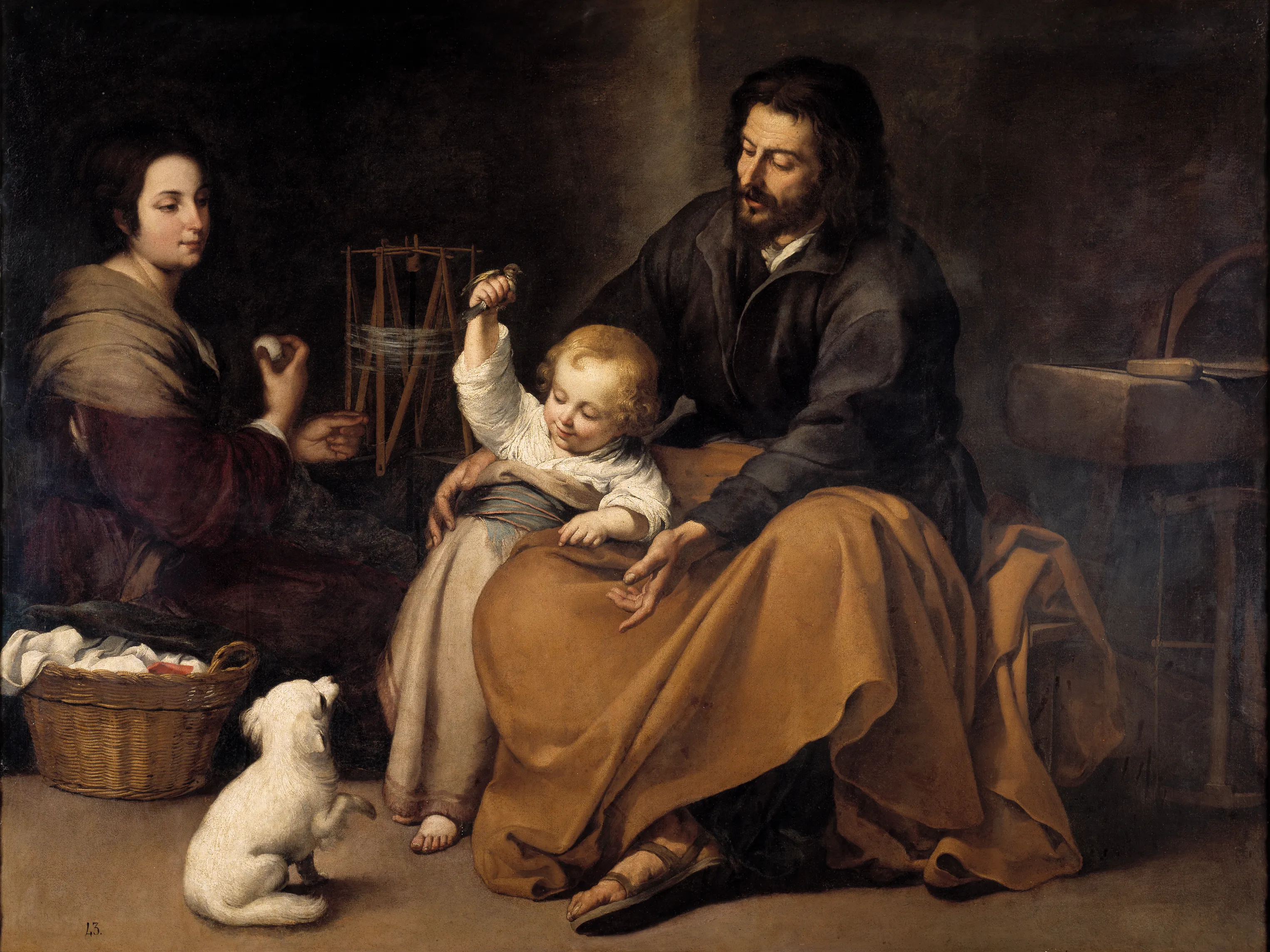
Baroque
2 artworks
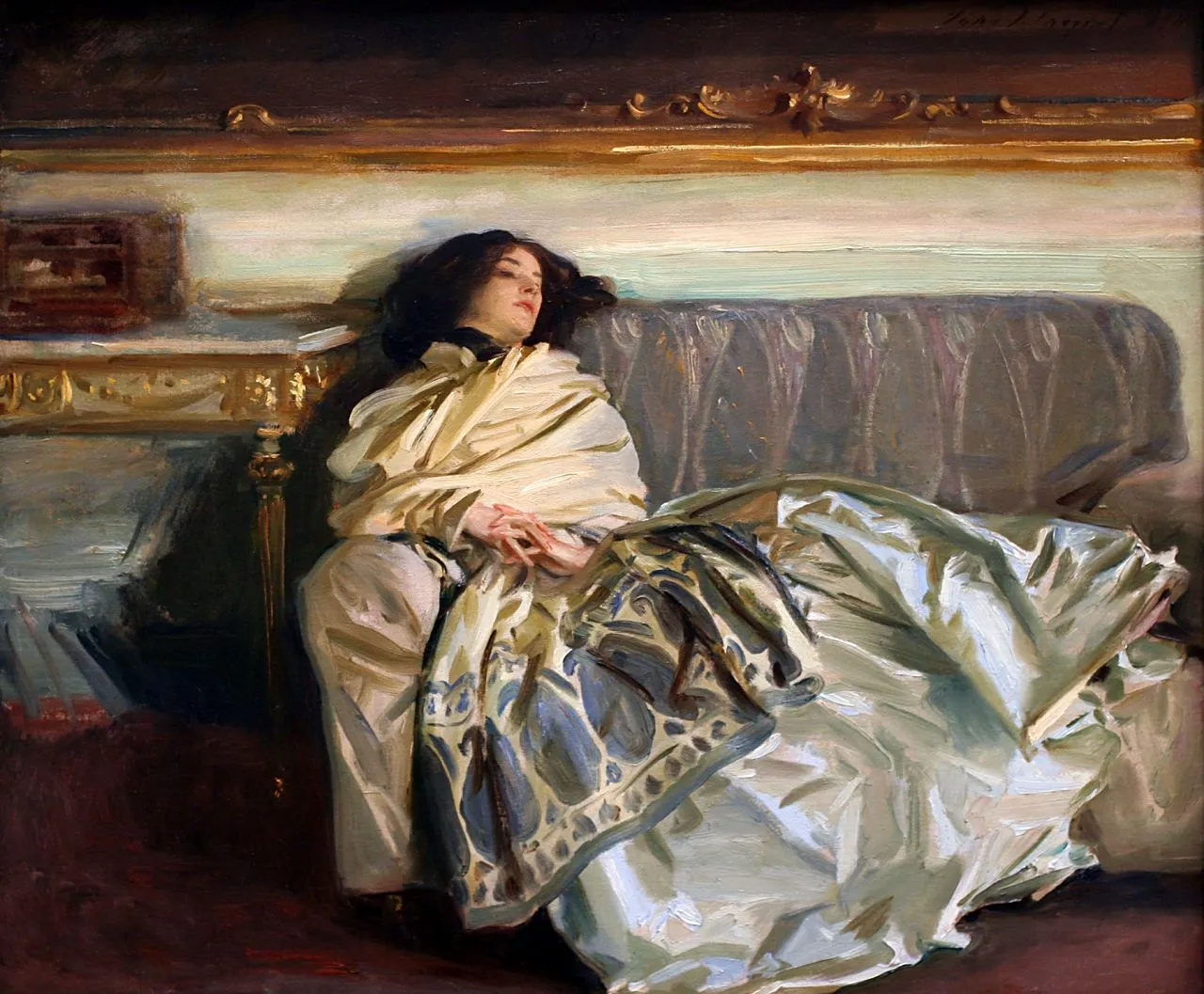
American Impressionism
5 artworks
Realism
4 artworks
Pre-Raphaelite
3 artworks
Barbizon School
5 artworks
Academic art
5 artworks
Luminism
3 artworks
Rococo
2 artworks
Symbolism
22 artworks
Neo-Impressionism
3 artworks
Ukiyo-e
1 artworks
Japonism
4 artworks
Edo period
1 artworks
Fauvism
1 artworks
Naturalism
9 artworks
Russian Realism
1 artworks
Post-Impressionism
13 artworks
Genre painting
9 artworks
Neoclassicism
3 artworks
ウィーン分離派
7 artworks
自然主義
1 artworks
ナショナル・ロマンティシズム
1 artworks
未来派
1 artworks
More artists
If you find an error in this content, please let us know here
This site is protected by reCAPTCHA, and the Google Privacy Policy and Terms of Service apply.