
On the Bank of the Seine, Bennecourt
1868
- Dimensions
- 81.5 × 100.7 cm
- Medium
- Oil on linen canvas
- Collection
- The Art Institute of Chicago
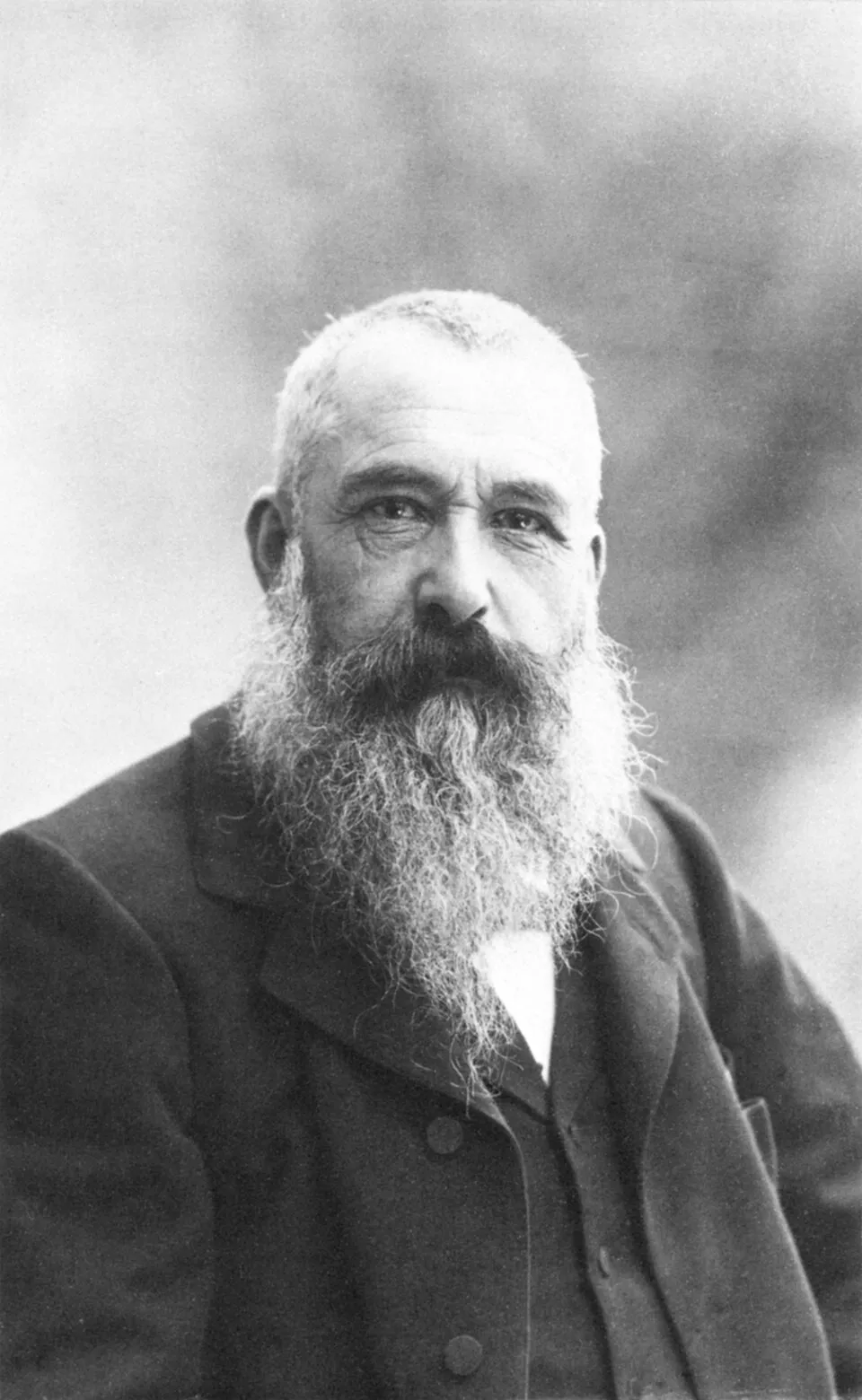
Celebrated as a founding figure of Impressionism, he is one of France’s most ren…
✦ Highlights (technique & color)
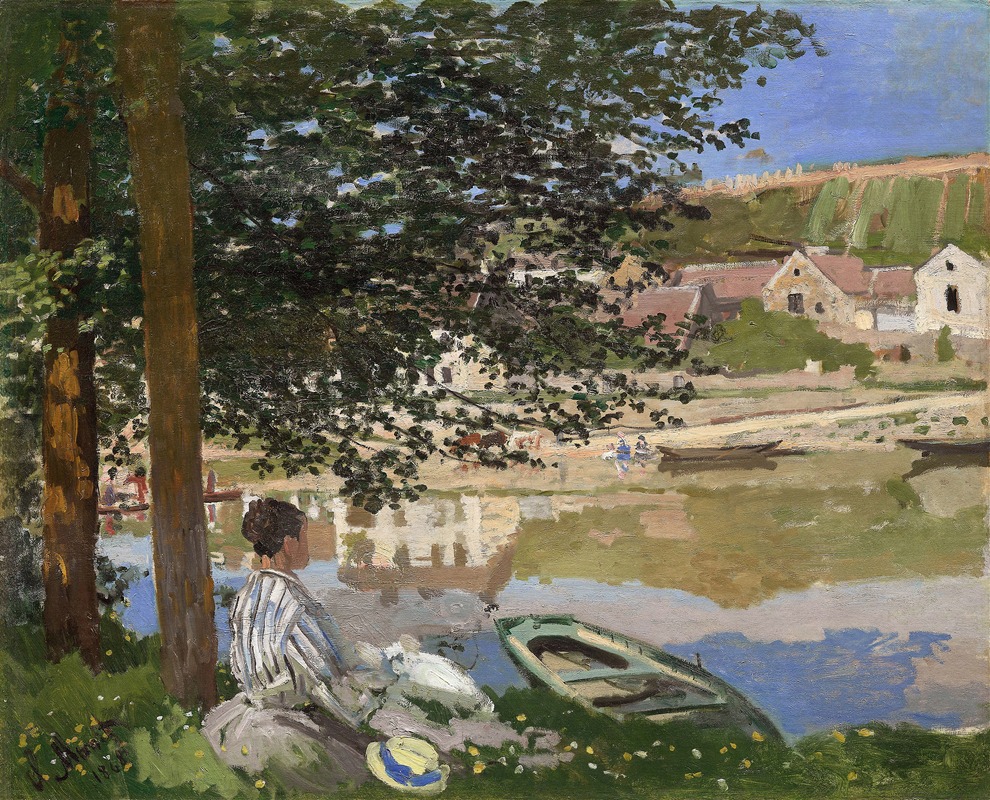
X-ray analysis has revealed that another adult figure was originally depicted on the water to Camille's right. Rather than scraping away the initial layer of paint, Monet covered it with broad, heavy strokes of blue, reducing the composition to a single figure. In addition, the houses and the water on the far shore are rendered in flat planes of color, capturing an immediacy reminiscent of an unfinished oil sketch.
✦ The setting of this painting
The scene is set on the flat shore of the Grande Île, an island in the Seine. In the shaded foreground, Camille sits quietly, gazing across at Gloton, a riverside hamlet of Bennecourt on the opposite bank. A ferry landing can be seen on the opposite slope, and a single rowboat is moored in the foreground. At the time, it was an emerging summer retreat easily accessible from Paris by train.
✦ Historical context
In the spring of 1868, Monet was in the depths of extreme poverty and emotional despair. Although his eldest son, Jean, had been born the previous year, Monet's father cut off his financial support. He stayed at an inexpensive inn in Gloton, but was eventually evicted for being unable to pay his bill. In his despair, Monet attempted suicide in the Seine. This work is the only painting that survives from this tragic stay.
A woman in a striped dress sits on the grassy bank beneath the shade of the trees.
Before her gaze stretches the tranquil Seine and the houses on the opposite shore.
The woman depicted is Camille Doncieux, Monet's lover and future wife.
With the scenery reflected on the water, it appears to be an idyllic holiday scene.
A quiet, contented moment spent with the woman he loved—
one might easily see it that way.
Yet, in truth, this painting holds a hidden secret.
Look closely at the water just to Camille's right.
You may notice how the paint is built up in an unusual, raised texture.
An X-ray examination by the conservation science department at the Art Institute of Chicago revealed an astonishing truth.
Another adult had once been painted beside Camille.
The outline revealed the head and full figure of a person wearing a bonnet.
Rather than scraping it away, Monet painted over it with thick, rough strokes of blue pigment,
deliberately reducing the scene to Camille's solitary silhouette.
Why did he erase this companion and leave her alone?
In the spring of 1868,
Monet was at the lowest point of his life.
The previous summer, Camille had given birth to their eldest son, Jean.
However, Monet's strict father, Adolphe, refused to acknowledge their relationship
and cut off his financial support entirely.
With no steady income, Monet was constantly hounded by unpaid lodging bills.
At the recommendation of the novelist Émile Zola, they traveled to Gloton, a hamlet in Bennecourt—
a rural retreat close to Paris where the cost of living was low.
Though they took rooms at the Auberge Dumont, Monet's desperate circumstances did not improve.
Inevitably, he could no longer afford the rent there either.
Eviction.
Unable to provide for his family, unable to keep painting.
Despair.
The night after being cast out of the inn, Monet threw himself into the Seine.
An attempted suicide.
Surviving by chance, Monet returned to Paris alone, leaving Camille and Jean behind,
to write desperate letters pleading for financial support from patrons.
This painting is the sole surviving work from that tragic stay in Gloton.
About 145 more words
Read the rest of this commentary —
and step into a secret gallery
opened just for you
An "art letter" delivered to you every Saturday morning
Works, music and words chosen for your sensibility, from your artist-type result and the paintings you love
A library of masterpieces and music you can enjoy "in your own words", not just look at
A "digital art notebook" (unlimited) where your impressions build into your own taste
Unlimited likes and notes
¥980 / month¥0 today
¥980/month (tax incl.) from day 8. Cancel anytime.
Already have an account? Log in
Your Note
Write down what this painting made you feel in your art notebook.
Please sign up to write notes.
Sign up for freeRecommended Artworks
_Claude_Monet_-_Muse%CC%81e_des_Beaux-Arts_de_Lyon_(W821)+(1).webp)
Sources & references
More artists

If you find an error in this content, please let us know here
This site is protected by reCAPTCHA, and the Google Privacy Policy and Terms of Service apply.