Girls at the Piano

1892

Impressionism

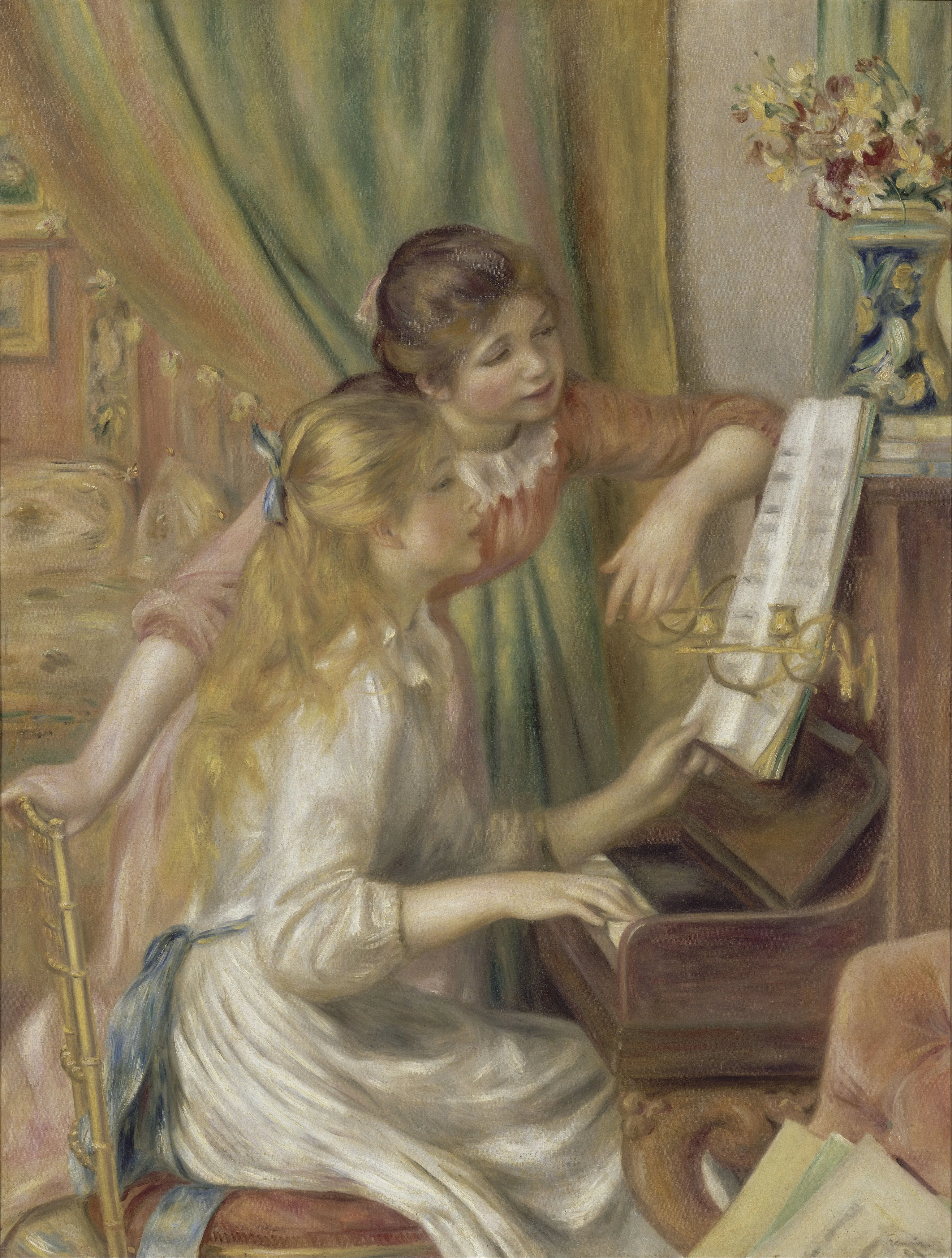
In a room bathed in warm light, two girls huddle together, peering at a piano score.

A serene and contented scene of daily life, typical of a bourgeois household of the era.

However, when this painting was created, the artist Renoir was under unprecedented pressure.

Having reached the age of 50, and thanks to the efforts of his close friend, the poet Mallarmé, among others, he was commissioned by the French government to create a work for the national museum collection – a first for an Impressionist painter.

For him, who was finally overcoming years of hardship when his paintings didn't sell and deep uncertainties about his own style, this was a crucial opportunity he absolutely could not fail.
Perhaps due to this immense pressure, he painted five or six canvases on this single subject, subtly altering the colors and details in each, and then allowed the government to choose from among them.

What he presented as a national collection piece was not an exaggerated historical or mythological scene, but rather the very ordinary sight of girls gathered around a piano, an instrument that was becoming increasingly common in people's lives.

From the painting, one can almost hear not so much the elegant melodies of a masterpiece, but rather the hesitant plucking of notes and the joyful chatter and laughter of the girls.

What he captured on canvas after years of artistic struggle and conflict was an unpretentious 'eternal moment of happiness'.

Perhaps it was the soft, warm light found in everyday life that sustained him through a period of harsh criticism and allowed him to establish his status as a master.

If you find an error in this content, please let us know here

フランスの印象派を代表する画家の一人。リモージュの仕立て屋の家に生まれ、10代の頃はパリの磁器工場で皿に花束の絵付けを行う職人として働いていた。

Your Note

Write down what this painting made you feel in your art notebook.

Please sign up to write notes.

Sign up for free

Music and art
are waiting for you.

Broaden your own world through the stories of art.
We will notify you by email when new articles are published.

Sign up free to read