
Vétheuil
1901
- Dimensions
- 縦 90.2 cm × 横 93.4 cm
- Medium
- 油彩/カンヴァス
- Collection
- シカゴ美術館
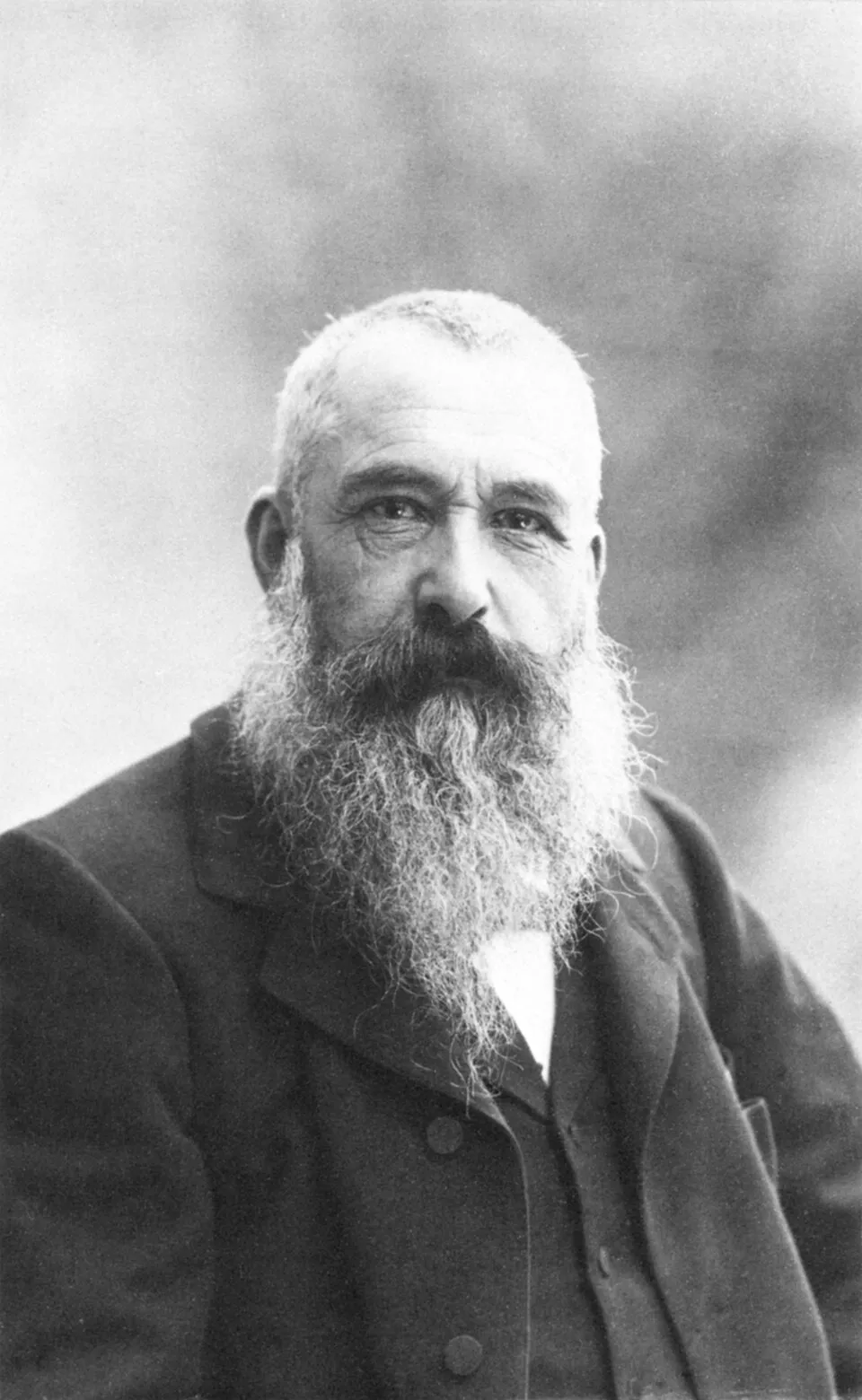
Celebrated as a founding figure of Impressionism, he is one of France’s most ren…
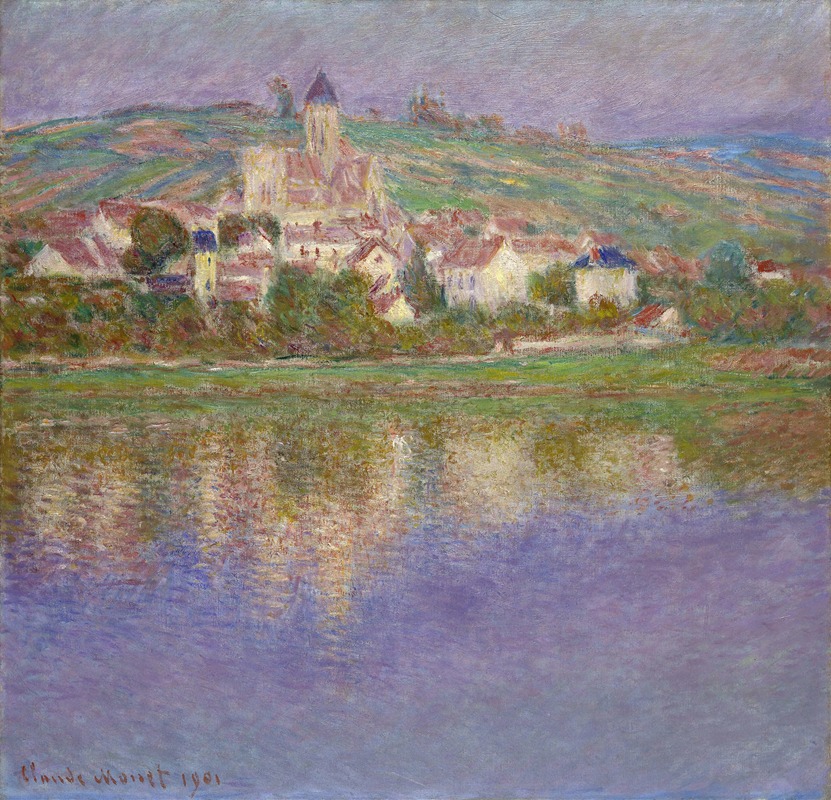
60歳を迎えた画家が、自らの画業の過去の主要なモチーフを訪ね直し、過去の感覚と印象を総括しようとした。自然の模写を超え、画面の装飾性と色彩の抽象的構成を追求する決意が込められている。
✦ Highlights (technique & color)
画面は上から「空」「街並み」「水面」の三つの水平帯状構造に分割され、中央の水平線で実体と水面の反射が上下対称に近い形で対峙している。遠近法的な奥行き感を意図的に抑え、装飾的平面性を高めている。明確な線描ではなく、筆致の方向と長さの切り替えによって形態が描き分けられており、水面は水平方向の短く密なタッチ、街並みは垂直方向および幾何学的な短い筆致で構成されている。
✦ The setting of this painting
フランスのイル=ド=フランス地域圏ヴァル=ドワーズ県に実在する小都市ヴェトゥイユ。セーヌ川を挟んで対岸に位置する小集落ラヴァクールの一軒家のバルコニーからの視点。真夏の真昼の強い太陽光がセーヌ川と建物の壁面を照らし出し、水面に鮮やかな反射像を生成している。
✦ Historical context
1901年。ガソリン自動車が普及し始めた初期段階であり、モネ自身も最新の自動車を購入して移動の自由を得ていた。印象派の自然模写から、20世紀のモダン・アートや抽象的構成へと向かう過渡期。
The relentless midsummer sun pours down from above, intensely illuminating the surface of the Seine and the walls of the buildings on the far bank. On the water, shimmering reflections of the townscape and the silhouette of the Church of Notre-Dame appear vividly defined. In the summer of 1901, having reached the age of sixty, Claude Monet quietly gazed from a balcony on the opposite shore at the place where he had once endured profound grief and hardship. Gone were the bustling crowds and boating activity he had once depicted; only pure light and color intertwined in the stillness. Facing his canvas, the artist kept his brush moving, superimposing memories of the past onto the landscape before his eyes.
Escaping the Sweltering Garden to a Place of Memories
In the summer of 1901, at Monet's estate in Giverny, extensive work was underway to expand his "water garden" and modify the surrounding waterways. Laborers moved through the grounds, churning up the earth and throwing the surroundings of Monet's beloved water lily pond into turmoil. Compounding the disruption, that summer brought record-breaking heat. The blazing sun and suffocating temperatures made painting outdoors practically impossible.
Monet could not hide his frustration. In a letter dated July 19, 1901, to his art dealer, Paul Durand-Ruel, he voiced his deep dissatisfaction: "With this heat, work is impossible; I am even longing for rain and cold." Forced to abandon working in his garden, he had no choice but to seek a new location.
He made his way to Lavacourt, a small hamlet a few kilometers up the Seine from Giverny. Lavacourt lay directly across the river from Vétheuil, the town where he had once lived with his family and experienced a major turning point in his life. Monet rented a house in Lavacourt, setting up its balcony as a makeshift open-air studio. Fleeing the sweltering heat of Giverny to observe the setting of his past life from across the river was perhaps, for him, far more than a simple retreat.
Commuting by Modern Automobile to "Reckon with the Past"
Monet's work in Lavacourt was aided by the cutting-edge technology of the time. The previous year, in December 1900, he had purchased a Panhard & Levassor, one of the newest gasoline-powered automobiles. During his impoverished days living in Vétheuil in the late 1870s, he had traveled largely on foot or by boat, demanding considerable time and effort wherever he went. By 1901, however, Monet could effortlessly drive himself—or have his chauffeur drive him—between his home in Giverny and his temporary studio in Lavacourt day after day. This technological leap granted him easy access to a site from his past, physically facilitating the creation of the series.
At sixty years old, a powerful resolve was taking root in Monet. As he confided to the critic François Thiébault-Sisson, he wished to revisit the principal motifs of his past career and take stock of his earlier sensations and impressions. Painting the scenery of Vétheuil once again, which he had captured around 1880, was not merely a recycling of old motifs; it was an attempt to re-evaluate and reconstruct his past achievements through twentieth-century sensibilities and techniques. Commuting to this nostalgic site in a modern automobile, the painter harbored a quiet determination to elevate his art to a new plane.
The Disappearance of Human Presence
The townscape of Vétheuil that Monet observed from the balcony differed decisively from what he had once painted. His works depicting Vétheuil from the 1870s were rich with the vitality of human activity—townspeople coming and going, boats floating along the Seine, and the texture of everyday life in the streets. The landscape had always carried the pulse of human life.
In this 1901 canvas, however, there is not a single sign of human activity—no figures, no implements of daily labor, and no boats. The composition is presented as an entirely deserted landscape. As the midday sun beats down, illuminating the town and river, nothing remains but silence.
Art historians such as Andrew Forge have suggested that this austere, human-free composition reflects the artist's inner mourning and nostalgia. Vétheuil was a place etched with sorrow: his first wife, Camille, had succumbed to illness there in 1879, and his stepdaughter, Suzanne Hoschedé, had died suddenly in 1899. Returning two decades later to the setting of his bitterest struggles and deepest losses, repeatedly painting the vacant townscape in silence, can be interpreted as a tribute to his departed wife and family. While Monet himself left no written statement of mourning, the disappearance of human presence quietly speaks to what the painter was truly gazing at beyond the scenery.
An Endless Struggle with Landscape Painting
Monet initially believed he could finish this series of Vétheuil views quickly. Yet the natural light and atmosphere changed by the moment, and the perfection he pursued proved elusive. In a letter to Durand-Ruel dated October 19, 1901, Monet reported: "I set to work on a series of views of Vétheuil, thinking I would finish them quickly, but in the end they took up my entire summer, so all my other ongoing work remains suspended."
In truth, this work was not completed entirely on the balcony in Lavacourt as a purely plein-air endeavor. After spending the summer capturing the shifting light on site, Monet brought the canvases back to his studio in Giverny in the autumn. There, from the autumn of 1901 into early 1902, he spent months meticulously refining and reworking the compositions. While some have suggested this served as a pretext to delay delivering the London series that his dealer had been persistently pressing for, there is no doubt that Monet was engaged in an endless struggle with landscape painting, guided by memory and sensation inside his atelier.
About 687 more words
Read the rest of this commentary —
and step into a secret gallery
opened just for you
An "art letter" delivered to you every Saturday morning
Works, music and words chosen for your sensibility, from your artist-type result and the paintings you love
A library of masterpieces and music you can enjoy "in your own words", not just look at
A "digital art notebook" (unlimited) where your impressions build into your own taste
Unlimited likes and notes
¥980 / month¥0 today
¥980/month (tax incl.) from day 8. Cancel anytime.
Already have an account? Log in
Your Note
Write down what this painting made you feel in your art notebook.
Please sign up to write notes.
Sign up for freeRecommended Artworks
Sources & references
More artists
If you find an error in this content, please let us know here
This site is protected by reCAPTCHA, and the Google Privacy Policy and Terms of Service apply.