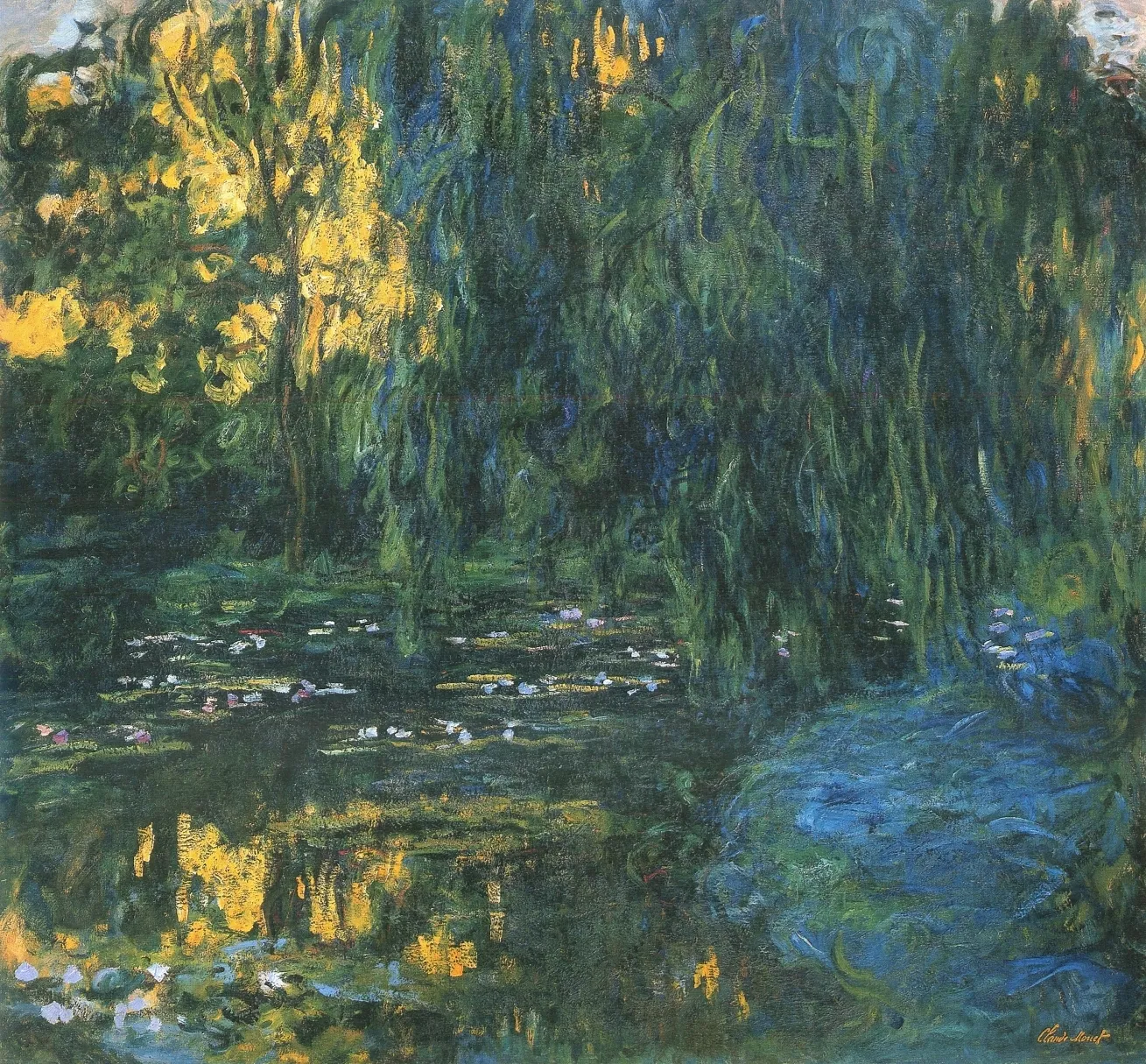
Water Lilies

1914

Water surfaceAbstraction
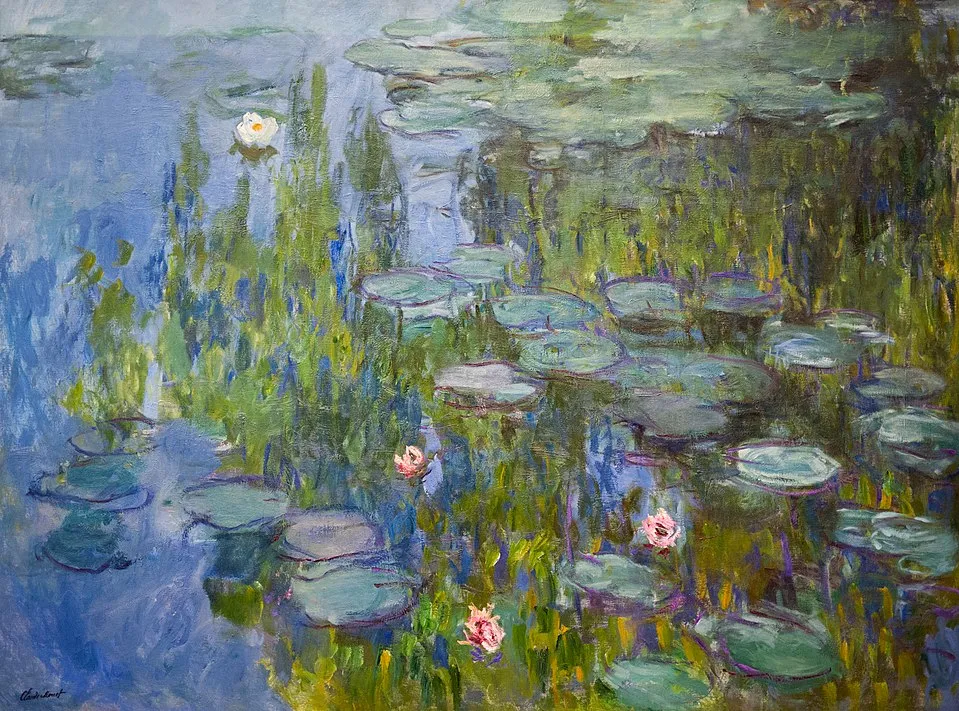
Circa 1914-1926

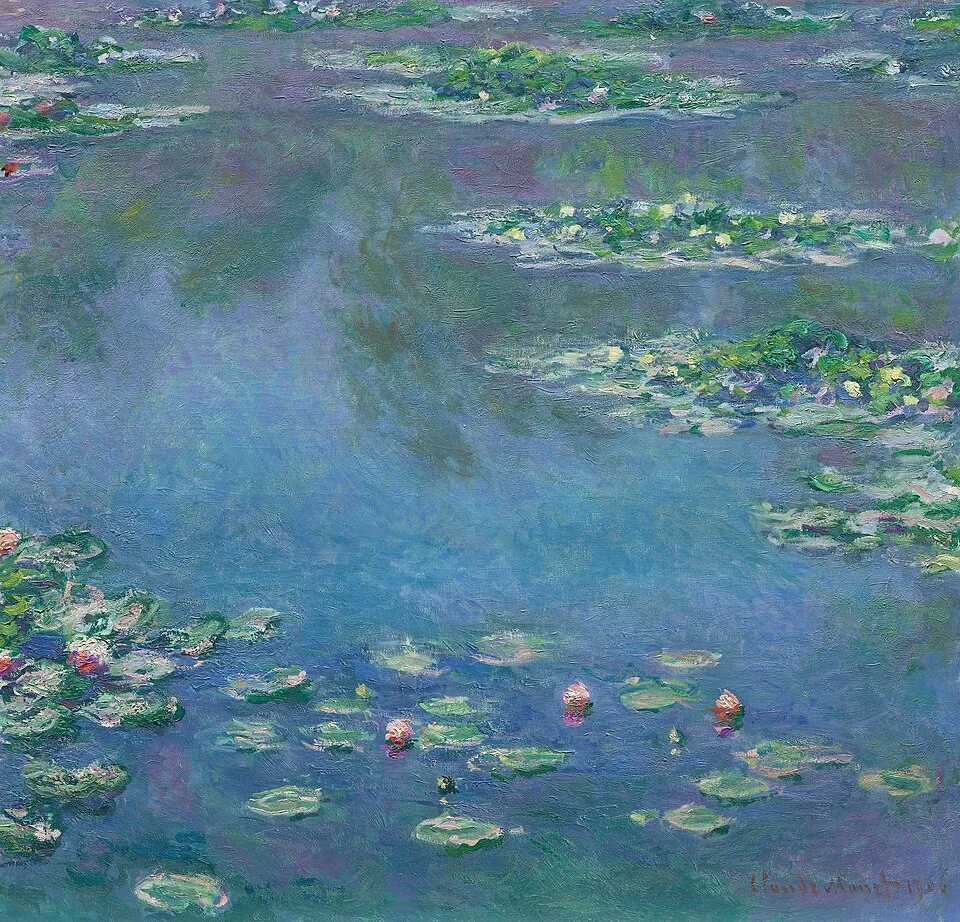
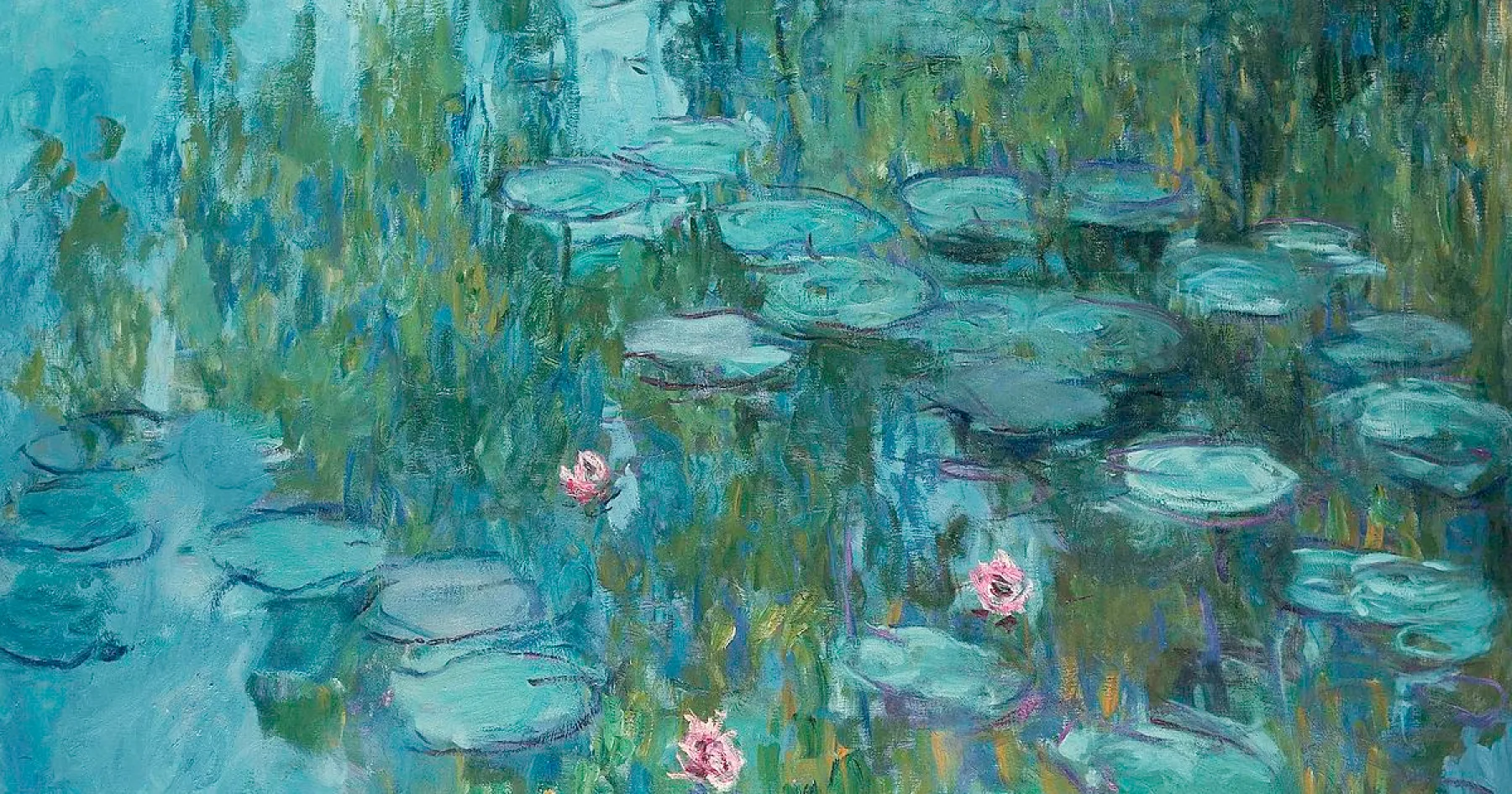
A water surface that dominates the visual field, adorned with vibrant water lilies floating upon it.

The sky, clouds, and shadows of trees merge into the watery mirror, eliminating even the boundaries of the horizon and the shore, creating a mystical landscape that approaches pure abstraction.

Yet, in truth, when this monumental series was painted, the artist Monet was in the depths of profound sorrow and despair.

He had successively lost his beloved wife Alice and eldest son Jean, and furthermore, suffering from cataracts, he was gradually losing his eyesight, which was his very life as a painter.

In addition, World War I broke out.
His second son Michel was also sent to the fierce battlefields, and trains carrying soldiers ran very close to his Giverny residence, with the sound of cannons echoing, creating a dire situation.

While close friends and family around him evacuated one after another, as if to escape the successive hardships that assailed him, he remained alone in his studio and tirelessly continued to paint the pond in his garden.

In the depths of the horrific war and his own physical decline, the water surface he painted, far from being dark and somber, shines with astonishing richness of color and is full of vitality.

What saved him from the abyss of despair was perhaps the unassuming beauty of this peaceful nature, and his strong prayer as a painter to offer a 'place of peaceful contemplation' to those who were suffering.

If you find an error in this content, please let us know here

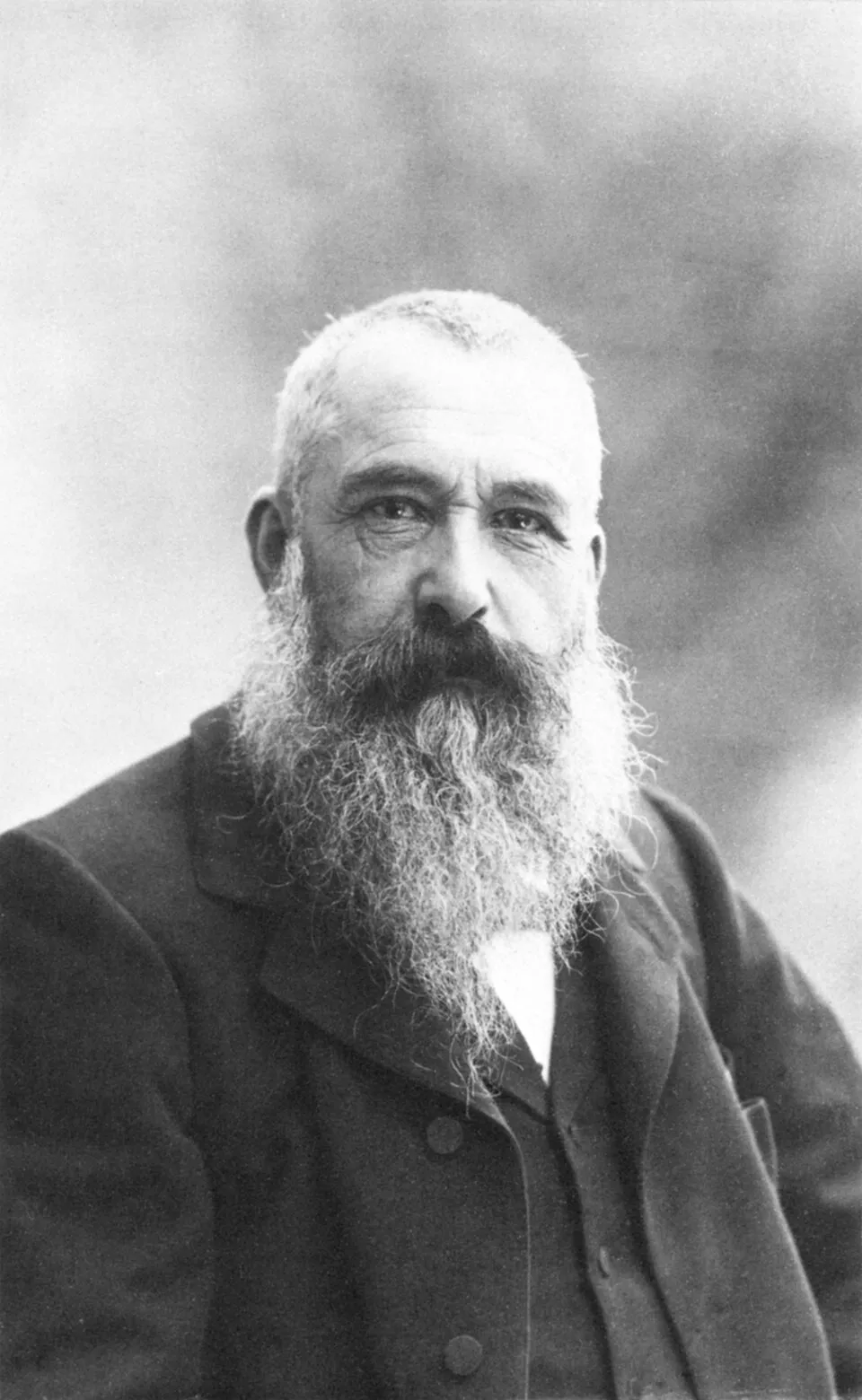
Claude Monet

France

Claude MonetClaude Monet

1840 – 1926

「印象派の父」とも称される、フランスを代表する画家。 自然の風景や水面に反射する光、天候によって絶えず移り変わる情景を、鋭敏な感覚でキャンバスに捉えた作風で広く…

Music recommended for this painting

Your Note

Write down what this painting made you feel in your art notebook.

Please sign up to write notes.

Sign up for free

Music and art
are waiting for you.

Broaden your own world through the stories of art.
We will notify you by email when new articles are published.

Sign up free to read