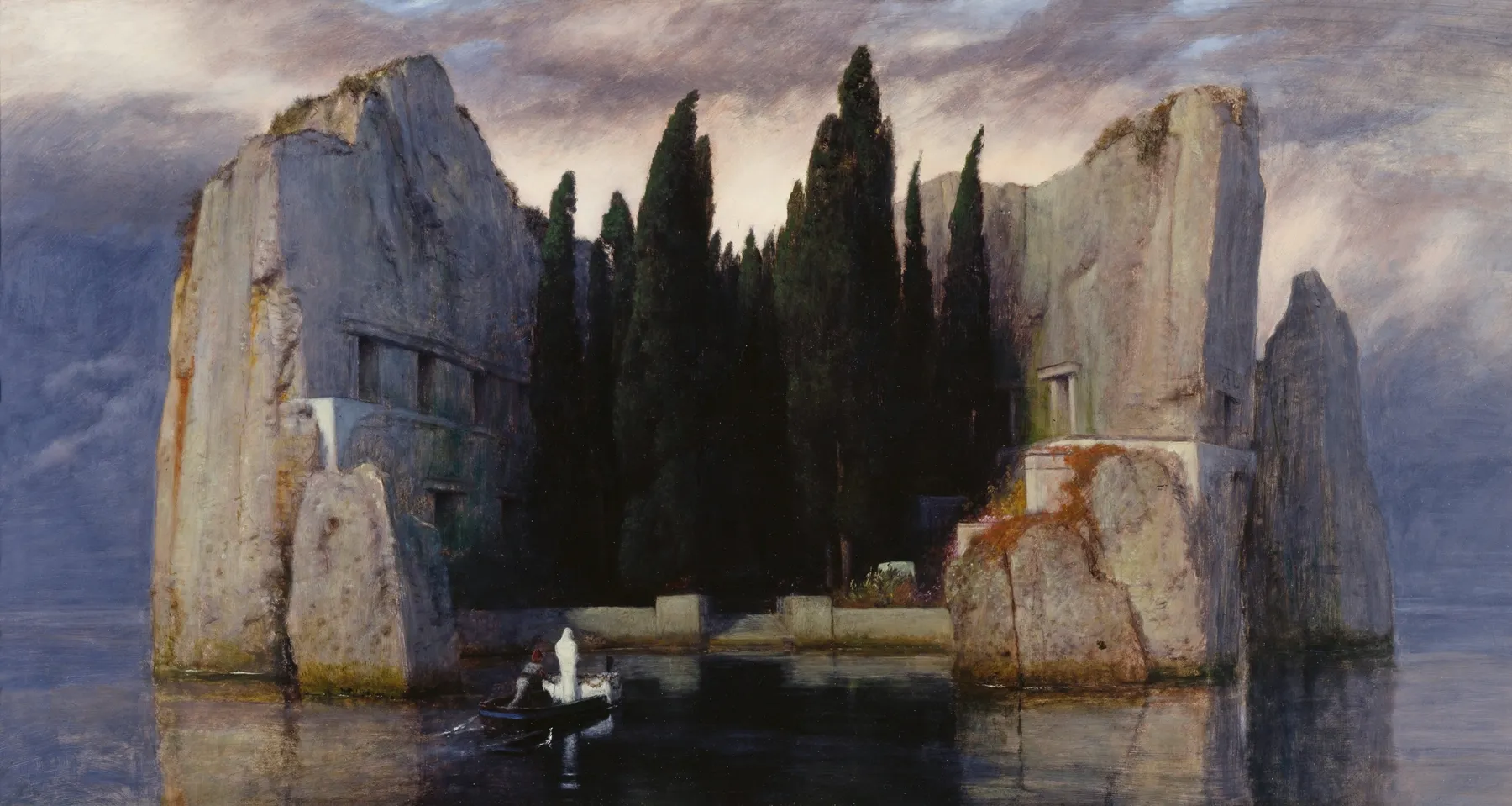
When many people first see Arnold Böcklin's Isle of the Dead, they are overcome by a strange sensation.
Dark, waveless waters.
A towering, sheer rocky island.
In its center, a dense, dark grove of cypress trees.
A small boat approaches it, carrying a coffin draped in white cloth and a figure in white robes standing silently.
It is by no means a "beautiful landscape painting."
Rather, an eerie, overwhelming "scent of death" dominates the canvas.
Yet, for some reason, one cannot look away.
Where does this pull come from?
Today, we will explore its true nature.
The True Nature of Absolute "Silence"
First, let's break down the "stillness" that this painting emanates.
The only movement on the canvas is the ferryman rowing the small boat.
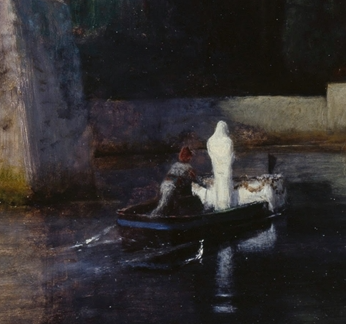
However, even the sound of his oar stroking the water seems to be absorbed into this space.
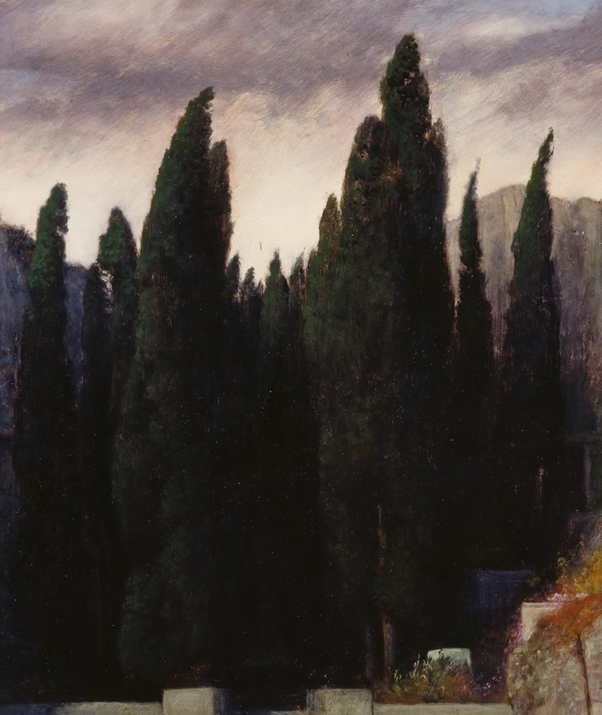
The cypress trees in the center have long been symbols of "death" and "cemeteries" in the Mediterranean world.
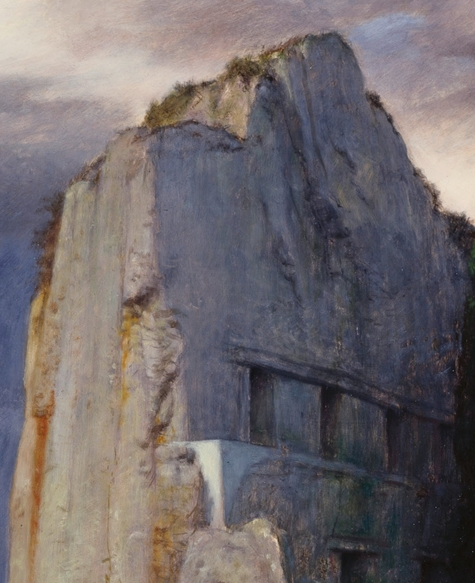
The rocky surface is riddled with dark openings, presumably burial chambers.
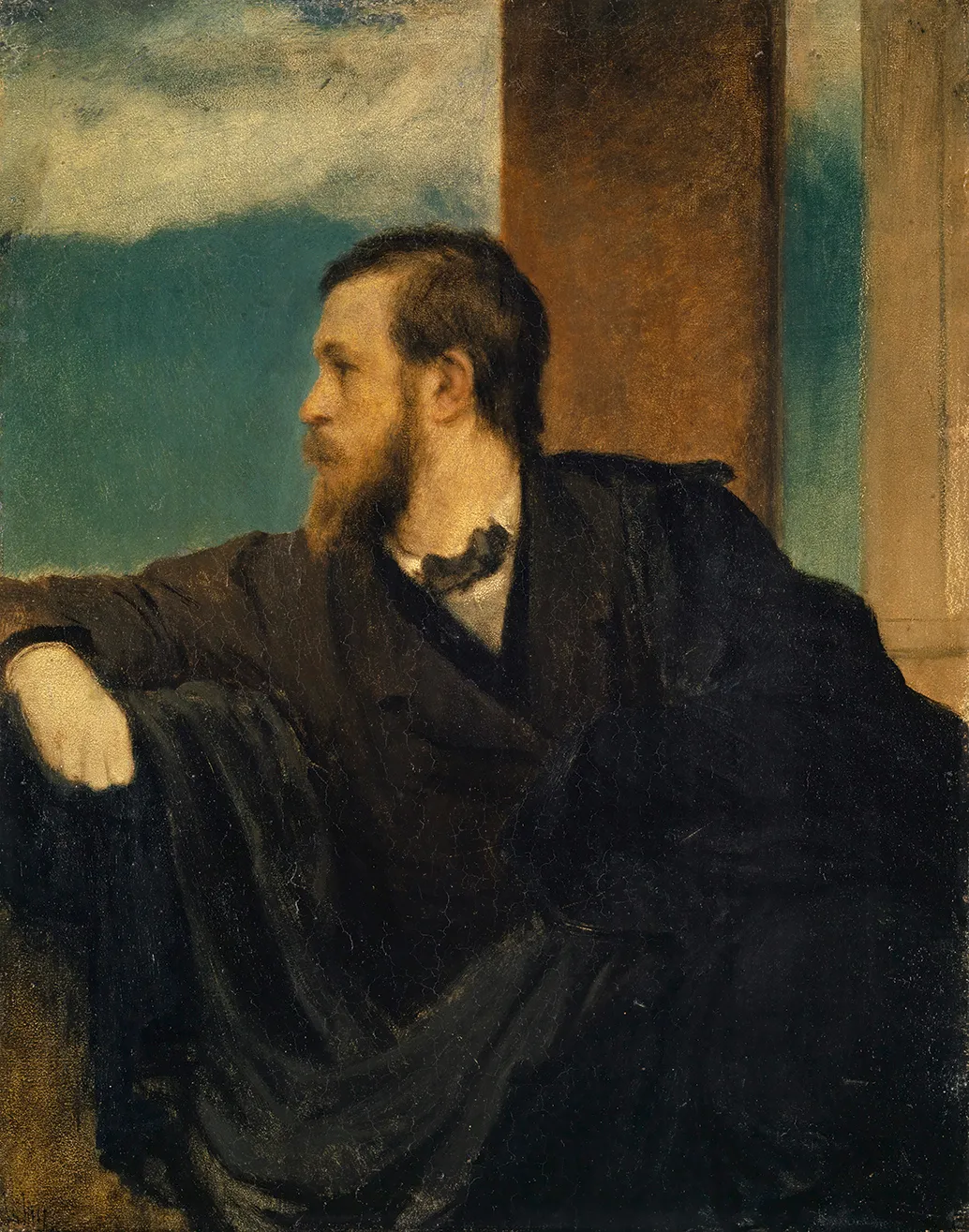
The Swiss Symbolist painter Böcklin never explicitly stated the meaning of this painting.
He left only one comment:
"It must be a dream painting that creates such silence that one would be startled by the sound of a knock at the door."
This absolute stillness was born from a personal loss.
In 1880, while Böcklin was working on this painting, he was visited by a young widow, Marie Berna.
At her request for a "dream painting" to mourn her husband, who had died of diphtheria, Böcklin added the "white coffin" and the "figure in white robes" to this scene.
However, Böcklin himself was not untouched by the shadow of death.
He fathered 14 children in his lifetime, but lost 8 of them.
His young daughter was also buried in the English Cemetery in Florence, which partly inspired this painting.
The "Death Frenzy" That Engulfed Europe
This deeply personal and eerie "landscape of death" swept Europe into a frenzy from the late 19th to early 20th century.
The explosively popular reproductions became so widespread that, according to writer Vladimir Nabokov, they "could be found on the wall of every Berlin home."
Psychoanalyst Freud hung the painting in his consulting room, Russian revolutionary leader Lenin displayed it above his bed, and Hitler even purchased an original (the third version) to adorn his Chancellery.
Why did people eagerly hang a painting depicting "death" in their own rooms?