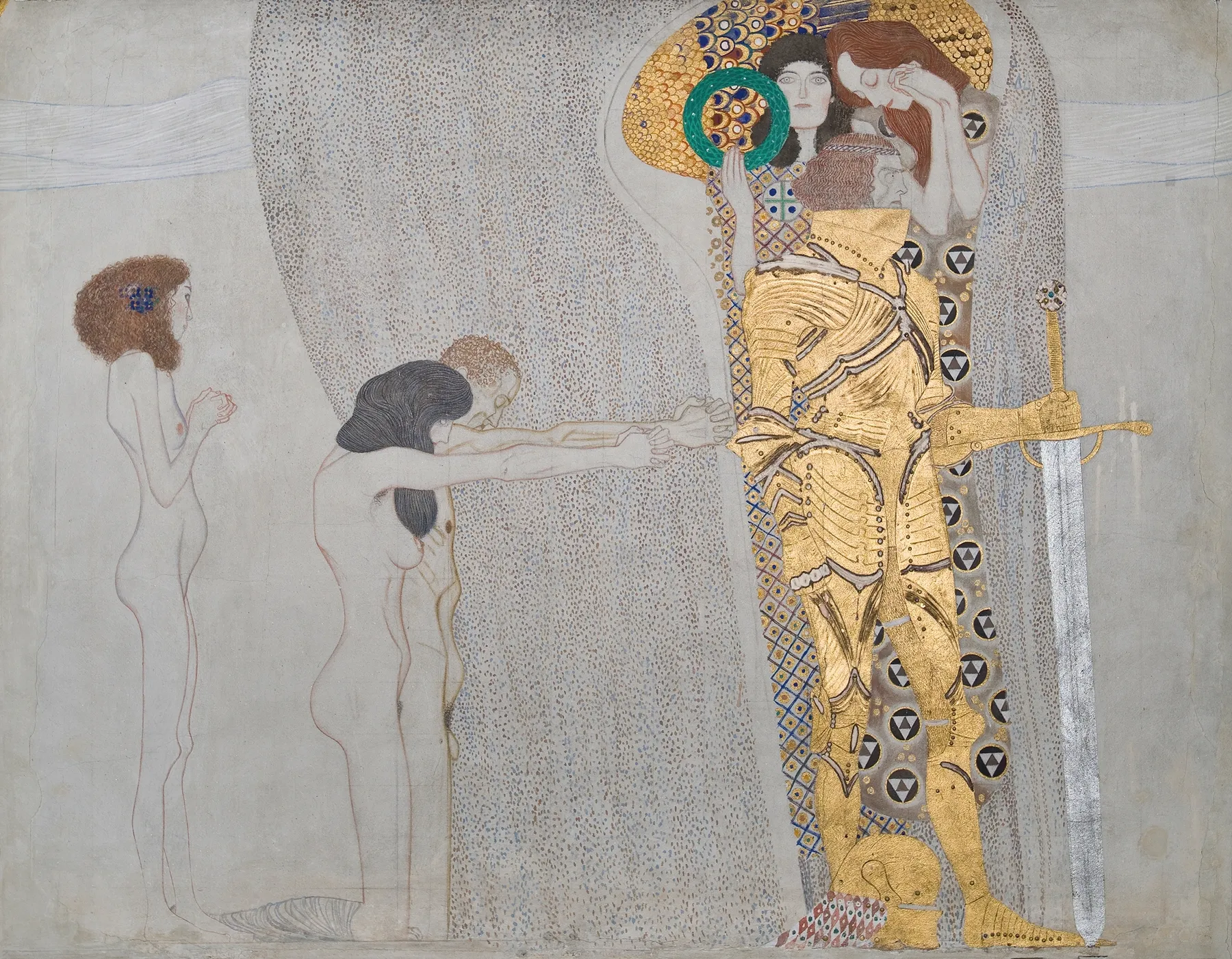
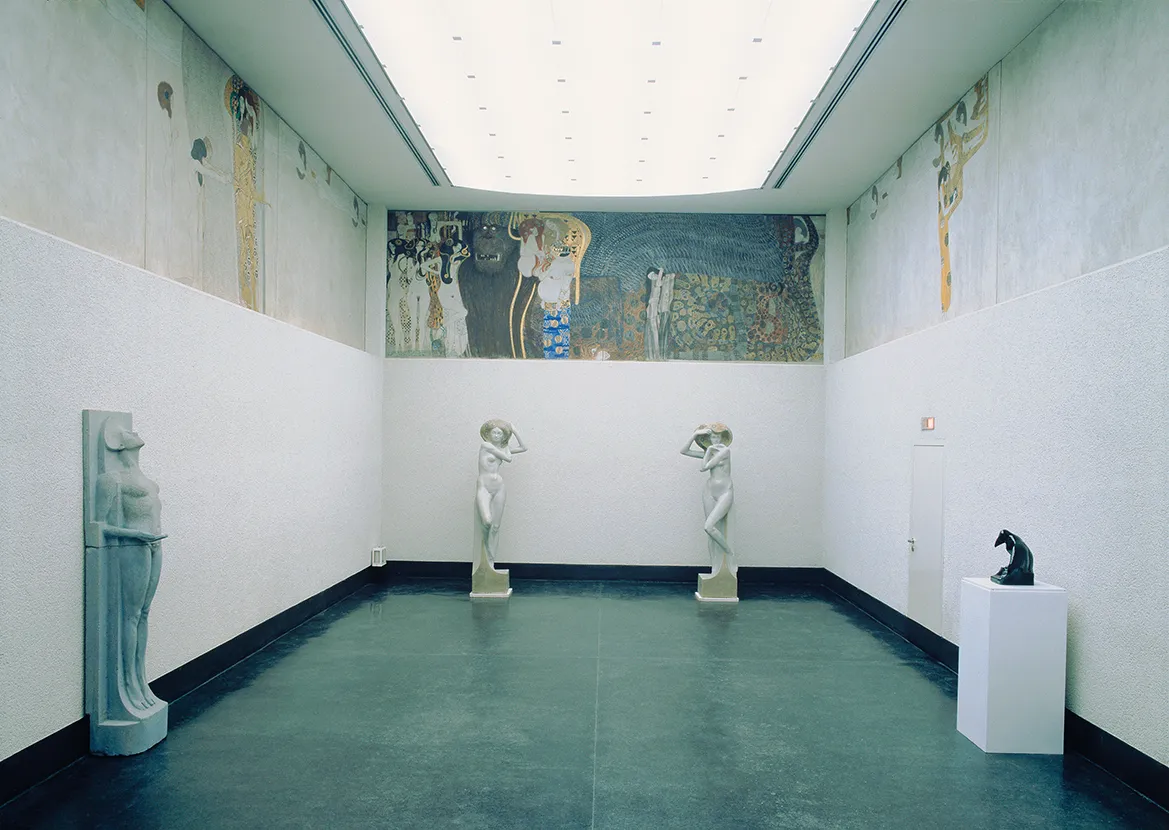
Stepping into the dedicated subterranean gallery of the Secession Building in Vienna, visitors are immediately enveloped in a serene, contemplative silence.
Against the bare expanse of white plaster, flowing contours and radiant gold leaf emerge, exuding a solemnity reminiscent of stepping into an ancient sanctuary or a sacred ritual chamber.
The mural Beethoven Frieze, painted by Gustav Klimt, spans over 34 meters in length and stands approximately two meters high, bringing an exquisite, delicate harmony to the entire space.
Source: Wikimedia Commons
As its title suggests, this frieze was dedicated to a single monumental figure: the composer Ludwig van Beethoven.
Yet why did an already acclaimed painter feel compelled to create such an immense spatial environment simply to give visual form to a symphony?
Rebellion of the Young Secessionists
Source: Moritz Nähr - tumblr.com, Public Domain, via https://commons.wikimedia.org/w/index.php?curid=45439296
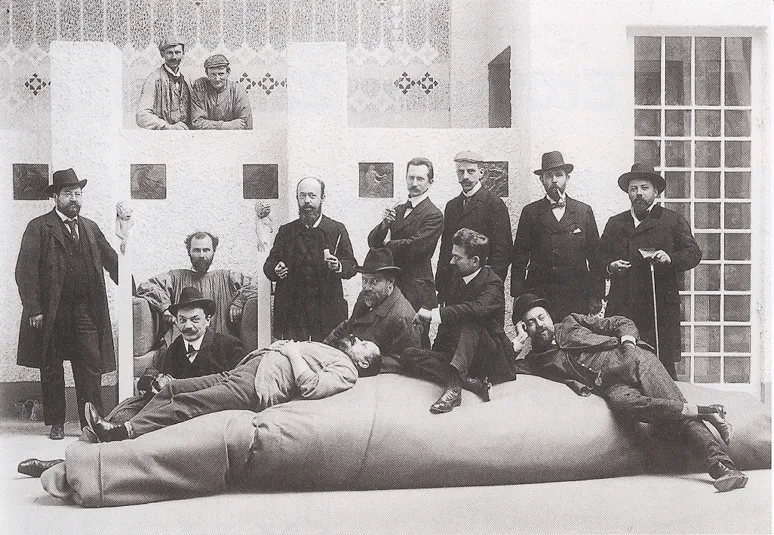
The key to unraveling this question lies in the name they adopted: the Vienna Secession.
As the word "Secession" implies, the essence of the movement was a rebellion staged by young artists against the conservative art establishment of the day.
In late 19th-century Vienna, the art world was dominated by an academic establishment that clung to repetitive traditions and rigid rules.
"There is no future for us in this musty temple caked in old paint."
Infuriated by this stagnation, young visionaries led by Gustav Klimt chose to renounce their elite status, withdraw—or "secede"—from the Künstlerhaus, and forge an entirely new artistic path with their own hands.
As a monument to this rebellion and union, they erected the Secession Building, crowned with its gilded dome of laurel leaves.
And the unifying theme they chose to embody their ideal—a sanctuary where all arts dissolve into one—was none other than Beethoven.
A Temple Where Architecture, Sculpture, Painting, and Music Merge
In the spring of 1902, the Vienna Secession held its 14th exhibition.
Their goal was the realization of a Gesamtkunstwerk—a total work of art that completely fused architecture, sculpture, painting, and music within a single unified space.
Designed by architect Josef Hoffmann, the interior of the building was not merely an exhibition hall, but a sanctuary consecrated to a shared artistic devotion.
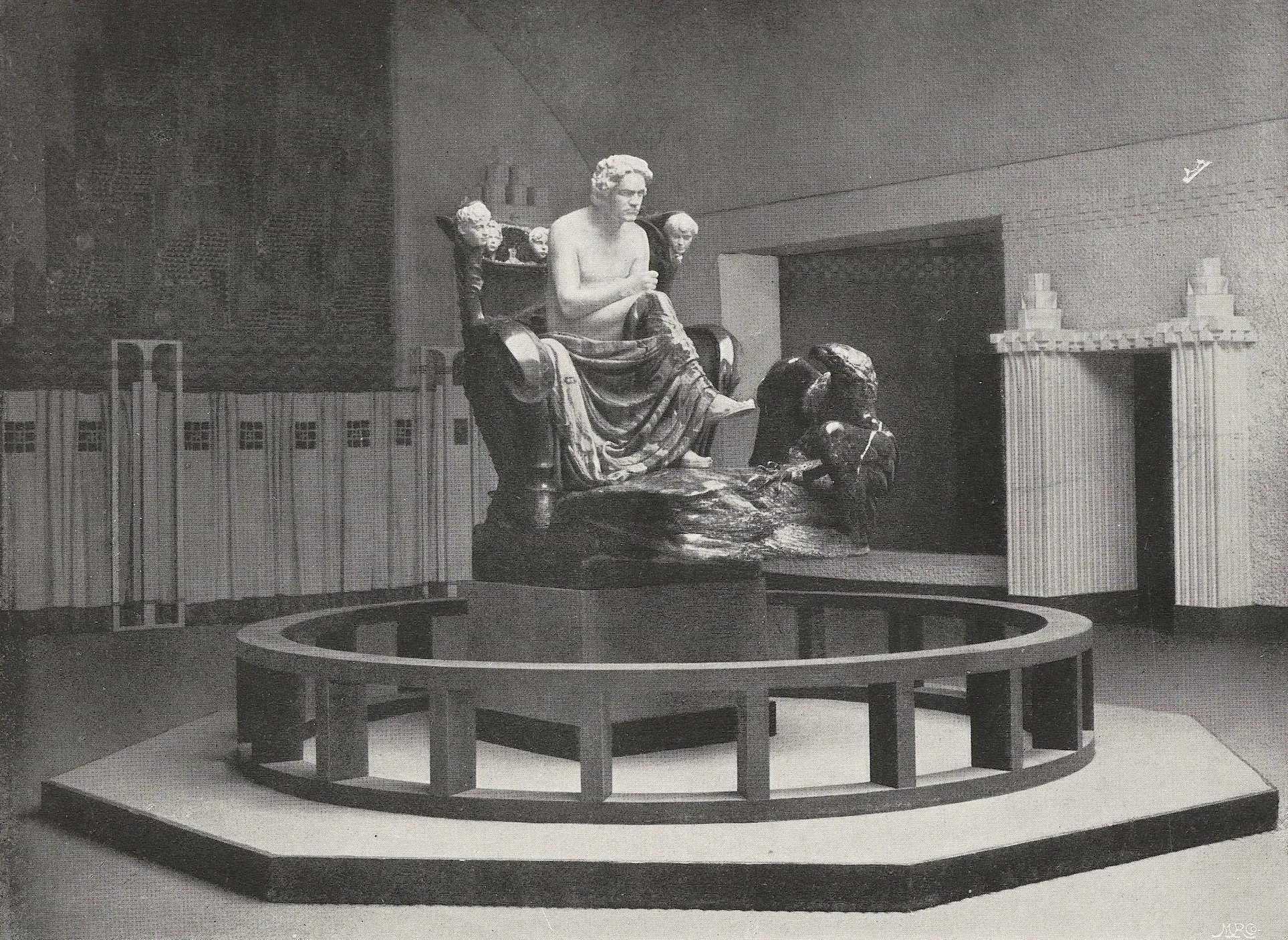
At the center of the main hall stood a monumental sculpture of Beethoven, a masterpiece upon which the German sculptor Max Klinger had labored for fifteen years.
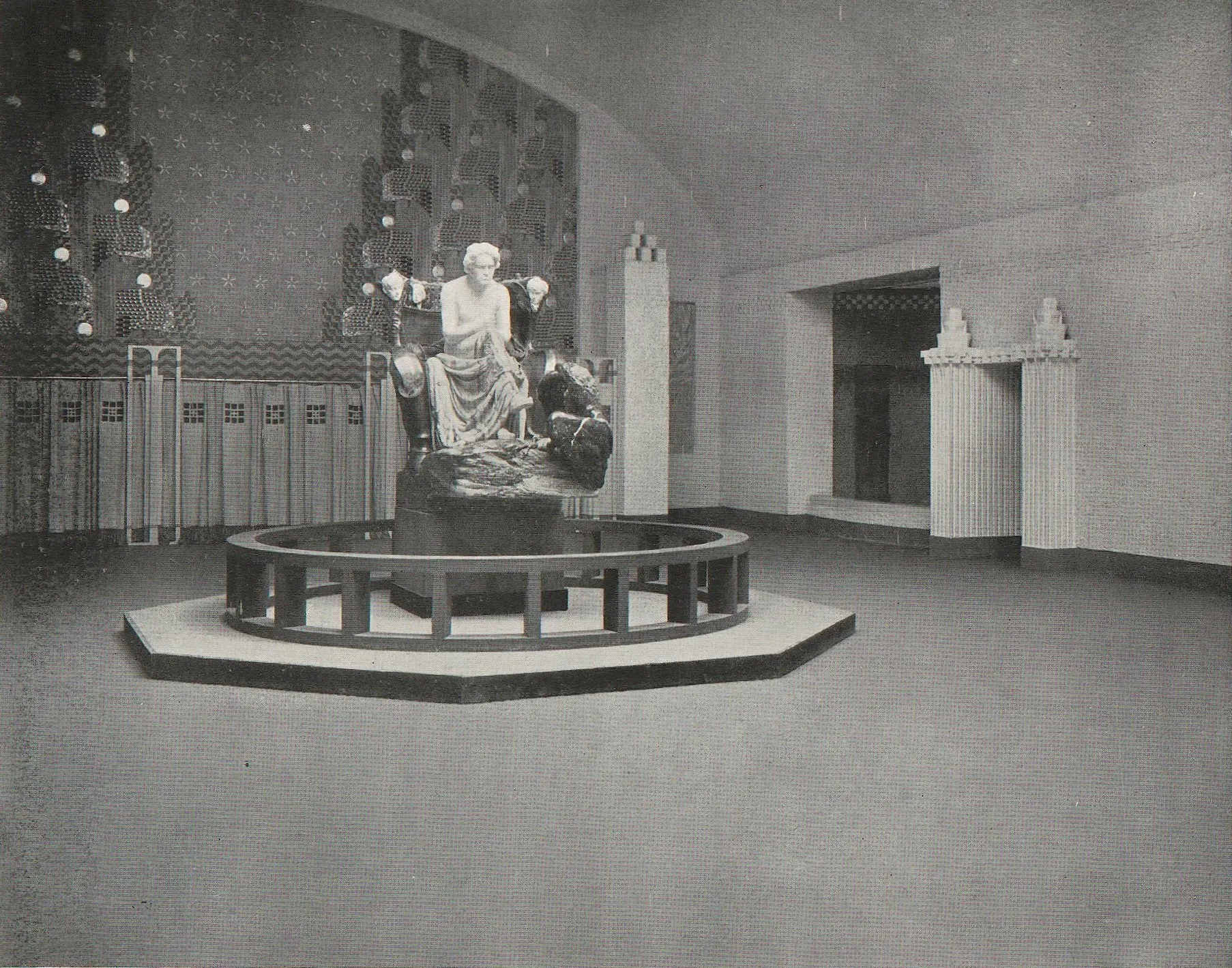
Source: Max Klinger, Beethoven (1902) / Wikimedia Commons (Public Domain)
Klimt's frieze was painted across the upper walls of an adjoining side aisle, guiding visitors toward the central hall where Klinger's sculpture was enthroned.
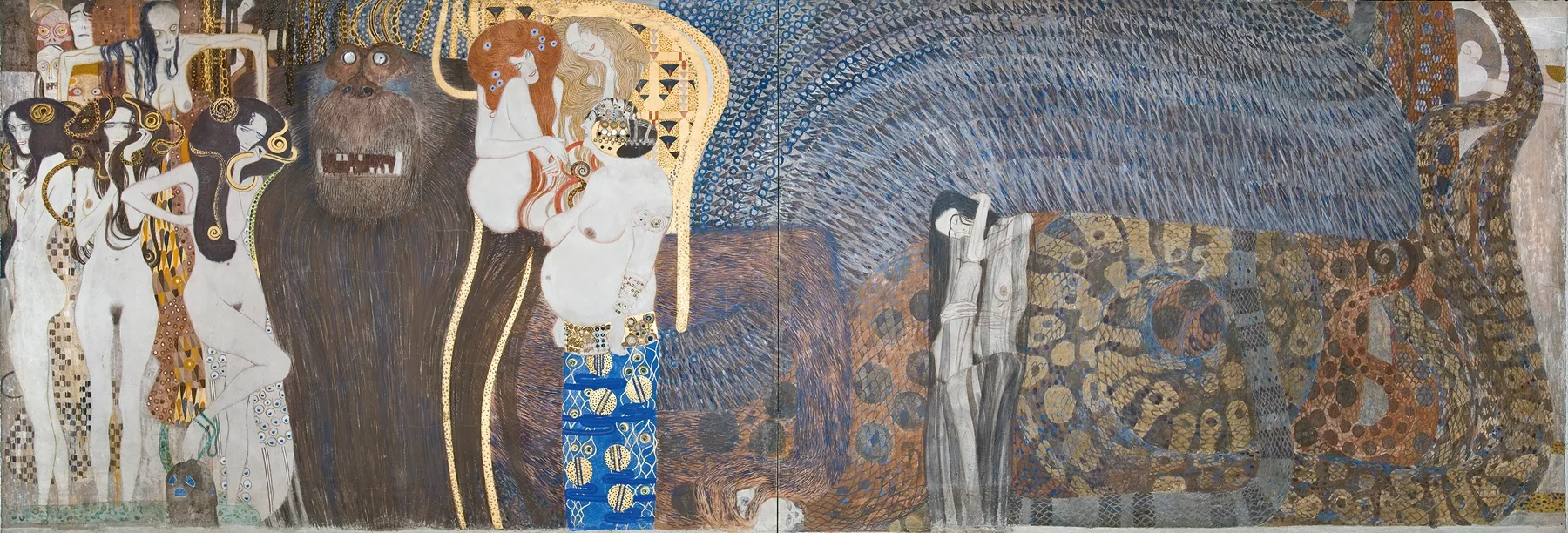
Through Hoffmann's meticulous spatial design, openings were integrated along the upper walls.
This allowed visitors to follow the visual narrative of Klimt's paintings while catching glimpses through the apertures of the Beethoven sculpture resting in the adjacent hall.
On the eve of the exhibition's opening, conductor Gustav Mahler led a wind ensemble in his own arrangement of the fourth movement of Beethoven's Symphony No. 9.
As the solemn chords resonated through the hall, witnesses noted that attendees experienced a moment where painting, sculpture, and music truly dissolved into one another.
The Journey of the Ninth Interpreted by Wagner
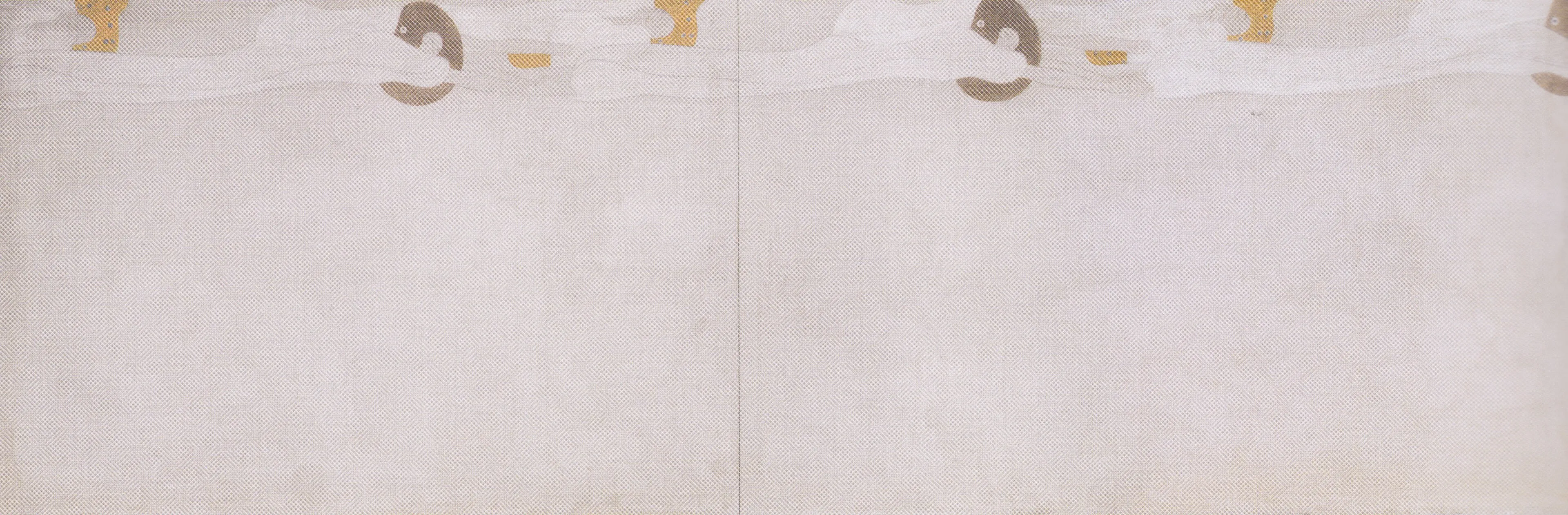
Underpinning this artistic concept was Richard Wagner's narrative interpretation of the Ninth Symphony.
In his 1846 program notes, Wagner had interpreted the symphony as a journey of the human soul: yearning for happiness, battling terrifying obstacles, and finally finding salvation through the power of poetry and song.
Klimt translated this spiritual progression directly across three continuous walls.
The narrative begins along the first long wall, depicting floating, ethereal figures drifting through the void in search of longing and happiness.
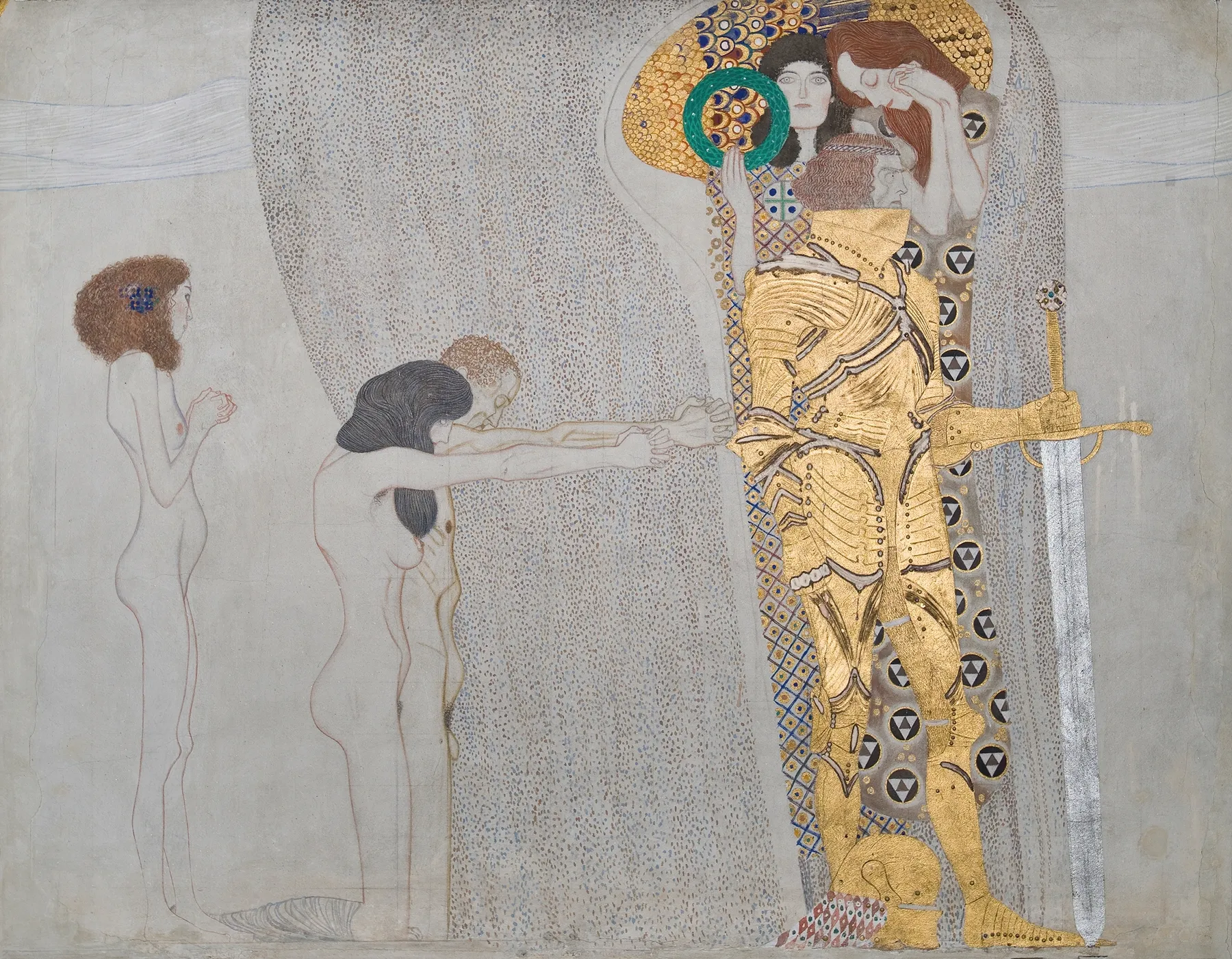
Below them, suffering humanity, afflicted by starvation and earthly misery, implores a knight in golden armor to take up their cause.
Flanked by two female figures representing Ambition and Compassion, the knight resolves to confront destiny for the sake of humanity's deliverance.
It is widely believed that the features of this golden knight were modeled after Mahler, who shared a deep creative resonance with the Secessionists.
Intended for Destruction After the Exhibition
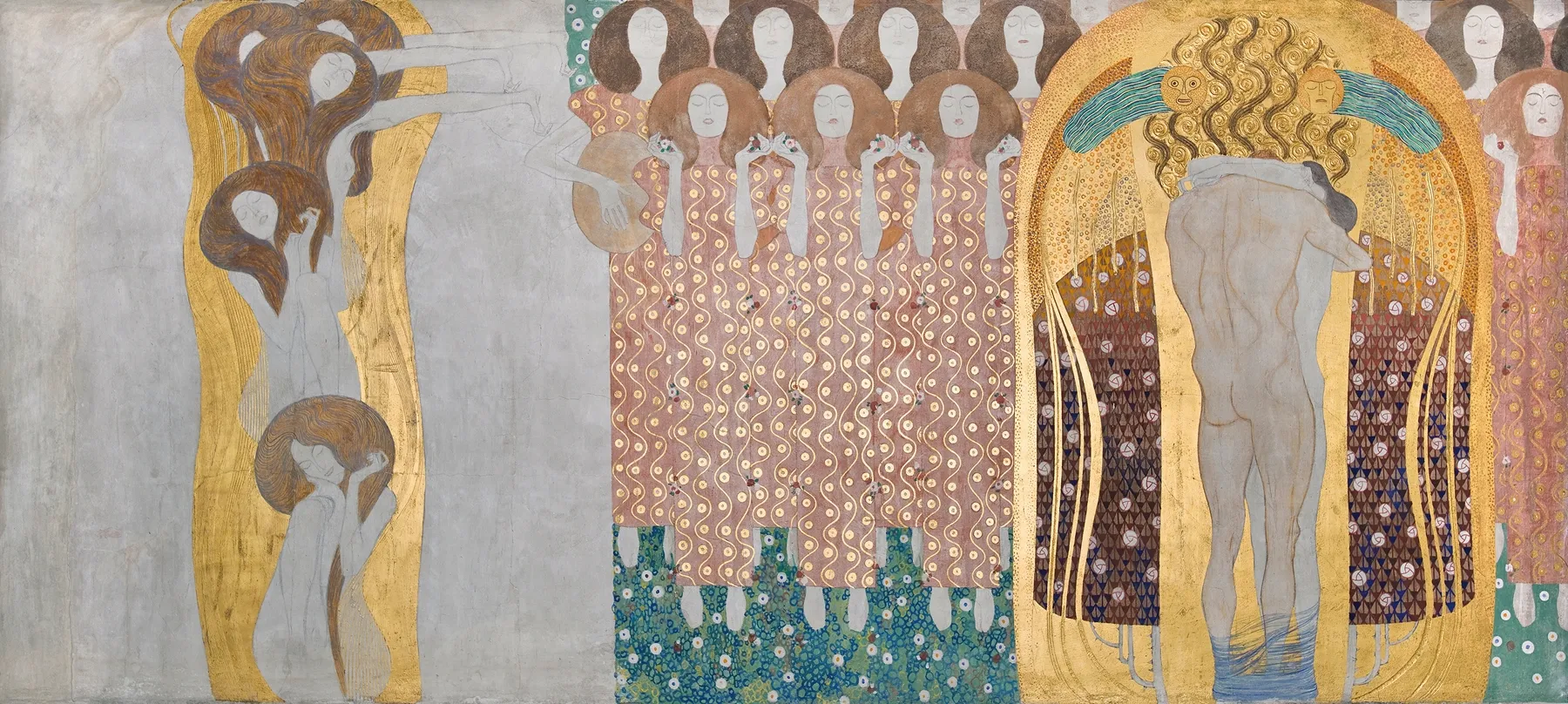
Beyond the noble aspirations and solemn vows of the opening wall lay dark and terrifying barriers: human weakness, base desires, and the cruel forces that govern the world.
These central panels painted by Klimt were filled with visceral, raw expressions that departed radically from the polished, ornamental imagery often associated with masterworks today.
When unveiled at the 1902 exhibition, the stark depictions of naked flesh and unabashed desire provoked severe outrage across conservative Viennese society.
Deemed immoral, the work was fiercely denounced in the press for supposedly degrading the dignity of fine art.
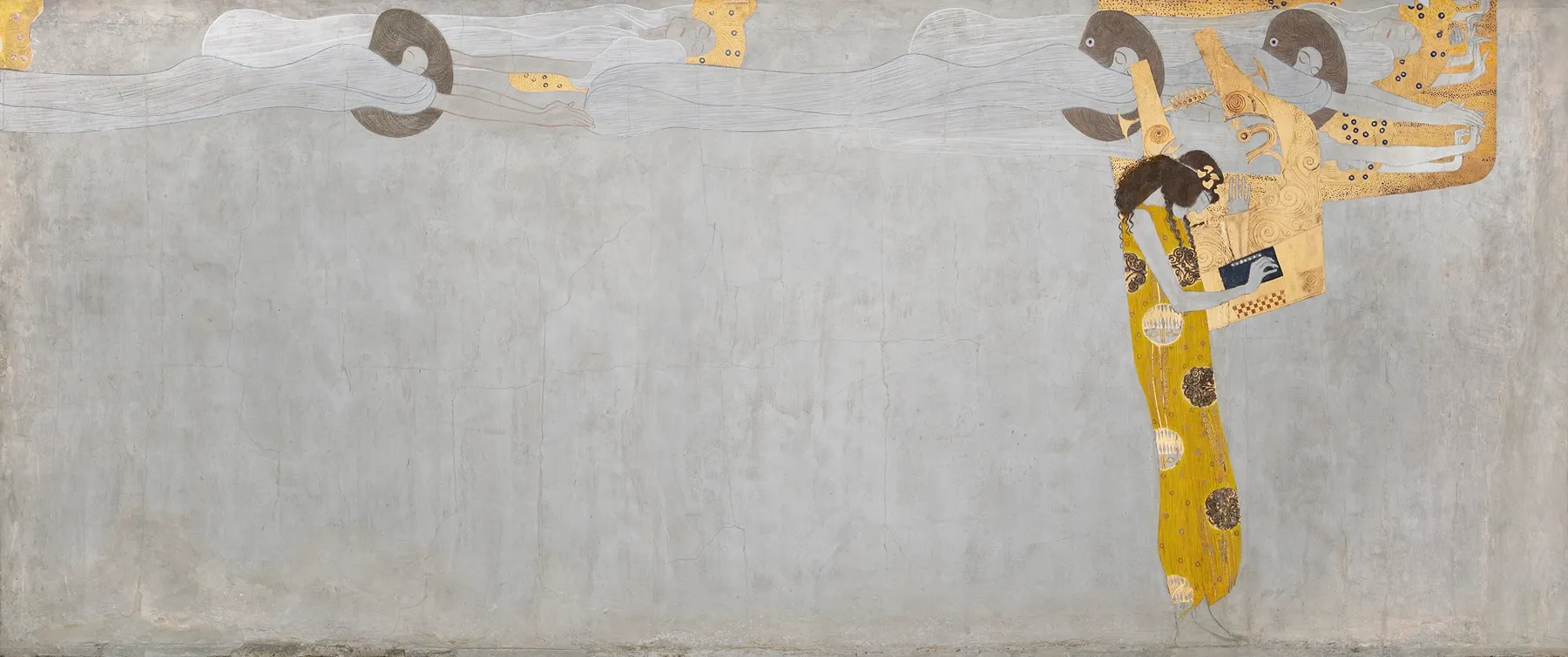
Furthermore, the most remarkable fact concerning the frieze is that it was never intended to survive for posterity.
The Beethoven Frieze was conceived as an ephemeral decoration, meant to be scraped off and destroyed alongside the temporary walls once the exhibition closed.
Klimt had poured his bold gold leaf and creative passion directly onto raw plaster solely for this fleeting occasion.
How, then, did a temporary mural, so vehemently condemned at its debut, manage to survive more than 120 years to stand before us today?
Behind its survival lies a story entwined with a major scandal in turn-of-the-century Vienna and a dramatic saga surrounding its ownership.
In the following sections, you will discover:
The Roar of the Grotesque Monster: The symbolism behind the giant Typhon on the central wall and the public outcry that shook conservative Vienna
Retreat into Pure Aestheticism: How the scandal surrounding the frieze led Klimt to turn his back on public commissions
Two Fates, Two Sanctuaries: The serendipitous journey that allowed this mural to survive while much of the collection perished in the flames of war
A Protracted Struggle with the State: Postwar export bans, the eventual acquisition by the Austrian Republic, and a decade-long restoration effort