
Sainte-Adresse
1867
- Dimensions
- 57.0 × 80.0 cm
- Medium
- Oil on canvas
- Collection
- National Gallery of Art, Washington
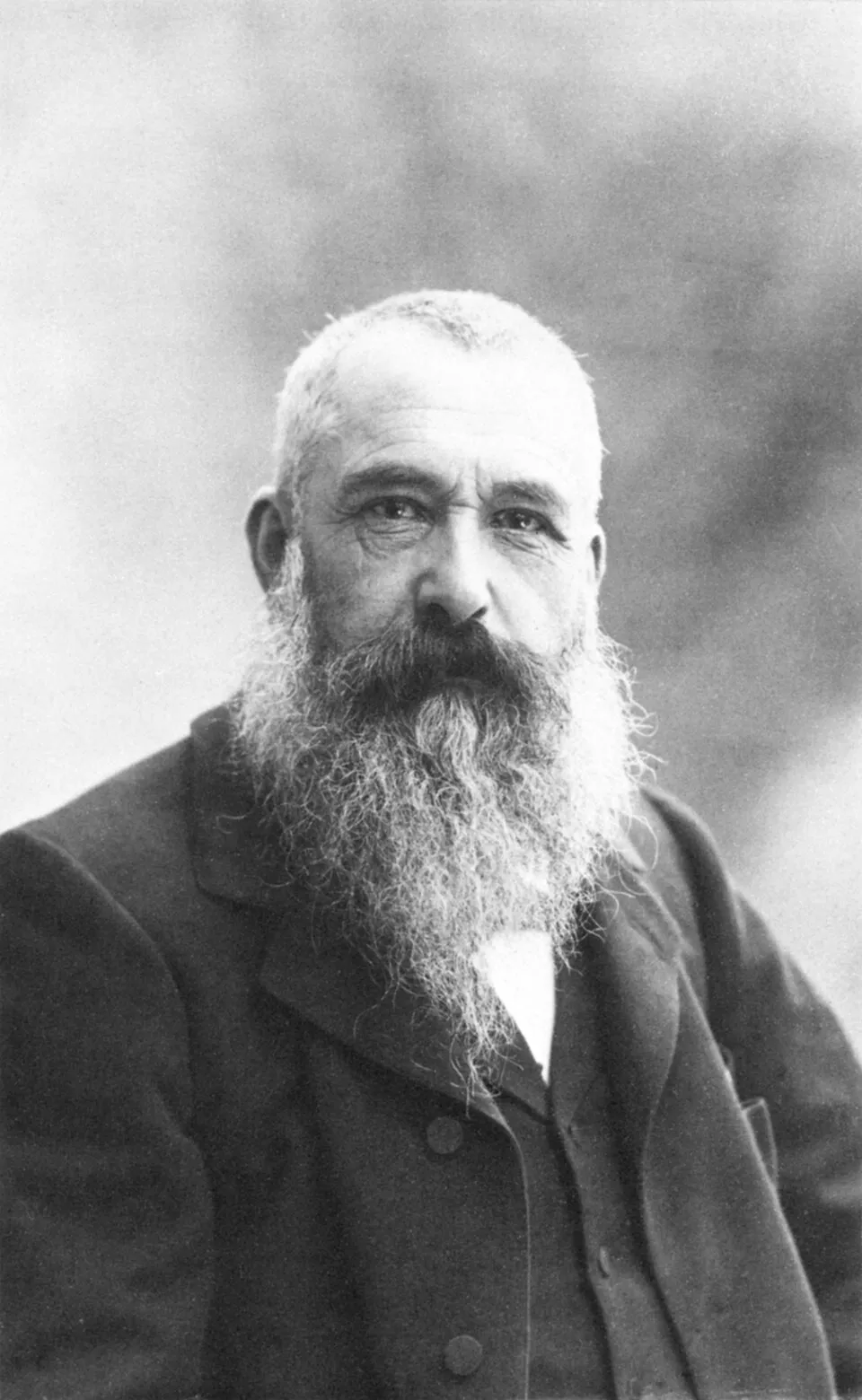
Celebrated as a founding figure of Impressionism, he is one of France’s most ren…
✦ Highlights (technique & color)
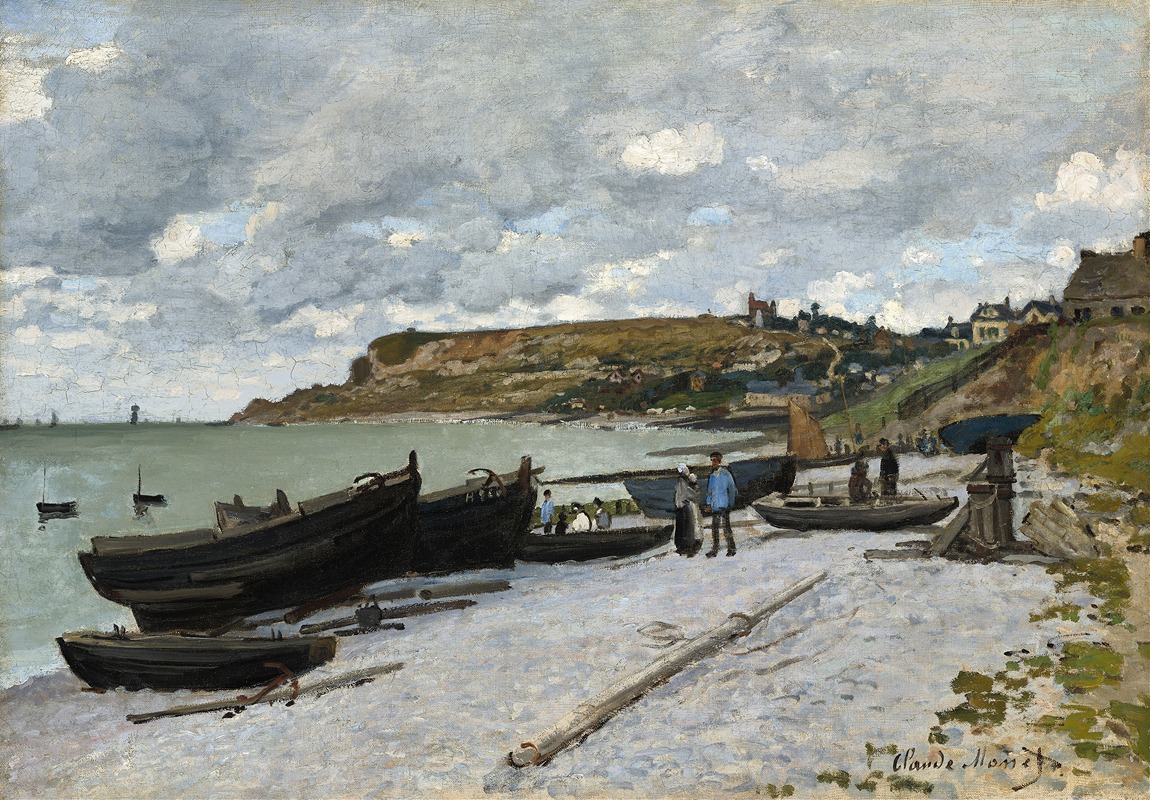
The humid, overcast atmosphere typical of Normandy is captured through bands of heather-gray and white clouds. The sea is rendered in forest and seafoam greens, while the fishing boats on the shore are defined by swift touches of black, brown, and dark blue. Abandoning traditional gradations to juxtapose patches of pure color—capturing the stark contrasts of natural light—was a groundbreaking approach that laid the foundation for Impressionism.
✦ The setting of this painting
The setting is Sainte-Adresse, a resort town on the English Channel adjacent to the port city of Le Havre in Normandy. Framed by steep dunes and verdant hills, it was rapidly developing into a fashionable getaway at the time. Modern villas stood alongside traditional fishermen's cottages, while a shingle beach stretched across the shore at low tide. It was also a familiar landscape to Monet, who spent his childhood and youth in the region.
✦ Historical context
In 1867, the French art world was dominated by academicism, which favored idealized depictions of mythology and history. Monet and his peers, however, sought to capture modern life just as it appeared before them. This period also coincided with the arrival of Japanese ukiyo-e prints in France. Monet collected these prints, and their flat spatial arrangements and elevated viewpoints profoundly influenced his quest to break free from traditional chiaroscuro and develop a new mode of expression.
On a shingle beach at low tide, mud-stained black fishing boats rest hauled ashore.
In the distance rise lush, green hills.
Under an overcast sky, a quiet moment seems to drift along the coast.
In the summer of 1867,
the twenty-six-year-old Claude Monet had hit rock bottom in his life.
In Paris was his partner, Camille, with whom he lived.
She was carrying new life within her, her due date fast approaching.
Yet Monet did not have a single sou in his pocket.
Unpaid debts were mounting, with no prospect of paying them back.
Upon discovering the situation, his father, Adolphe, was furious.
He completely cut off his allowance and imposed a heartless condition:
leave Camille and return to his family.
Leaving his pregnant lover behind in Paris
was a heart-wrenching choice.
Yet, to survive, he had no other option.
Reluctantly, he sought refuge at his aunt's villa in Sainte-Adresse.
Cold stares from his relatives.
Guilt toward his distant lover.
And an insurmountable financial desperation.
Driven to the brink, the only thing Monet could cling to was his paintbrush.
He threw himself frantically into working at his easel outdoors.
In a letter to his close friend, the painter Frédéric Bazille, he wrote:
"I have some twenty canvases underway,"
"some stunning seascapes and landscapes with figures,"
"I am working like mad."
About 97 more words
Read stories of masterpieces for free
Your Note
Write down what this painting made you feel in your art notebook.
Please sign up to write notes.
Sign up for freeRecommended Artworks
Sources & references
More artists

If you find an error in this content, please let us know here
This site is protected by reCAPTCHA, and the Google Privacy Policy and Terms of Service apply.