
The Reluctant Bride
1866
- Dimensions
- 65 × 54 cm
- Medium
- Oil on canvas
- Collection
- Private Collection
19世紀フランスのアカデミック・リアリズムを代表する風俗画家。 豪華な室内に佇む、美しく着飾った上流階級の女性たちを好んで描いた。
「美味なる人形」と称された社交界の流行画家が、豪華なドレスの奥に隠された「政略結婚」の理不尽さを捉え、前を見つめる花嫁の瞳にブルジョワ社会への静かな抗議を刻みつけた一枚
✦ Highlights (technique & color)
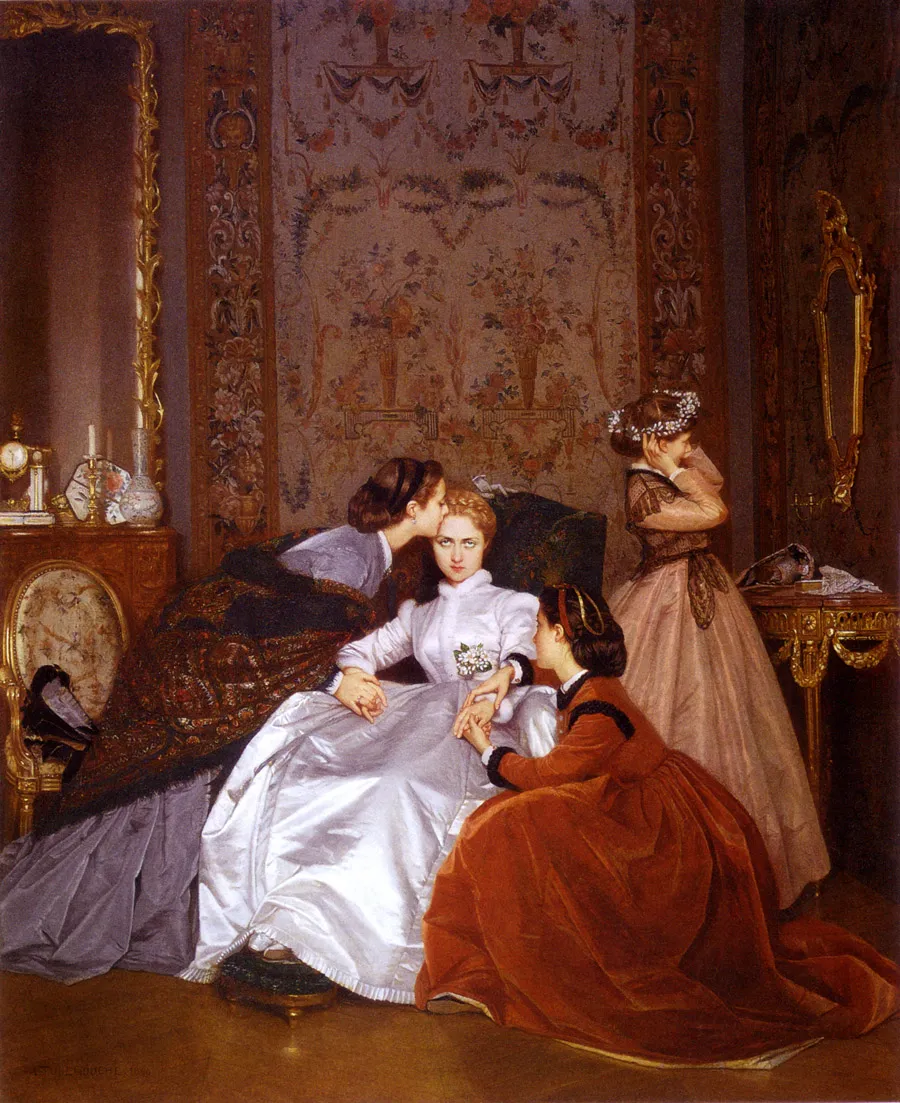
画面下部に4人の女性を集中させ、上部に重厚で豪奢な室内装飾を大きく配置することで、空間全体が人物を圧迫する視覚効果を生み出しています。また、筆痕を消し去る滑らかな油彩技法を用い、白サテンの光沢、ベルベットの深み、毛皮の柔らかい質感を見事に描き分けています。最大の見どころは、周囲の女性たちが画面内で完結しているのに対し、中央の花嫁だけが「第4の壁」を破り、画面外の鑑賞者をまっすぐ見つめ返す鋭い視線の演出にあります。
✦ The setting of this painting
描かれている場所は、19世紀半ばのパリにおける上流ブルジョワ階級の住宅内に存在した客間(サロン)または私室(ブドワール)です。高い天井には植物柄の壁紙や壁掛けが貼られ、金箔を施したロココ復活様式の家具や豪奢な絨毯が配置されています。1860年代のブルジョワ社会において、ブドワールは女性たちが身支度を整え、結婚式などの儀礼前に親しい親族や友人(花嫁介添人)とともに過ごす密室的な領域でした。室内には柔らかい光が差し込み、結婚式挙式直前の緊張した時間帯が設定されています。
✦ Historical context
この絵が描かれた1860年代のフランスは、ナポレオン3世による第2帝政の最盛期であり、パリ改造を経て富裕なブルジョワ階級が台頭した時代です。当時の上流社会において結婚は、当事者の感情ではなく家格の維持や財産保全を目的とする「政略結婚(Mariage de raison)」が一般的でした。女性たちは自らの意思と無関係に親の決めた相手へ嫁ぐことを求められました。また美術界ではアカデミズムが権威を握る一方、モネらの初期印象派が芽吹き始めた歴史的転換期でもありました。
In the center of a luxurious room sits a woman, clad in a pure white silk dress and fur.
On either side, friends in vibrant dresses lean in, gently kissing her forehead and holding her hand, attempting to console her.
In the background, an innocent girl tries on the bride's floral wreath before a mirror, as if harboring romantic aspirations for the future.
It is just before a splendid wedding, one that everyone is expected to celebrate. Yet, the bride's gaze alone, filled with overwhelming anger and defiance, stares directly at us.
About 155 more words
Unlock this story's ending, and every article on MusicStory
- 42
Stories1–2 new every week
An archive of paintings paired with great music, made for a weekend night and a cup of coffee
- 282
Paintings with commentarygrowing daily
From simply looking to truly reading — the brushwork and the obsession of the masters
- 10
Music Librarygrowing daily
Know it first, and what reaches your ear changes — background music becomes art you keep for life
My Notes, unlimited
Every reading adds to a digital art notebook that is yours alone
Already have an account? Log in
Music recommended for this painting
Stories featuring this painting
Your Note
Write down what this painting made you feel in your art notebook.
Please sign up to write notes.
Sign up for freeRecommended Artworks
.webp)
More artists
If you find an error in this content, please let us know here
This site is protected by reCAPTCHA, and the Google Privacy Policy and Terms of Service apply.