
The Garden
1899
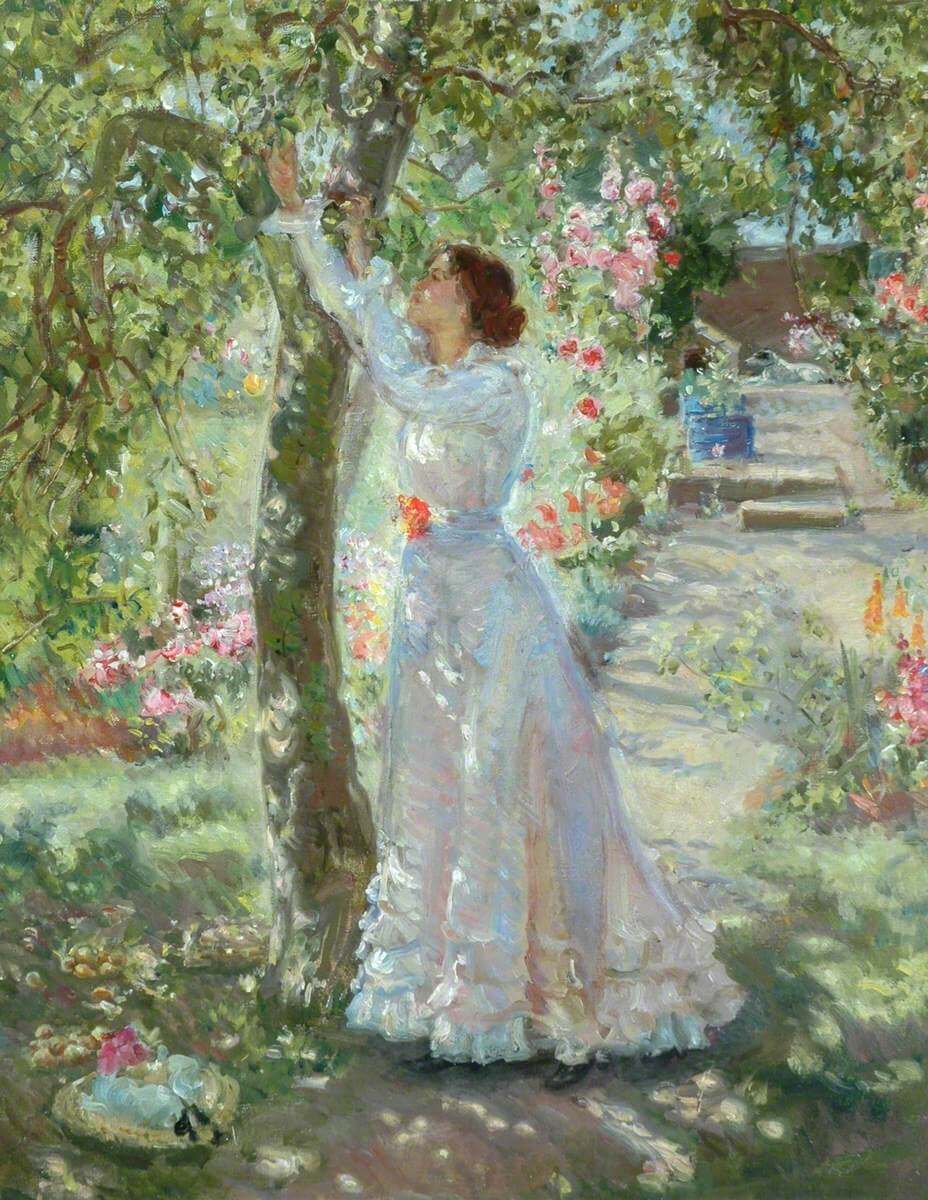
.jpg)
エセル・ウォーカーは、スコットランド・エディンバラ出身の画家。 印象派の影響を受けた柔らかな筆致で、人物画や海景画、花、そして庭の情景などを得意とした。
Depiction of Light and Color, Calculated Composition
The light in the painting streams in from the upper left, and the beautiful dappled sunlight falling on the woman's white dress and the ground is rendered with the Impressionistic technique of *plein air* painting (outdoor creation).
The dress is not merely white; bluish shadows are cast upon it, and a pink, flower-adorned bonnet (hat) placed at her feet adds a vibrant accent to the canvas.
Another significant highlight is the silhouette of the woman reaching out to pluck fruit (apples and pears), which is depicted in sync with the spread of the tree branches.
About 119 more words
Read stories of masterpieces for free
Stories featuring this painting
Your Note
Write down what this painting made you feel in your art notebook.
Please sign up to write notes.
Sign up for freeRecommended Artworks
.webp)
More artists
If you find an error in this content, please let us know here
This site is protected by reCAPTCHA, and the Google Privacy Policy and Terms of Service apply.