
Musician
1923
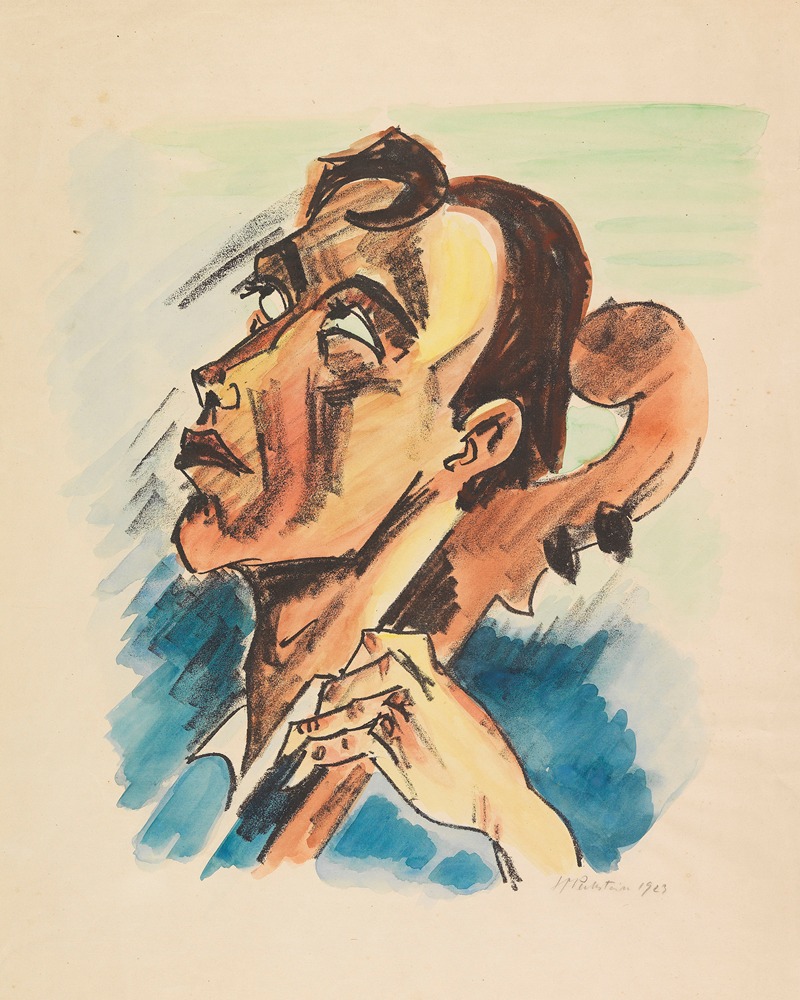
- Dimensions
- 58 × 49 cm(リトグラフ版) / 画線部 40.0 × 31.8 cm(木版画版)
- Medium
- Hand-colored lithograph or woodcut
- Collection
- Private collection
✦ Highlights (technique & color)
This work exists in both hand-colored lithograph and woodcut versions. In the woodcut, sharp chisel cuts and visible wood grain lend a palpable tension to the figure. In the lithograph, the artist applied color by hand over uniform black lines, breathing dynamic vitality into the static print.
✦ The setting of this painting
All concrete references to a specific concert hall or performance venue have been eliminated. Instead, the scene is filled with an abstracted, geometric, or dark-toned background, conceived as an attempt to unite music—an auditory art—and visual expression within a single spiritual space.
✦ Historical context
In 1923, the Weimar Republic was gripped by unprecedented hyperinflation. It was a harrowing period when the currency collapsed, plunging Germany into severe hunger and pervasive social unrest.
A figure playing an instrument.
An extraordinary tension emanates from their hands and upward gaze.
The background offers no depiction of an actual concert hall, opening instead into a purely abstract space.
In 1923, Germany's Weimar Republic plunged into unprecedented hyperinflation.
It was a harsh era when the currency collapsed, and severe famine and social unrest engulfed the entire nation.
Under these circumstances, the artist Max Pechstein poured his soul into printmaking.
Over the course of his lifetime, he created a vast body of work comprising more than 900 prints.
Amid the collapse of social order, the motif of "music"—leading people toward inner harmony and salvation—was deeply bound to the artist's own soul-searching cry.
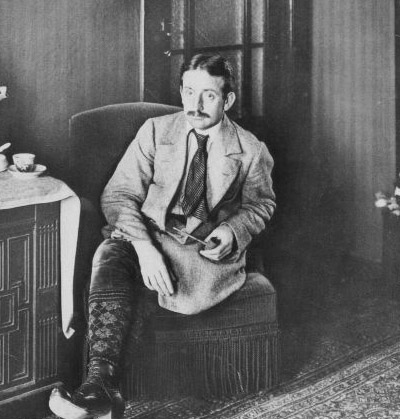
Pechstein had a close friend named Erwin Finlay-Freundlich.
A renowned astronomer deeply involved in verifying Einstein's theory of relativity, he was also an accomplished amateur cellist.
Pechstein painted portraits of him in 1919, 1923, and 1927, yet none portrayed him as an astronomer.
He was always depicted as a cellist.
Stripping away external markers like social status and profession to capture pure inner emotion and passion.
It was for this purpose that the motif of playing music was chosen.
About 104 more words

Sign up free and enter Your Museum
Read the stories behind great paintings and music for free, in Your Museum
Your Note
Write down what this painting made you feel in your art notebook.
Please sign up to write notes.
Sign up for freeRecommended Artworks
![Untitled [Rescue boat]](https://musicstory-assets-682855971161-ap-northeast-1-an.s3.ap-northeast-1.amazonaws.com/artworks/paintings/untitled-rescue-boat.jpg)

Sources & references
More artists

If you find an error in this content, please let us know here
This site is protected by reCAPTCHA, and the Google Privacy Policy and Terms of Service apply.