
Ophelia

1910

DeterminationLate Pre-RaphaeliteShakespeare

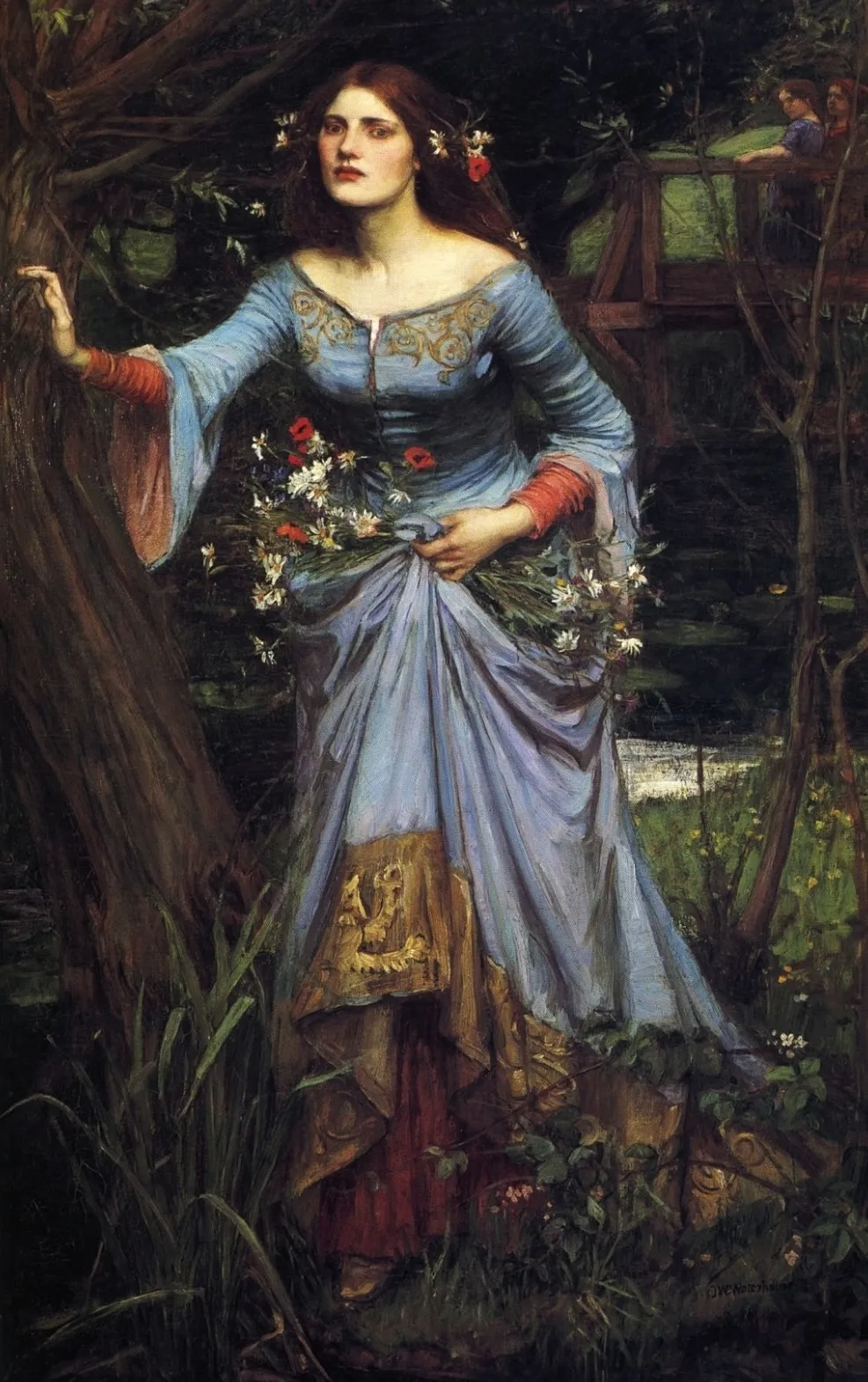
A woman in a noble blue and gold dress leans against a willow tree, a symbol of death.
Her hair and clothes are adorned with vibrant poppies, signifying death and sleep, and daisies, representing pure love.

This scene depicts Ophelia, the heroine from Shakespeare's tragedy Hamlet, who descends into madness and drowns.

But in fact, the woman depicted in this painting is entirely different from the 'fragile Ophelia' we commonly know.

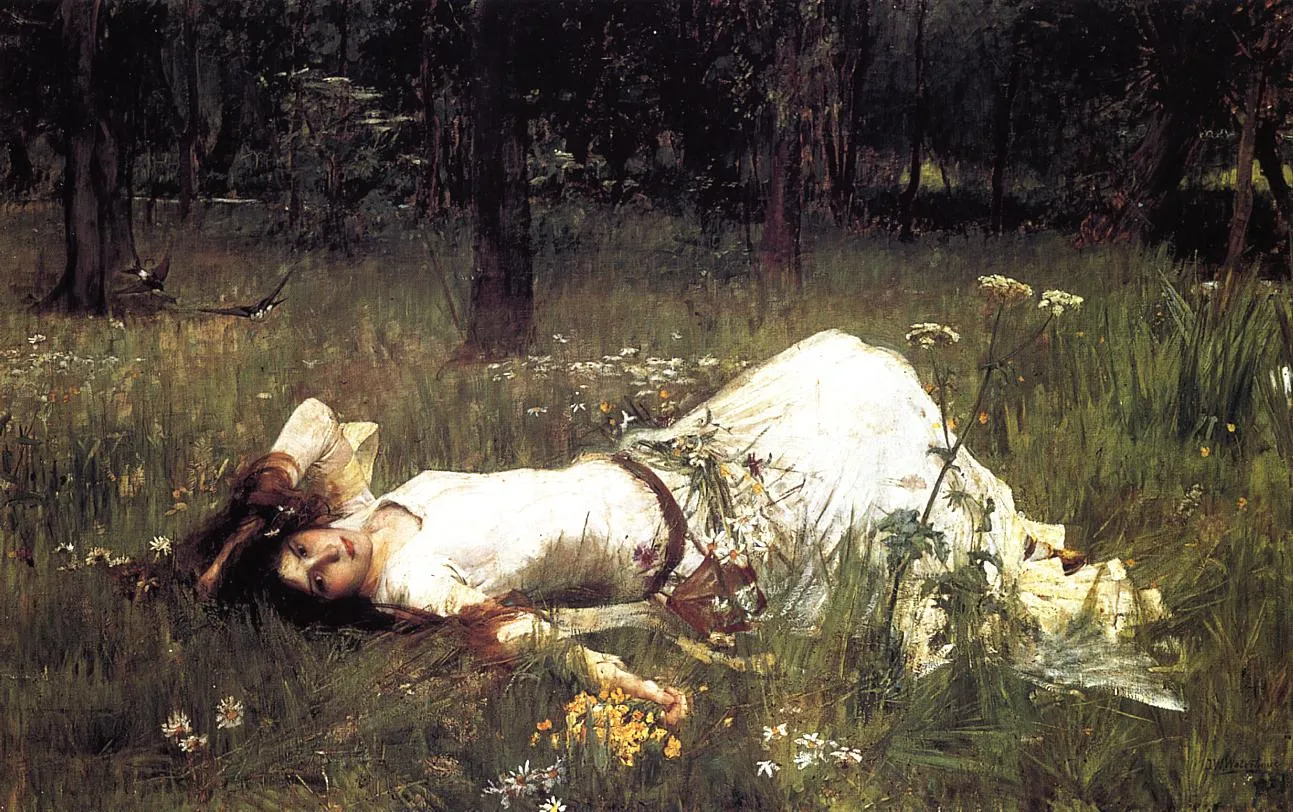
At the time, many painters (including Waterhouse himself in his younger days) conventionally depicted her as a delicate girl in a pure white dress, losing her sanity and drifting in the water while singing.

However, in 1910, the artist, nearing the end of his career, suddenly broke with this tradition of several decades.

What he painted on the canvas was not a mad girl with vacant eyes.

Instead, it was a mature adult woman, her cheeks flushed, gazing at us with a strong look that held clear determination amidst her despair.

From beneath the hem of her dignified blue dress, a vibrant orange lining peeks out, as if hinting at the impulses and passions hidden within her.

On the bridge behind her, two women gaze at her in surprise, but she steps into the water without hesitation.

In this painting, she is not accidentally drowning, swept away by fate or madness. Instead, she possesses a tense resolve, choosing the tragedy of death by her own will.

This Ophelia is the one the elderly painter, who had depicted numerous heroines from myths and literature throughout his career, finally arrived at.

She is not merely a victim of tragedy, but a woman who confronts her own despair and destiny head-on, a raw, powerful, and noble figure.

If you find an error in this content, please let us know here

ラファエル前派の精神を色濃く受け継いだイギリスの画家。 イギリス人の画家の両親のもとローマで生まれ、ロンドンの王立芸術院(ロイヤル・アカデミー)で学んだのち、自…

Your Note

Write down what this painting made you feel in your art notebook.

Please sign up to write notes.

Sign up for free

Music and art
are waiting for you.

Broaden your own world through the stories of art.
We will notify you by email when new articles are published.

Sign up free to read