
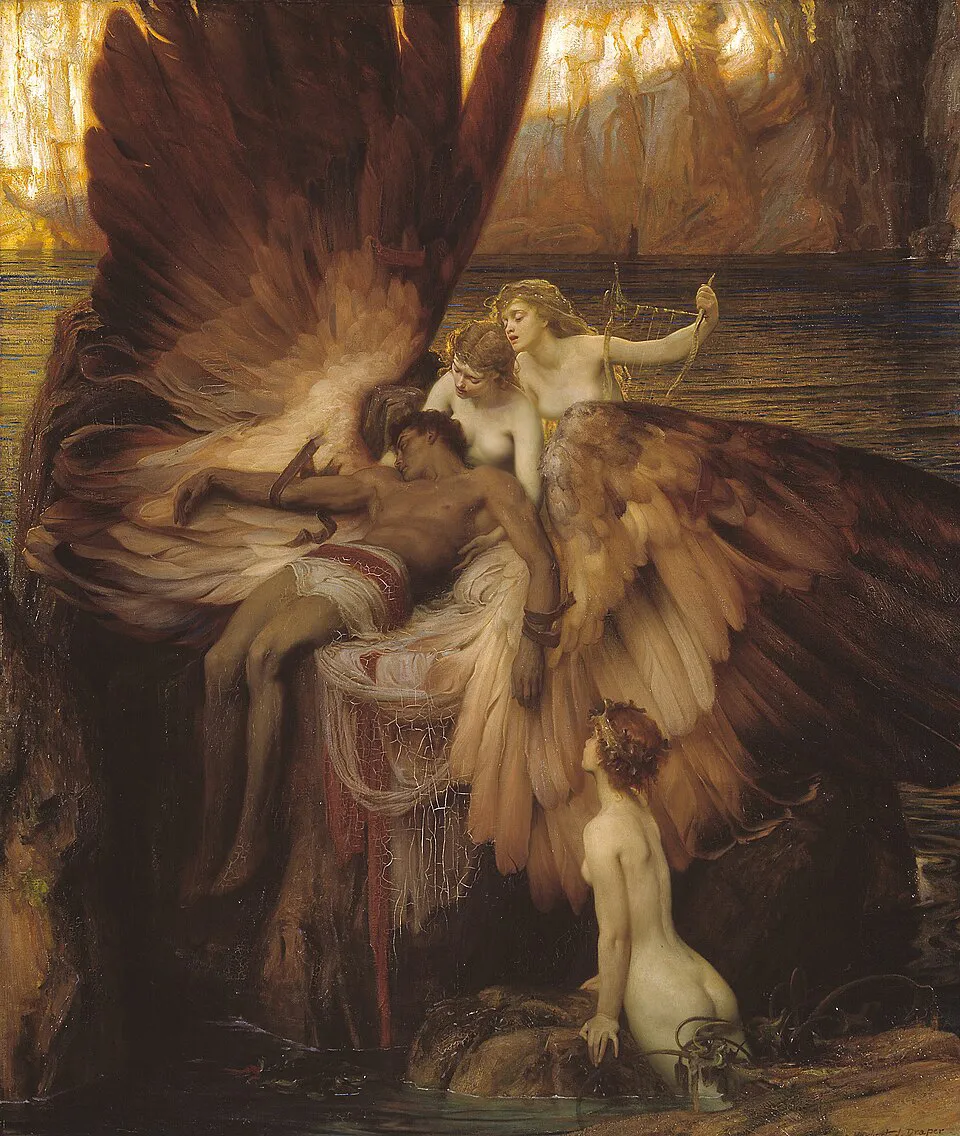
The Lament for Icarus
1898
ヴィクトリア朝後期から20世紀初頭にかけて活躍した、新古典主義を代表する画家。
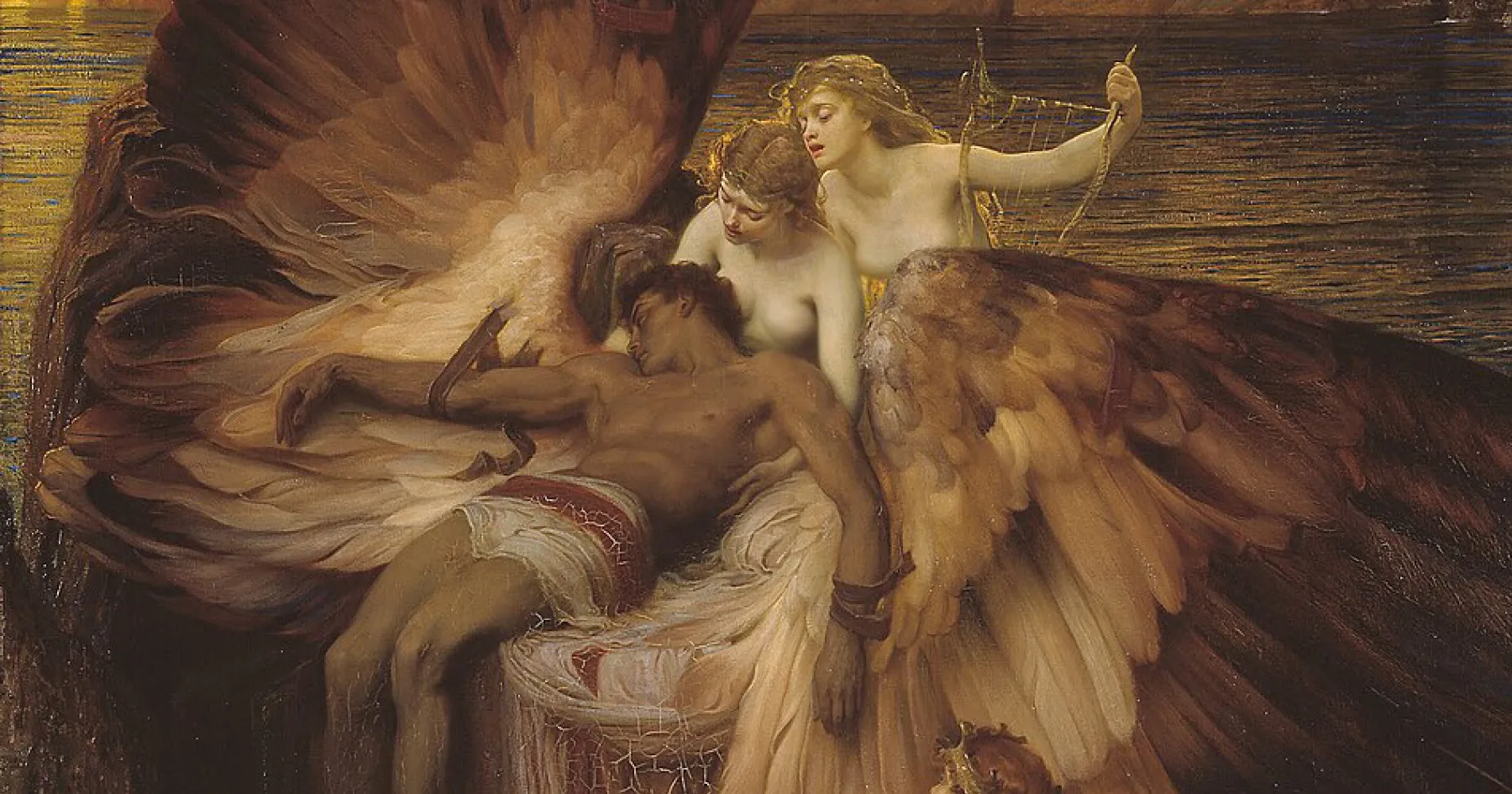
A rocky coast bathed in the golden glow of the setting sun.
There lies the sun-kissed body of a young man, embraced by sea nymphs, who, with lyres in hand, mourn him deeply.
This mythological painting depicts the final moments of Icarus, the youth from Greek mythology, who soared through the sky with wings made of wax and plummeted to his death after disregarding his father's warning and flying too close to the sun.
However, upon closer inspection, the wings, which should have melted away into a tragic mess from the sun's heat, are inexplicably preserved in their vibrant beauty, gently enveloping him.
About 136 more words
Read stories of masterpieces for free
Stories featuring this painting
Your Note
Write down what this painting made you feel in your art notebook.
Please sign up to write notes.
Sign up for freeRecommended Artworks

.webp)
More artists





If you find an error in this content, please let us know here
This site is protected by reCAPTCHA, and the Google Privacy Policy and Terms of Service apply.