
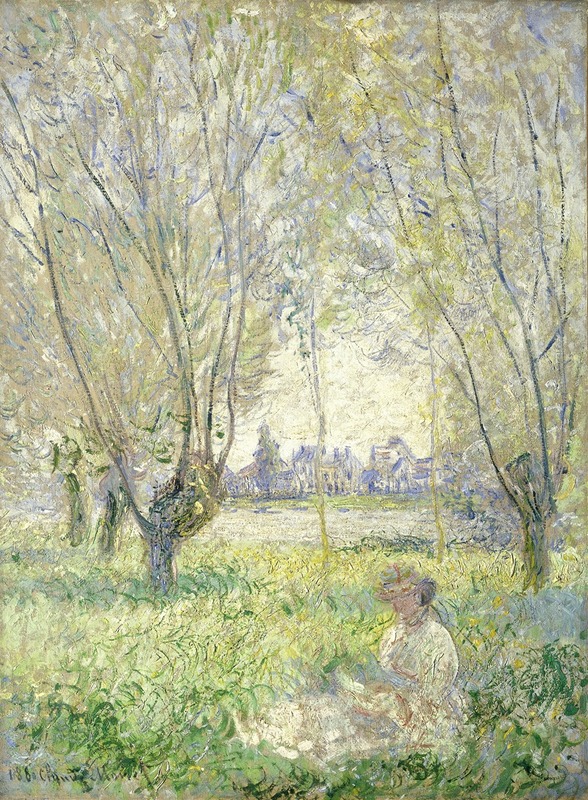
Woman Seated under the Willows
1880
- Dimensions
- 81.1 × 60.0 cm
- Medium
- Oil on canvas
- Collection
- National Gallery of Art, Washington, D.C.
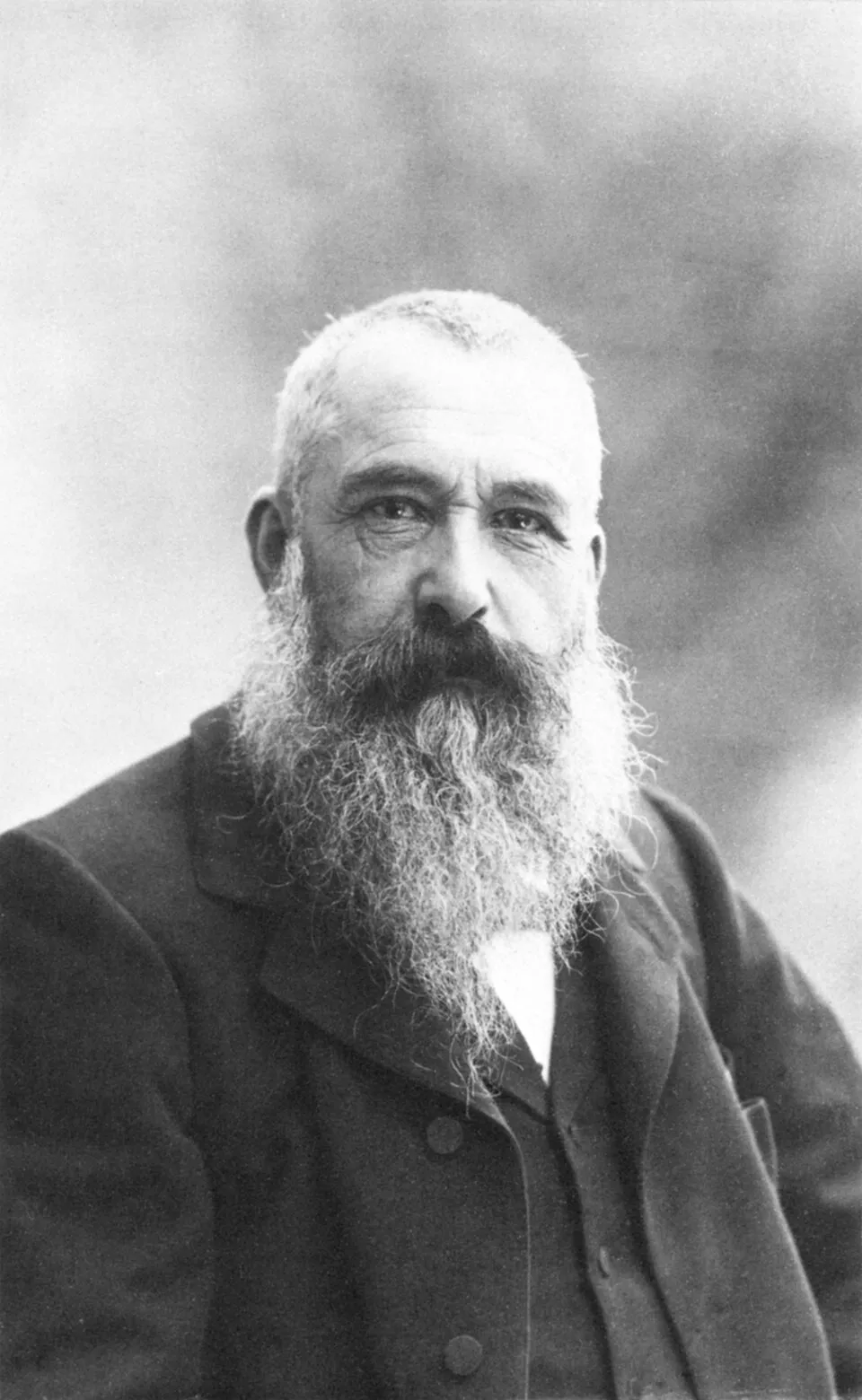
Celebrated as a founding figure of Impressionism, he is one of France’s most ren…
✦ Highlights (technique & color)
By completely dissolving contours and juxtaposing pure colors, the artist creates a palpable sense of atmosphere and three-dimensionality. The meadow in the lower portion of the canvas is rendered with bold, swift brushstrokes reminiscent of East Asian calligraphy, evoking the rustle of the wind. The woman's facial features are omitted, with a single stroke of pink symbolically capturing the warmth of sunlit skin.
✦ The setting of this painting
This work was painted along the riverbank in Vétheuil, a rural village roughly 70 kilometers northwest of Paris. Situated on a gentle bend of the Seine, it retained its rich natural scenery and historic charm, in stark contrast to the rapidly modernizing capital. Lush grasslands and willow trees occupy the foreground, while the shimmering surface of the Seine and a hamlet on the opposite bank stretch across the background.
✦ Historical context
In 1880, Monet was in the midst of a severe financial and emotional crisis. Having lost his wife the previous year and fallen into such poverty that he could barely afford paint, he refused to participate in the Impressionist group exhibition. Instead, this was a period when he desperately pursued strategies for commercial survival, submitting work to the conservative Salon and holding his very first solo exhibition.
Under the willows swaying in the wind, a woman sits on the grass.
On the opposite bank, buildings along the river are faintly visible.
An intimate family portrait on a tranquil summer day.
For many years, this painting was known as 'Madame Monet Under the Willows.'
It was believed to depict Camille, Monet's beloved wife.
Even the catalog of the National Gallery of Art in Washington explained it as such.
However, in reality, Camille was no longer alive when this painting was created.
Summer of 1878.
Due to financial hardship, Monet moved to Vétheuil, a rural village near Paris.
His patron, Ernest Hoschedé, went bankrupt.
A strange communal life began, with the Monet family and the Hoschedé family, a total of twelve people.
Life was at its limit.
In September of the following year, 1879.
Camille, who had been ill, passed away at the young age of 32.
Left behind were their young eldest son, Jean, and their infant second son, Michel.
Supporting the grieving Monet and his children was Alice Hoschedé, the patron's wife.
She took on the household chores, effectively acting as a surrogate mother.
And when Monet painted outdoors, she herself served as a model.
It is now believed that the woman depicted in this painting is Alice.
Alternatively, it could be her daughters, Suzanne or Blanche.
After Camille's death, Vétheuil was hit by a record-breaking cold wave.
The Seine River froze completely.
Monet wrote a desperate letter to a close friend, saying he had 'no more strength to keep fighting.'
Days passed with barely enough money to buy paint.
1880.
The harsh winter receded, and warm light finally returned to Vétheuil.
Monet broke away from his Impressionist colleagues.
It was a big gamble for survival.
Exhibiting at the conservative Salon.
And holding a solo exhibition in a magazine publisher's exhibition space.
This painting was created amidst such a desperate struggle.
About 198 more words
Unlock this story's ending, and every article on MusicStory
- 42
Stories1–2 new every week
An archive of paintings paired with great music, made for a weekend night and a cup of coffee
- 282
Paintings with commentarygrowing daily
From simply looking to truly reading — the brushwork and the obsession of the masters
- 10
Music Librarygrowing daily
Know it first, and what reaches your ear changes — background music becomes art you keep for life
My Notes, unlimited
Every reading adds to a digital art notebook that is yours alone
Already have an account? Log in
Your Note
Write down what this painting made you feel in your art notebook.
Please sign up to write notes.
Sign up for freeRecommended Artworks
Sources & references
More artists
If you find an error in this content, please let us know here
This site is protected by reCAPTCHA, and the Google Privacy Policy and Terms of Service apply.