
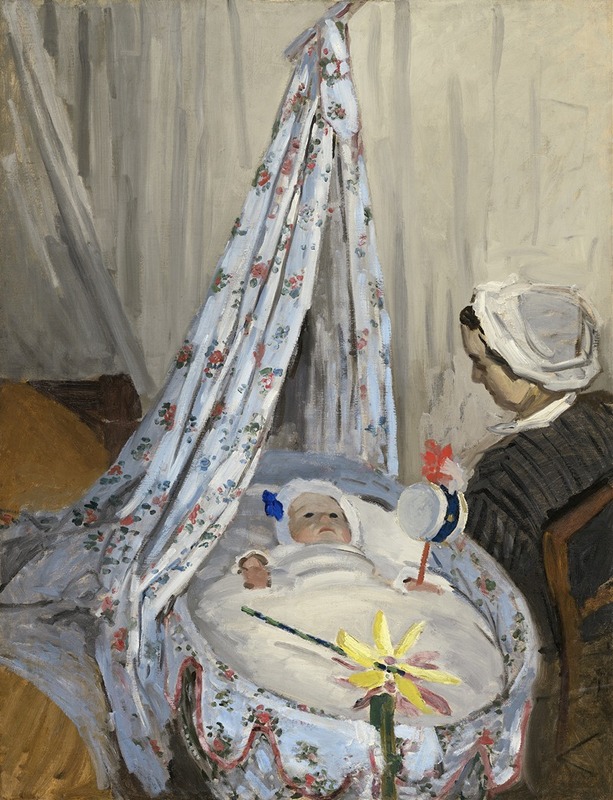
The Cradle – Camille with the Artist’s Son Jean
1867
- Dimensions
- 116.2 × 88.8 cm
- Medium
- Oil on canvas
- Collection
- National Gallery of Art, Washington
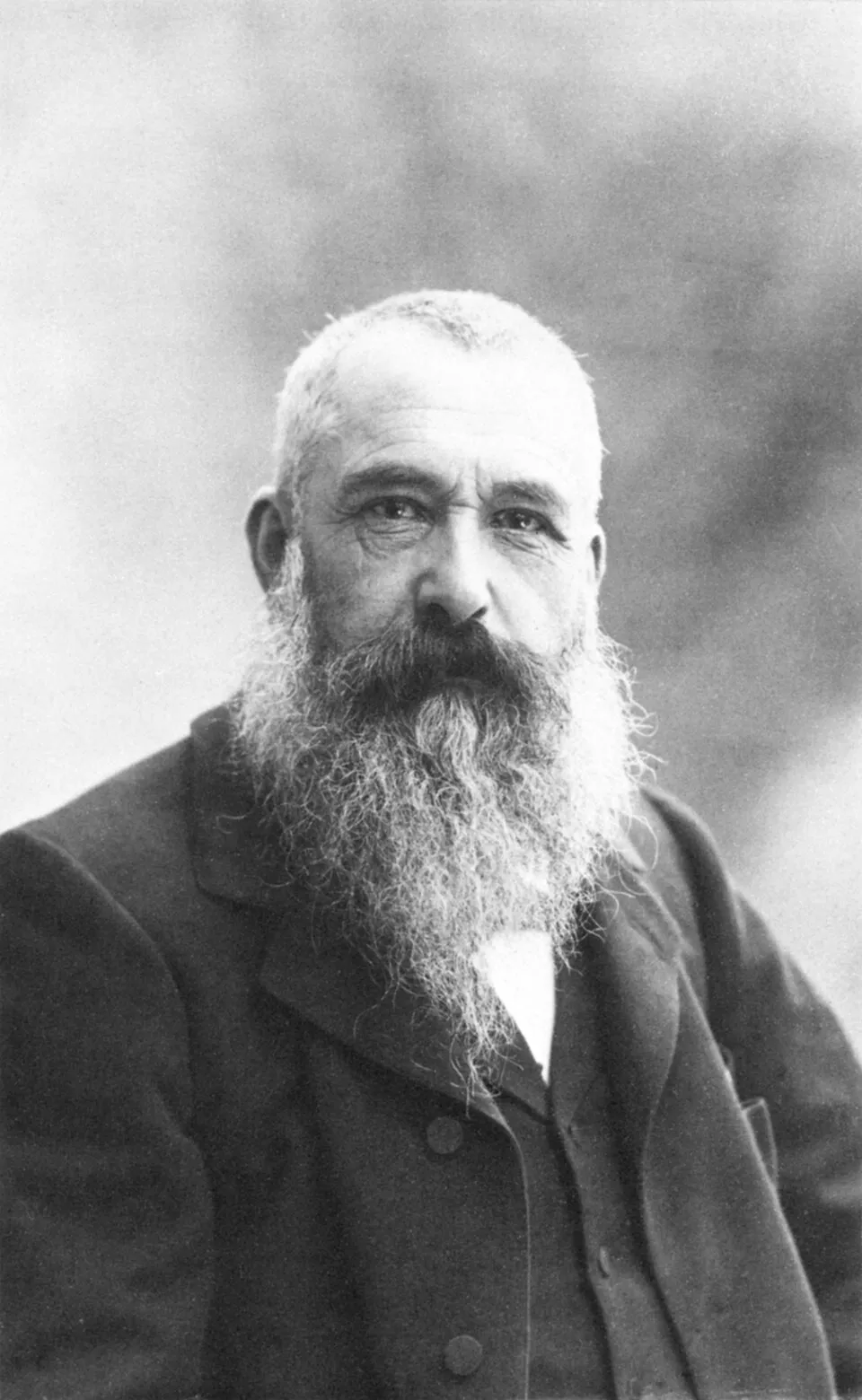
Celebrated as a founding figure of Impressionism, he is one of France’s most ren…
✦ Highlights (technique & color)
Dispensing with precise outlines, the composition is constructed through the rapid brushstrokes and dabs of light characteristic of Impressionism. Camille's face is swiftly modeled using bold, broad strokes, while the sky-blue fabric of the cradle and the blue drapery effectively emphasize the warm light within the darkened interior.
✦ The setting of this painting
The scene is set in the bedroom of a dark, cramped apartment on the Rue Saint-Louis in Paris, which Monet had temporarily rented. It captures a moment as winter approached, a few months after the birth of his eldest son, Jean, on August 8, 1867. The painting evokes a warm sanctuary that offered a rare sense of solace for Monet's family amid their extreme poverty.
✦ Historical context
In 1867, Monet was pressured by his father to break off his relationship with Camille, resulting in his financial support being cut off. Completely destitute, he was forced to stay at his family's estate, leaving behind his heavily pregnant partner. The following year, unable to pay his rent, he attempted suicide in the Seine, marking one of the most agonizing periods of crisis in his life.
In a luxurious cradle, a young life sleeps peacefully.
Beyond the bed, the figure of a mother.
She quietly watches over her beloved child.
Sky-blue fabric adorned with pink flowers.
In the baby's tiny hand, a toy drum.
At their feet, a charming pinwheel is placed.
By all appearances, it is a joyful family portrait celebrating the birth of a new life.
A warm, everyday scene brimming with hope and love.
But in reality...
When this painting was created, the artist Claude Monet was in the depths of hell.
He stood on the brink of despair, facing the most horrific period of his life.
In 1867.
Monet and his lover Camille were expecting a new life.
However, Monet's father, Adolphe, was furious.
He absolutely refused to acknowledge his relationship with Camille, who came from the lower middle class.
He demanded that Monet abandon her and return to his family home in Le Havre.
Otherwise, he threatened to cut off all financial support.
He made this cold declaration.
Living expenses completely ran out.
Days passed where he couldn't even afford paint, let alone bread for tomorrow.
Cornered, Monet took an unbelievable action.
He left Camille, who was in her final month of pregnancy, alone in Paris.
And he himself fled back to his family home in Normandy.
A family on the verge of collapse.
Amidst such desperate circumstances, on August 8, 1867.
Their eldest son, Jean, was born.
On Rue Saint-Louis in Paris.
In the dark, narrow bedroom of a temporarily rented apartment.
There, Monet painted this picture.
About 172 more words
Read stories of masterpieces for free
Your Note
Write down what this painting made you feel in your art notebook.
Please sign up to write notes.
Sign up for freeRecommended Artworks
Sources & references
More artists



If you find an error in this content, please let us know here
This site is protected by reCAPTCHA, and the Google Privacy Policy and Terms of Service apply.