
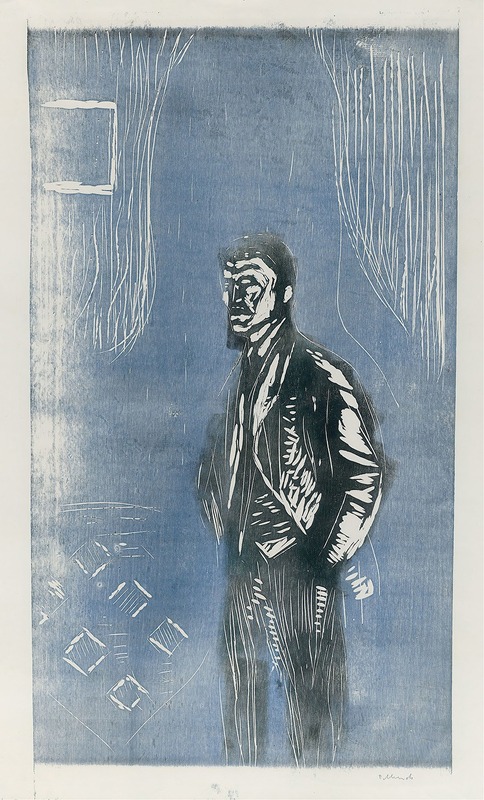
Self-Portrait in Moonlight
1904
- Dimensions
- 75.4 × 42.3 cm
- Medium
- Woodcut on cream wove paper
- Collection
- The Art Institute of Chicago
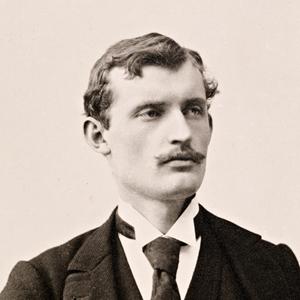
A celebrated Norwegian painter active from the late nineteenth century to the fi…
✦ Highlights (technique & color)
Abandoning the intricate puzzle-cut method, Munch gouged spontaneous marks directly into a single woodblock with a curved chisel. He applied black and blue inks unevenly by hand. By treating the raw wood grain as a central pictorial element, the patchy ink rubbing and the natural texture of the wood combine to form a powerful expression that speaks to the artist's inner turmoil.
✦ The setting of this painting
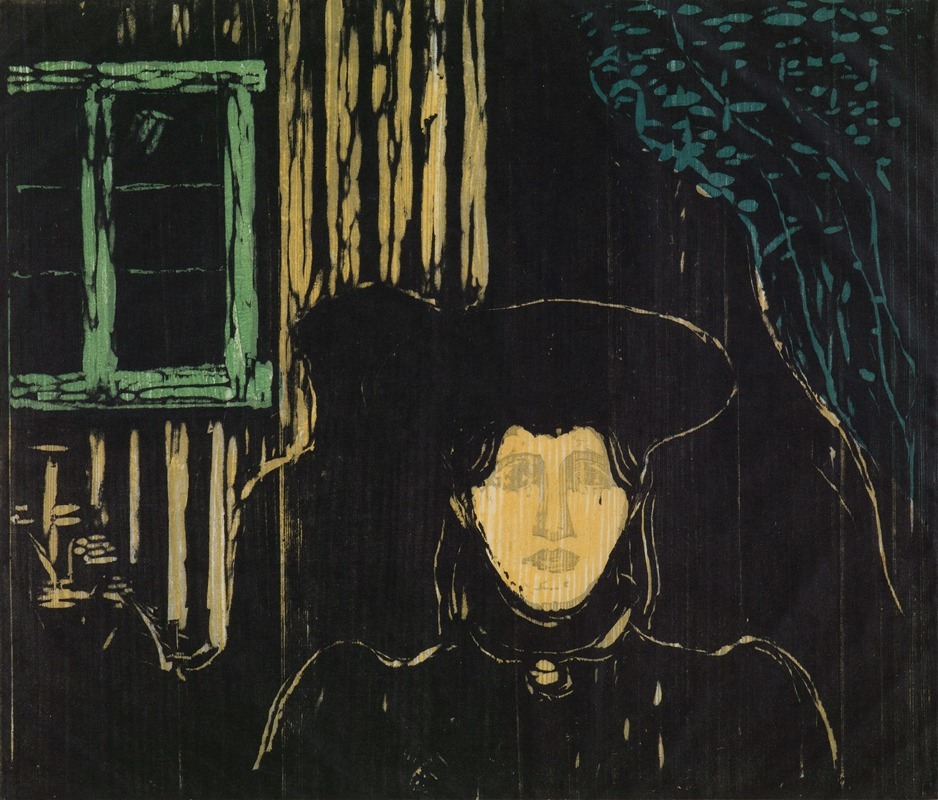
The setting is a psychological interior floating in nocturnal darkness, detached from any specific physical space. Dominating the background are relentless vertical stripes that evoke the chill of iron bars. Through their narrow slits, moonlight filters in, casting an eerie, pale glow over the artist's gaunt profile and head.
✦ Historical context
The years between 1904 and 1906 marked one of the most self-destructive periods in Munch's life. Escalating paranoia, a frantic retreat from interpersonal relationships, and severe alcoholism were gradually taking full control of him. This state of crisis culminated in his extended admission to a psychiatric clinic in Copenhagen in the autumn of 1908.
The countless vertical lines are like cold iron bars.
Moonlight seeping through the narrow gaps illuminates the pale profile of a gaunt man.
There is no landscape here indicating a specific place.
It is a mental interior, floating in the darkness of night.
The person depicted is the painter Edvard Munch himself.
The few years from 1904 to 1906.
These were the most destructive years of his life.
Advancing paranoia.
A terrifying escape from human relationships.
And severe alcoholism.
These were completely dominating him.
He once created beautiful, puzzle-like woodcuts using a fretsaw.
A decorative and artisanal approach.
However, from 1904 onwards, his perception changed dramatically.
He completely abandoned the complex division process.
Instead, he improvised carvings on a single block with a round gouge.
Applying black and blue ink unevenly by hand.
Woodcuts transformed into a means to directly scrawl his inner anxieties onto paper.
The physical violence of carving rough wood.
His 1895 work, Self-Portrait with Skeleton Arm, created in Paris.
A work influenced by portraits of Edgar Allan Poe and Dostoevsky.
The theme of death, which he declared at the time as 'the greatest color is black,' returned after about a decade.
About 76 more words
Unlock this story's ending, and every article on MusicStory
- 42
Stories1–2 new every week
An archive of paintings paired with great music, made for a weekend night and a cup of coffee
- 282
Paintings with commentarygrowing daily
From simply looking to truly reading — the brushwork and the obsession of the masters
- 10
Music Librarygrowing daily
Know it first, and what reaches your ear changes — background music becomes art you keep for life
My Notes, unlimited
Every reading adds to a digital art notebook that is yours alone
Already have an account? Log in
Your Note
Write down what this painting made you feel in your art notebook.
Please sign up to write notes.
Sign up for freeRecommended Artworks
Sources & references
More artists
If you find an error in this content, please let us know here
This site is protected by reCAPTCHA, and the Google Privacy Policy and Terms of Service apply.