
Pieta
1876
- Dimensions
- 222.9 × 149.2 cm
- Medium
- Oil on canvas
- Collection
- Private collection
✦ Highlights (technique & color)
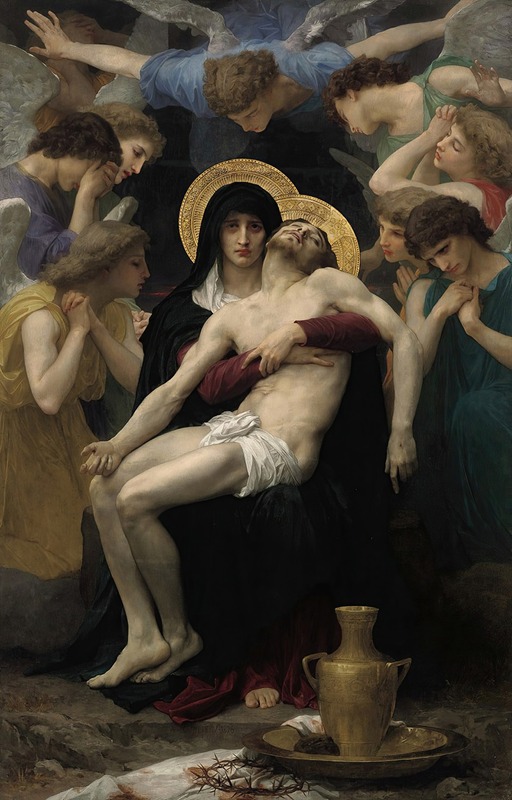
The painting is characterized by a striking chiaroscuro. In contrast to the Virgin Mary's pitch-black mantle, the body of Christ radiates a luminous white glow. Behind them, nine angels wear robes that shift from red to violet in the gradation of a rainbow of promise, symbolizing hope and the salvation of the soul.
✦ The setting of this painting
The scene is set in a dark, rugged rocky landscape evoking the foot of Mount Golgotha just after Christ's crucifixion. In the foreground lie the crown of thorns, a white cloth soaked with fresh blood, and a pitcher of water symbolizing purity. This symbolic space is crafted to elevate the dramatic moment of death into an enduring tragedy.
✦ Historical context
France in the 1870s. Inheriting the harmony of classical antiquity and the classicism of the Renaissance, Bouguereau enjoyed international renown for his unmatched painterly technique. In 1875, however, tragedy struck when he lost his beloved eldest son to illness. This work was born from that profound experience of personal loss.
A dark, jagged cliffside. A woman draped in a jet-black mantle cradles the pale corpse of a young man. Surrounding them, angels clad in robes of vibrant colors gather in deep lamentation. This is the "Pietà"—a traditional religious motif portraying the Virgin Mary mourning the death of her son immediately following the Crucifixion of Christ.
Flawless composition and smooth, luminous skin. The limp, hanging arm of Christ and his meticulously rendered hands and feet draw strong inspiration from the sculptures of the Italian master Michelangelo. It stands as the pinnacle of classical beauty. Masterful foreshortening is lavished throughout, executed with a virtuosity so controlled it borders on clinical detachment. At first glance, it appears to be a flawless, impenetrable religious masterpiece.
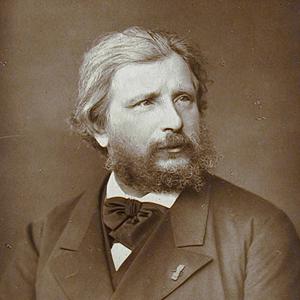
Yet beneath the surface lies a second, hidden meaning. This painting is a poignant record of the painter’s own heartbreaking loss. On July 19, 1875, William-Adolphe Bouguereau lost his beloved eldest son, Georges, to illness—a pulmonary condition complicated by tuberculosis. Georges was just sixteen years old. Devastated by his son's untimely death, Bouguereau suffered a catastrophic psychological blow. For nearly six months, he fell into a deep depression, unable to so much as hold a paintbrush.
From the depths of despair, however, he rose once more, determined to channel the agonizing pain of his loss into his art. He resolved to create this painting as a monument to his late son. Day after day, he poured himself into his sketchbook, producing countless raw, grief-stricken, and anguish-filled drawings. Then, with extraordinary speed, he completed this colossal canvas in just two months to submit it to the Paris Salon of 1876.
About 261 more words

Read the rest of this commentary —
and step into a secret gallery
opened just for you
An "art letter" delivered to you every Saturday morning
Works, music and words chosen for your sensibility, from your artist-type result and the paintings you love
A library of masterpieces and music you can enjoy "in your own words", not just look at
A "digital art notebook" (unlimited) where your impressions build into your own taste
Unlimited likes and notes
¥980 / month¥0 today
¥980/month (tax incl.) from day 8. Cancel anytime.
Already have an account? Log in
Your Note
Write down what this painting made you feel in your art notebook.
Please sign up to write notes.
Sign up for freeRecommended Artworks
Sources & references
More artists
If you find an error in this content, please let us know here
This site is protected by reCAPTCHA, and the Google Privacy Policy and Terms of Service apply.