
 日本語 (JA)
 English (EN)
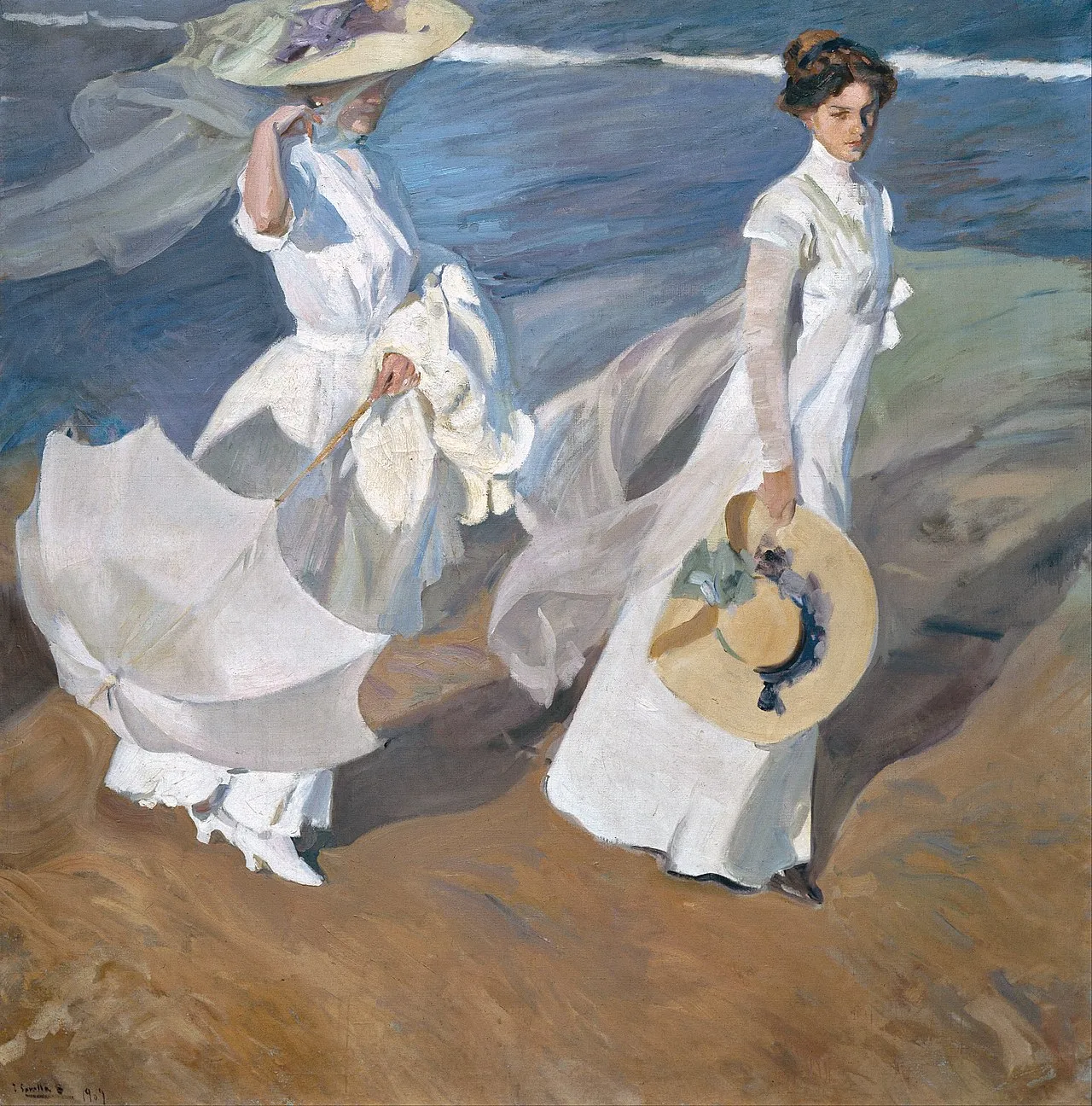
- Dimensions
- 205 cm × 200 cm
- Medium
- Oil on canvas
- Collection
- Museo Sorolla
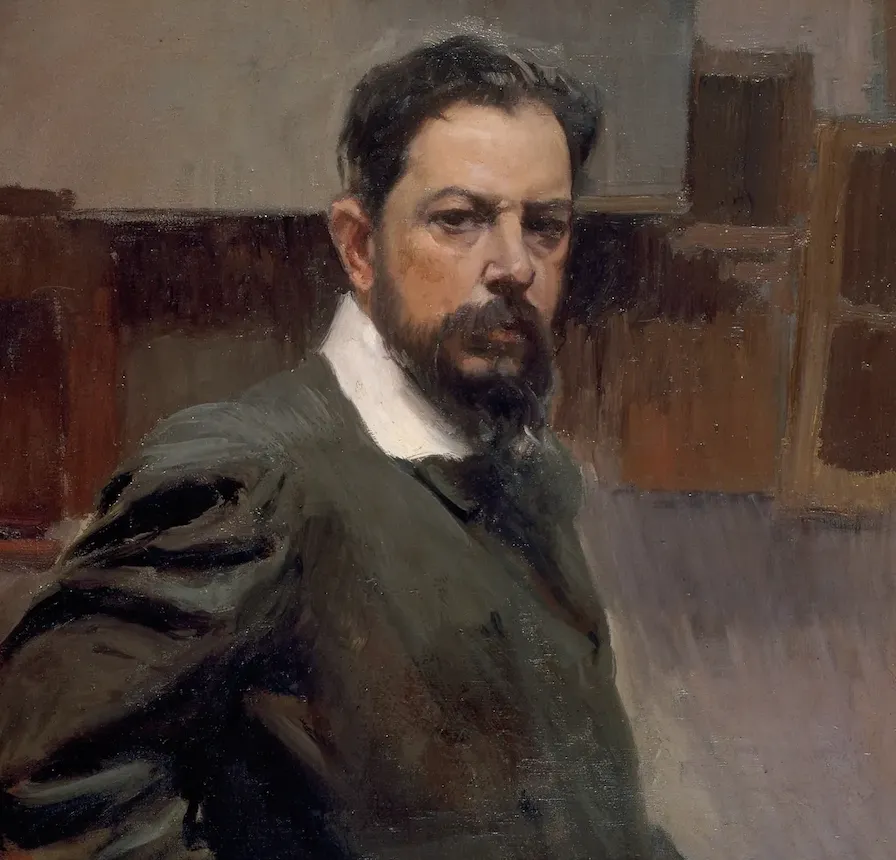
A defining figure of Spanish art who bridged the late nineteenth and early twent…
Following the historic triumph of his solo exhibition in America, he sought to immortalize in the radiant Mediterranean light the profound confidence he had gained, along with the pride of the economic and social prosperity his beloved family now enjoyed.
✦ Highlights (technique & color)
Note the photographic framing, which crops the brim of the hat at the top of the canvas and leaves an expansive stretch of sandy beach below. The artist also avoids black entirely in the shadows, using violets and lavenders to capture the luminous, airy atmosphere. The billowing dresses achieve an astonishing texture through thick impasto whites and delicate, translucent gradations.
✦ The setting of this painting
Malvarrosa Beach in Valencia, along the Mediterranean coast of eastern Spain. Once a setting for fishing and manual labor, by the early 20th century it had transformed into a modern seaside retreat where the affluent enjoyed leisure, spurred by the expansion of the railway network.
✦ Historical context
An era when Spain was enveloped in national melancholy following the loss of its remaining colonies in the Spanish-American War of 1898. In response, the Generation of '98 sparked a movement of cultural and spiritual renewal, and Sorolla similarly sought to present a luminous, wholesome vision of Spain's future through his painting.
On a beach in Valencia bathed in dazzling Mediterranean light, two women stroll gracefully, enveloped by the sound of the waves.
To Capture a Radiant Summer for Eternity
Joaquín Sorolla gazed intently at the scene unfolding before him, as if peering through the viewfinder of a camera. Walking along the water's edge were his lifelong companion and artistic muse, his wife Clotilde, and their nineteen-year-old eldest daughter, María.
The sea breeze rustled their exquisite, sheer white dresses, lifting a translucent veil gently before a face. On the left of the canvas, Clotilde walked with grace, steadying a white parasol with her left hand while gently holding down her windblown veil. Beside her on the right, María kept a measured, elegant pace, stepping firmly on the damp sand.
Sorolla's life had not always been so bathed in light. Born on February 27, 1863, into a merchant family in Valencia, he lost both of his parents to a cholera epidemic when he was just two years old. Taken in by his maternal uncle, a locksmith, the hardships of his early childhood may well have cast a deep shadow over his heart.
Yet he possessed an exceptional talent with the brush. At the art academy in Valencia and the Prado Museum in Madrid, he rigorously studied old masters such as Velázquez, Ribera, and El Greco. His artistic voice truly blossomed after encountering the plein-air painting of artists like Jules Bastien-Lepage during a stay in Paris in 1885. Following his marriage to Clotilde on September 8, 1888, she and their three children—María, Joaquín, and Elena—remained his most intimate subjects. He cherished his family, creating numerous masterpieces set against sun-drenched shores.
The summer of 1909 marked an undeniable golden year in Sorolla's career.
In February of that year, he crossed the Atlantic to hold his first American solo exhibition at The Hispanic Society of America in New York. Mounting an exhibition in the United States, a former enemy nation, must have been a formidable gamble. Yet the outcome was a worldwide triumph, attracting over 160,000 visitors in just over a month and seeing paintings purchased for sums equivalent to millions of dollars in the currency of the day.
Returning in triumph from America, Sorolla was filled with profound confidence, both artistic and financial. His homeland of Spain had plunged into deep melancholy following its defeat in the Spanish-American War of 1898 and the total loss of its overseas colonies. Yet Sorolla had moved beyond his early, tragic paintings, seeking to dispel the lingering shadows of a lost empire. A resolute desire for renewal—to celebrate the vibrant vitality of Spain and envision a wholesome, luminous future—powerfully drove his brush.
About 403 more words
Read the rest of this commentary —
and step into a secret gallery
opened just for you
An "art letter" delivered to you every Saturday morning
Works, music and words chosen for your sensibility, from your artist-type result and the paintings you love
A library of masterpieces and music you can enjoy "in your own words", not just look at
A "digital art notebook" (unlimited) where your impressions build into your own taste
Unlimited likes and notes
¥980 / month¥0 today
¥980/month (tax incl.) from day 8. Cancel anytime.
Already have an account? Log in
Music recommended for this painting
Stories featuring this painting
Your Note
Write down what this painting made you feel in your art notebook.
Please sign up to write notes.
Sign up for freeRecommended Artworks
Sources & references
More art movements
Pre-Baroque
1 artworks
Victorian era
10 artworks
Impressionism
48 artworks
Late Pre-Raphaelite
10 artworks
Baroque
2 artworks
American Impressionism
5 artworks
Realism
4 artworks
Pre-Raphaelite
3 artworks
Barbizon School
5 artworks
Academic art
5 artworks
Luminism
3 artworks
Rococo
2 artworks
Symbolism
22 artworks
Neo-Impressionism
3 artworks
Ukiyo-e
1 artworks
Japonism
4 artworks
Edo period
1 artworks
Fauvism
1 artworks
Naturalism
9 artworks
Russian Realism
1 artworks
Post-Impressionism
13 artworks
Genre painting
9 artworks
Neoclassicism
3 artworks
ウィーン分離派
7 artworks
自然主義
1 artworks
ナショナル・ロマンティシズム
1 artworks
未来派
1 artworks
More artists




If you find an error in this content, please let us know here
This site is protected by reCAPTCHA, and the Google Privacy Policy and Terms of Service apply.